I have lived in the UK for most of my life, but when young I definitely had wanderlust and even ended up living in South Africa for several years which was a wonderful experience. I now look forward to a long and leisurely retirement doing what I like most - gardening, photography, walking and travelling.
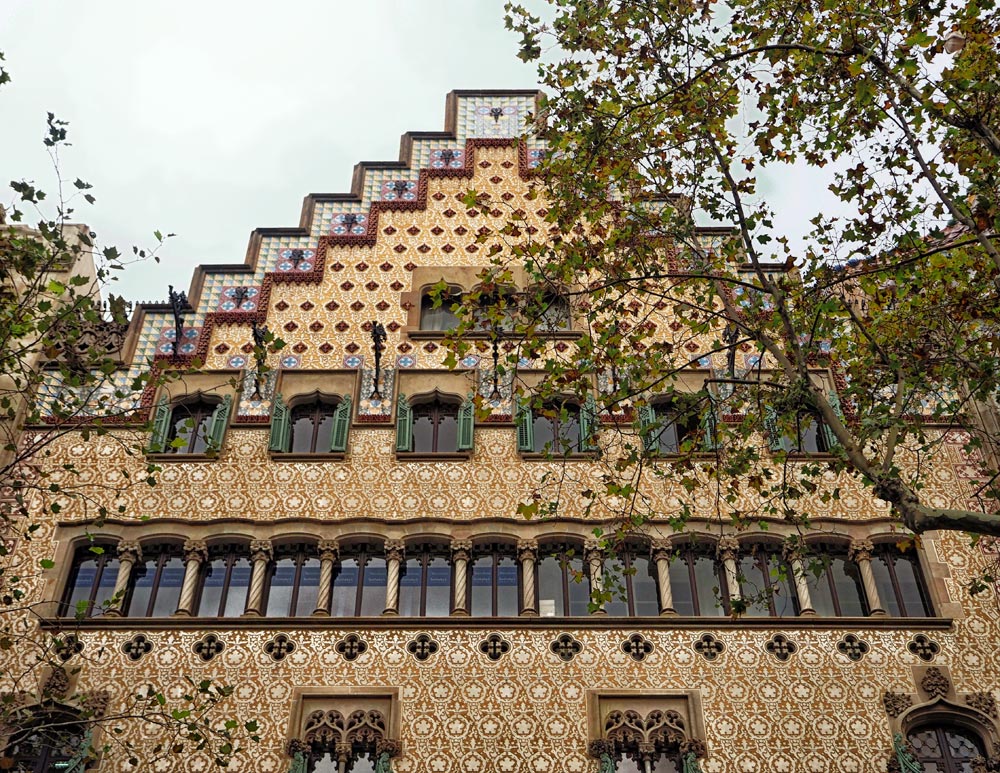
Casa Amatller (Josep Puig i Cadafalch) is next door to two other Art Nouveau houses on Passeig de Gràcia, between Aragó and Consell de Cent streets in the Eixample district of Barcelona.
On the left is the Lleó i Morera House by Lluís Domènech i Montaner – he of the Sant Pau complex that I am currently blogging about, and on the right is the Batlló House by Antoni Gaudí.
Mansana de la Discòrdia or Block of Discord, is the name given to the block, (click on the link to discover the reason) where these exquisite examples of Modernist architecture are located.
I felt that this beautiful building with its projecting balconies and gargoyles and arresting stone sculptures and ceramic tiles would be perfect for Paula’s Word challenge this week.
I’ll try and find an excuse to post some pictures of the other house, but if you want to have a look inside as well as out then visit Casa Lleó i Morera .
This breathtaking site is full of wonderful mosaics, colours, sculptures, windows, artistic design and architectural details from the modernist era.
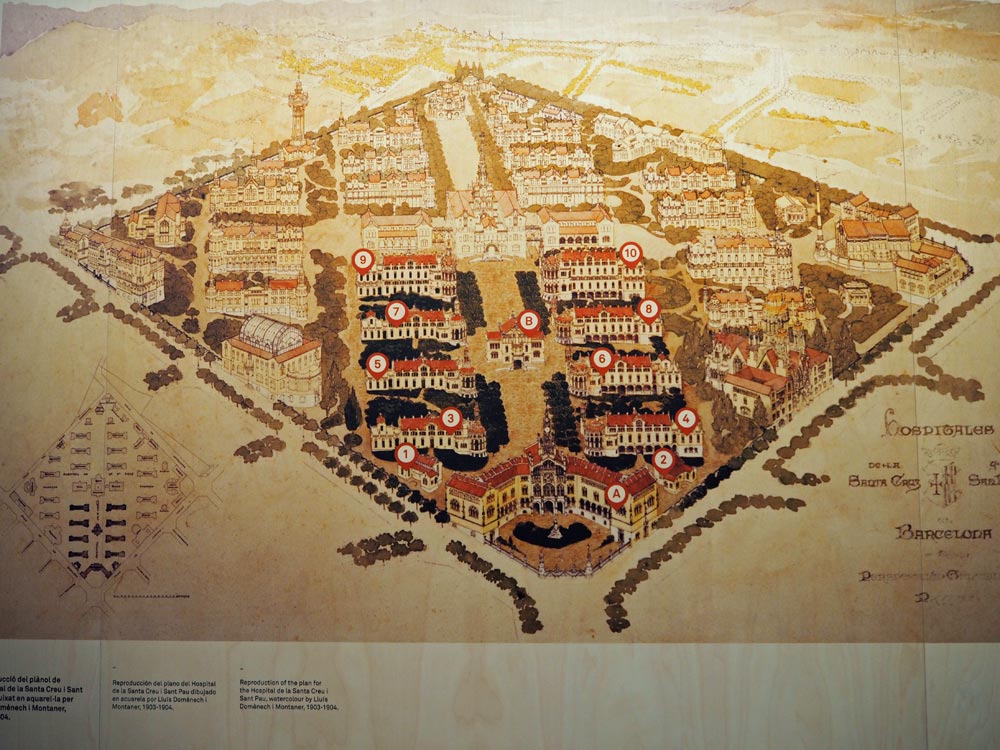
First I will show you the map of the site again so you can see where the pavilions are situated and then we’ll take a stroll around the site.
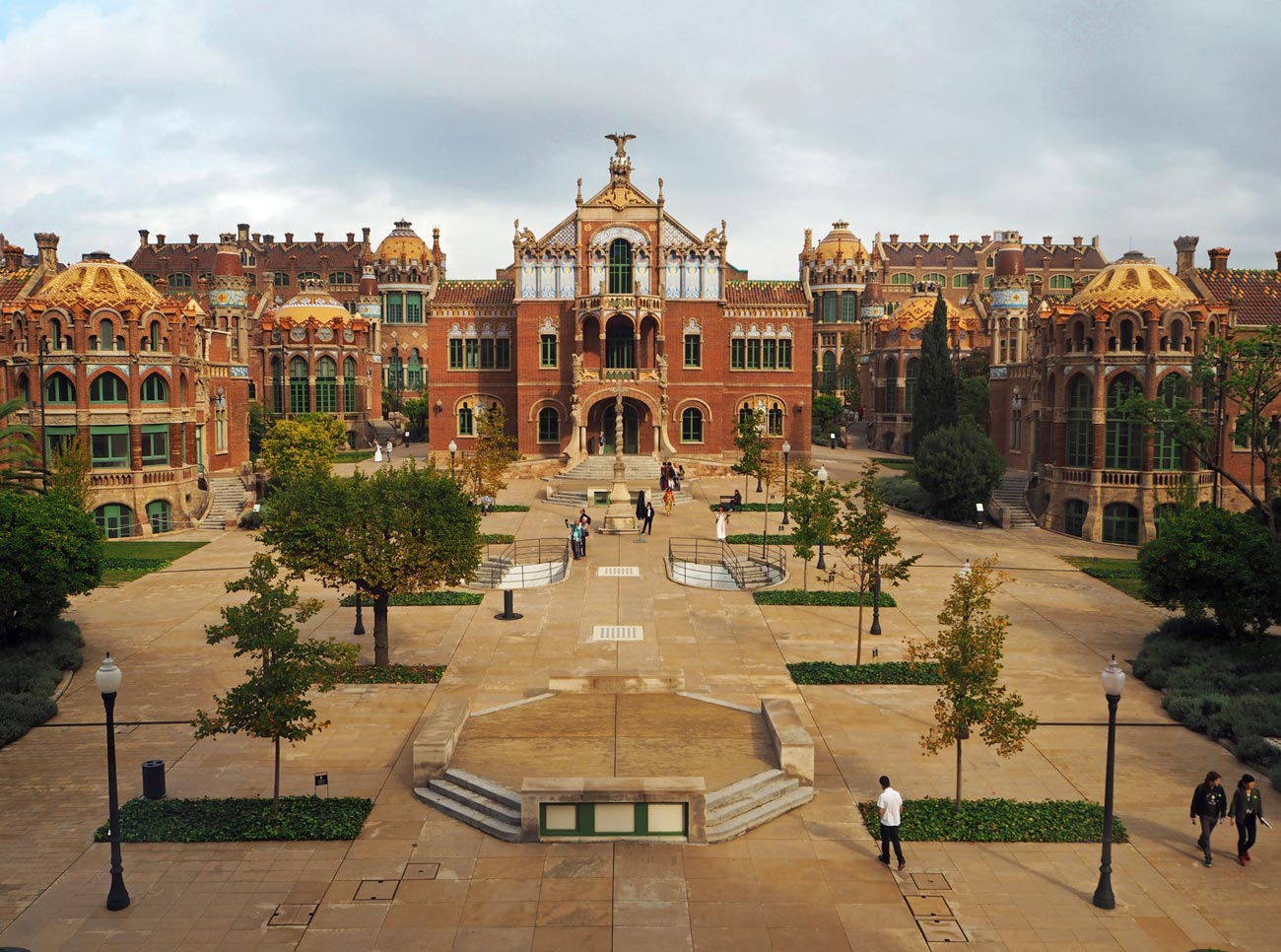
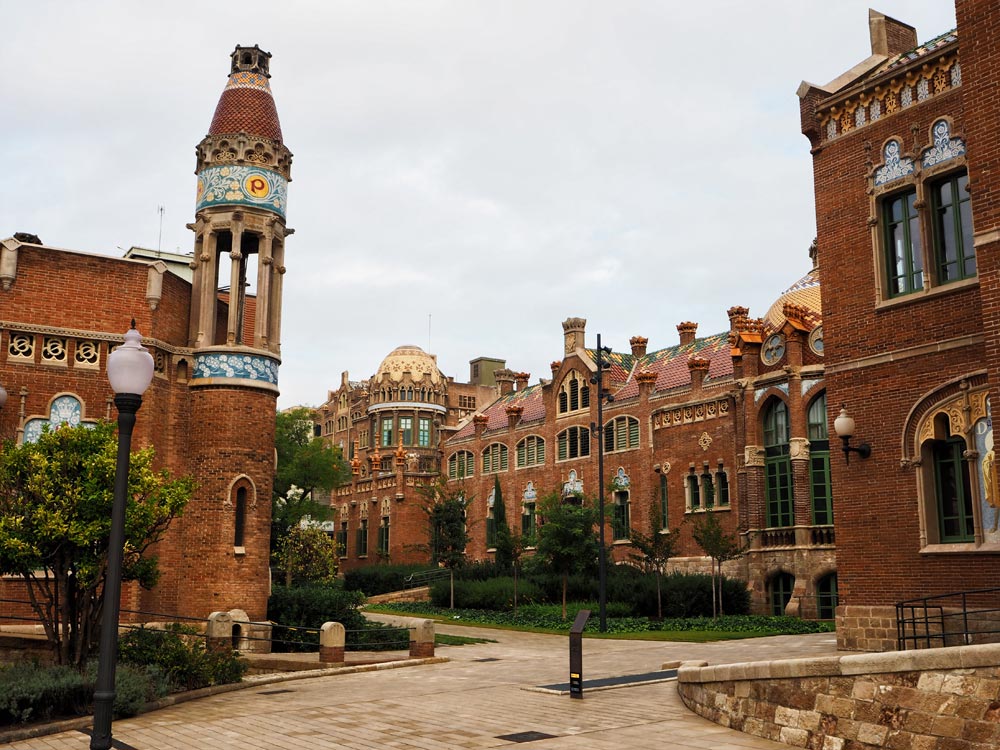
View from the Administration Pavilion (Building A on the map) looking at the Operations building (B) in the centre
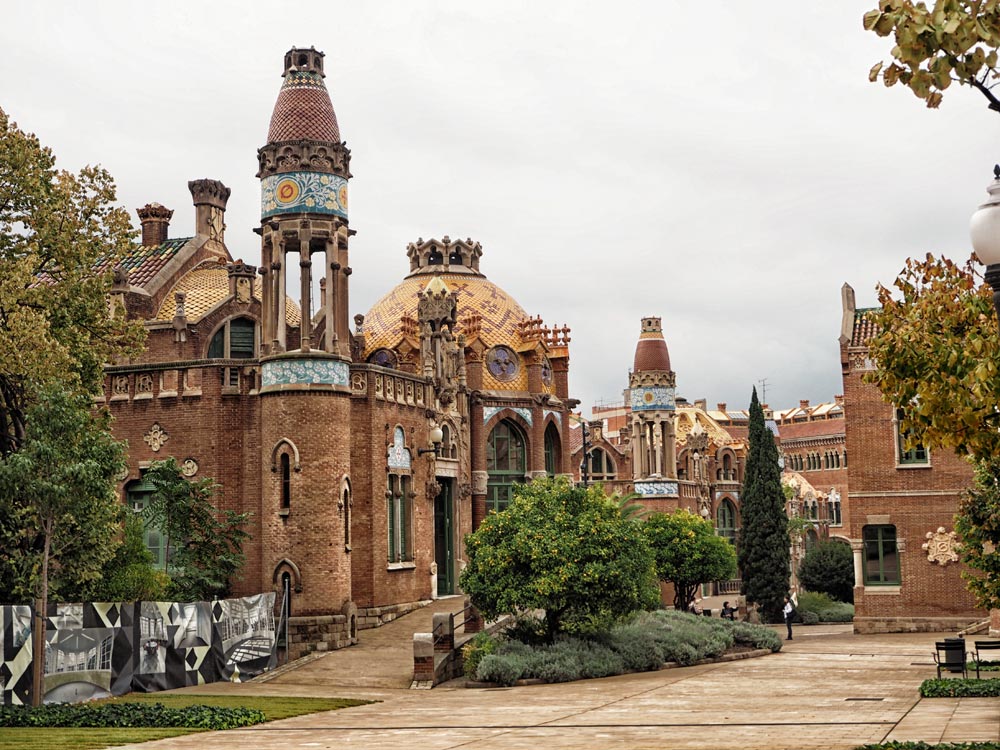
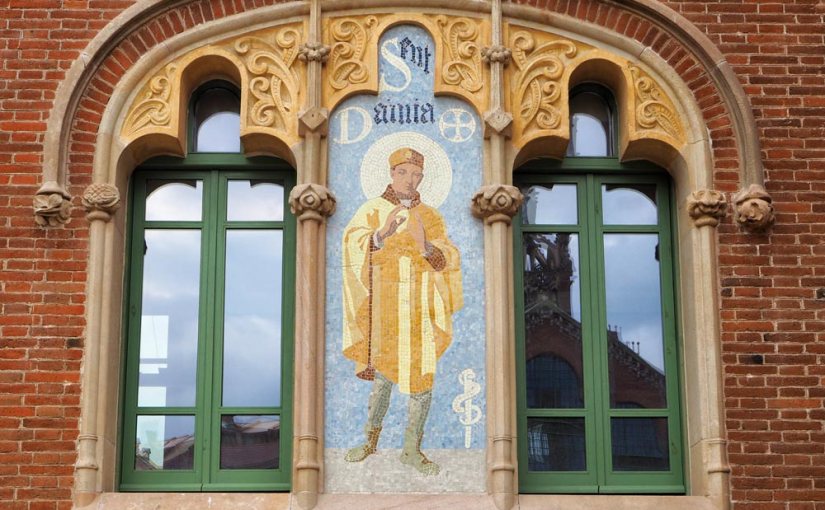
After going through the entrance gate with our pre-booked tickets we found ourselves following the underground tunnel which brought us out just in front of the Casa D’Operacions (Sant Cosme and Sant Damia). For what felt like an eternity both my daughter and I were stunned into silence as we gazed around us. From the front we were already in awe of the craftsmanship we had seen, but we didn’t expect such beauty to continue so meticulously.
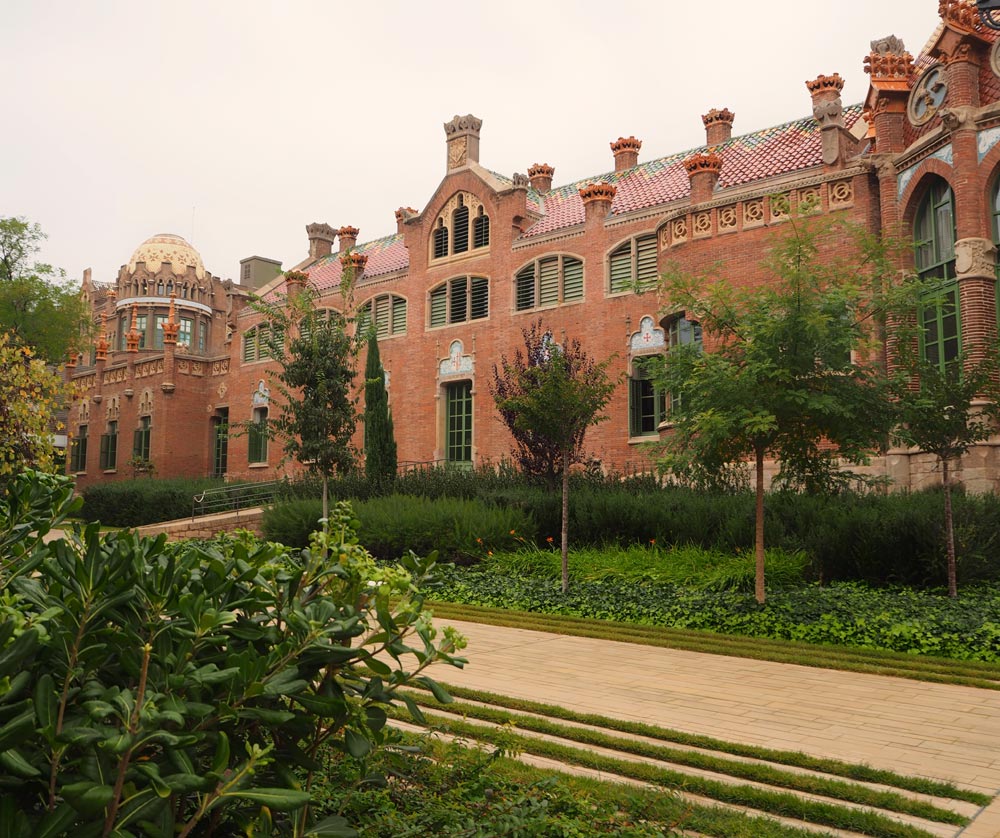
The grounds are so well laid out with lots of lovely planting of citrus trees, lavender, horse chestnut trees, lindens and deciduous trees all providing shade in the summer and warmth in the winter. Few of the original trees remain except for a couple of date palms. Bay, rosemary and lemon verbena and other medicinal plants grow in the parterres. The gardens were created to provide a pleasant space that would alleviate pain and suffering of the patients and their families. The plants helped to purify the air, fight bacteria, dust and toxic gases and shelter the exposed area from the weather. An idea hospitals of today would do well to replicate.
It was hard to know where to look. The symmetry of each building, the mosaic patterns on the roofs and domes, the elaborately decorated water turrets, the sculptures, the window shapes and the art nouveau style…
You can enter the operations building, but there is not much inside and the only other one that you can enter is Sant Rafael which shows how it was used as a ward. There is much to see externally though and each pavilion although built in the same style and using the same materials with the purpose of creating pleasant and natural surroundings for the patients have their differences.
Of the twelve main pavilions six have been finished and two are currently undergoing restoration. You can see how beautifully the work has been carried out when you see parts of the site still requiring refurbishment.
Next post we will visit the individual pavilions to take a look at the materials used and the differences which make them unique.
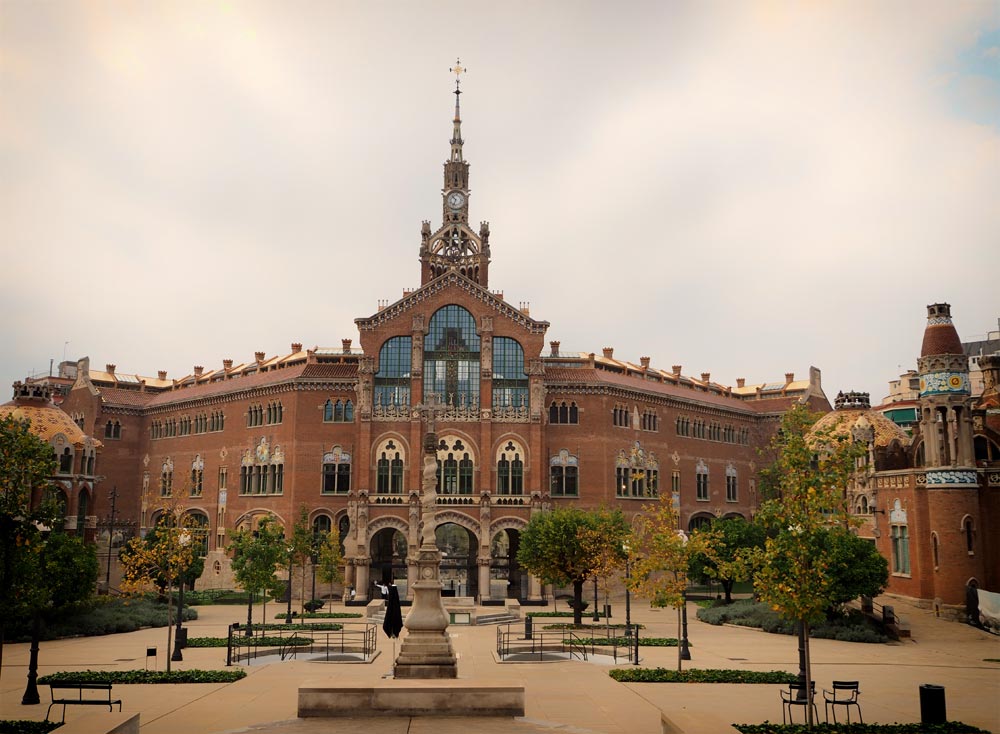
View of the Administration Pavilion (A) from the Operations building (B)
(In all of these posts I advise you to click on the photos to enlarge them as only then will you appreciate the incredible artistic detail. )
Source: All the information in these Sant Pau posts is taken from the admission booklet.
How to get there: Metro: L5 Sant Pau / Dos de Maig or L2 to Sagrada Familia and walk up Avenue de Gaudi Bus: H8, 19, 20, 45, 47, 50, 51, 92, 117, 192
It was my friend Jo who pointed out this place in Barcelona. When she visited the site was still undergoing renovation, but knowing how much I love Art Nouveau she prompted me to seek it out during my visit to the city last October. So I did. And I loved it. So much so that I am going to have to break a post about the site into several parts as there is so much to share. To begin with we will take a look at the entrance to the site. The Administration Pavilion.
The entrance to the site is at the end of Avenue de Gaudi and at the other end the Sagrada Familia is situated. It was designed as a monumental altarpiece with one central and two lateral components in the form of a great ‘supreme being’ who welcomes with open arms, those who visit the site.
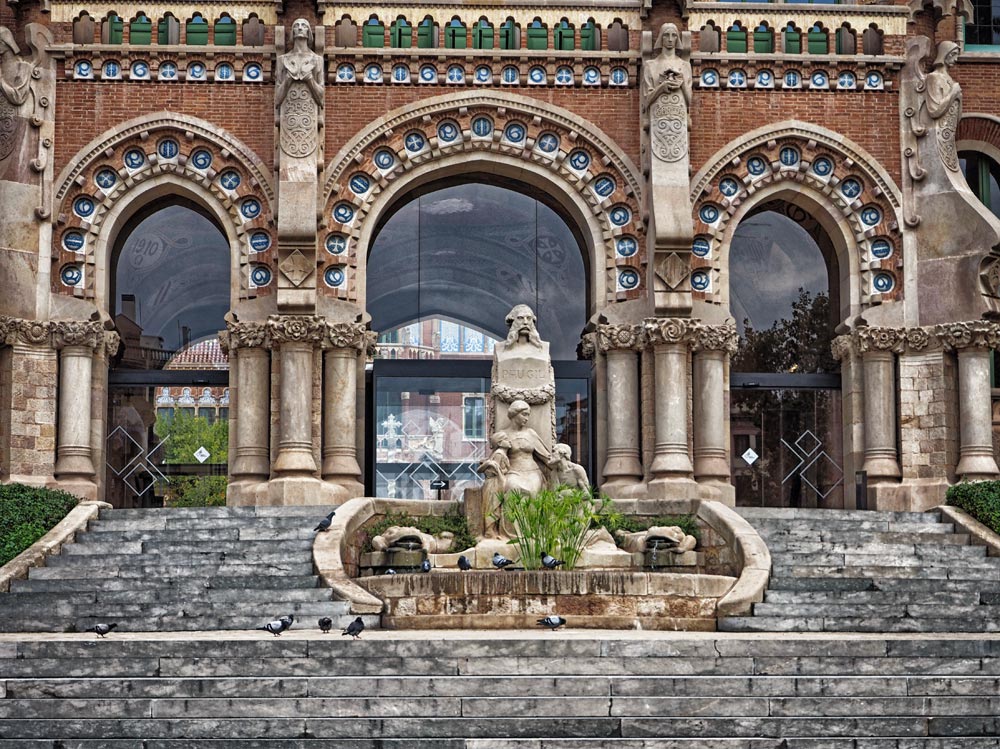
The origins of the Hospital de la Santa Creu i Sant Paul date back to 1401 when six Barcelona hospitals were merged. In 1902 work began on a new hospital to serve the growing needs of the city and the architect Lluis Domenech i Montaner was commissioned to build the new hospital which opened in 1930. It was funded by a legacy from banker Pau Gil whose statue adorns the front staircase.
Pau Gil (the banker who funded the building)
Designs by Francesc Labarta and mosaics by Marius Maragliano run around the facade.
Murals
Murals
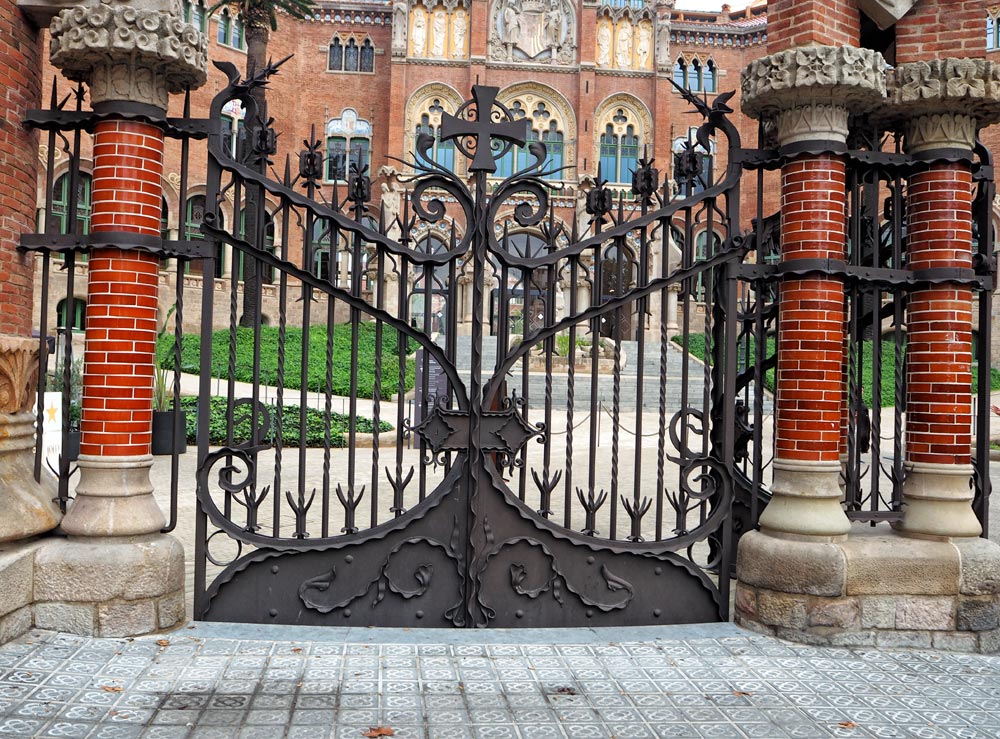
Entrance
It is a masterpiece of Catalan Modernism and a city within a city, with separate pavilions for the different medical specialities and landscaped gardens. Twenty-seven pavilions were built, sixteen of which are modernist. The buildings are linked by underground tunnels.
The pavilions are arranged along two main north/south and east/west axis 500m x 50m wide and adjacent streets 300m x 30m wide. The buildings are symmetrical which may be one reason that I find them appealing. And to visually even out their heights some are one storey and others two storeys above a basement.
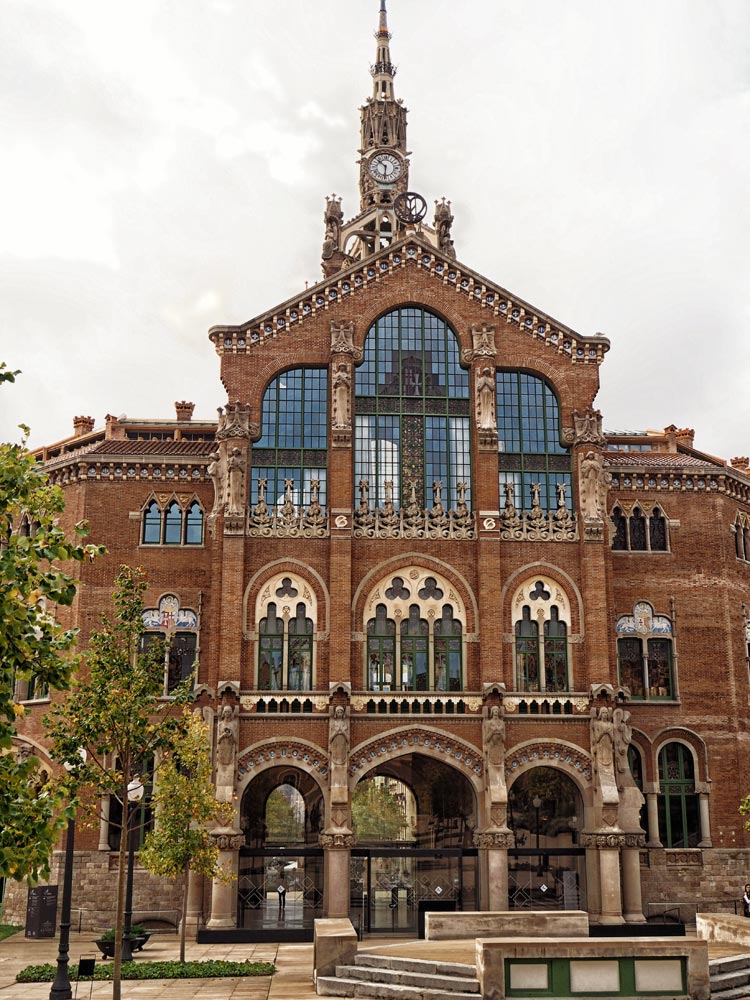
From within the site you can see that the rear of the Administration Pavilion is as charming as the front. It was built between 1905 and 1910 and is the most ornate (wait until you see the interior), and was designed to be the main entrance as well as administration and hospital admission offices.
Entrance
Floral capitals
The rear view
Mosaics
The Art Nouveau site was officially opened at the end of February 2014 after four years of refurbishment work. Of the twelve pavilions, six have been finished and two are ongoing. The completed pavilions will be used as functional work spaces.
I hope this has whetted your appetite as next time we are going to have a look inside the site.
Source: All the information in these Sant Pau posts is taken from the admission booklet.
How to get there: Metro: L5 Sant Pau / Dos de Maig or L2 to Sagrada Familia and walk up Avenue de Gaudi Bus: H8, 19, 20, 45, 47, 50, 51, 92, 117, 192
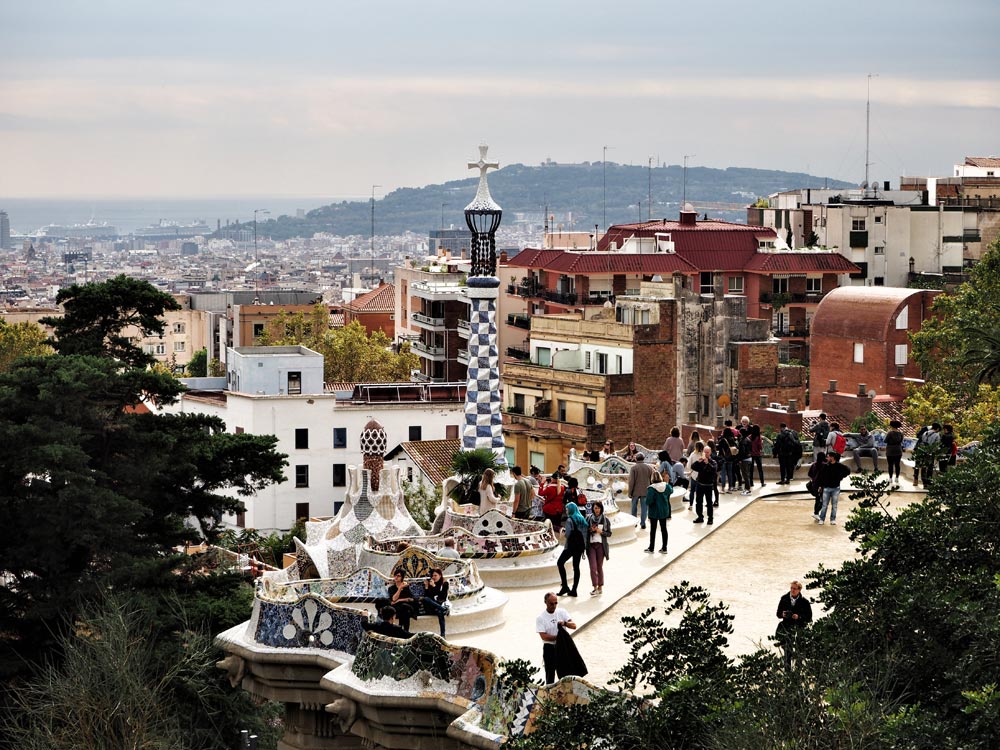
Looking down on Nature Square and the undulating bench
Welcome to Park Güell, one of the major works of Gaudí in Barcelona. Access to the Monumental Zone of Park Güell is limited to 400 tickets every half hour. Which seems an awful lot of people on such a short time frame as you are not obliged to exit within half an hour and most likely explains why it is so busy! To avoid having to wait for several hours to enter the Monumental Zone it is best to purchase your timed tickets beforehand.
The Porter’s Lodge – Casa del Guarda
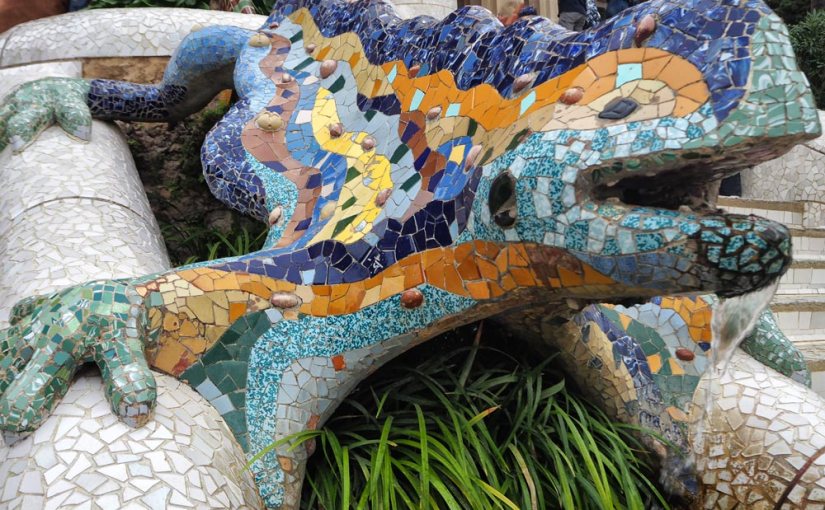
Snake’s head fountain
Decorative window
Decorative window
Mosaics on the bench
Eusebi Güell entrusted to Gaudí the plan to create an estate for well off families in a large property that Güell had purchased in the zone known as ‘bare mountain’, a location with magnificent views over the plain and the ocean.
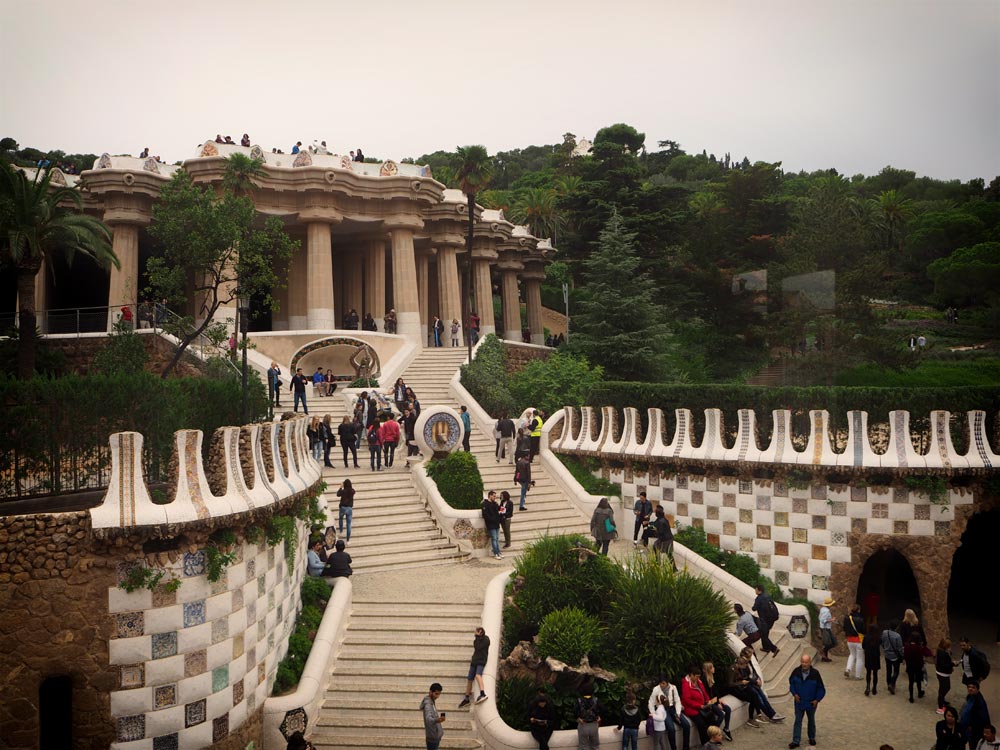
Monumental Flight of Steps. Framed by two convex walls with merlons (crenellated parapet).
Dragon or Salamander
Dragon’s claw
Brightly coloured tile-shard mosaics
Only one sixth of the plot could be built on for residential use only. And in the beginning work progressed well, but the difficulty of transport to the plot made it nonviable and in 1914 Güell decided to stop the project.
Merlons
Parc Guell
Another decorative window
Trencardis decorative system for the roof
The undulating roof at the top of the Hypostyle Room
Upon the death of Güell the estate was offered to the Barcelona City Council who opened it as a public park in 1926. The UNESCO declared it a Cultural Heritage of Humanity site in 1984.
Hypostyle Room – the ceiling is formed of small domes in the Catalan vault technique. It was conceived as a covered space that could serve as a market for the estate.
Decorative window
Trencardis (tile-shard mosaic) roof of the now bookshop
Undulating bench
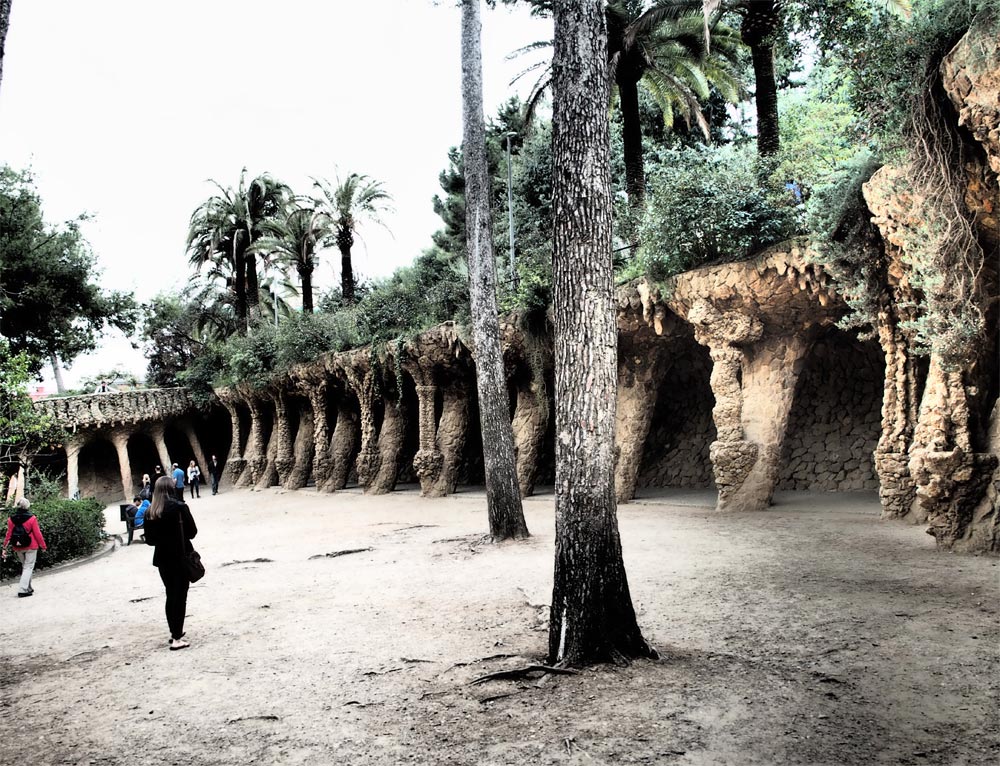
Portico of the Washerwoman
I think you might agree with me that this site definitely complies with pretty much all the meanings of winding.
Leaving Durham behind, we continued northwards to Alnwick in Northumberland where we would spend our last couple of night in England before heading over the border for 10 days. We stayed in a welcoming B&B on the outskirts of the town and within easy walking distance of the gardens that were our main reason for stopping here.
I have desired to go where springs not fail, To fields where flies no sharp and sided hail And a few lilies blow ~ Gerard Manley Hopkins
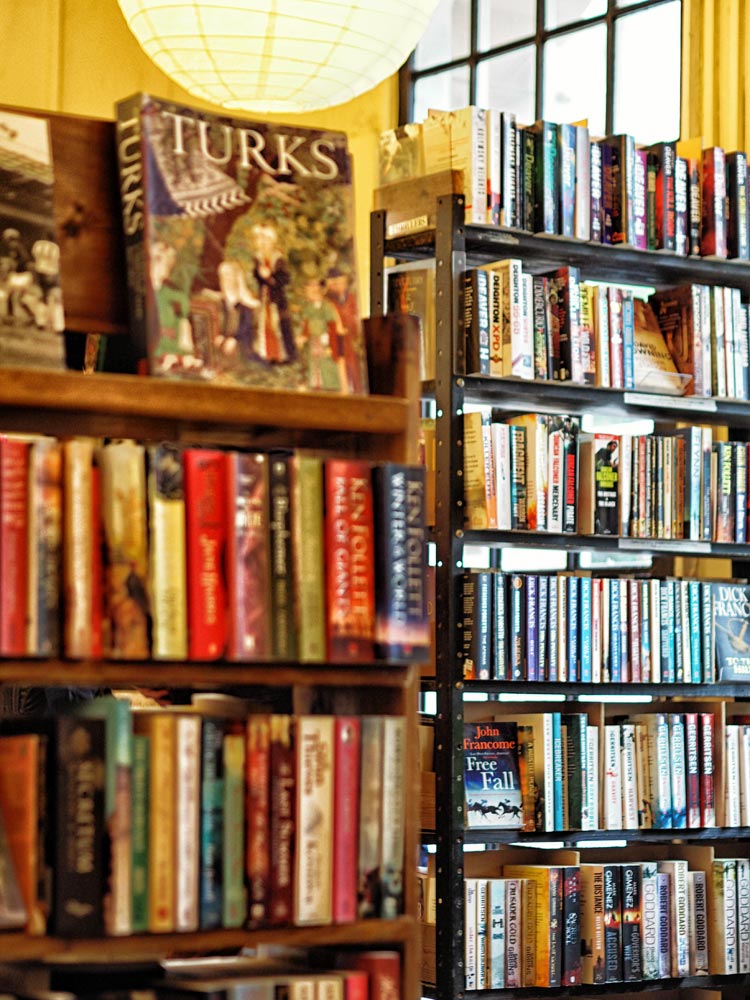
After all the beautiful sunny warm, even hot, days of September thus far (with the exception of Norwich) the weather finally turned. We woke to thick fog and rain. With only one full day here we had no choice but to make the best of it and set off to visit the famous Alnwick Water Gardens. On the way, and in a bid to get out of the wet for a while, we popped into Barter Books, originally a Victorian railway station on the North Eastern line and now a second-hand bookshop. And far more…
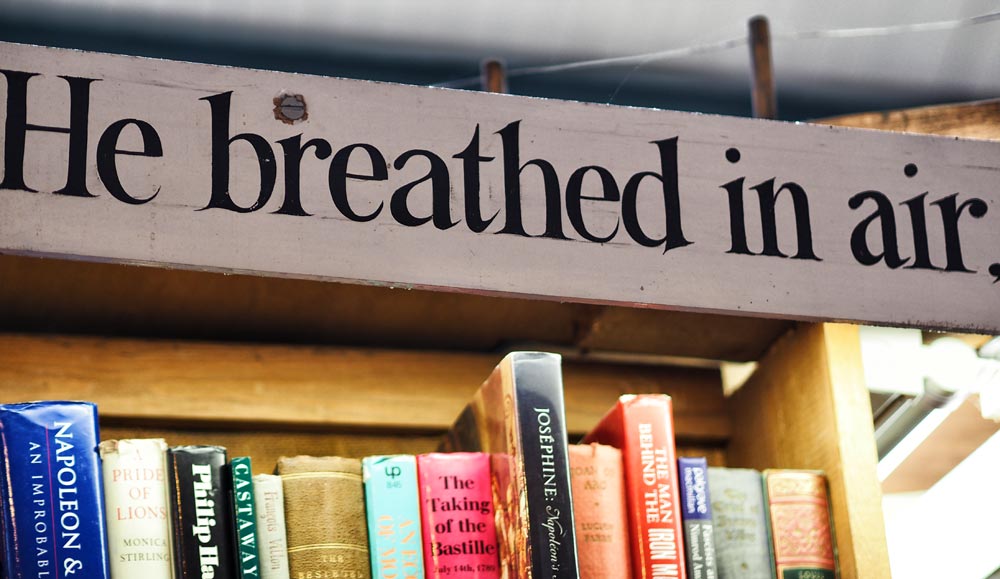
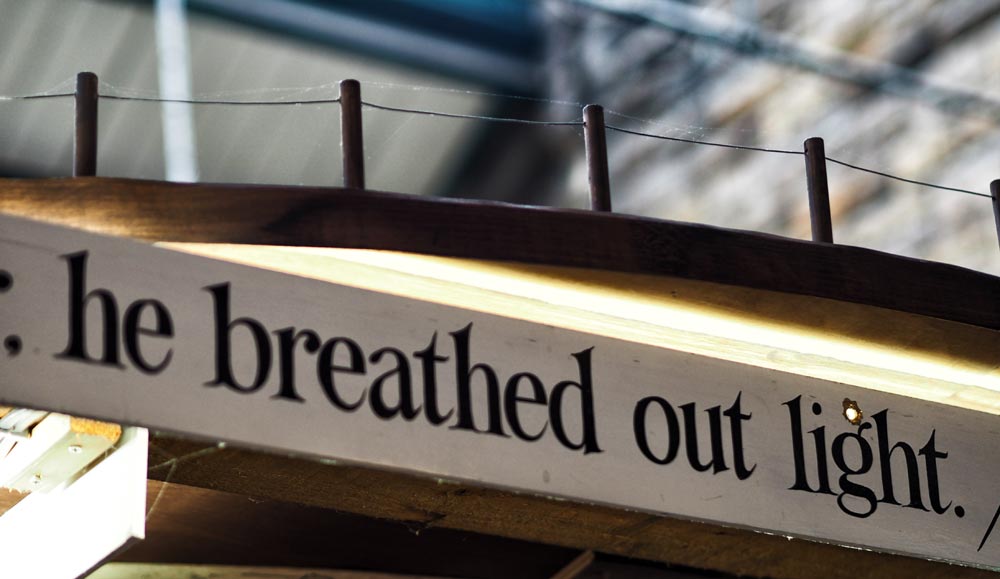
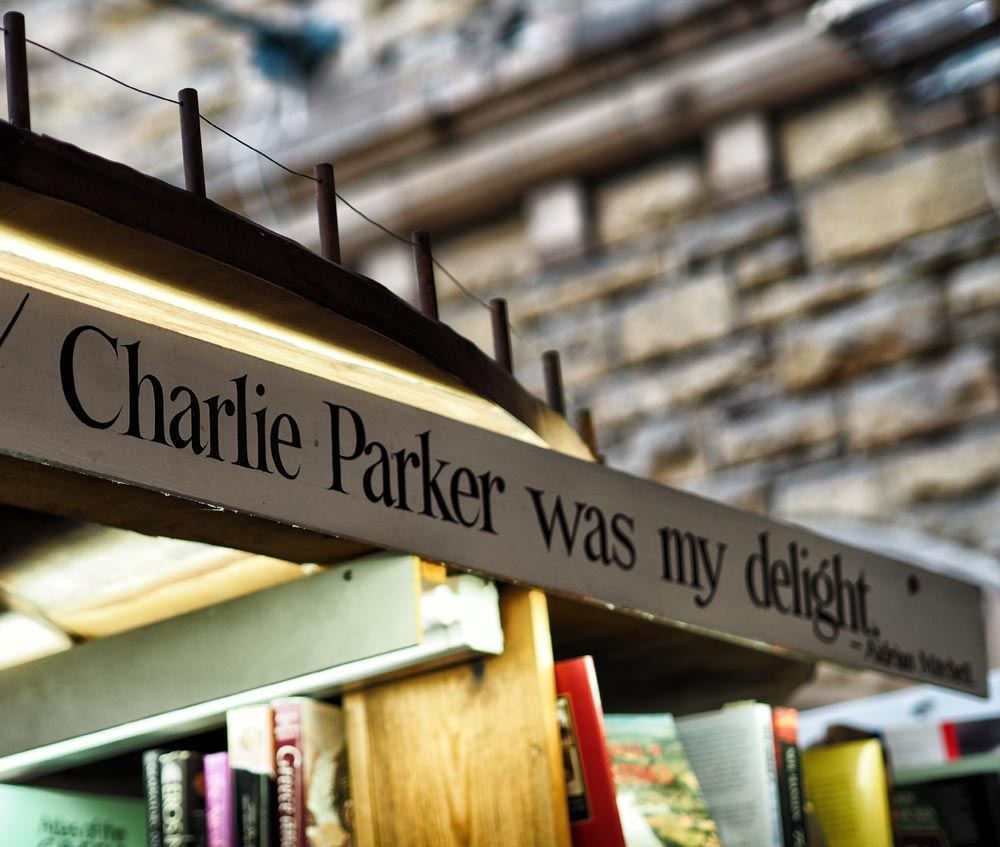
…an enchanting place filled with poetry lines linking the bookshelves above your head, 40 foot murals and a model train-set in the air; a station café, free wifi, comfortable armchairs and plenty of seating.
O western wind, when wilt thou blow That the small rain down can rain? Christ if my love were in my arms, And I in my bed again. ~ Anon (early 16th century)
The books are almost the last thing you look at.
There were, naturally, several books in this second-hand bookshop in Alnwick Northumberland that I could have walked out with, but the thoughts of having to carry them around with me for the next couple of weeks turned me off the idea.
The thought of living in this pretty little town however…
‘He breathed in air/He breathed out light/ Charlie Parker was my delight.’ ~ Adrian Mitchell
It’s quirky, it’s rambling and it’s the most eclectic place to browse in. Set up by Mary Manley in 1991 it is a second-hand bookshop based on the swap system and called Barter Books and home of the original reproduction ‘Keep Calm and Carry On‘ second world war poster.
And it was very tempting to abandon the garden visit and settle in for the entire day here!
This is Peter Dodd’s ‘Famous Writers’ Mural. In brief, this is a huge (38′ x 16′) mural comprising almost forty life-size characters – specifically, famous writers in the English language from 1800 onward.
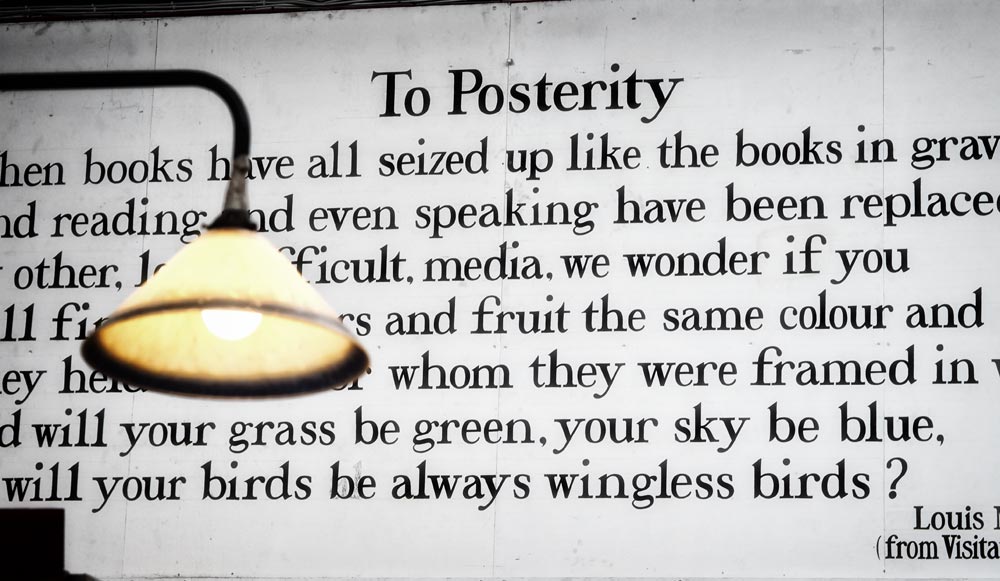
Finally I will leave you with this poem written by Louis MacNeice an Irish poet who was part of the generation of the Auden Group, also sometimes known as the “Thirties poets”. I find it quite poignant.
“To Posterity”
When books have all seized up like the books in graveyards And reading and even speaking have been replaced By other, less difficult, media, we wonder if you Will find in flowers and fruit the same colour and taste They held for us for whom they were framed in words, And will your grass be green, your sky blue, Or will your birds be always wingless birds?























 TRAVEL WORDS