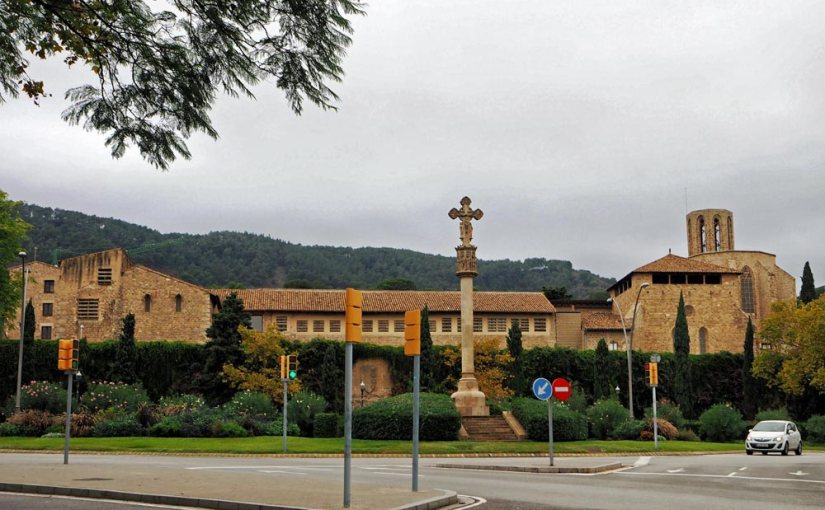
On a rather damp and grey day in Barcelona my daughter and I decided to take the Tourist Bus and see the city at leisure. One place we wanted to stop off at and have a look was the Monastery or Reial Monestir de Santa Maria de Pedralbes in the north-west of the city. Due to road closures we had to disembark at the Palau Reial-Pavellons Guell and walk up the Avenue Pedralbes to the monastery. No great hardship.
The Royal Monastery of St Mary of Pedralbes, founded by Queen Elisenda de Montcada in 1327, stands as a unique historical and cultural testament to the Poor Clare community who lived there continuously from 1327 until just recently.
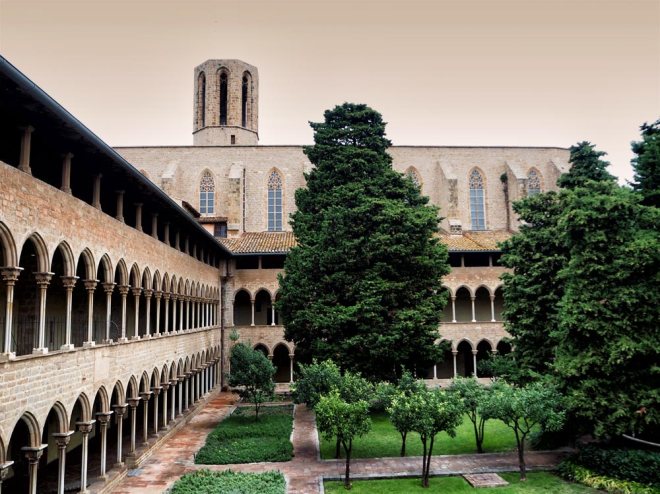
The different rooms are grouped around the three-storey Gothic cloister. They include St Michael’s Chapel, the dormitory, refectory, kitchen, infirmary, storerooms, abbey room and chapter house, plus various day cells.

Capitals supporting the pointed arches are decorated with highly stylized leaves
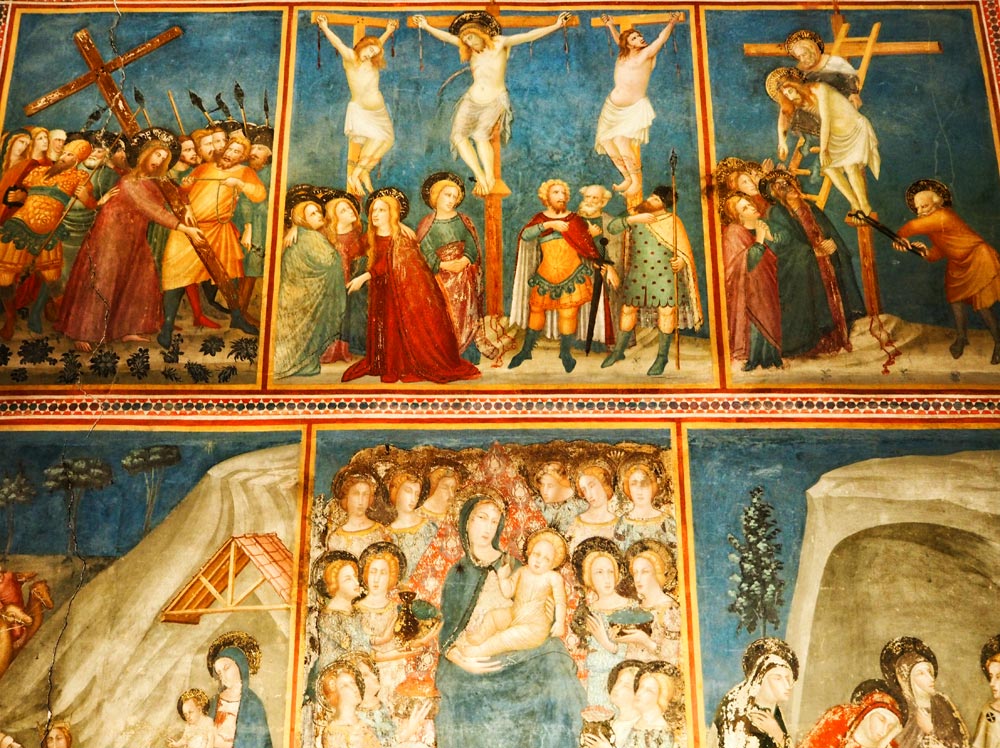
The chapel of St Michael is decorated with a magnificent series of murals, which according to two contracts dating from 1343 and 1346 were a commission given to the painter Ferrer Bassa by the Abbess Francesa ça Portella, who wanted to make the room her private cell. They have recently been re-opened to the public after a ten year period of restoration.

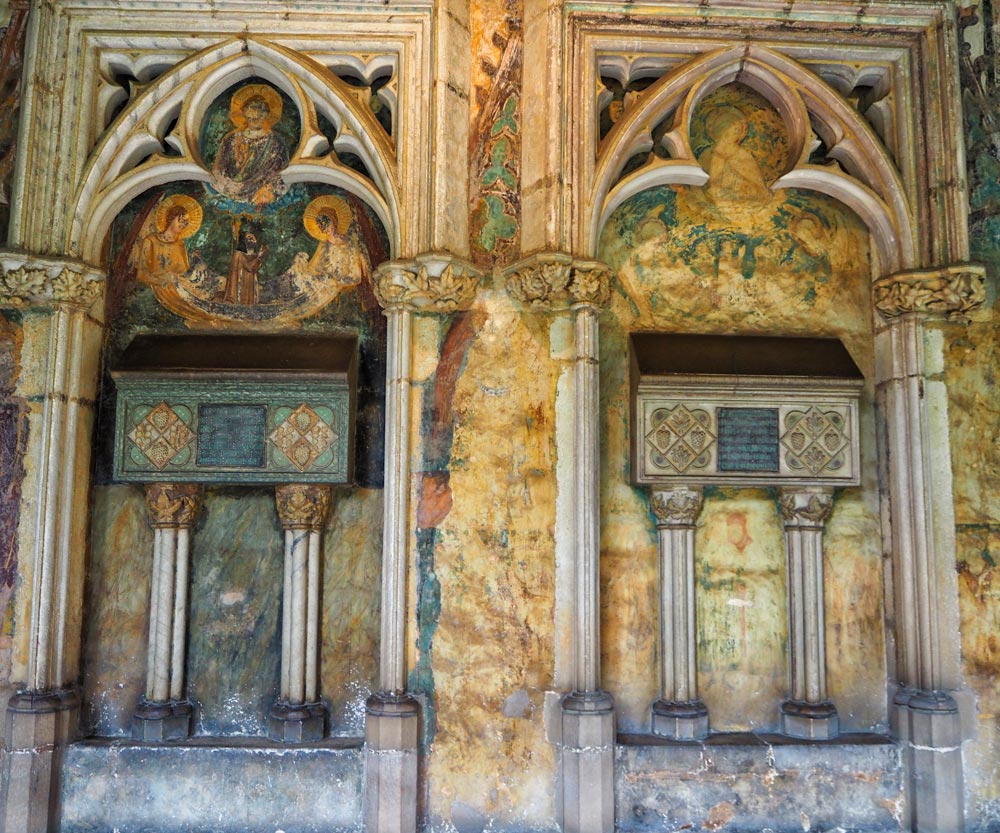
The Sepulchre of Queen Elisenda de Montcada (c. 1292-1364), consists of a marble, two-sided tomb occupying two storeys of the cloister within an arcosolium (an arched recess used as a place of entombment).


Also in the cloister, next to the sepulchre of Queen Elisenda, there are three sepulchres of three Catalan noblewomen.

By the queen’s feet and head there are two kneeling thurifer angels, burning incense.

The sepulchre is supported by three golden lions
The medicinal garden of the cloister is a representation of how the medieval herb garden would have looked. Considered the world’s largest Gothic cloister, it has two galleries with twenty-six columns on each side made of nummulitic stone – limestone containing fossil remains – from Girona, and a third upper gallery added later.
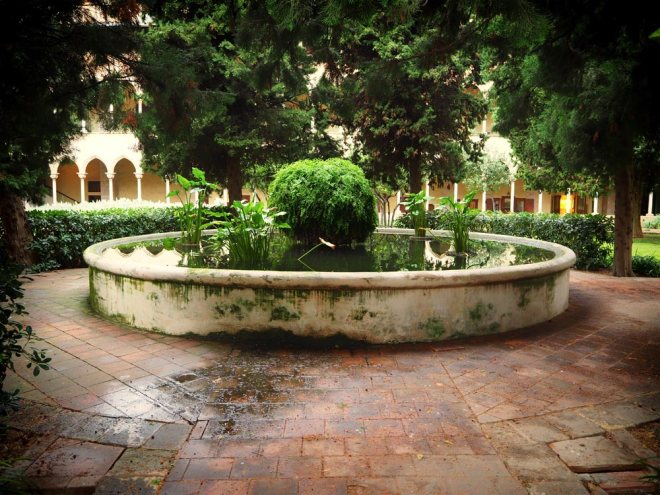

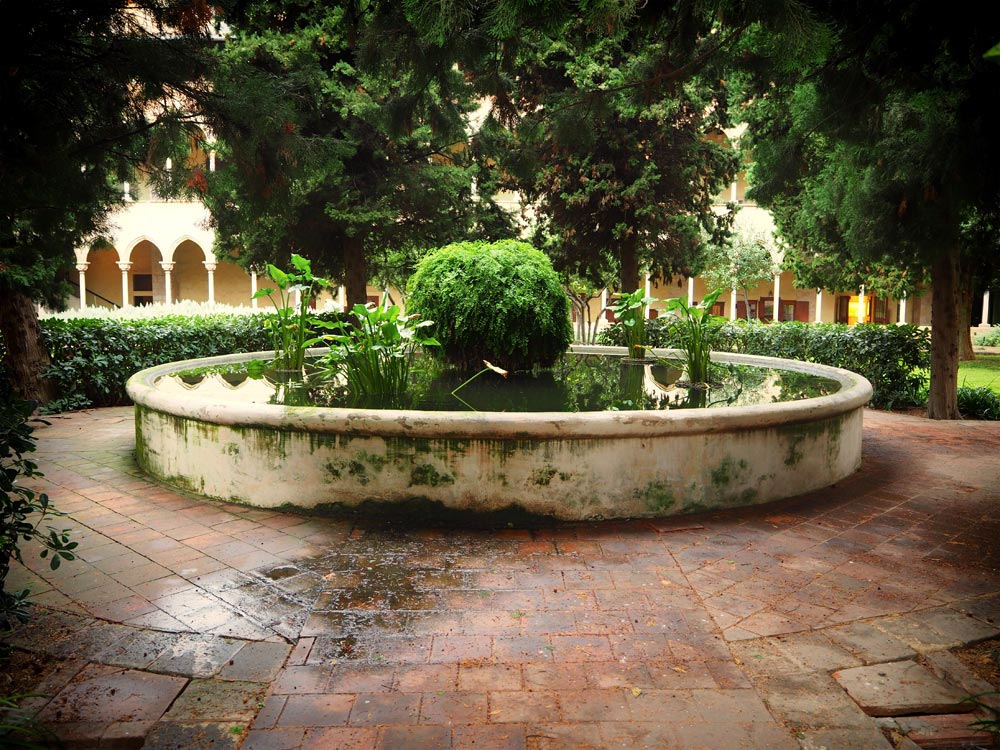
The Angel fountain

The Angel fountain

The well
The exhibition “The Monastery of Pedralbes – The Monastery Treasures” is located in the old dormitory. I will show some of the exhibits in a separate post as they are quite unique.
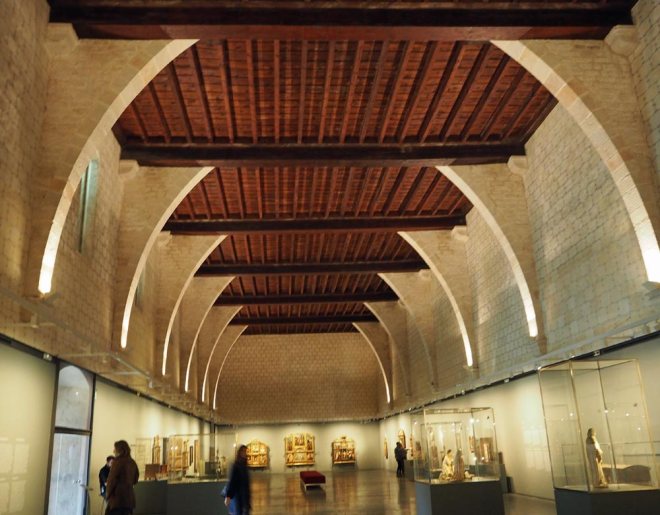
There is so much to see including the abbey room and the refectory, that we could have stayed much longer. I would recommend that you make time to visit this wonderful place if you are in Barcelona. There is much more to the city than Gaudí .

Crucifixion in the Abbey room

Painting depicting draperies in the Abbey room

Tiled unit in the refectory
It is easy to reach by public transport, buses H4, 63 and 78, as well as the Blue Tourist Bus.
The Monastery of Pedralbes site gives you a lot more information about the monastery and Queen Elisenda de Montcada.
Paula’s (Lost in Translation) challenge this week is Traces of the Past











 TRAVEL WORDS