Black and White Sunday: Traces of the Past

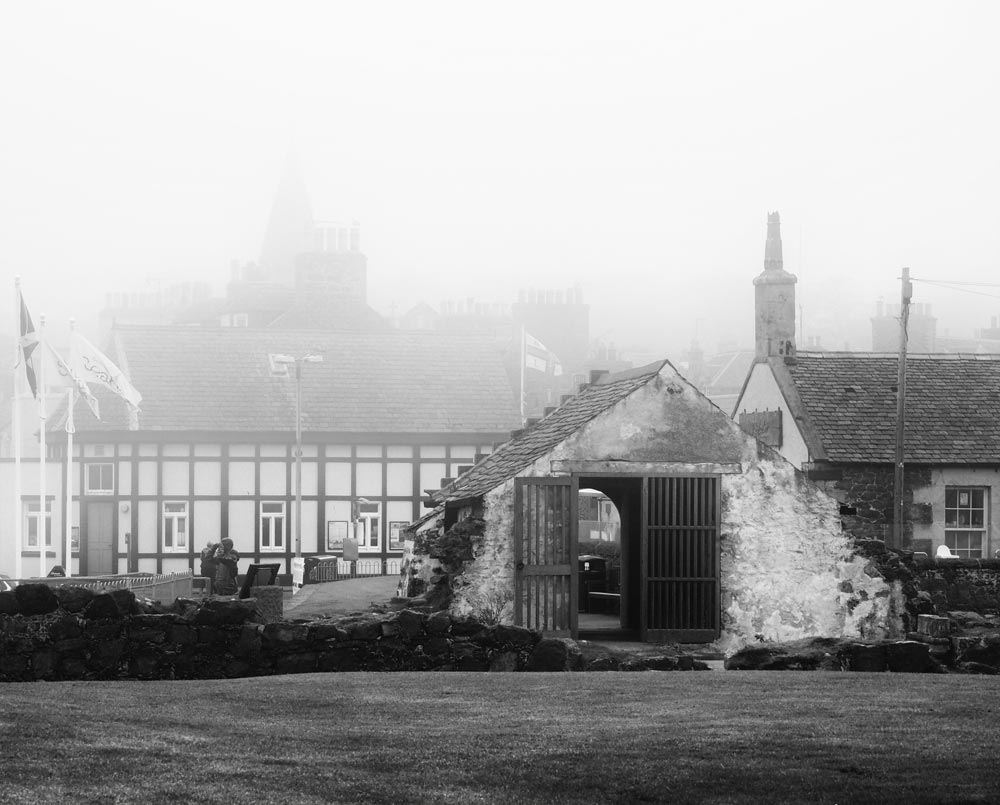
The only remains of St Andrew’s Old Kirk in North Berwick is a small white-harled stone building which stands just inland from the path to the Scottish Seabird Centre.

The first church was probably made of wood and was probably constructed by monks from the Abbey at Lindisfarne some time in the 600s. A later building was erected some time in the 1100s, but little of this is left other than low stone walls on the grass to the north of the only part remaining. Continue reading Black and White Sunday: Traces of the Past

WPC: Unusual

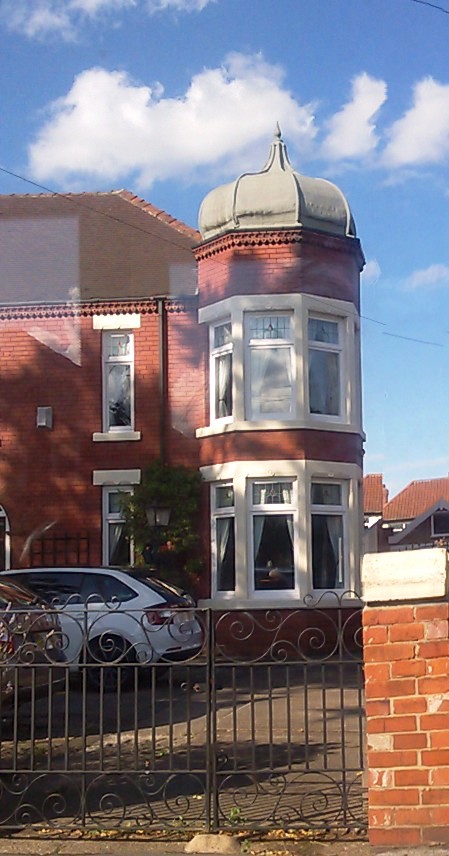
I am in Doncaster, South Yorkshire at the moment as my son is in hospital there. The daily route to the hospital goes along Town Moor Avenue which is opposite the racecourse. The field itself I remember as where my children played school sports. The houses along this road are quite spectacular (and very large) and today I managed to snap one of the more unusual ones through the bus window.

This conservation area contains Town Field itself and the planned suburban expansion of Doncaster’s residential area carried out in the early twentieth century along its northern side. The architecture of most of the buildings date from this period. The land was developed by Harold Arnold and Son from 1901 and it can be seen that the architects were influenced by the Arts and Crafts movement of the late 19th century. This was based on a dislike of mechanical ornamentation and a belief in the return to hand craftsmanship and simpler forms.

Buildings are mainly two-storied, although along and towards Thorne Road there are three-storied development. They are predominantly in red brick with slate or small red clay plain tiles. There are often elaborate forms of buildings with decorative architectural features, such as windows, doors, chimneys, bays, turrets, gables and porches. There are also areas of half timbering, stucco and decorative brickwork. Front boundary walls are generally low brick walls with castellated terracotta decorative copings often backed with hedges or shrubs.

Doncaster – Town Field was designated a conservation area on 8 April 1991.

Source: DMBC
Thursday’s Special

This week Paula encourages us to consider the differences between taking a landscape or portrait format. What factors make you decide which way to go? Is it the lens on your camera that forces you into a particular format, or are you making a more conscious decision about what it is you want to portray and what is the best way to do that? 

These two images are of the haunting bronze sculpture that I have featured before in black and white. The close-up landscape version(s) were deliberate compositions to focus on the detail of the women and children as they wait for their husbands and fathers to return from sea.The decision to take a portrait shot was based purely on the desire to capture the entire sculpture and show exactly how small these figures actually are.
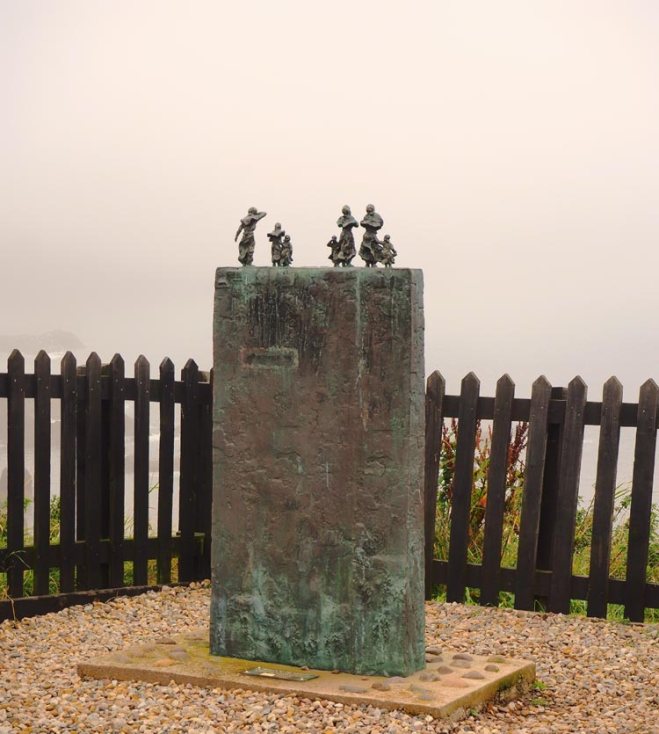
I tend to take most of my photos in the landscape mode unless I am photographing something particularly tall like a building or a tree. Of course with editing software it is easy to change any photo into any size afterwards, so it is not always necessary to make the decision at the point of clicking the shutter. I think the most important decision you should make when taking that shot is whether you have thought about what it is you are trying to capture and have you considered carefully that this is the best composition. That helps you take a great shot rather than several mediocre ones when you simply ‘hope for the best’.

I am interested to hear your thoughts.

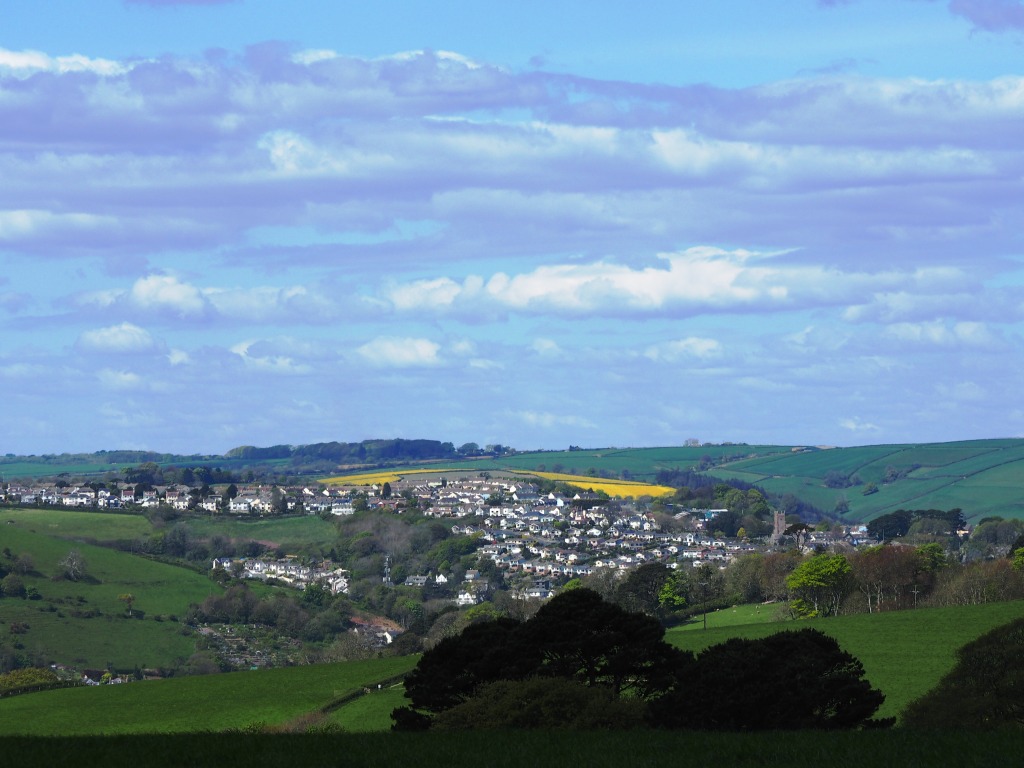
Just Back From…. South Devon

I booked a week away in south Devon in December when it was cold and dark and I needed something to look forward to in the spring months. We have always taken a spring break since we got together and as a teacher the Easter holidays were the first chance to get away. Even after leaving teaching the habit has stuck with us. In recent years we would return to the West Country and carry out research into where we would like to live. Now of course we have moved down to Cornwall so we can enjoy spring here without going very far.

Dartmouth

One of my projects is to visit every county in England (and possibly Wales and Scotland), preferably to stay a few days, but at least to have driven through other than on a motorway. So for these ‘at home’ breaks (I refuse to use the word staycation), I look for somewhere where I haven’t been.

South Devon is only a couple of hours drive from us and a region I haven’t been to since I was 12 years old and on holiday in Buckfastleigh with my parents and dog. It was the year when we were supposed to be having a week in Devon and a week in London, but the car broke down shortly after Exeter and we found ourselves spending extra time in Devon. I do remember an amazing farmhouse breakfast where we stayed overnight and also stopping off at Stonehenge and running around the stones (you could do that in those days), but I recall absolutely nothing about London! My mother had a friend living in Orpington, then in the Kent countryside, now just another part of the Greater London sprawl. Continue reading Just Back From…. South Devon

WPC: Reflecting

I’ve looked at clouds from both sides now
From up and down and still somehow
It’s cloud’s illusions I recall
I really don’t know clouds at all…

~ Joni Mitchell

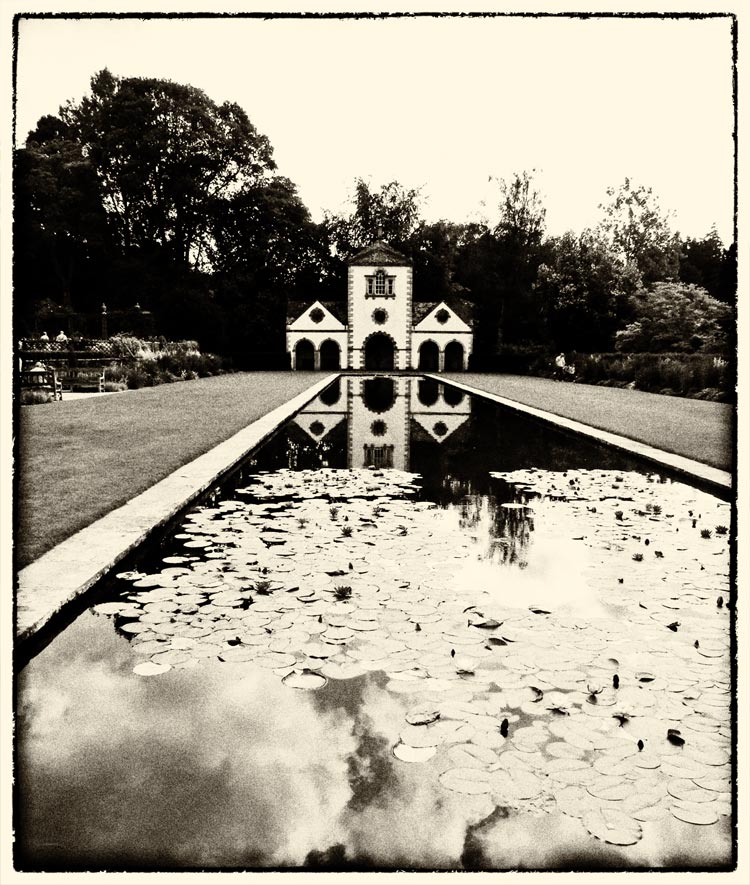
The Pin Mill, Lily Pond Approach at Bodnant Gardens, Conwy

Before being re-erected at Bodnant in the 1930’s, the building was originally put together in 1730 as a picnic house or shooting lodge, or it is thought it may have been used as a garden house. Later, the building was used as a factory for making dressmaking pins with two furnaces for that purpose inside the building.

WPC: Reflecting