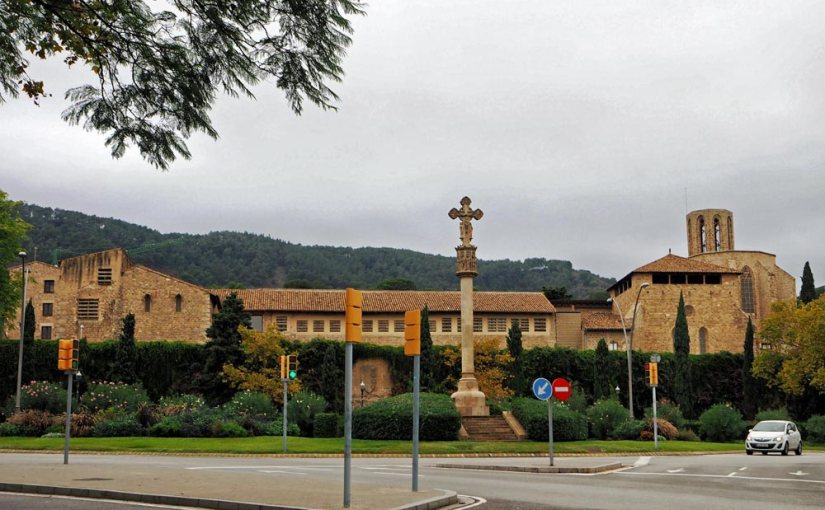
On a rather damp and grey day in Barcelona my daughter and I decided to take the Tourist Bus and see the city at leisure. One place we wanted to stop off at and have a look was the Monastery or Reial Monestir de Santa Maria de Pedralbes in the north-west of the city. Due to road closures we had to disembark at the Palau Reial-Pavellons Guell and walk up the Avenue Pedralbes to the monastery. No great hardship.
The Royal Monastery of St Mary of Pedralbes, founded by Queen Elisenda de Montcada in 1327, stands as a unique historical and cultural testament to the Poor Clare community who lived there continuously from 1327 until just recently.
The different rooms are grouped around the three-storey Gothic cloister. They include St Michael’s Chapel, the dormitory, refectory, kitchen, infirmary, storerooms, abbey room and chapter house, plus various day cells.
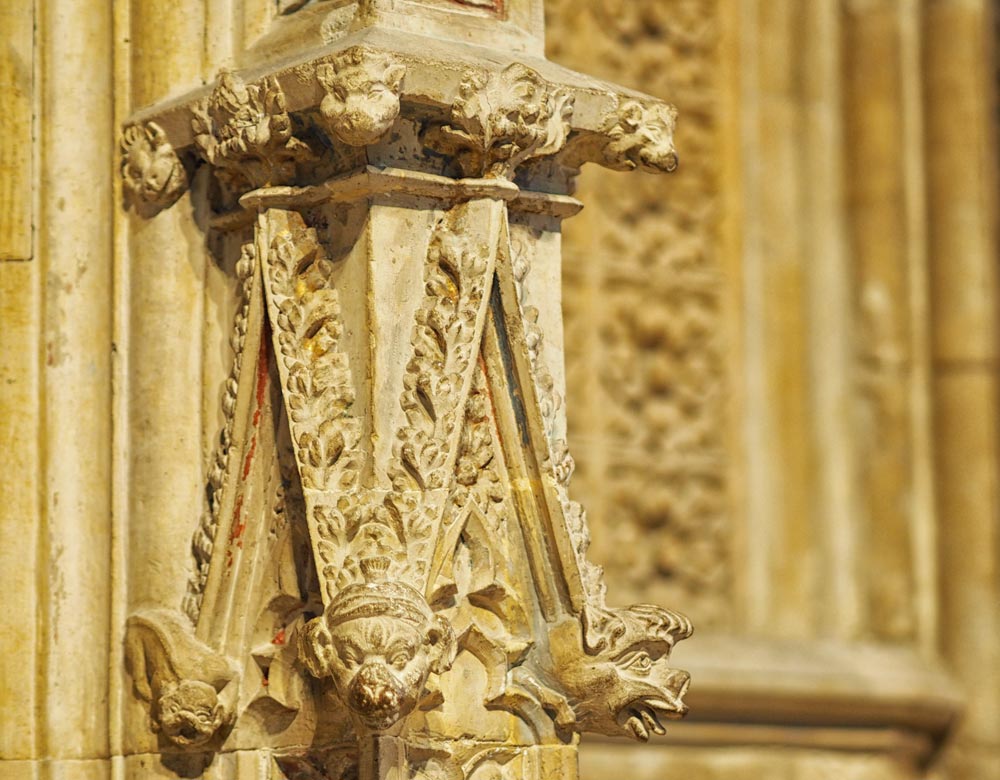
Capitals supporting the pointed arches are decorated with highly stylized leaves
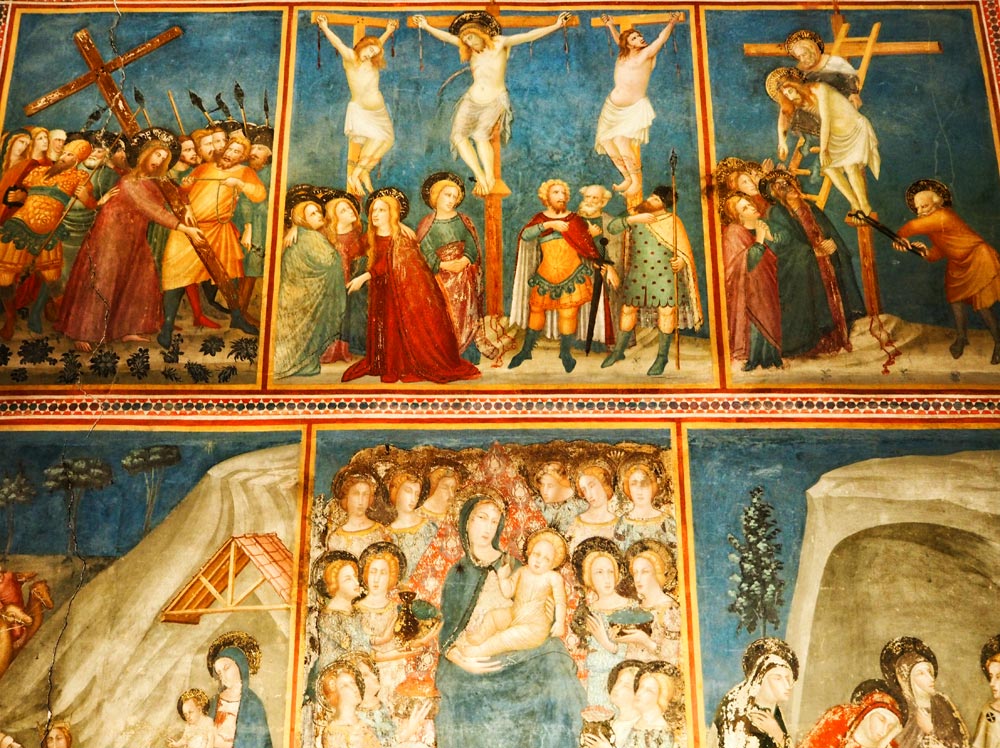
The chapel of St Michael is decorated with a magnificent series of murals, which according to two contracts dating from 1343 and 1346 were a commission given to the painter Ferrer Bassa by the Abbess Francesa ça Portella, who wanted to make the room her private cell. They have recently been re-opened to the public after a ten year period of restoration.
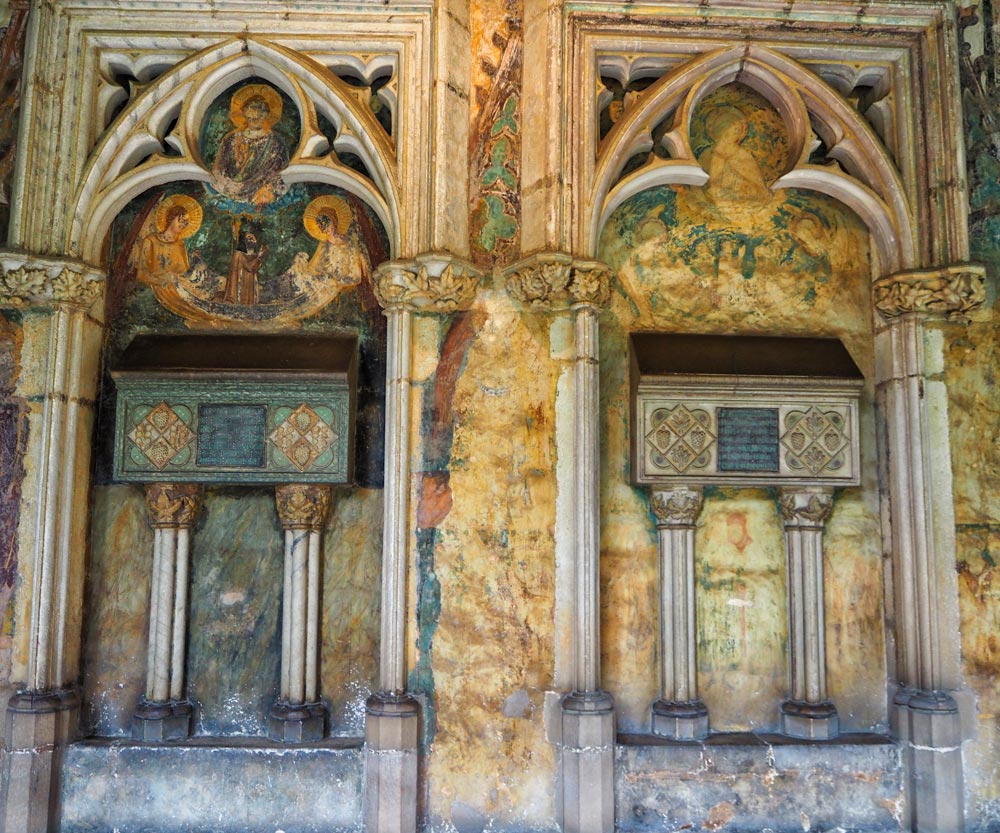
The Sepulchre of Queen Elisenda de Montcada (c. 1292-1364), consists of a marble, two-sided tomb occupying two storeys of the cloister within an arcosolium (an arched recess used as a place of entombment).
Also in the cloister, next to the sepulchre of Queen Elisenda, there are three sepulchres of three Catalan noblewomen.
By the queen’s feet and head there are two kneeling thurifer angels, burning incense.
The sepulchre is supported by three golden lions
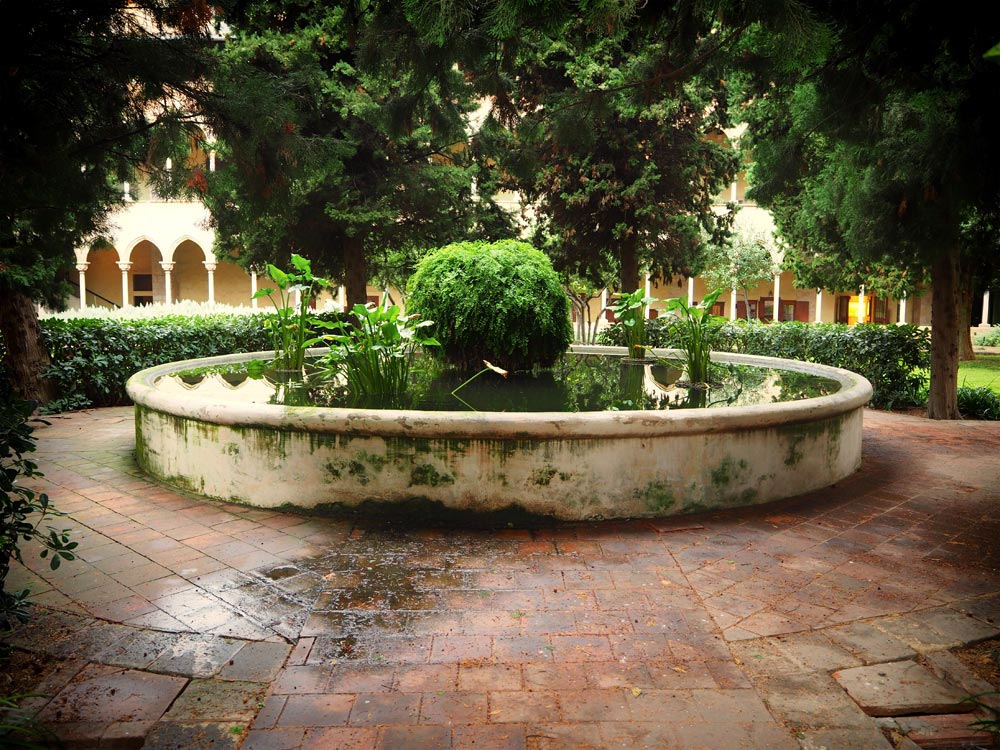
The medicinal garden of the cloister is a representation of how the medieval herb garden would have looked. Considered the world’s largest Gothic cloister, it has two galleries with twenty-six columns on each side made of nummulitic stone – limestone containing fossil remains – from Girona, and a third upper gallery added later.
The Angel fountain
The Angel fountain
The well
The exhibition “The Monastery of Pedralbes – The Monastery Treasures” is located in the old dormitory. I will show some of the exhibits in a separate post as they are quite unique.
There is so much to see including the abbey room and the refectory, that we could have stayed much longer. I would recommend that you make time to visit this wonderful place if you are in Barcelona. There is much more to the city than Gaudí .
Crucifixion in the Abbey room
Painting depicting draperies in the Abbey room
Tiled unit in the refectory
It is easy to reach by public transport, buses H4, 63 and 78, as well as the Blue Tourist Bus.
The Monastery of Pedralbes site gives you a lot more information about the monastery and Queen Elisenda de Montcada.
After two lovely sunny days in Lincoln we were ready to carry on northwards. Instead of heading for the A1 immediately we decided to drive through the Lincolnshire countryside via Gainsborough and Bawtry and get onto the A1 near Doncaster. A lot of this region is familiar to me as I grew up in Retford (Notts), Scunthorpe (Lincs) and then moved to Doncaster (S. Yorks) on my return from South Africa. I still managed to get confused on the outskirts of Doncaster though as many of the road routes have altered since I was last there. And then we hit an accident on the A1 and were at a standstill for about an hour!
Eventually though we were about to hit Durham, another city that although I have passed by many times I have never actually visited. My intention was to find the park ‘n ride and bus into the city, but obviously my directional awareness was totally absent on this day as I couldn’t find the site and finished up almost in the city centre where more roadworks were taking place. Heading back out of the city we eventually found the right road (it is next to the A1 but not very well signed) and caught a bus back into the city. It was a very hot day and by the time we had walked up to the castle and cathedral area we were feeling very warm!
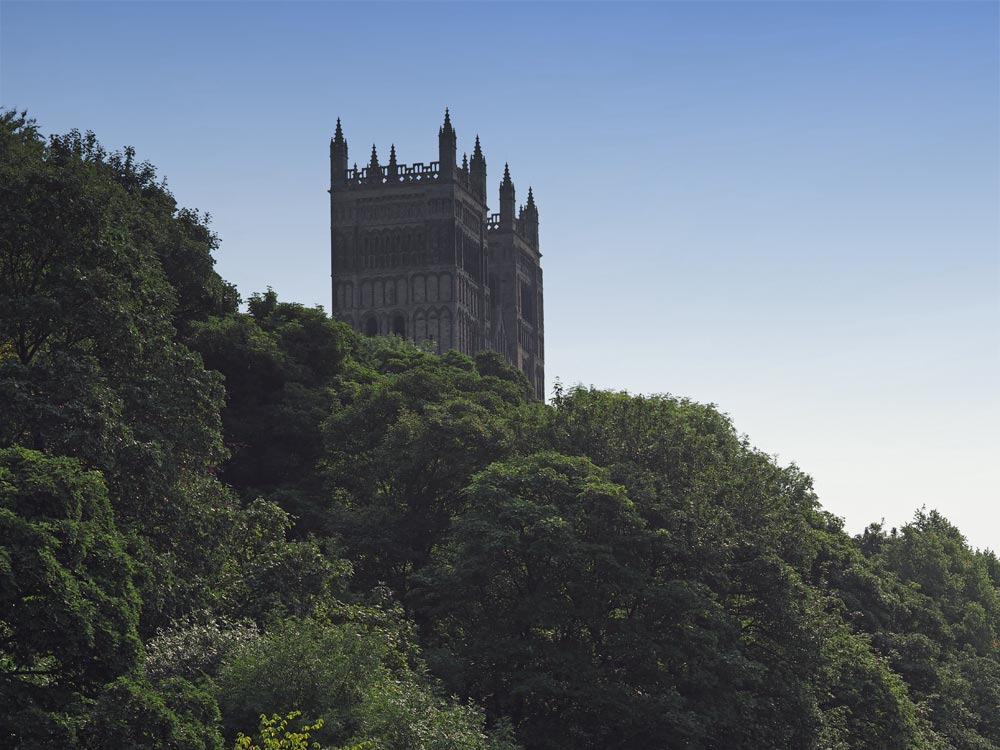
Cathedral view from the river
First stop was to get some lunch and relax! We saw a nice looking café on the Palace Green and found a table outside. After 10 minutes we moved inside to get out of the heat. Now bear in mind this was mid-September in the north-east of the country!
Durham Castle – opposite the cathedral
Lunch menu
Autumn gold
Cosin’s Hall
Spires
The story of the Dun Cow, as depicted in an eighteenth-century panel on the north facade of Durham Cathedral.
The Pemberton Building
You are not charged to enter the cathedral, though a donation is suggested, and you are not allowed to take photographs inside either, which was rather disappointing. I did see a few people surreptitiously taking a few shots with their phones and a couple who had cameras were approached, rather more gently than my Lincoln experience.
I did make a few notes and sketches though: Prior Castell’s clock – a highly decorative wooden clock; the shrine of St Cuthbert; huge pillars carved in a diamond or chevron pattern in the nave; coloured marble floors and a lectern stand with pink and green marble pillars and heraldic lions at the base. Inserts of patterned marble and bands adorn the upper columns. Shrines with traces of the medieval paint in red and blue… Lindisfarne Gospels
Cloisters – the windows would once have contained clear and stained glass
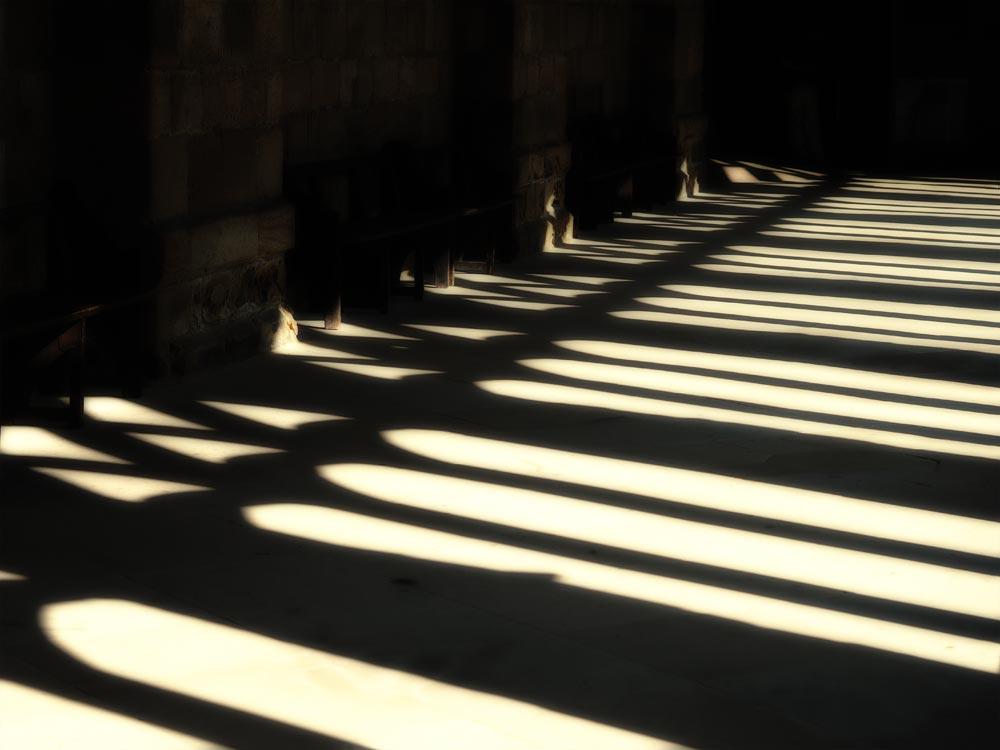
On entering the cloisters, where the monks would have once passed daily on their way to the Chapter House, the Monk’s Dormitory, Scriptorium, Refectory and Great Kitchen, I decided the photography rules no longer applied. The shadows on the stone slabs were far too tempting and how could I resist the flat wooden ceiling with shields at the intersections of each cross beam and the golden angels near the Chapter House.
More notes: Arched shadows form on the wide stone floor as the hot sun beams down on the cloisters. Wooden pews line the walls and marks in the stonework indicate that possibly a recess has been blocked up. Maybe where the monks stored their books? A pipistrelle bat flies down the passageways and surprises me – I have never seen one at this time of day before. Maybe the darkness in here confuses it into thinking it is dusk. Dust motes float in the air and I can almost imagine the slapping of the sandals of the monks from distant times in the all-pervading silence.
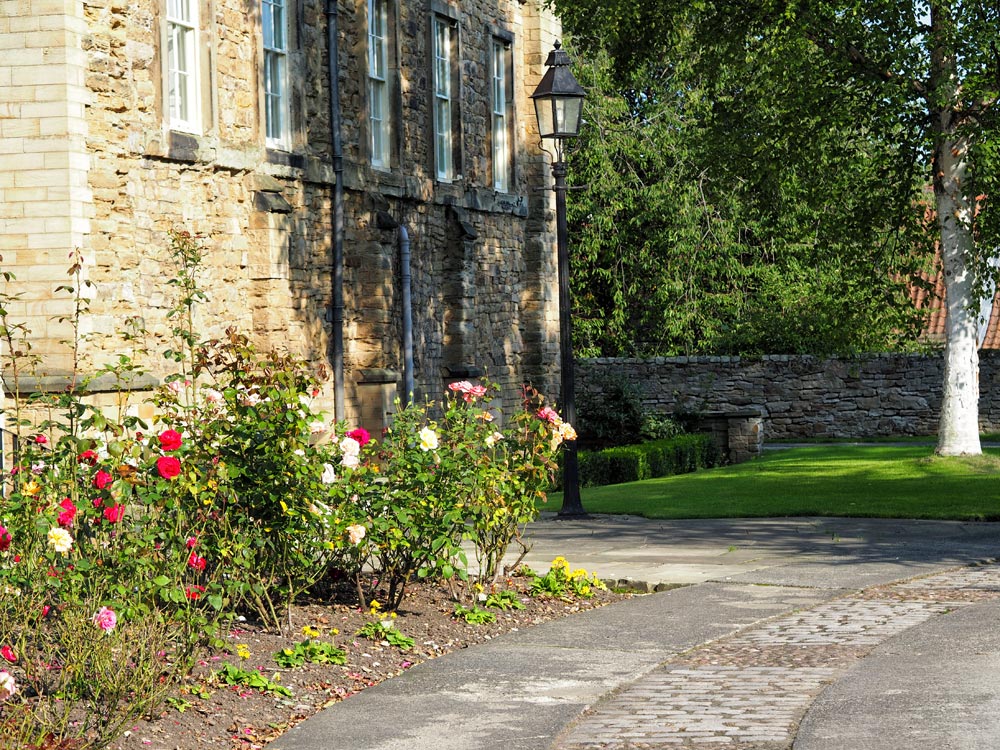
We exited the cloisters into a Memorial Garden which stands on the site of the Monastic buildings. A young lad sat peacefully on the bench studying his text book in the sunshine whilst we soaked in the colour and the beauty of the roses still flowering in September.
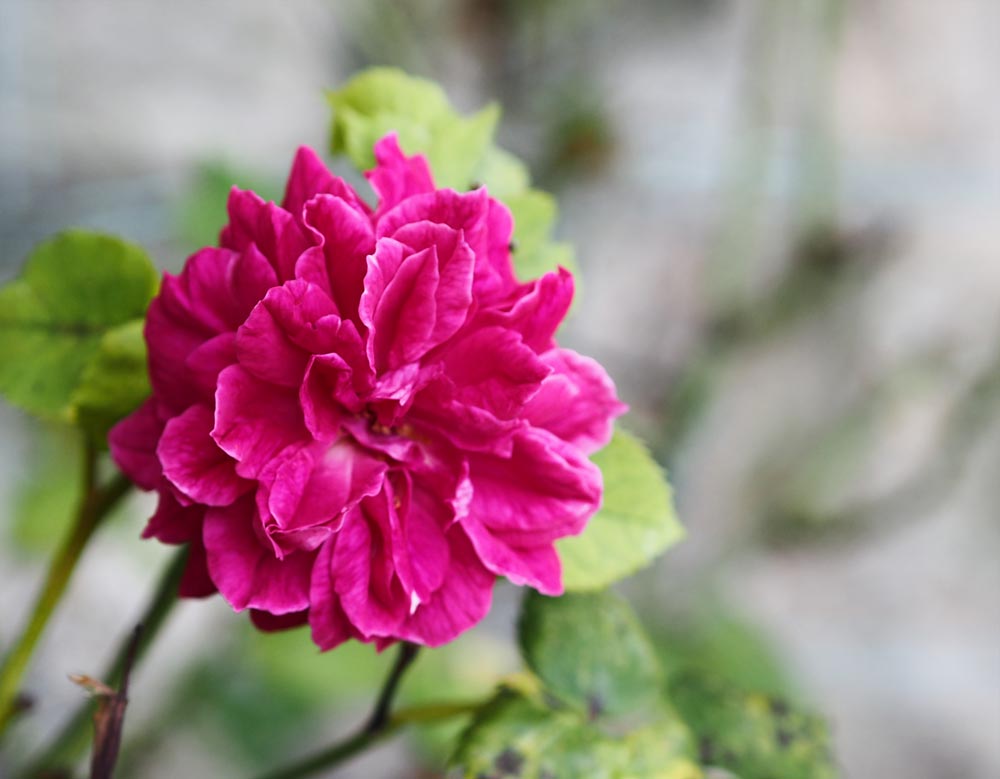
The Ypres Rose
Brought back from Ypres in 1917 by Lieutenant H J W Scott 5th BN:DLI. Since then it has travelled with the Scott family from Essex to Surrey and to Cornwall. Presented to this garden of remembrance by his son Mr O T Scott. Planted on Remembrance Sunday 1978.
College Green is a quiet area on the south side of the cathedral, it has a very beautiful secluded village like quality to it, with the houses being the home to members of Durham’s Dean and Chapter. Many of the buildings surrounding the Green originated in the Middle Ages.
An arched gateway on the east side known historically as the Abbey Gates also called Prior Castell’s Gatehouse of 1495-1519 leads into the street called the Bailey. The gate is still locked each night. It has some delightful carvings on the ceiling.
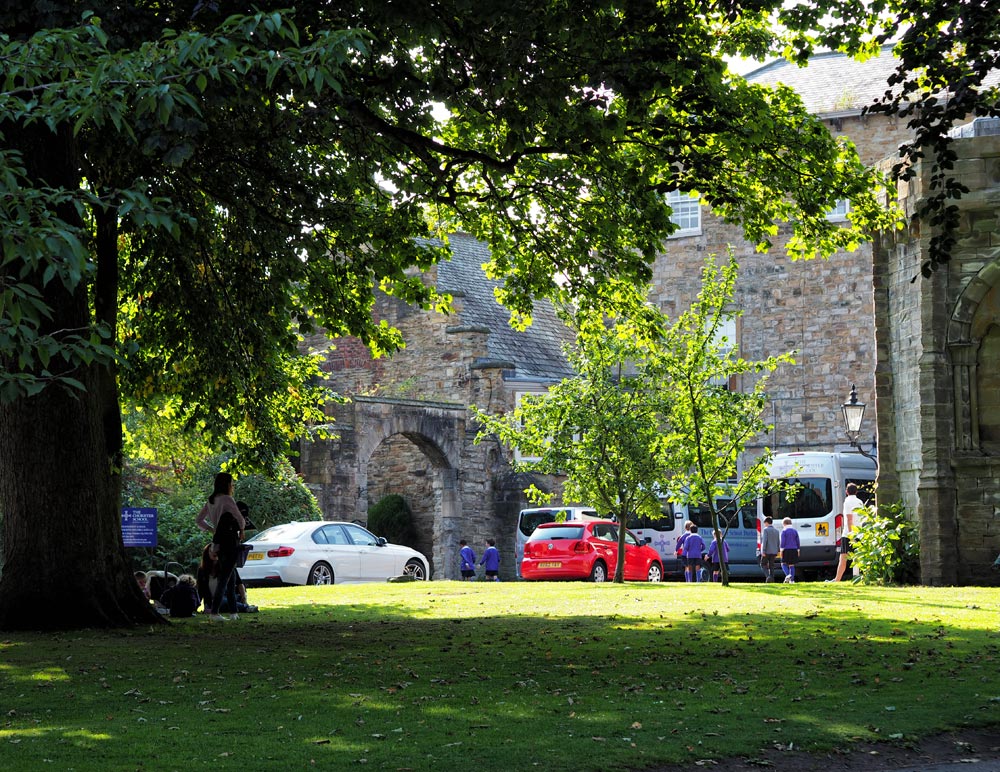
The south western corner of the College is the home to the Durham Chorister School. This was originally established as a song school around 1390. Former pupils of this school have included the former Prime Minister Tony Blair and the actor, Rowan Atkinson most noted for his role in the BBC comedy Blackadder and as the comedy character Mr Bean.
The Abbey House
As usual, colourful doors and interesting windows caught my eye as we made our way back to the Palace Green where we could catch the cathedral bus back to the Park ‘n Ride stop.
For some inexplicable reason I failed to get a shot of the full west face of the cathedral (I have a vague recollection that there was scaffolding around some of it). To see some images of the cathedral then please visit this site.
These memorial crosses near the cathedral did manage to catch my eye. I was particularly drawn to the rather arts and crafts style of carving on the larger cross.
IF YOU ENJOY A WALK, LONG OR SHORT, THEN HAVE A LOOK AT JO’S SITE WHERE YOU ARE WELCOME TO JOIN IN WITH HER MONDAY WALKS.
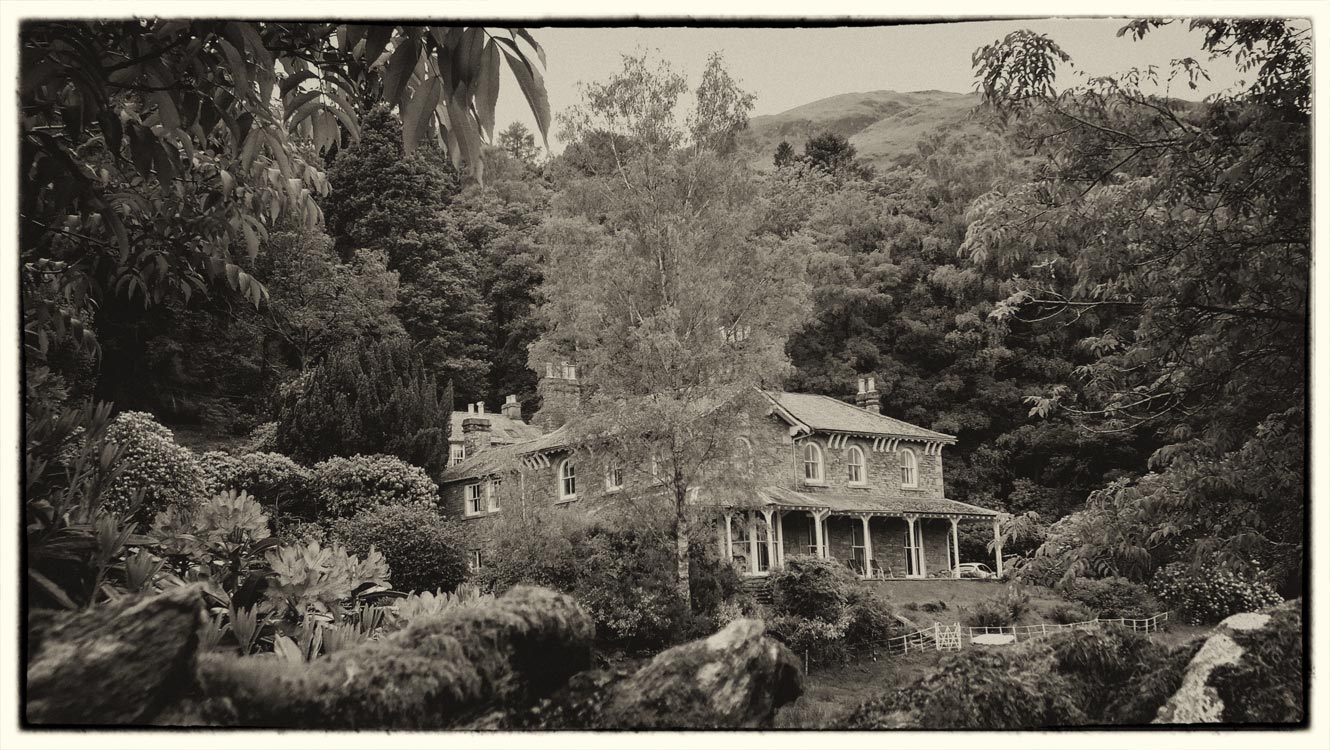
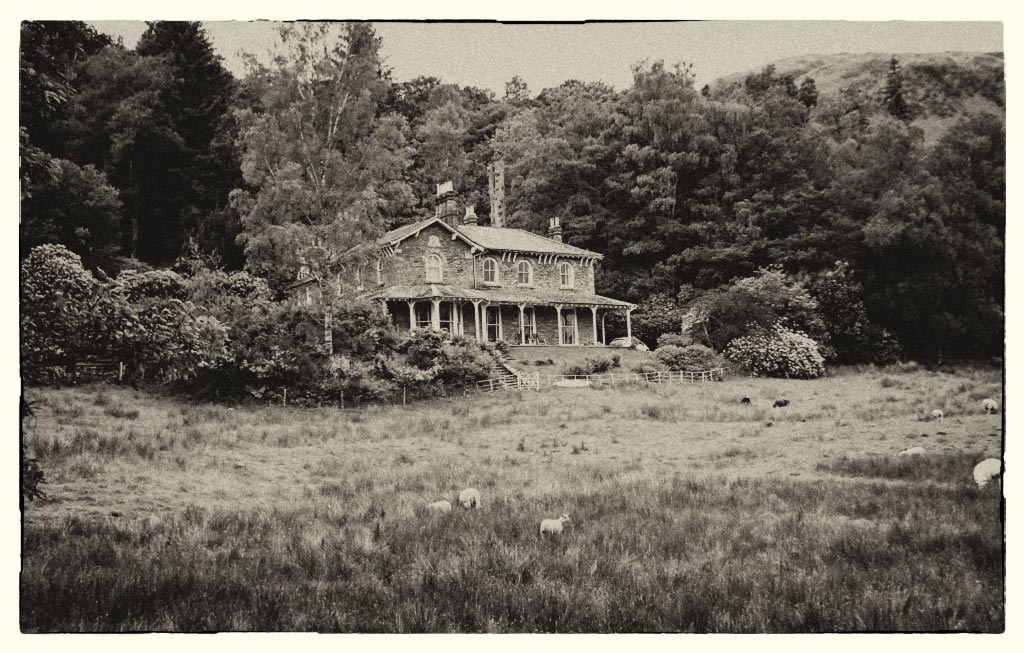
The Lake District lies in north-west England and is one of the most beautiful regions in the country, if you like lakes and hills. High hills as seen behind this pretty house which is located on the banks of Grasmere lake. Surrounded by a pretty woodland garden, this sturdy stone-built house has curved sash windows, an extended roofline and a covered verandah. I could see myself sitting on that verandah on a swing seat piled high with cushions, a cat curled up in the sunny spot, a table cluttered with garden magazines, potted plants and coffee cups…
Lambs gambolling in the fields
…admiring the view
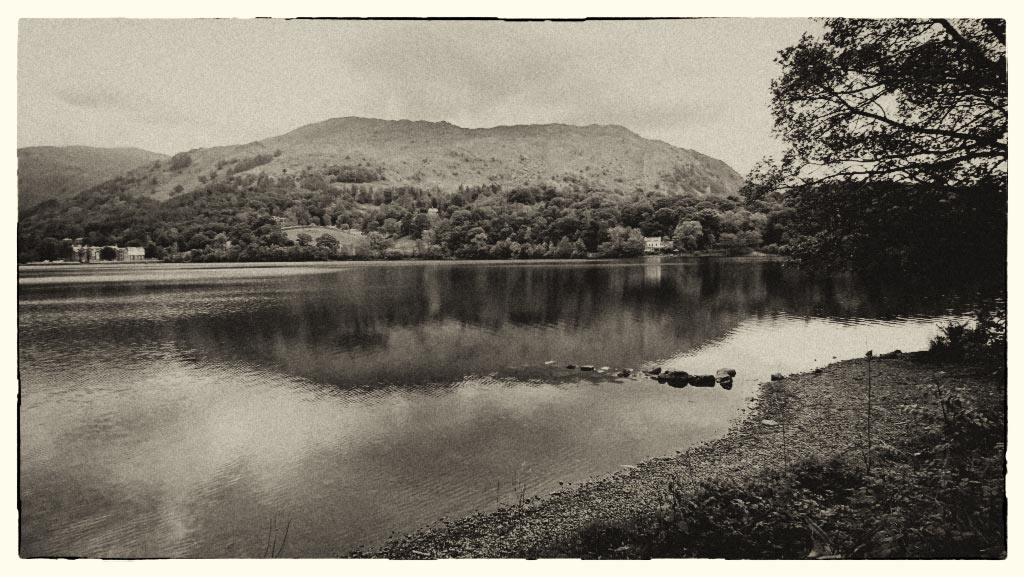
Lake Grasmere
Please visit Paula to see other representations of this week’s challenge.
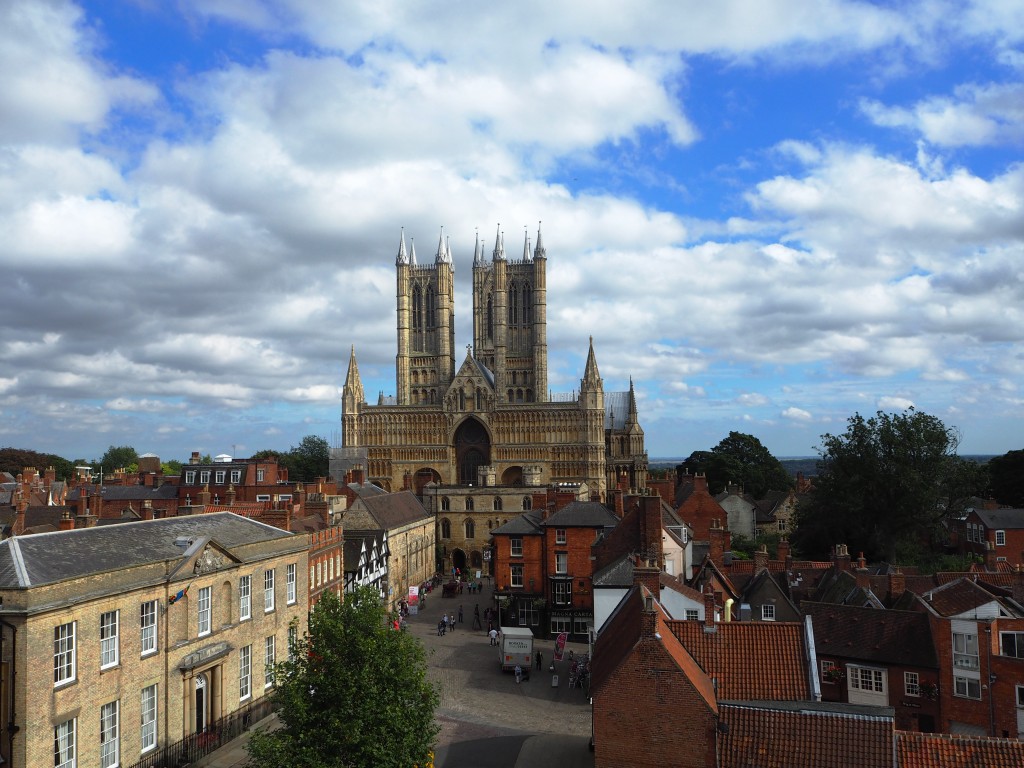
Lincoln has a magnificent cathedral, but practically opposite there is the castle. Not any old ruin, but a grand Norman castle with two keeps and a complete curtain wall. Its highly strategic position has given it continuing historical importance – the site of many battles, sieges, medieval wheeling and dealing and it houses one of the four surviving examples of that monumental document – the Magna Carta.
The castle faces the cathedral and market place in the upper town
Nowadays it is a wonderful museum telling the stories of life as both Georgian and Victorian prisons, the rebellions, the Battle of Lincoln in 1141, which came about because of the struggle for the throne between Matilda, the daughter and chosen heir of Henry I and her cousin Stephen; the siege of Lincoln 1191; the Magna Carta, 1206, and the civil war siege in 1644. From 1660 it ceased to be a military stronghold and became a jail and courthouse.
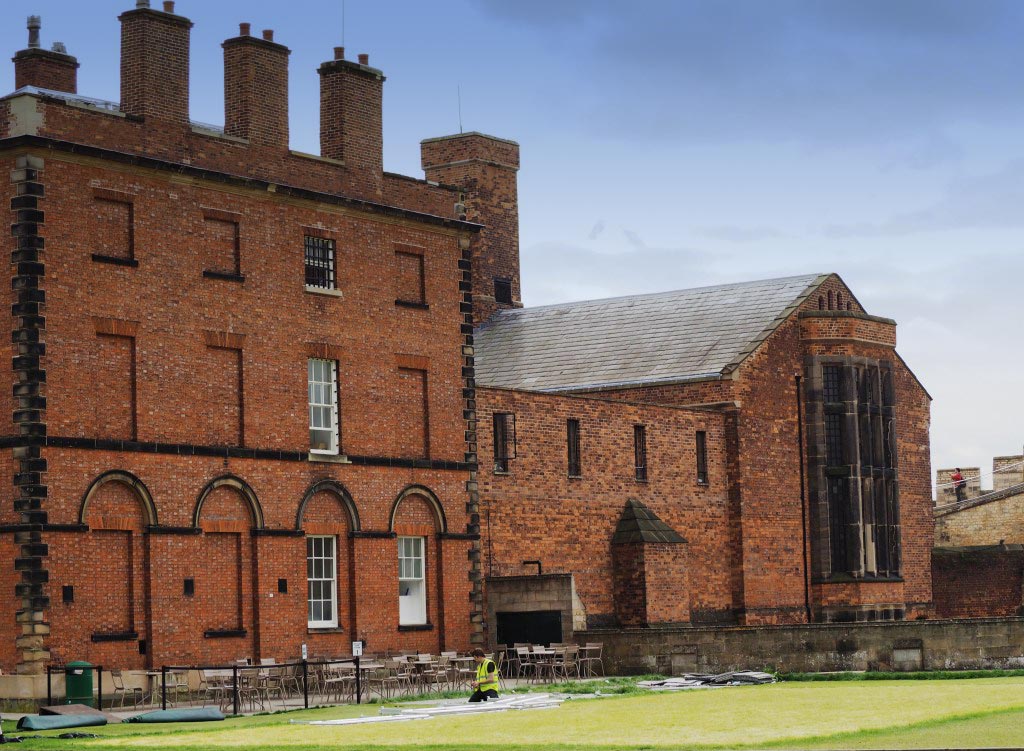
Georgian and Victorian prisons
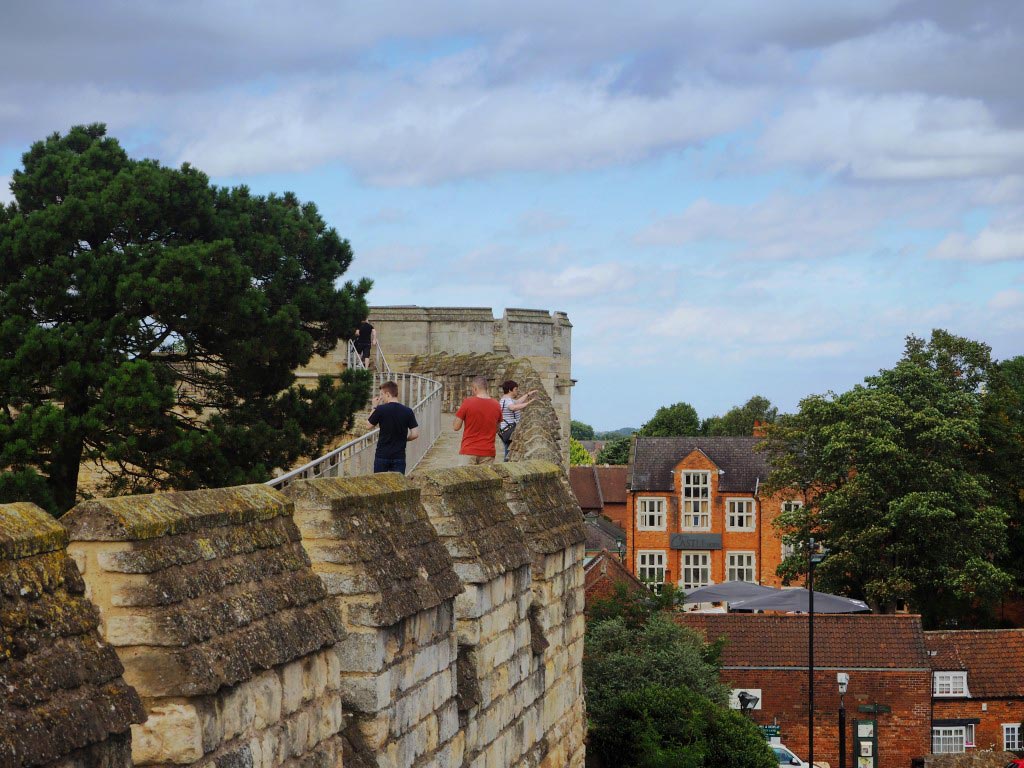
We decided to join a free tour of the castle and grounds which was very interesting and we learned a lot about the history of the site. Afterwards we wandered around the prison cells where they have short films telling the story of individuals and why they were in prison and also went to have a look at the ‘Magna Carta’ and the ‘Charter of the Forest’. Then I left OH resting on a bench in the sunshine whilst I walked around the Medieval Wall Walk.
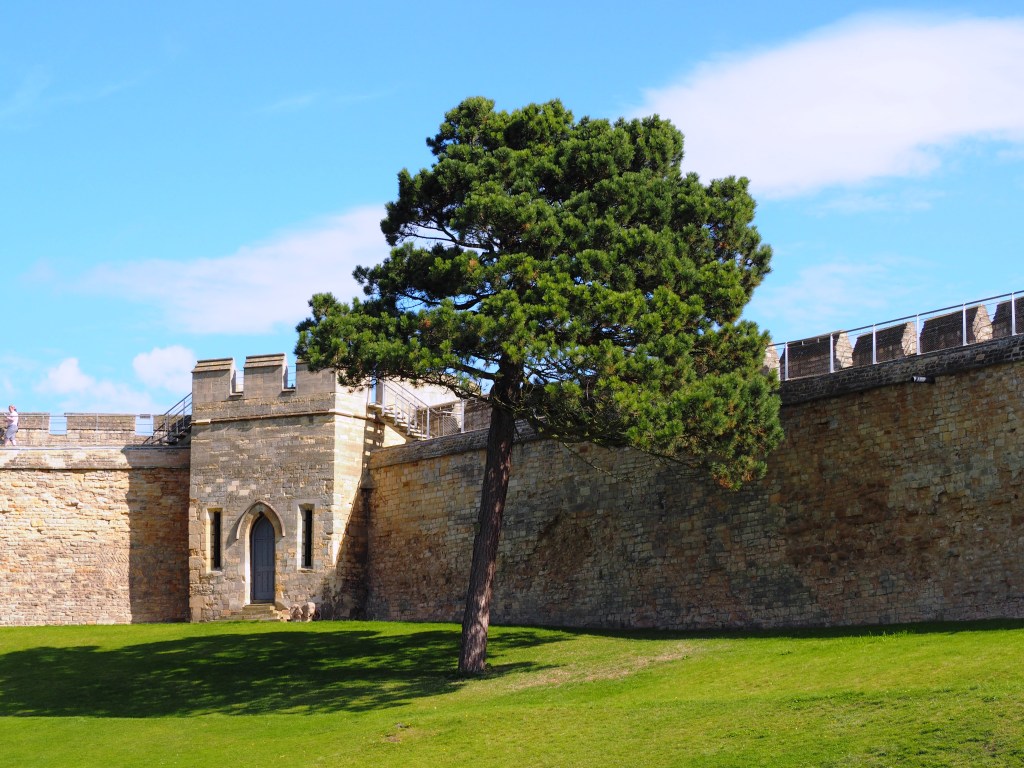
Cobb Hall
Cobb Hall is the latest of the three towers, estimated to have been built between 1190 and 1220. The tower defended the castle’s north-east quarter. Although flat on this side, externally it is rounded and inside the walls have been carved with graffiti by prisoners and bored guards. Between 1817 and 1859, 38 prisoners were hanged on a wooden gallows from the top of this tower.
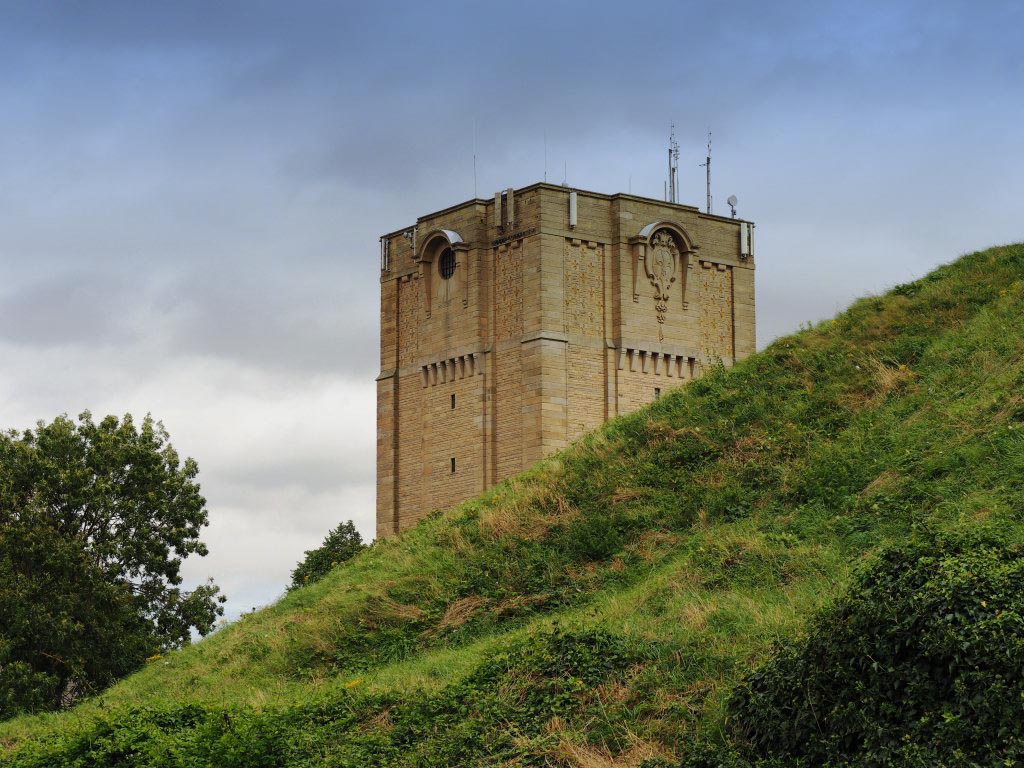
On the wall heading to Cobb TowerWater Tower built in 1911 after a typhoid epidemic.
Although outside the castle walls you cannot avoid noticing this impressive tower. The 120-foot-tall building was constructed a result of a Typhoid epidemic in Lincoln that started in late 1904. 113 people died from the outbreak which was one of the city’s biggest peacetime disasters. The building was completed in 1911, decorated with the fleur-de-lys – the symbol of Lincoln Cathedral’s Patron Saint, Mary Mother of Jesus. It is supplied by piping water from a reservoir 22 miles away at Elkesly, Nottinghamshire.
The new Lincolnshire flagAnd whilst we are talking about the fleur-de -lys, it is also present on the newly designed flag which was unveiled in 2005 to promote the county’s profile.
The red cross is the Saint George’s Cross representing England. Yellow represents the crops grown in the county, as well as the nickname “Yellowbellies” given to people born and bred in Lincolnshire. Blue represents both the sea of the East coast and the wide skies of Lincolnshire, and green symbolises the rich lushness of fenland fields. The fleur de lys is a recognised symbol of the City of Lincoln.
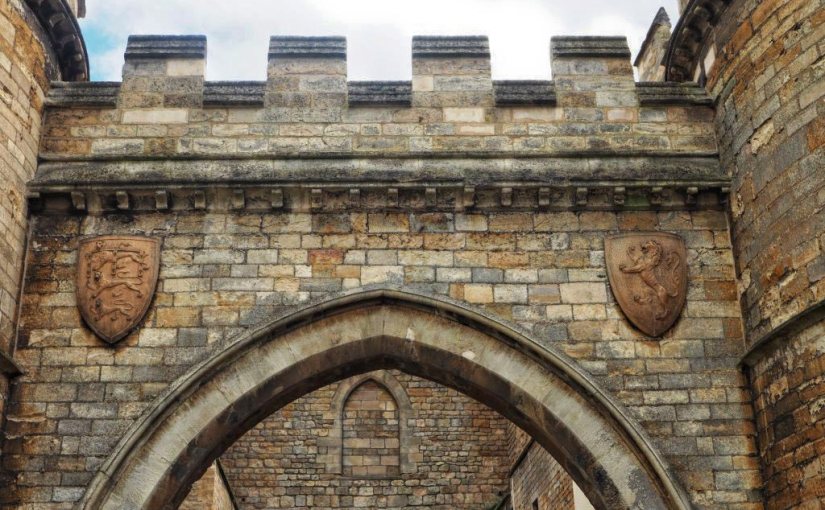
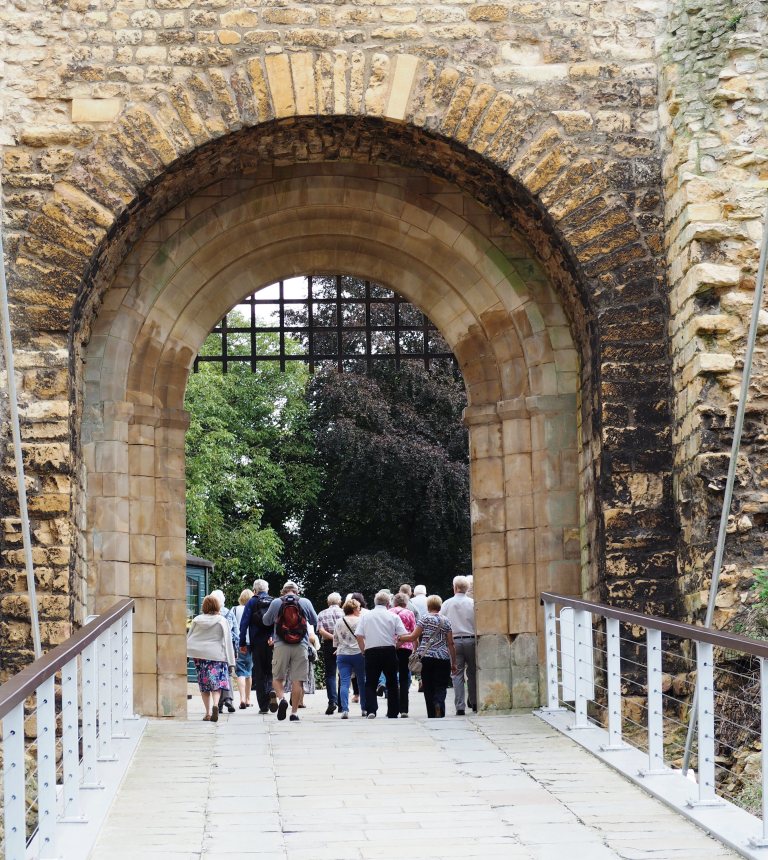
The East Gate
The East Gate
Row of terrace houses on the east side
Motte and Bailey – Lucy’s Tower
Another view of the prisons
Sculpture of George III
The Lucy Tower
The Lucy Tower is named after one of the formidable women linked to the castle. It was built on top of its Norman mound and is a polygonal shell keep, the internal space was kept open.
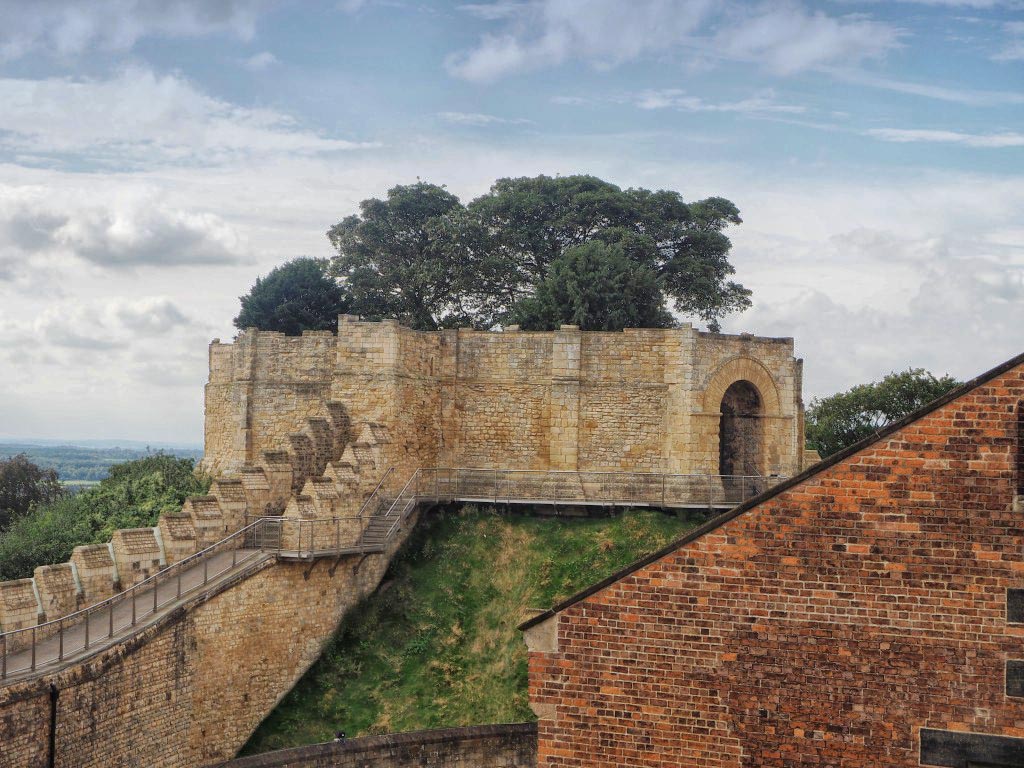
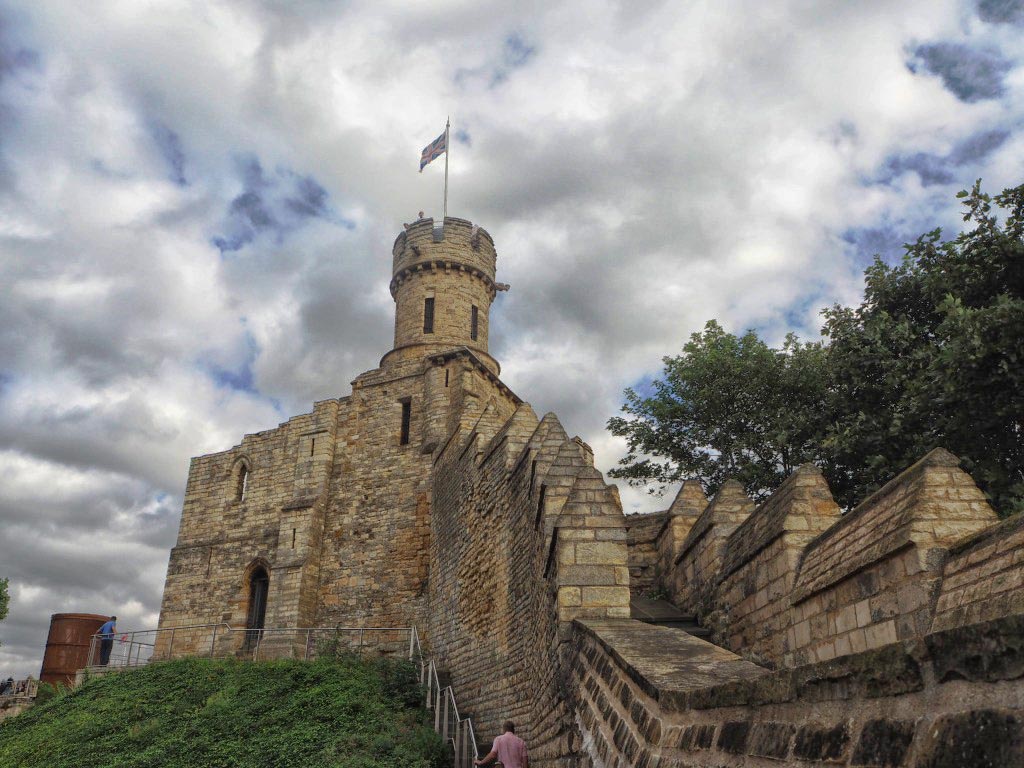
Observatory Tower
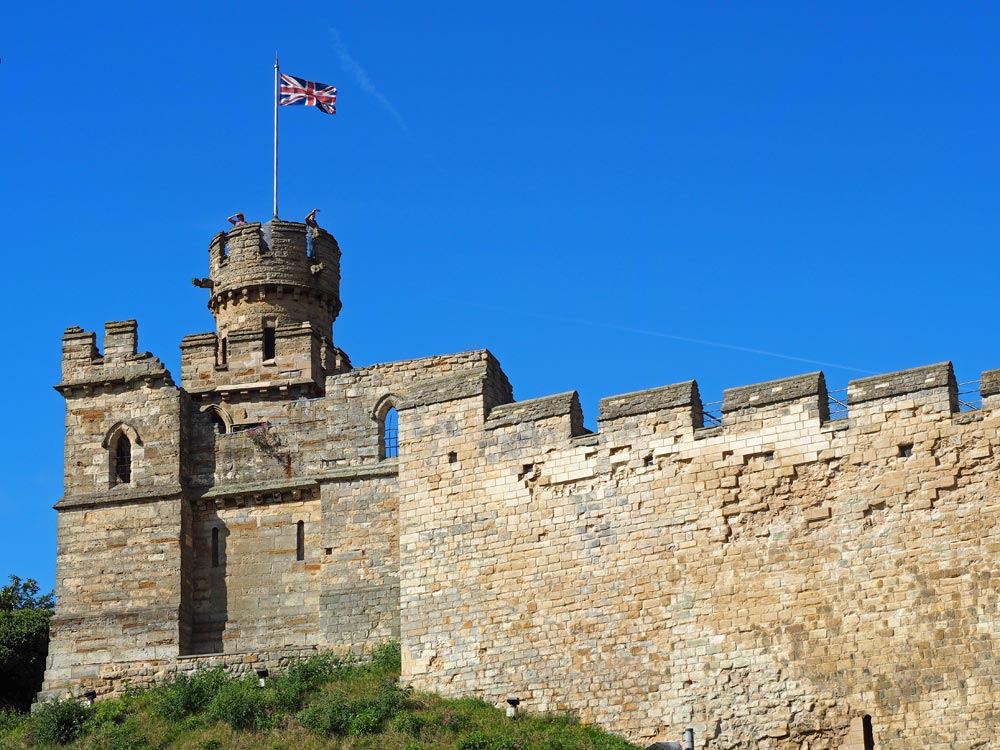
The wall walk continues around the back of the Victorian prison to the Observatory tower which was built on the smaller of the two mounds that join the south curtain wall. The additional tower was added in early †19C by prison governor John Merryweather who was a keen amateur astronomer.
The Observatory Tower
Grotesque
East Gate from inside the walls
East Gate
Oriel Window – East Gate
Entrance and lift to the wall walk
View onto Bailgate
IF YOU ENJOY A WALK, LONG OR SHORT, THEN HAVE A LOOK AT JO’S SITE WHERE YOU ARE WELCOME TO JOIN IN WITH HER MONDAY WALKS.



























 TRAVEL WORDS