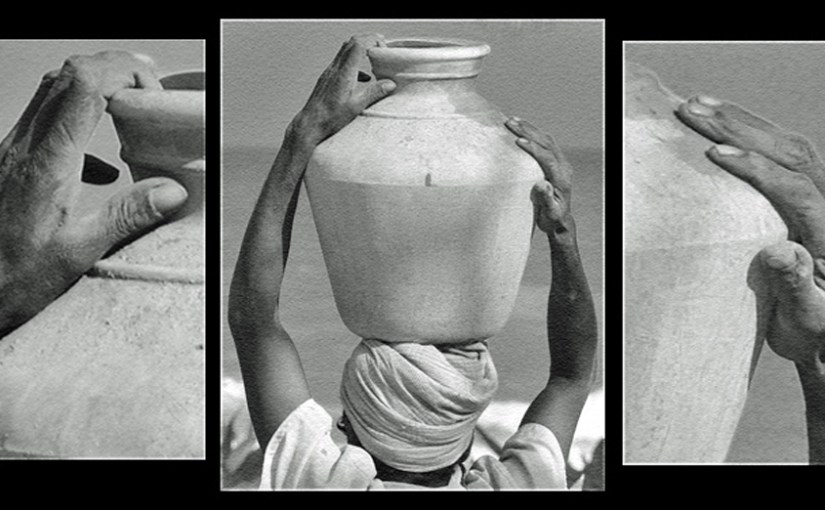
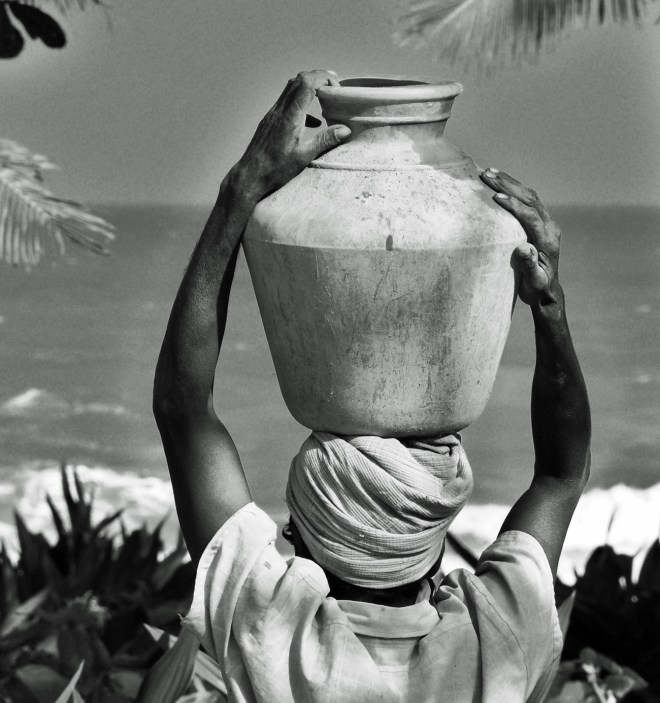
WPC: Humanity
It’s that time of the year again…
…when people from miles around converge on this beautiful little Medieval market town for the Ludlow Food Festival. They come to attend numerous workshops and tastings, visit local producers, hit the sausage trail or try the pudding tastings, listen to top chefs deliver talks and demonstrations in the castle grounds or learn knife skills and attend Egyptian Masterclasses. This town of 10,000 people will double its population over the coming weekend.
On Sunday there will be a Local Producers’ Market with over 40 small, local food and drink exhibitors on the Market Square.
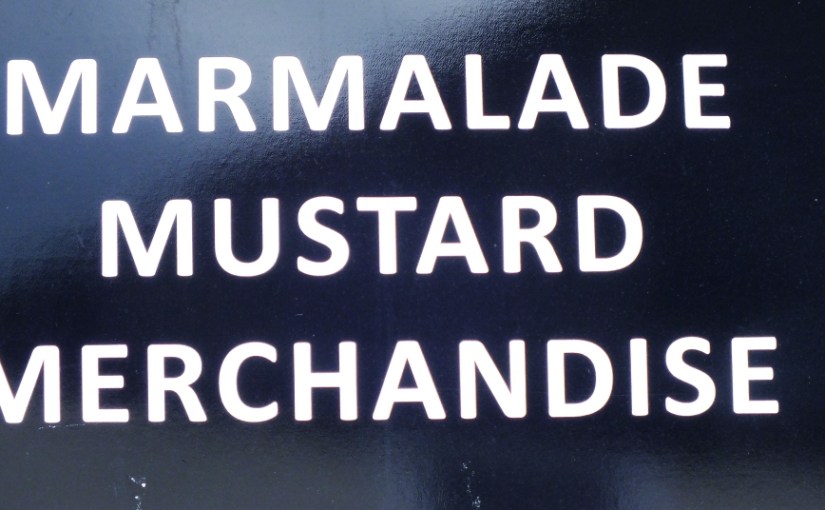
And, as usual, there is a Window Dressing Competition. So I took the camera around the town today (before the hoards arrive) to see what merchandise I could find.


It was August 2003. We were in what felt like the middle of nowhere in the thriving, spirited outback centre of Alice Springs.
Some of you may know Alice from the 1950 novel by Nevil Shute or the subsequent film ‘A Town Like Alice’. We were there to set off on an adventure into the deep centre – to the Uluṟu-Kata Tjuṯa National Park about 463 kms direct by road from Alice in the Northern Territory of Australia.
It is one of those iconic places that you fear will not live up to the hype. That you will arrive and be disappointed. And it was a long drive to be disappointed at the end of it.
Setting out in our hired Toyota Land cruiser (a giant beast that was total overkill as there was only the two of us, but the smaller Rav4 was unavailable) we headed for our first stop in Kings Canyon.
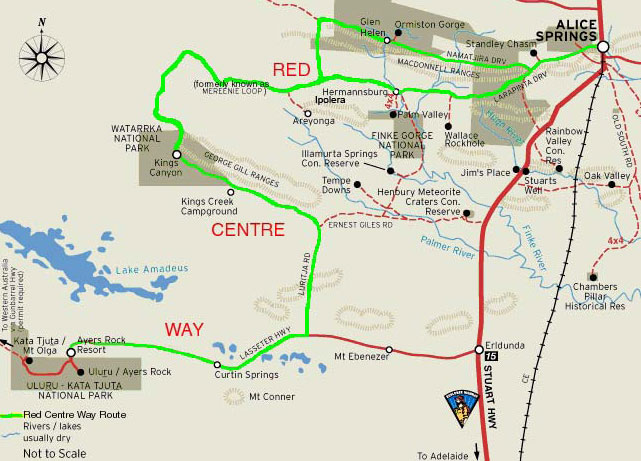
Feeling adventurous I decided that we would travel west through the West MacDonnell Ranges to Glen Helen, along the Mereenie Loop Road which is unsealed most of the way but passes incredible places along the way like Standley Chasm, Palm Valley and the Glen Helen Outback resort (all of which we had explored during the two previous days.) Nowadays I believe you need to purchase a permit to travel along part of this route, but then it was not required. And it is now known as the Red Centre Way. You cannot travel on an unsealed road in Australia in an ordinary hire car so make sure if you want to follow this route that you book a 4WD. All you have to deal with are pretty bad corrugations in places which take some adjustment in finding the optimum speed where you are not shaking the teeth out of your head, nor going so slow that you feel every bump! It is a lovely drive through some beautiful desert country, certainly more appealing than the much longer detour along the sealed highway.
If you don’t make any stops along the route the drive to the Kings Canyon resort is around 3 1/2 hours. There you will find 300 metre sheer cliff faces and a palm-fringed swimming hole and you can take the Kings Canyon Rim Walk for breathtaking views over the red landscape. We stayed in a basic cabin and enjoyed a walk in the valley before heading to the restaurant for barbecued steaks and a live country music band who invited people to get up and dance. Of course things will have changed since this trip and you can now have an ‘Under a Desert Moon Fine Dining Experience‘ which will more than likely set you back a whole lot more than what we paid for the entire trip!
Leaving Kings Canyon the following day (though I would recommend spending two nights at the resort if you can as there is much to see) we continued south along the Luritja highway for 300km to Uluru which is a huge monolith created some 600 million years ago. As we reached the Lasseter Highway we could see the third largest monolith in the distance – Mount Connor – (located 100 kms east of Uluru) which never gets much of a mention, but is quite a sight, rising up in the middle of the desert. You can book a 4WD day trip from the Ayers Rock resort which includes dinner at the Curtin Springs Station’ homestead and provides you with a quintessential Aussie Outback experience.
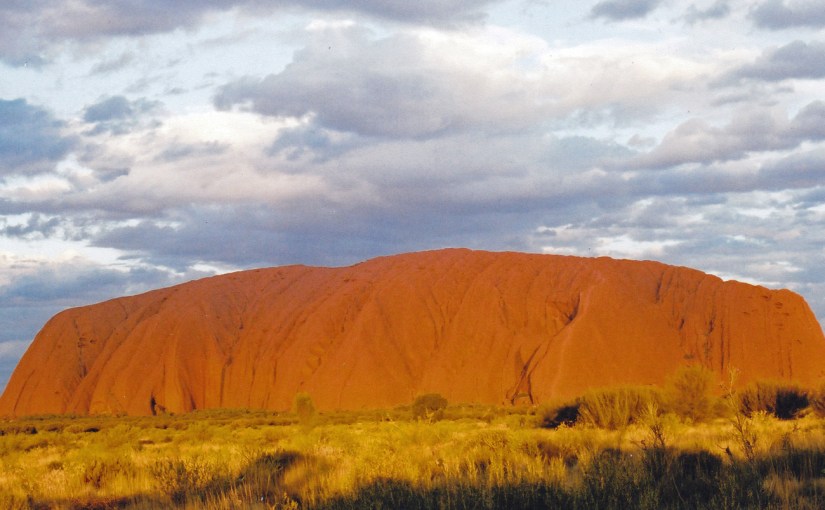
So on to the main event – Uluru. If I had thought that Mount Connor looked impressive I was totally astounded by this rock which is accepted as the largest Monolith in Australia and claims to be the largest monolith in the world. After dropping off bags in our accommodation in the Outback Pioneer Hotel and Lodge, we set off for the base of the monolith to have a walk and then to get into position to see the sunset.
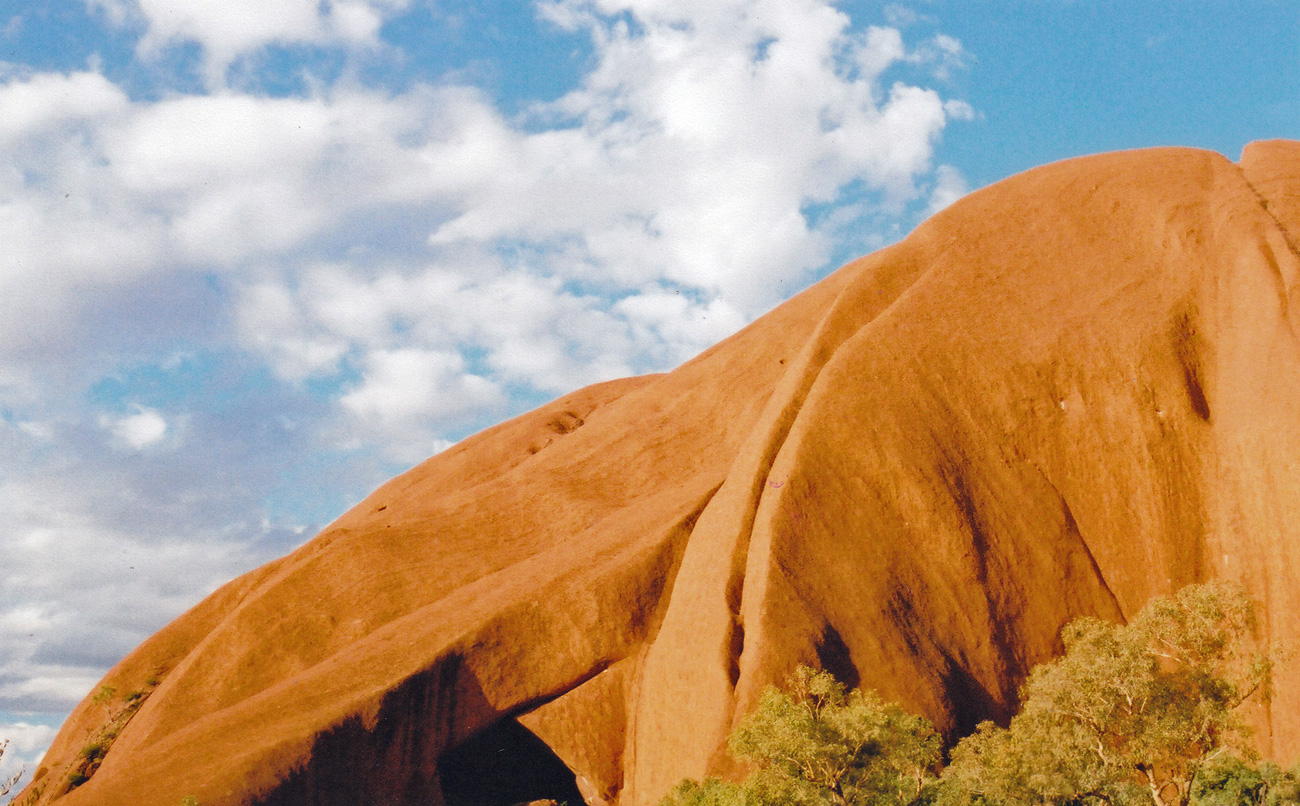
You don’t have to spend a fortune when visiting this part of the world (which is now rated to be the third most expensive resort to visit) as you can camp or stay in cabins and drive around yourself taking in the views and the park, and walk around the base (9 km) or in Kata-Tutja. Of course if you want 5* luxury spa hotels, flights over the rock, rides on camels or Harley Davidsons and dine outside under the stars with gourmet dining, then you can. But we didn’t.
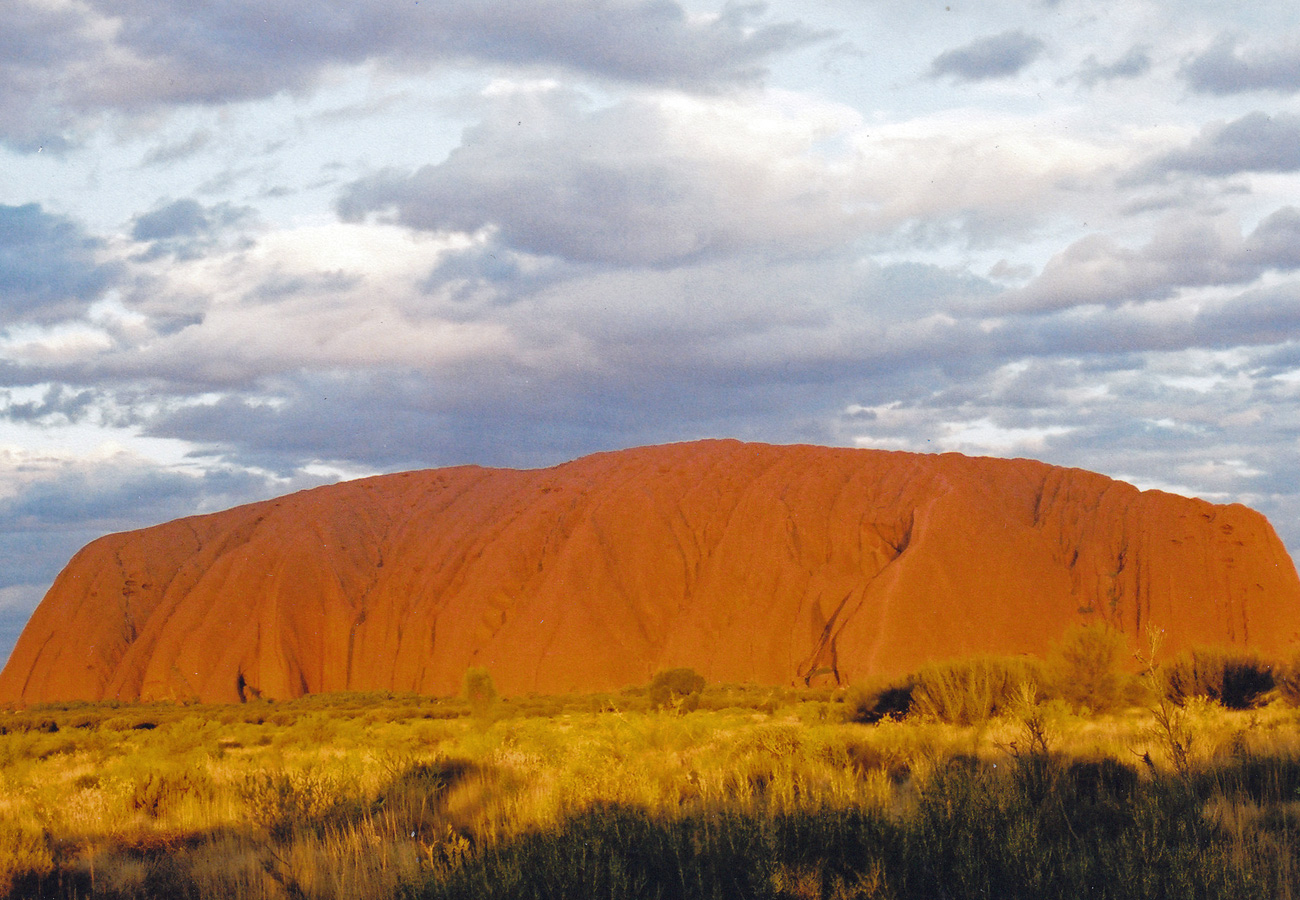
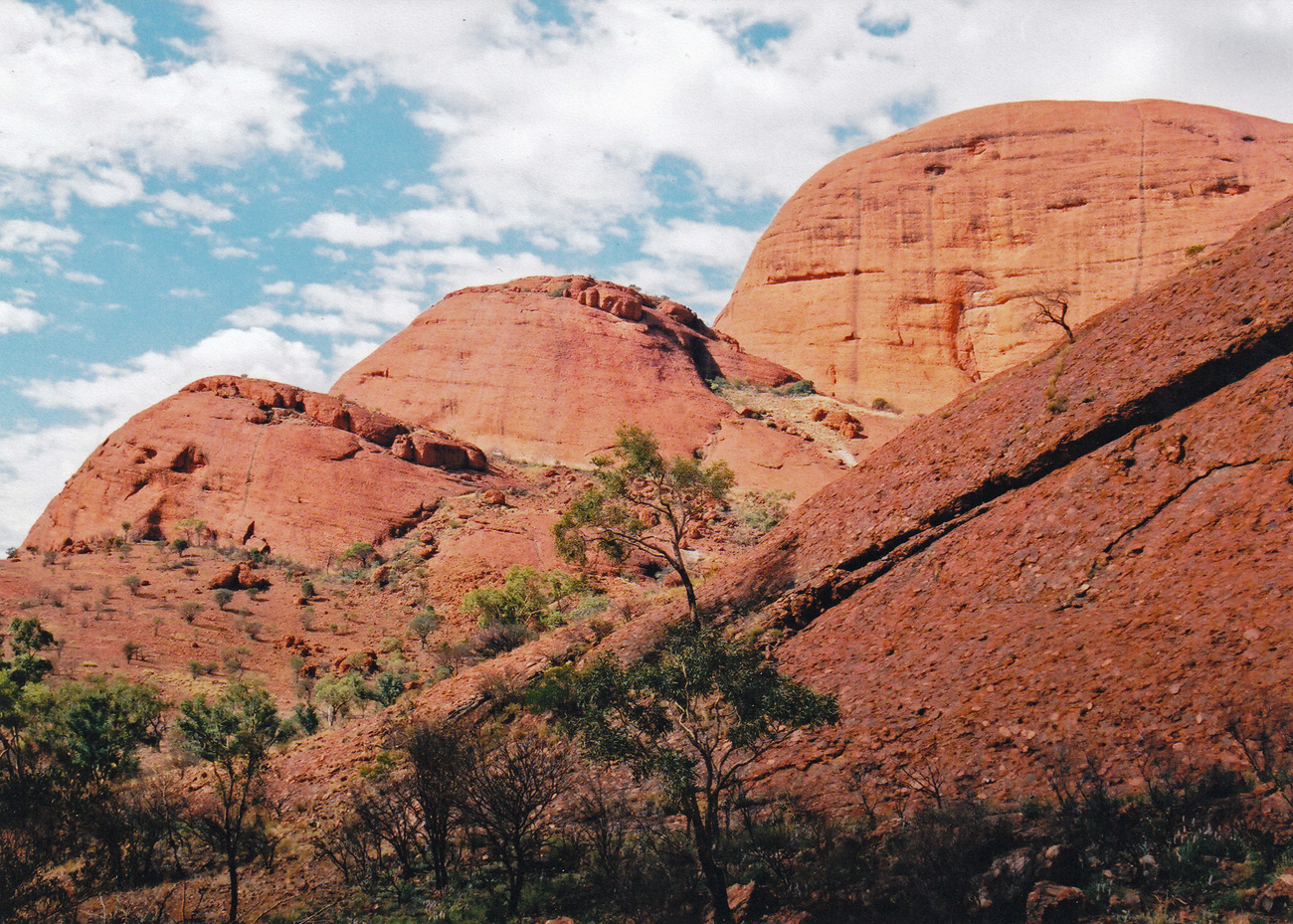
The next day we got up early to watch the sun rise. The rock really does glow and there is something very magical about it. Its history, its significance in Aboriginal culture, its location, the peacefulness. Even with the crowds it still feels special. We carried on to the Kata Tjuta (The Olgas) which are further on into the park and where there are two walks open to everyone: The Valley of the Winds, a 7 km beauty that makes a loop to two spectacular lookout points, takes about three hours and is easy-going. Do it in the early morning to avoid the crowds and the Walpa Gorge Walk, an easier 2.6 km stroll that takes in a nice representative of the native wildlife and plants of the park.
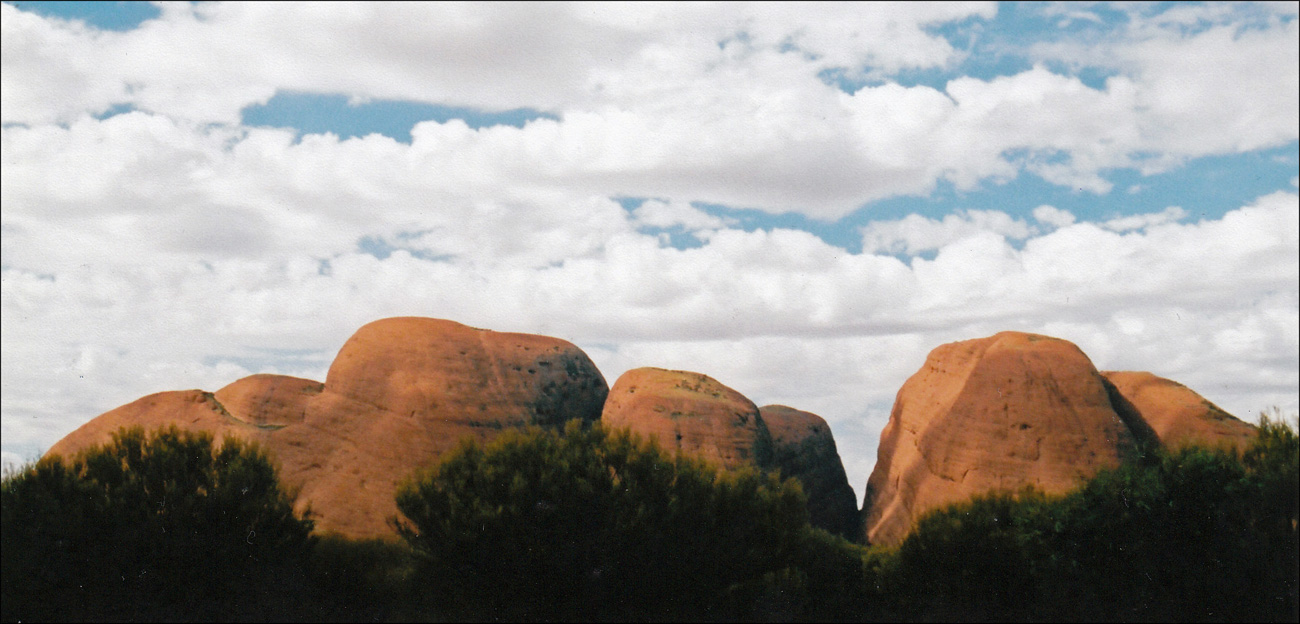
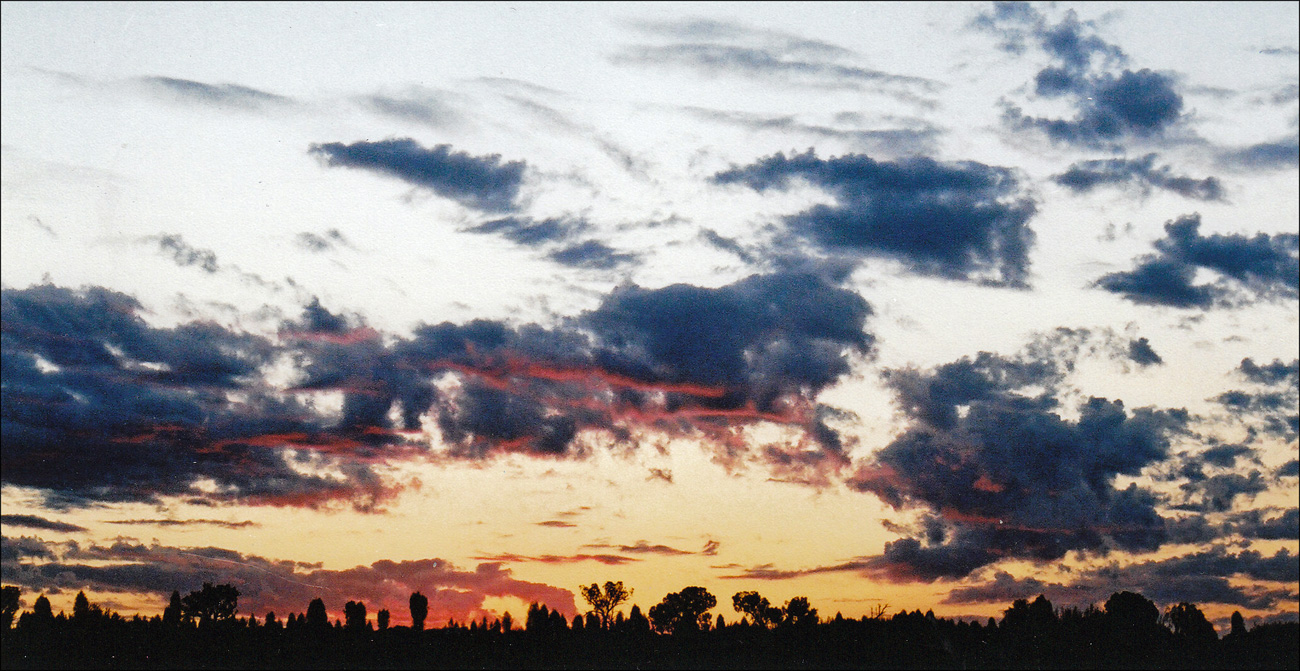
I can’t recall which trail we followed, but walking between the steep walls of red sandstone, listening to flocks of finches, looking at the wild flora, and above all, the feeling of space and no crowds of people, was my favourite part of the trip. Like Uluru, these rock formations are most spectacular at sunrise and sunset when the light seems to give them a magical red glow.
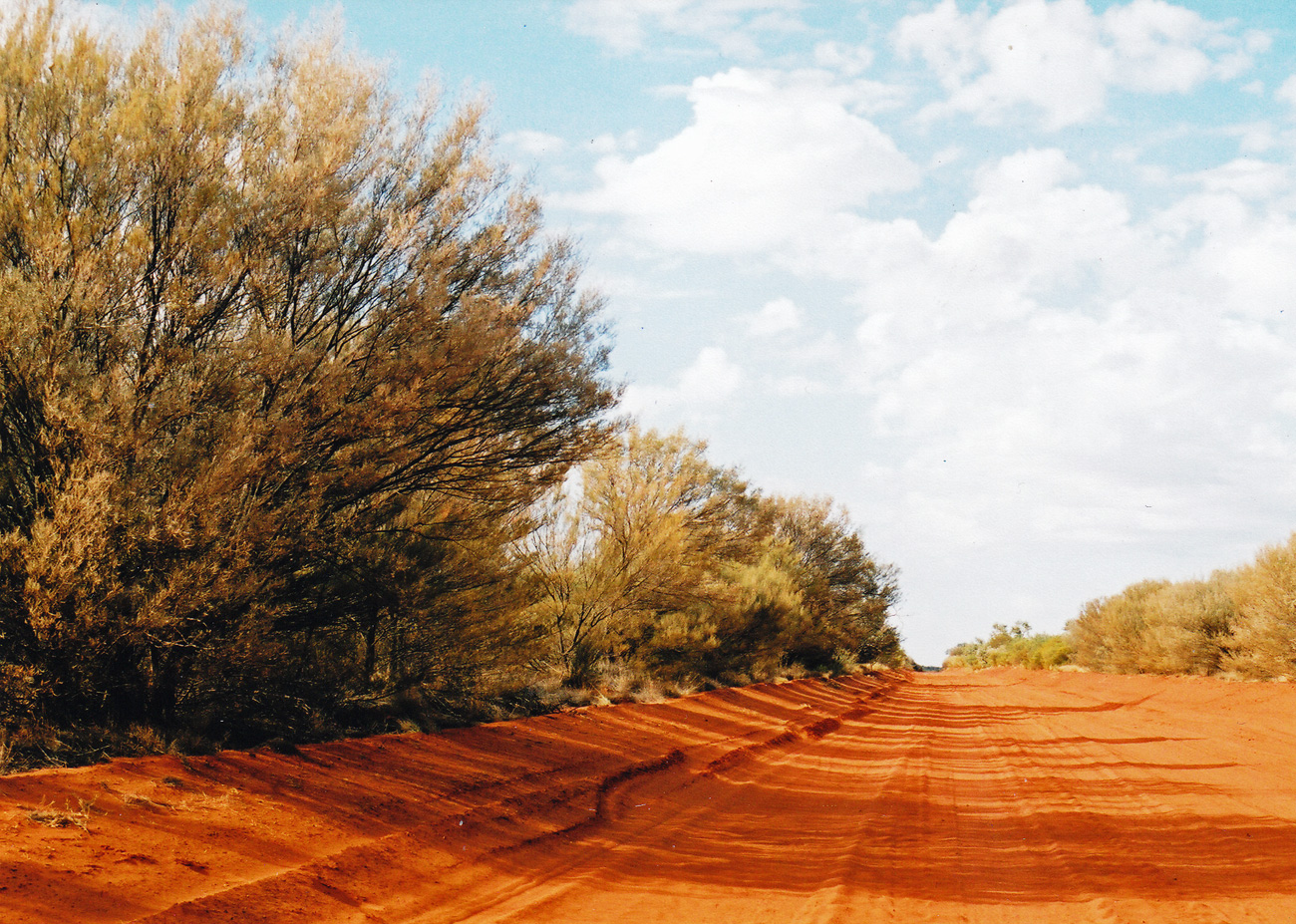
Returning to Alice along the Luritja Road we turned off onto Ernest Giles Road (unsealed for about 70 km) for a ride on a rich red and dusty road – take care though, as this is the one and only time that I literally took off! Driving too fast over a hidden dip, the land cruiser flew through the air before landing somewhat shakily on the other side, after that I took things a little more slowly.
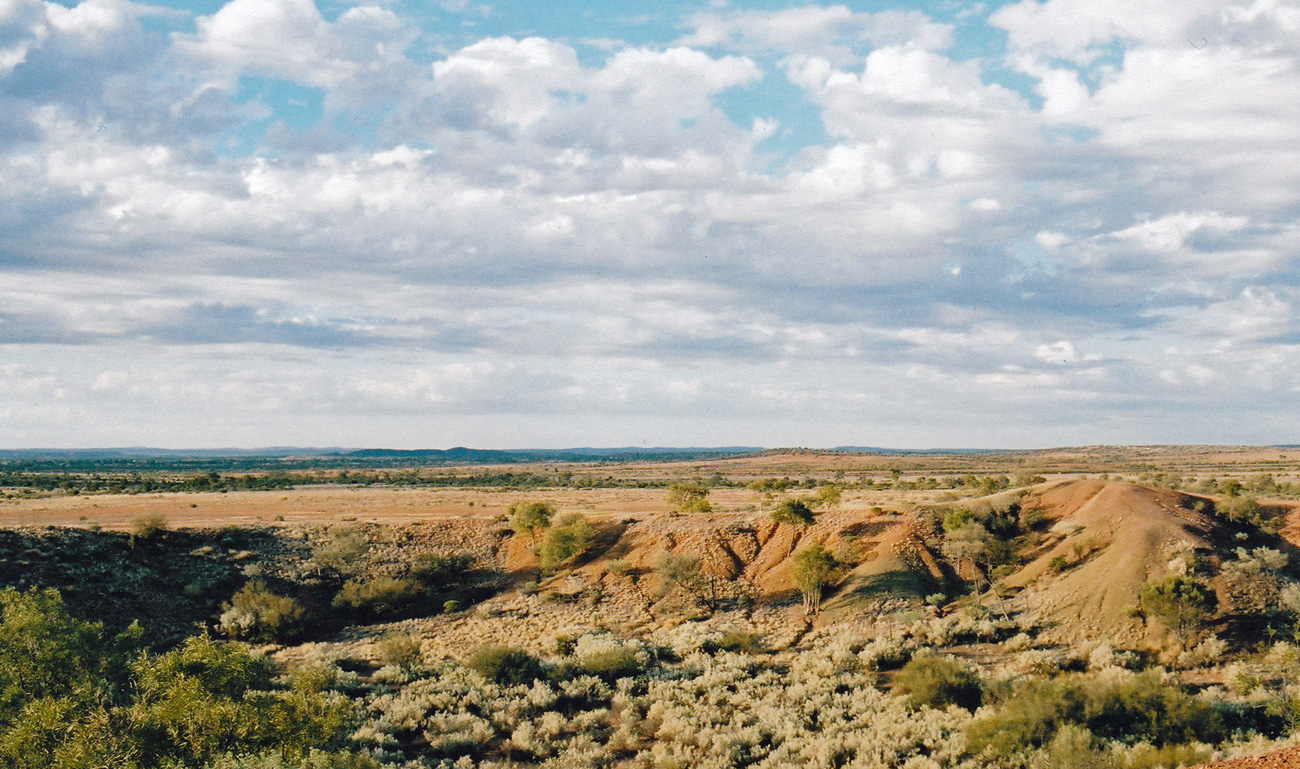
A few kilometres before the road joins the Stuart Highway leading back to Alice we passed the Henbury Meteorite Conservation reserve where we stopped for a stretch of legs and a walk around this unusual site. Henbury Meteorites Conservation Reserve contains 12 craters which were formed when a meteor hit the earth’s surface 4,700 years ago. The Henbury Meteor, weighing several tonnes and accelerating to over 40,000 km per hour, disintegrated before impact and the fragments formed the craters.
Uluru was even better than I had imagined, despite the amount of tourism (and I suspect it has increased over the past 10 years) and unexpectedly the walk in Kata Tjuta and the drives on those mystical red dusty roads through the Outback were additional highlights for me.
Have you visited an iconic site? And if so did it live up to your expectations or were you left feeling a little bit cheated?

If you read about my recent visit to the delightful Weald town of Cranbrook you will have seen my reference to St Dunstan’s church which is known as the ‘Cathedral of the Weald’. Wealth from the cloth industry enabled successive enlargements of the medieval church in the 15th and 16th century.
This delightful church is well worth a more detailed look around, so let’s go inside.

Around the church are information panels providing details about particular interesting objects within.

This font is Victorian from 1852, and example of early Victorian Gothic and made of Caen stone. The white marble carved figure behind commemorates Thomas Webster, an artist, and the Alexander Window above was installed by Col Alexander in memory of his wife and three children.

Although of pagan origin it is not unusual to find carvings of the Green Man inside a Christian church, even Canterbury Cathedral has 80 of them. When this church was built Cranbrook was surrounded by dense forest – the Weald. Four circular oak shields depicting these fierce-looking woodland spirits can be found here.


The church contains some splendid stained-glass windows


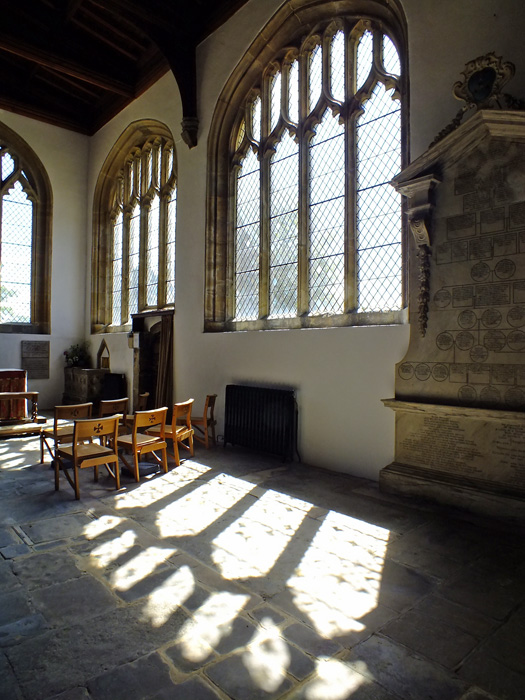
This beautiful serene corner of the church is named after St Thoma a Beckett, who by the 15th century had replaced St Dunstan as England’s most popular saint. I loved the light flooding through the clear leaded windows.


This porch was built around 1390. The wooden door added in 1569 at a cost of 17 shillings and 7 pence (£2k today). On the ceiling is a stone-carved Green Man.
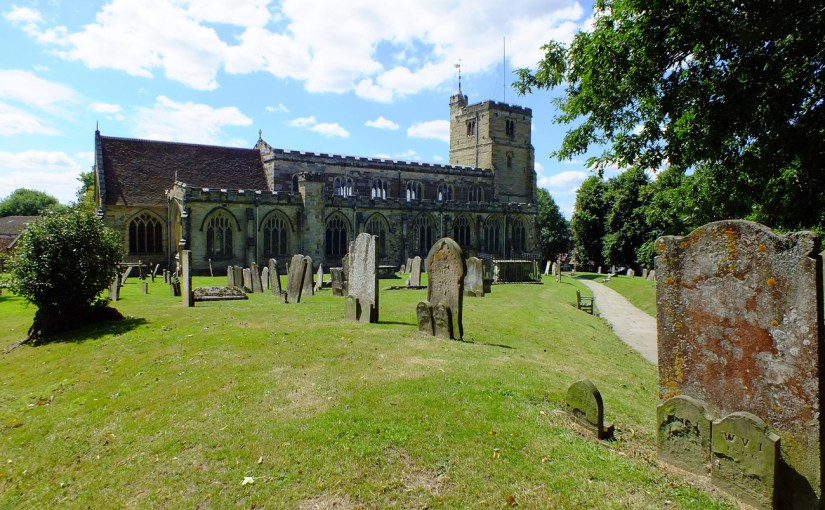
And a final look at the church surrounded by the old graveyard with interesting headstones.


If your interest is windows then Dawn from ‘The Day After’ invites participants to post pictures of any windows that they find curious, inviting, photogenic, or in some way tell a story.
Analogy: 1. [n] similarity in some respect between things that are otherwise dissimilar: “the operation of a computer presents an interesting analogy to the working of the brain”.
The Reliquary of St Eustace dates from AD 1210. This relic can be found in the British Museum and is supposed to hold the skull of a Christian saint called St Eustace. The headband is set with precious stones.
(please click image to enlarge )


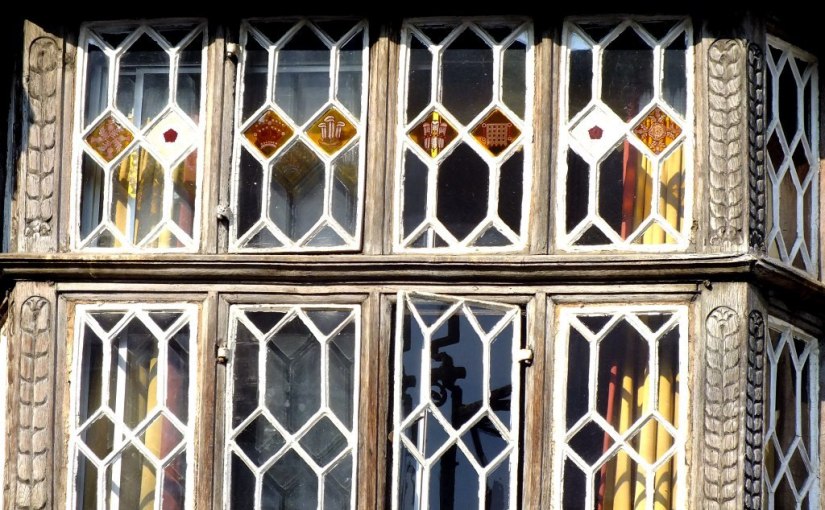
The Feathers Hotel was built during the reign of James I. It has a three-bay plan, with bays which are moulded and carved mullions and transoms, with cast diamond glazing.
I know why I have selected these two images for this challenge, but I’d like to know what do they say to you?
 TRAVEL WORDS