
Bryce Canyon to Springdale (Zion)
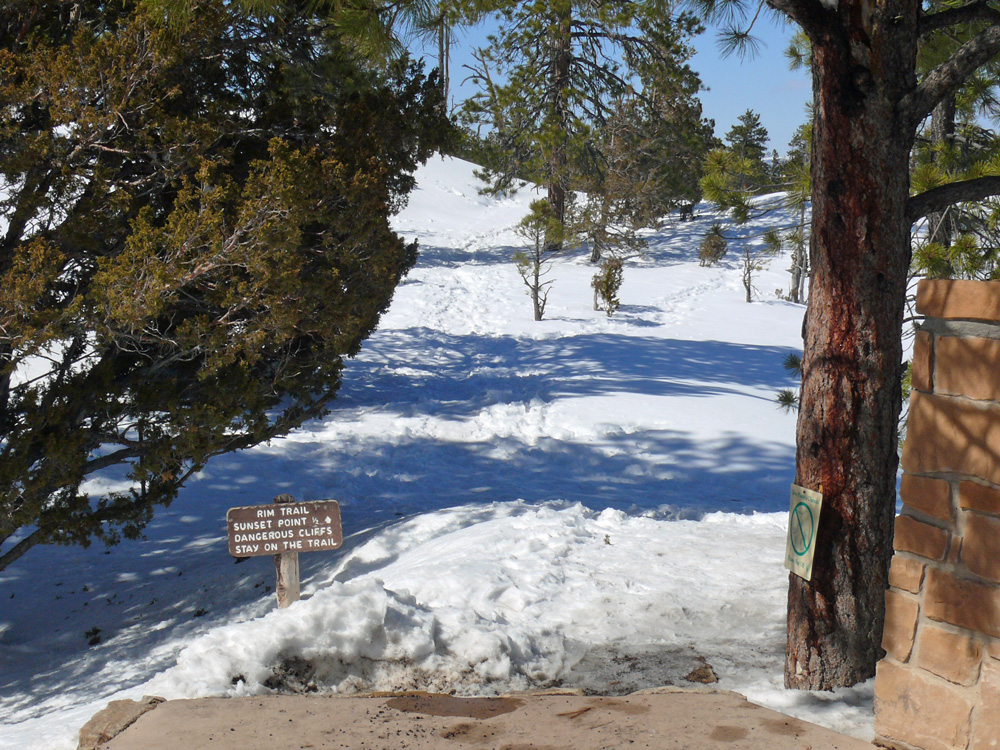
After breakfast at Ruby’s we took a couple of hours to revisit Bryce canyon, this time stopping at different viewpoints within the Amphitheatre Region. In winter you cannot travel to the south of the park and because of the heavy snowfall over the weekend even some of the usually accessible points were only open to cross-country skiers, not vehicles, and the delightfully named Fairyland Point was closed. No matter. We got all the views we could hope to see from Inspiration Point, Sunset Point and Sunrise Point. It must be wonderful to be able to hike the trails among the hoodoos in the spring/summer months. Queen’s Garden Trail, Navajo Loop and Peekaboo Loop are just a few.

Bryce Amphitheatre is the largest natural amphitheatre in the park. Vast panoramas can be seen from Inspiration Point and Sunrise Point which feature the Black Mountains in the northeast and Navajo Mountain in the south.
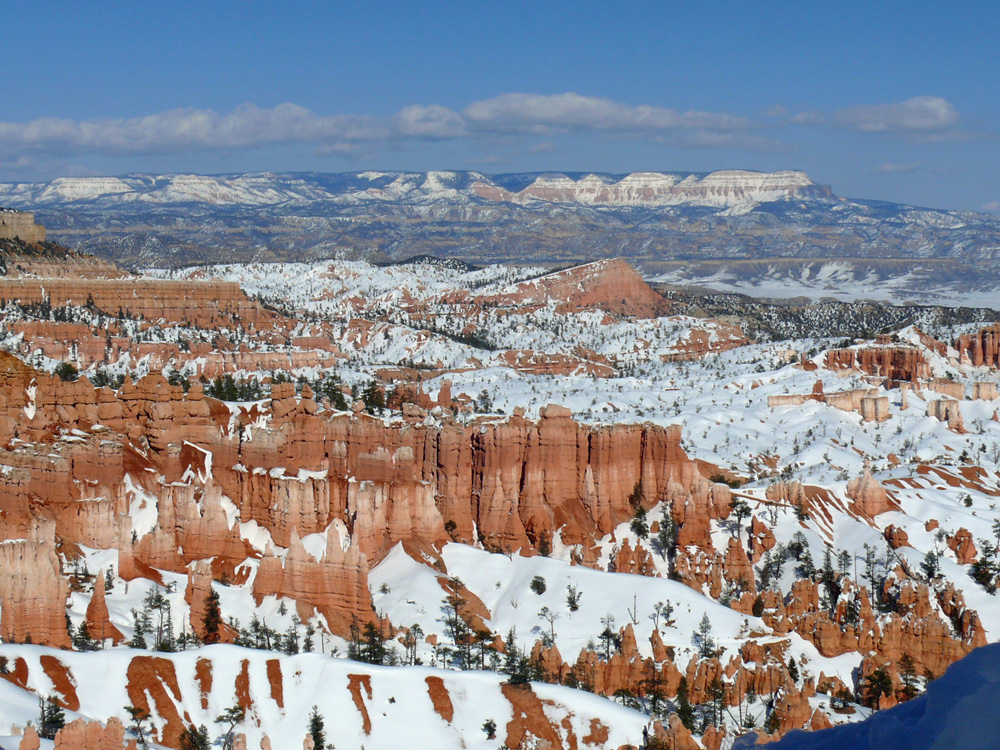
Technically Bryce is not a canyon because canyons are primarily carved by flowing water – a stream or river. Naturally acidic rainwater dissolves limestone, making the rounded edges of hoodoos, but the freezing and thawing of water does most of the sculpting at Bryce.
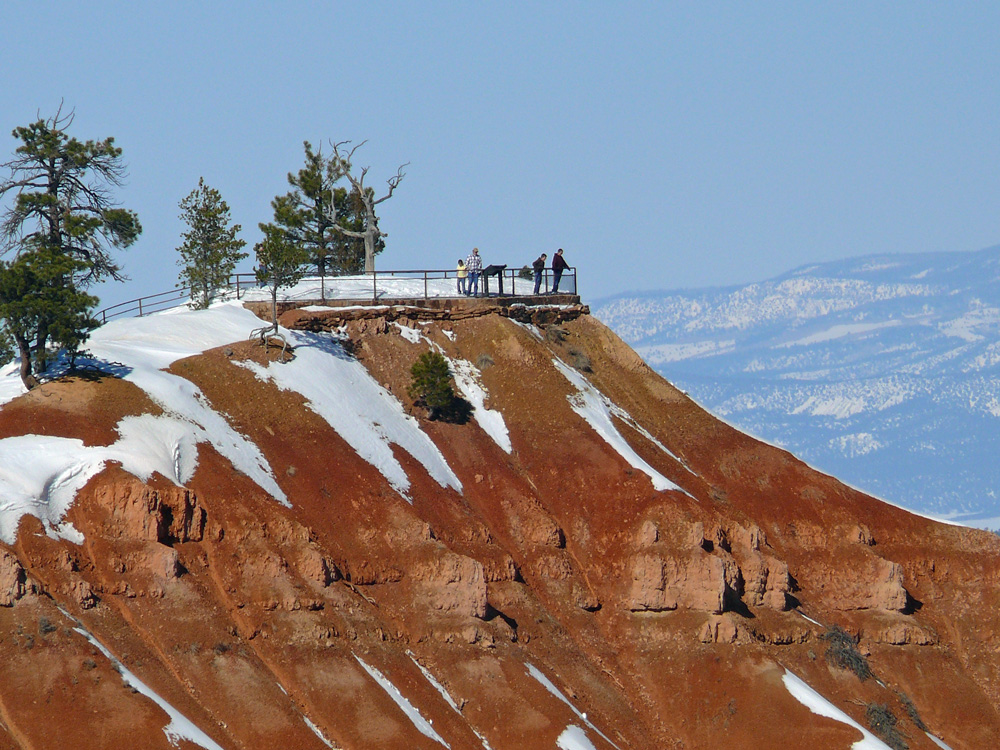
- Sunset Point – a good viewpoint
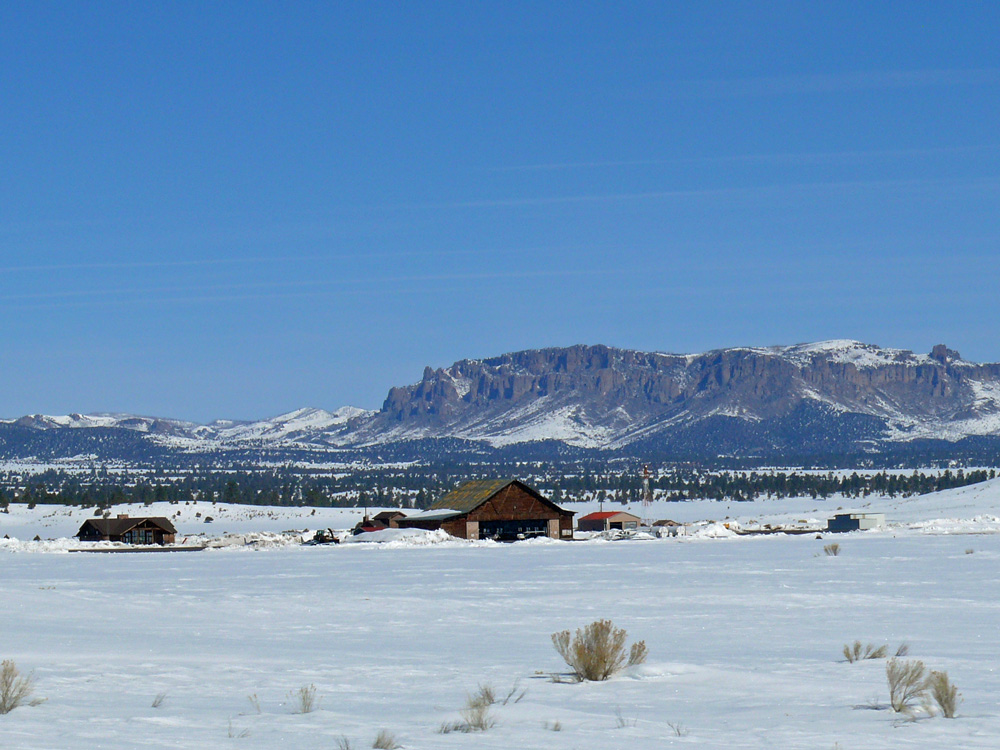
Back on the road we stopped again in Red Canyon, to get a few more photos. There are several trails here too: Hoodoo Trail, Pink Ledges trail and Bird’s Eye Trail all moderate terrain and where you can see the rare plant species of the region and perhaps some of the wildlife too (mule deer, bobcats, eagles).
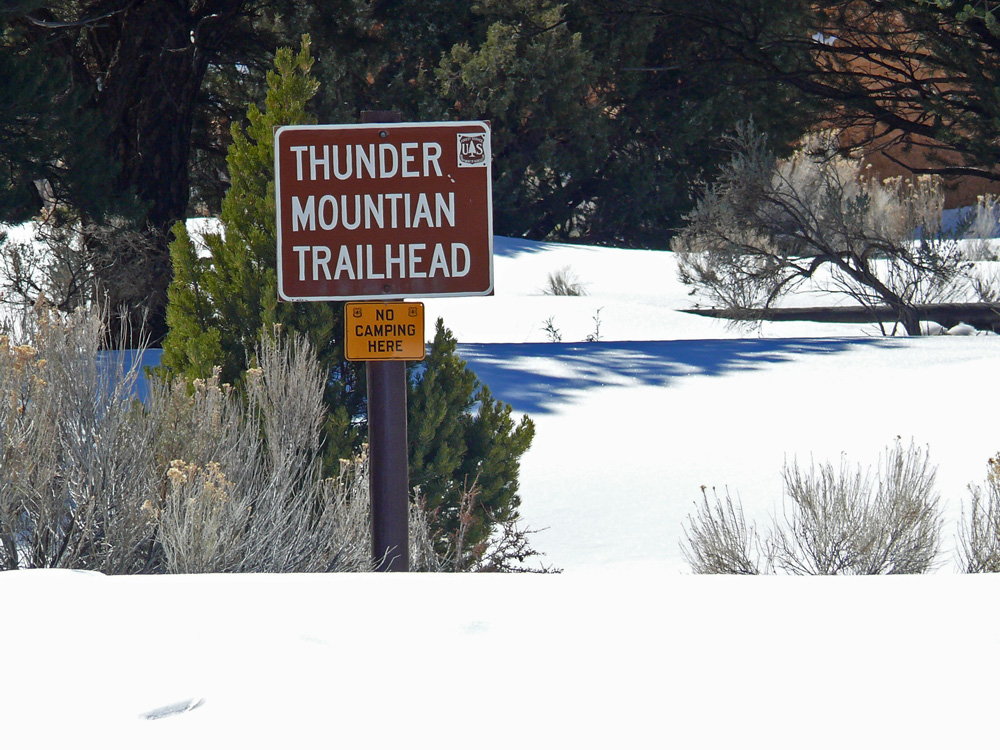

We were not shod for the snow, but managed to wander around a little to read the useful information plaques dotted around (and which are the source of information for this post). The most interesting is the legend of Butch Cassidy. There is even a 9 mile Cassidy Trail close by, believed to have been used by the outlaw. North on Highway 89 towards Circleville is the cabin where Cassidy was raised, born Robert Leroy Parker, he was the oldest of 13 children of Mormon immigrants and formed a gang, the Wild Bunch, in his teens.

Turning south onto the 89 the Sevier River winds it way alongside, like a black snake in all the snow. Around nearby Duck Creek modern ranches stand alongside decaying remains of ancient buildings. Horses’ breath steaming in the cold. At Hatch there were loads of antique shops, and any other time we’d have stopped for a browse, but we wanted to move on to the final destination on our itinerary. Pretty stands of Aspens lined the road, pink, white and yellow twiggy branches in the air.
If you turned north at the 89 / 12 junction you would reach the town of Panguitch – a name from a Native American word meaning big fish where there is year-round fishing. The most interesting story about the town though is the annual Panguitch Quilt Walk, celebrated in June every year when locally made quilts are on display.
The town was settled in 1864. The first winter was very tough. Frost killed all the crops before harvesting. A few men tried to get to a nearby town for supplies but they kept falling through the several feet of snow. They discovered that if they lay down a quilt, walked over it, lay down another in front and retrieved the last one, they could walk over the frozen landscape. This ‘Quilt Walking’ enabled them to get to the nearby town and back and helped the settlers of Panguitch to survive.
Back at Mount Carmel Junction we turned right onto Highway 9 the east highway that leads into Zion National Park via tunnels and a switchback to the canyon floor. It was created to allow tourists to make their way round the Grand Circle of parks (Zion, Bryce and the Grand Canyon).

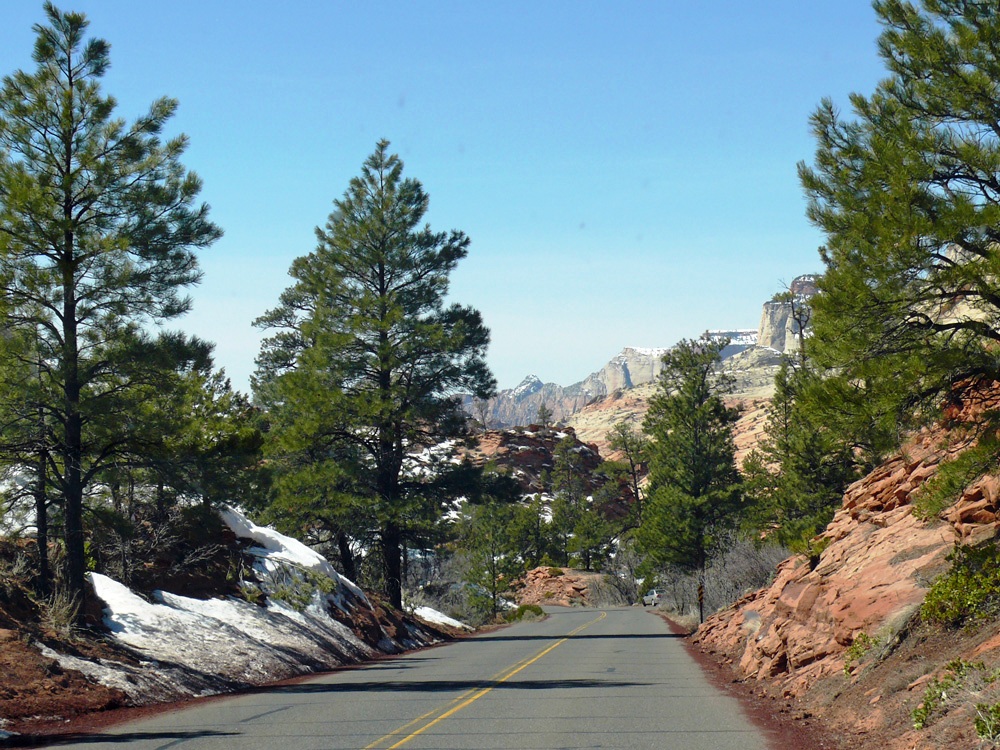

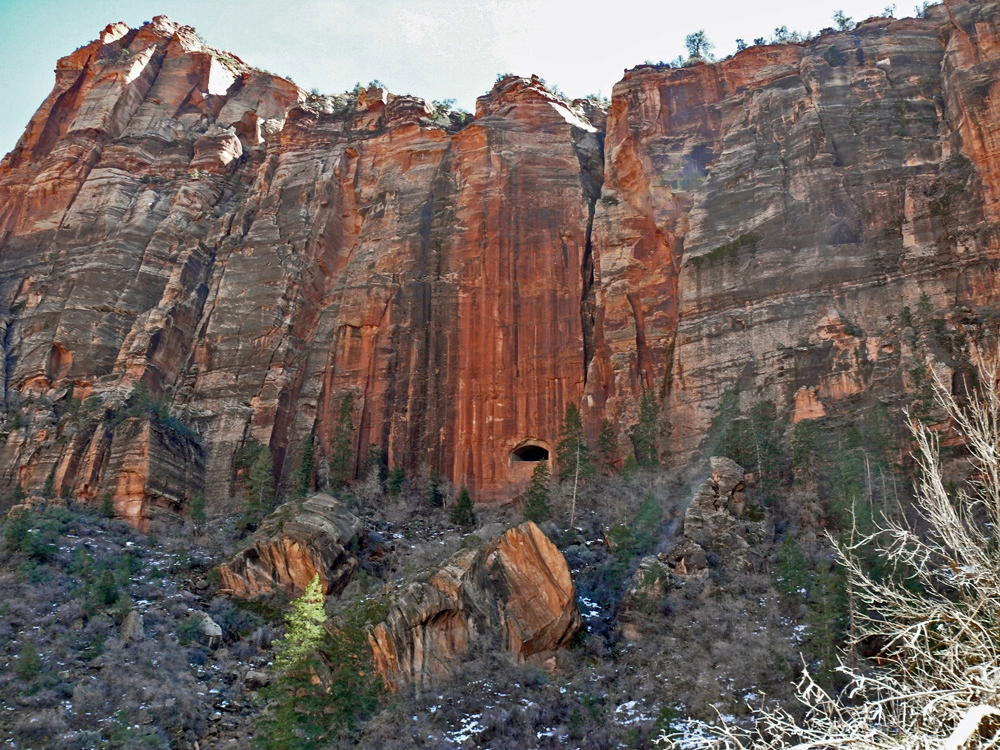
On entering the park at the eastern end you notice two things – the road is red to blend in with nature around it and the geology is spectacular.

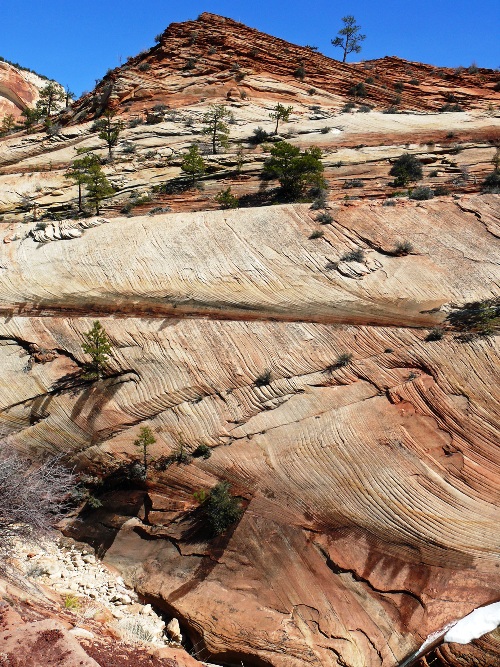
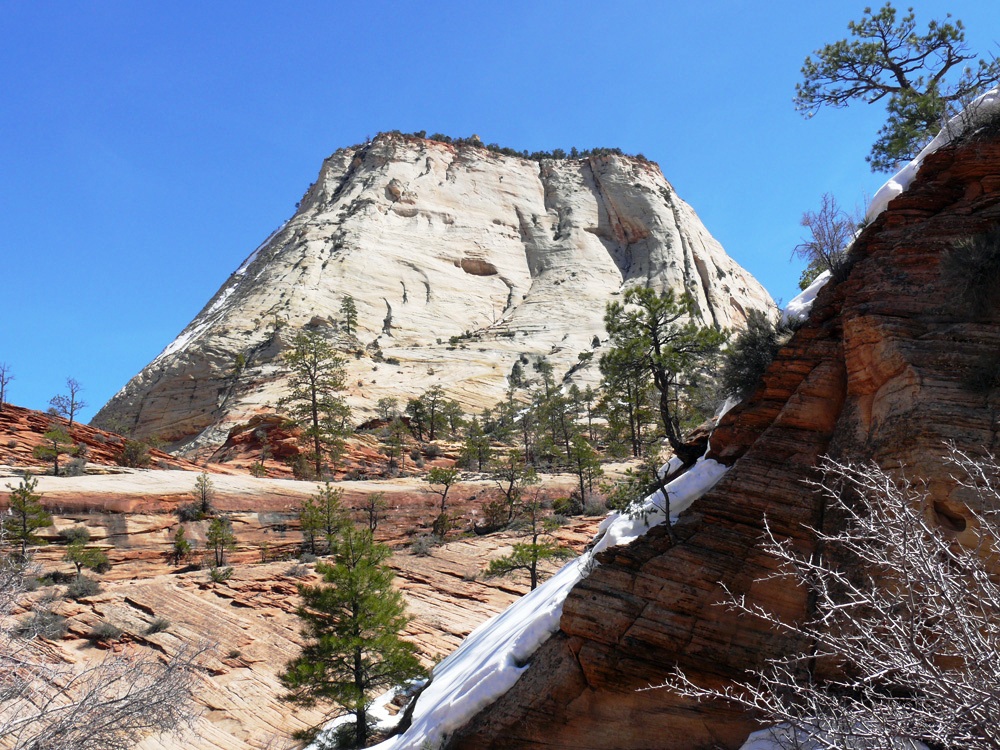
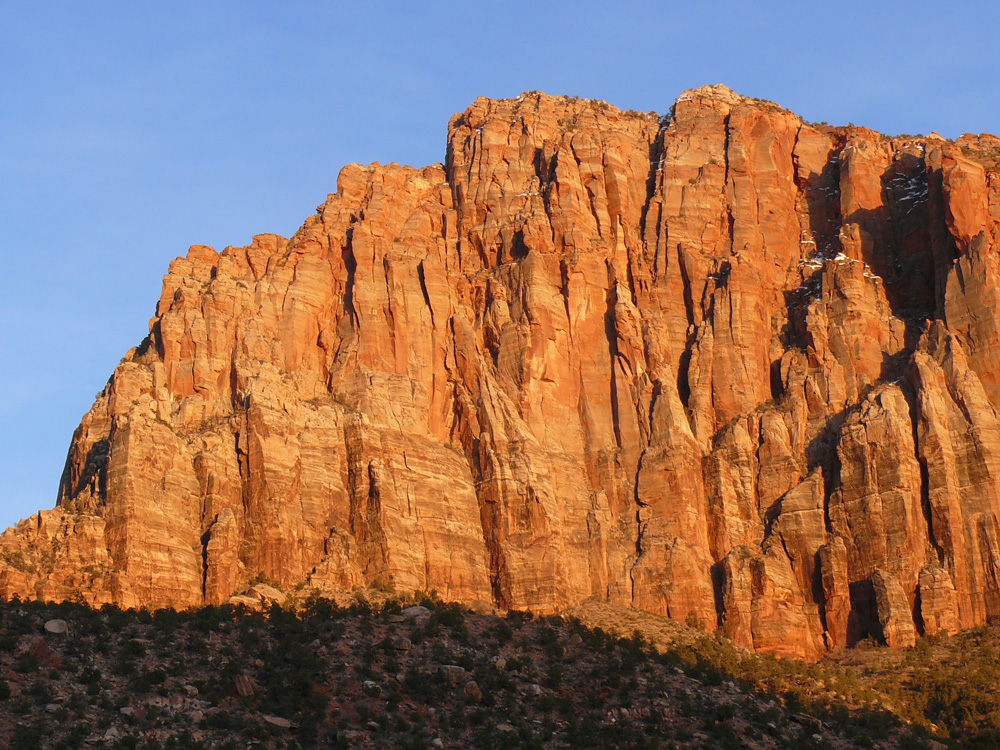
Found near the east entrance is the Checkerboard Mesa. The name stems from the cliff’s distinctive chequerboard pattern. The horizontal lines are caused by cross-bedding, a remnant of ancient sand-dunes. The vertical lines formed because of the contraction and expansion of the sandstone.


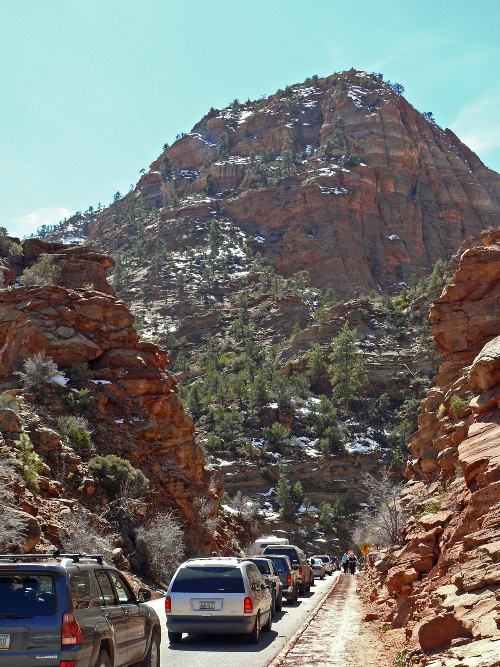
The road loops and winds alongside Pine Creek until the tunnels where we waited in a queue to get through – larger vehicles need to be accompanied which is why there is a waiting time.
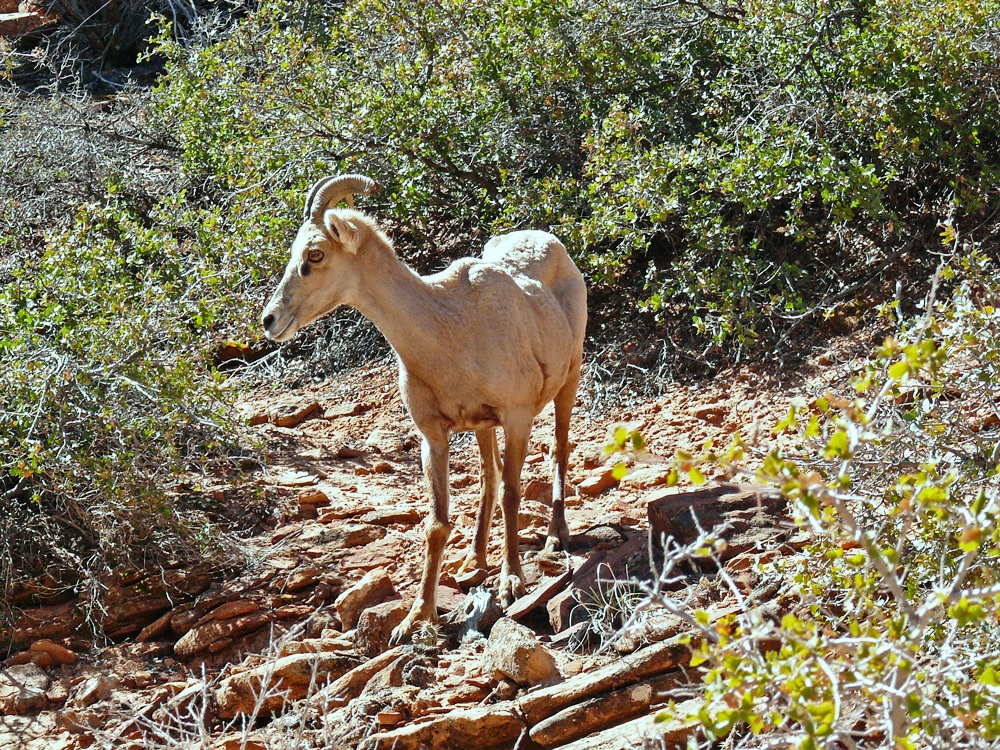
Some people had parked up to walk out to the Canyon Overlook Trail. It is very steep and narrow though so not suitable for everyone and can be extremely icy in winter. I walked a little way, before turning back, but did get to see some bighorn sheep on the way.
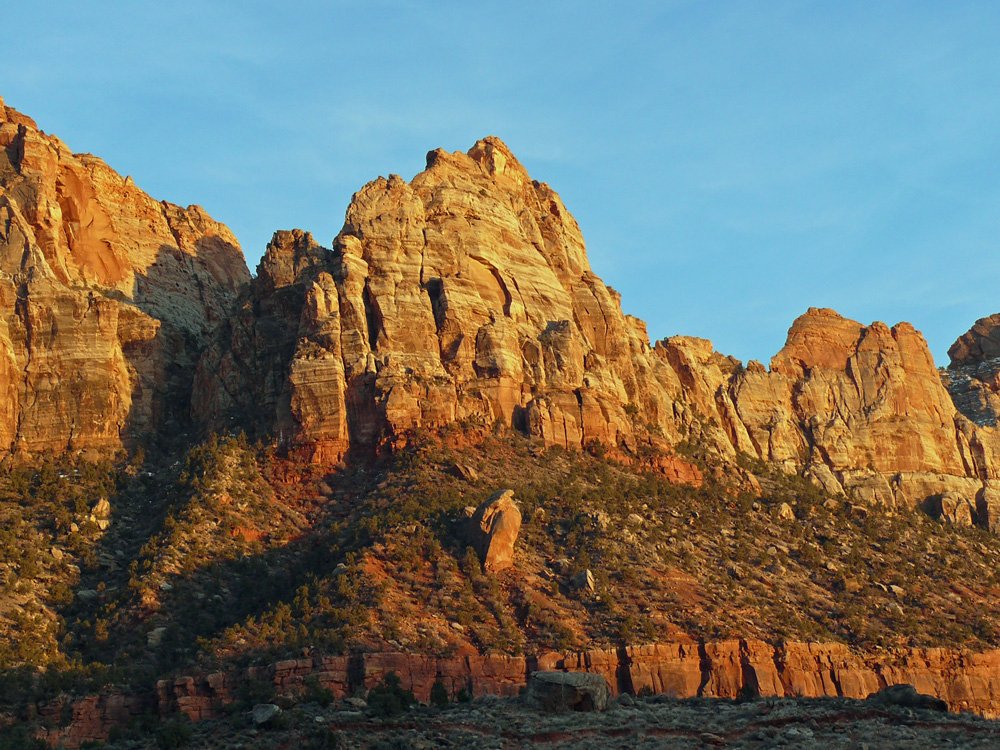
The tunnels were blasted through 1,000 feet high sandstone cliffs, the second one being over a mile long. Exiting the tunnel you get a good view of the Canyon and some of its most famous formations including the Great White Throne. There is a steep, 10 mile drive down switchbacks to the valley floor.
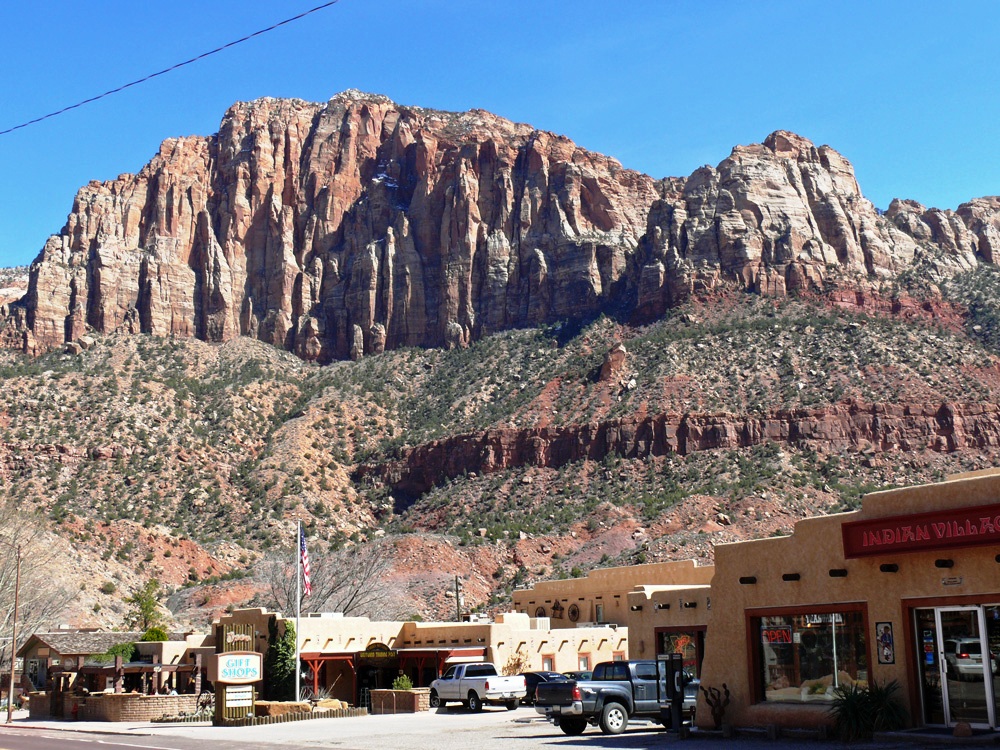
We drove through to the park’s southwest entrance and in to Springdale where we had booked a night in the Zion Canyon B&B only 1/2 mile from the entrance and close to park shuttle buses (summer months only). A bit early to check in we found a lovely little deli and gift shop where we had good freshly made sandwiches and coffee for lunch. The best food so far.
The Canyon was once home to the Anasazi (a Native Indian word meaning Ancient Ones) whom historians believed lived here 2000 years ago and up to the 13th century. The Paiutes discovered the canyon next and were living here when the first white people (Spanish Padres Silvestre Vélez de Escalante and Francisco Dominguez and the fur trapper Jedediah Smith) came through in the 1700s.) The first Mormon settler was Isaac Behunin who is credited with giving the Canyon its biblical name of Zion. Meaning a place of rest and refuge (Ancient Hebrew = sanctuary). Many of the rock formations have biblical names too.
In the afternoon we returned to the park and drove along the Scenic Floor of the Valley Road stopping at various places along the route, including the Emerald Pools Loop, Angels Landing and Temple of Sinawava. The Emerald Pool was very disappointing, after following a rather icy trail I reached the first pool (puddle) which was a muddy brown. The trail continued underneath a dismal waterfall onto even more uneven ground at which point I turned back.
We were going to eat at the Whiptail Grill near the gas station on the edge of Springdale, but it closed at 7:30 p.m so we were too late. Most of Springdale’s restaurants were closed in March, but we finally found Blondies open where we had a decent burger and fries. Unfortunately much of Utah is dry so I opted for an ice-tea (thinking it would be one of those lemony sweet drinks) only to find it tasted just like bitter cold tea, and I do not like tea! Major fail. By now I was getting withdrawal symptoms for a good bottle of red wine.




 TRAVEL WORDS