I have lived in the UK for most of my life, but when young I definitely had wanderlust and even ended up living in South Africa for several years which was a wonderful experience. I now look forward to a long and leisurely retirement doing what I like most - gardening, photography, walking and travelling.
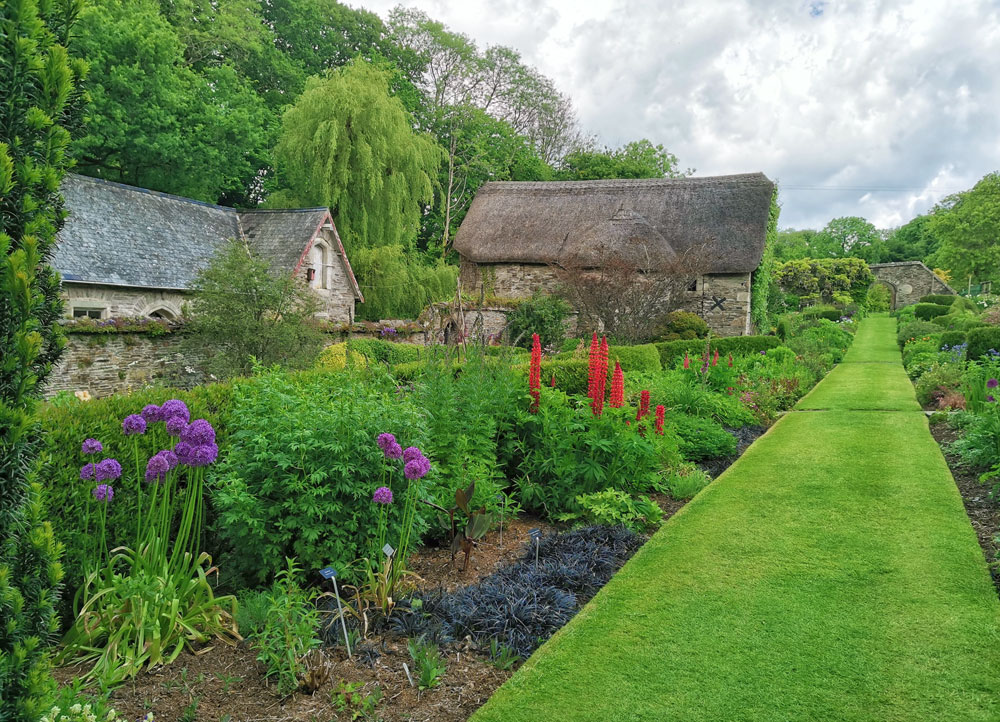
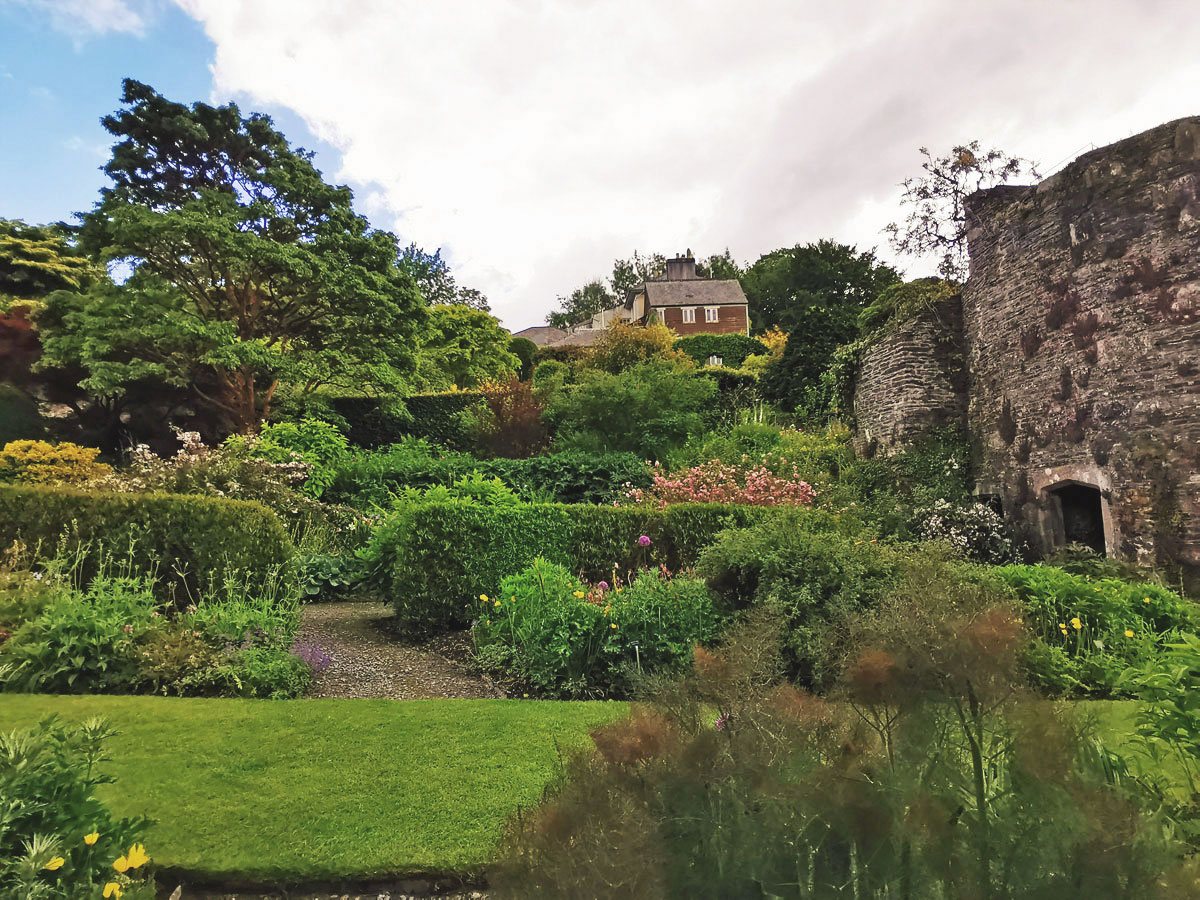
The second part of my visit to The Garden House is of the Walled Garden and the terraced areas leading up to the Café.
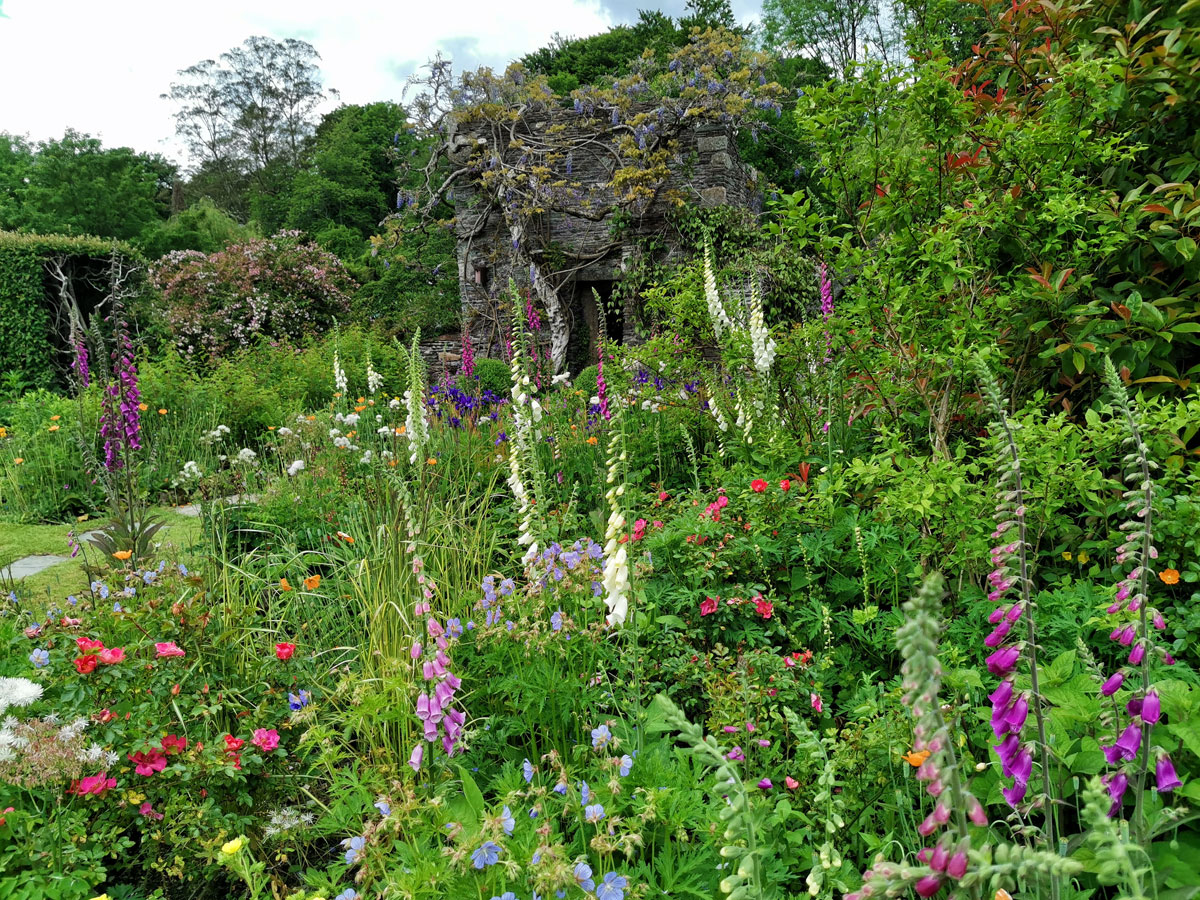
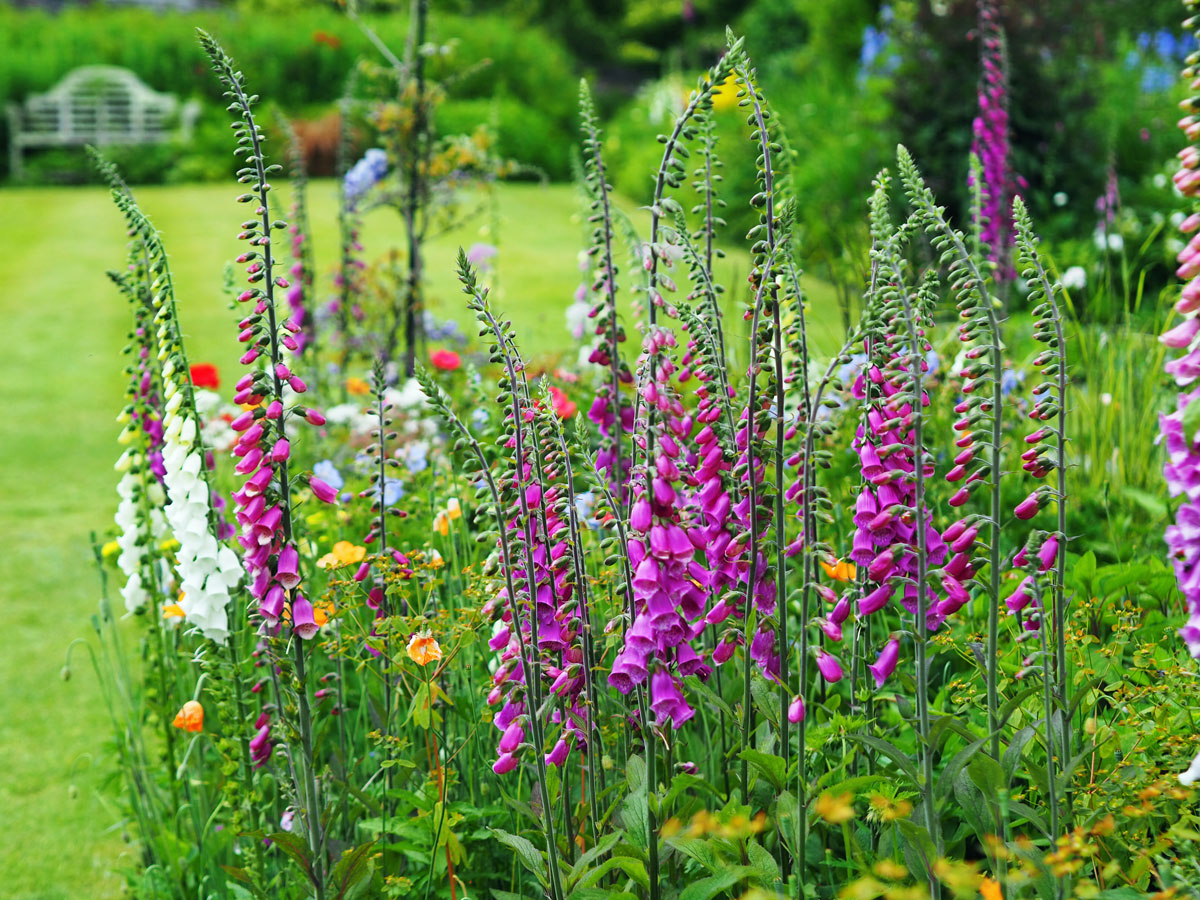
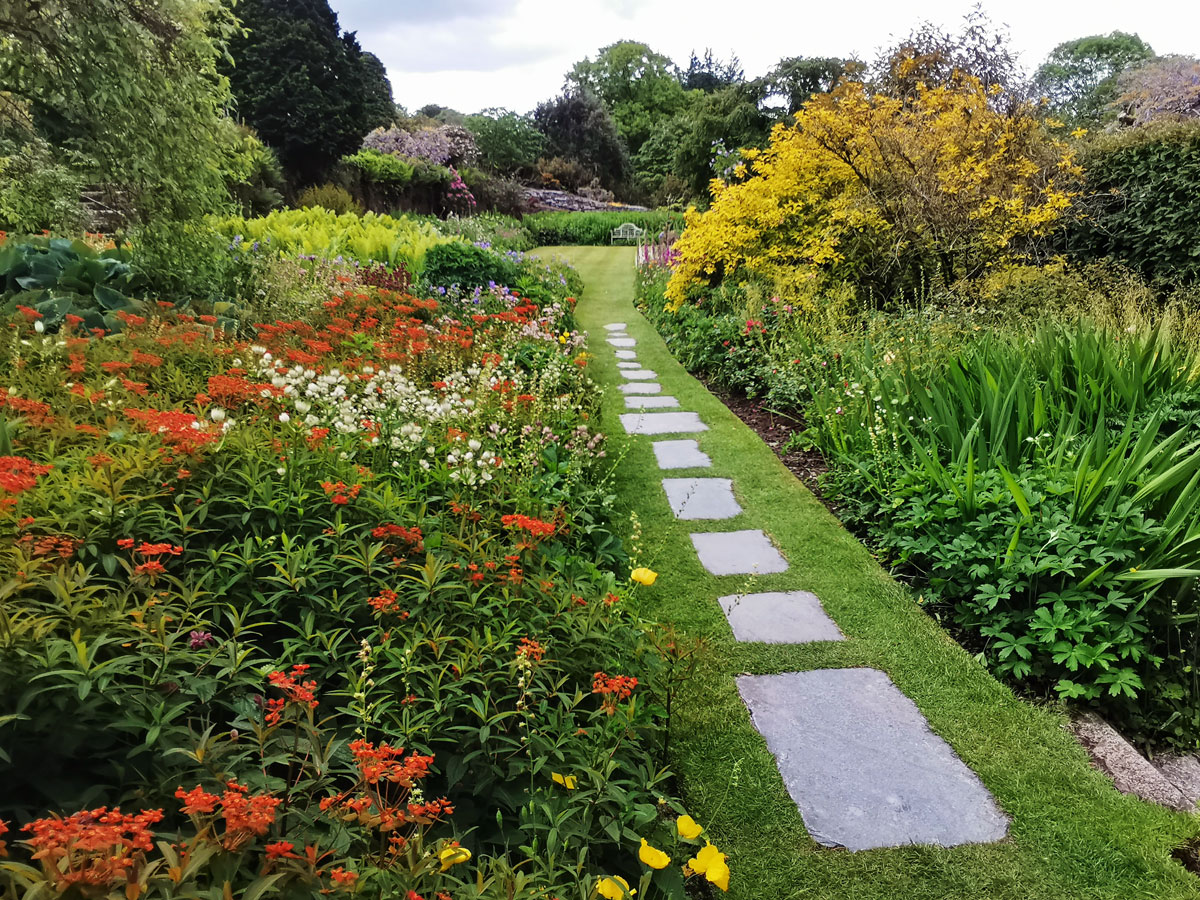
On both sides of a very neatly mown grass path, which seemed far too good to actually walk on, there are deep double herbaceous borders, filled in late May with swathes of Alliums, Peonies, Lupins, Aconites, Wisteria and lots of other perennials just beginning to emerge.
Ruined tower
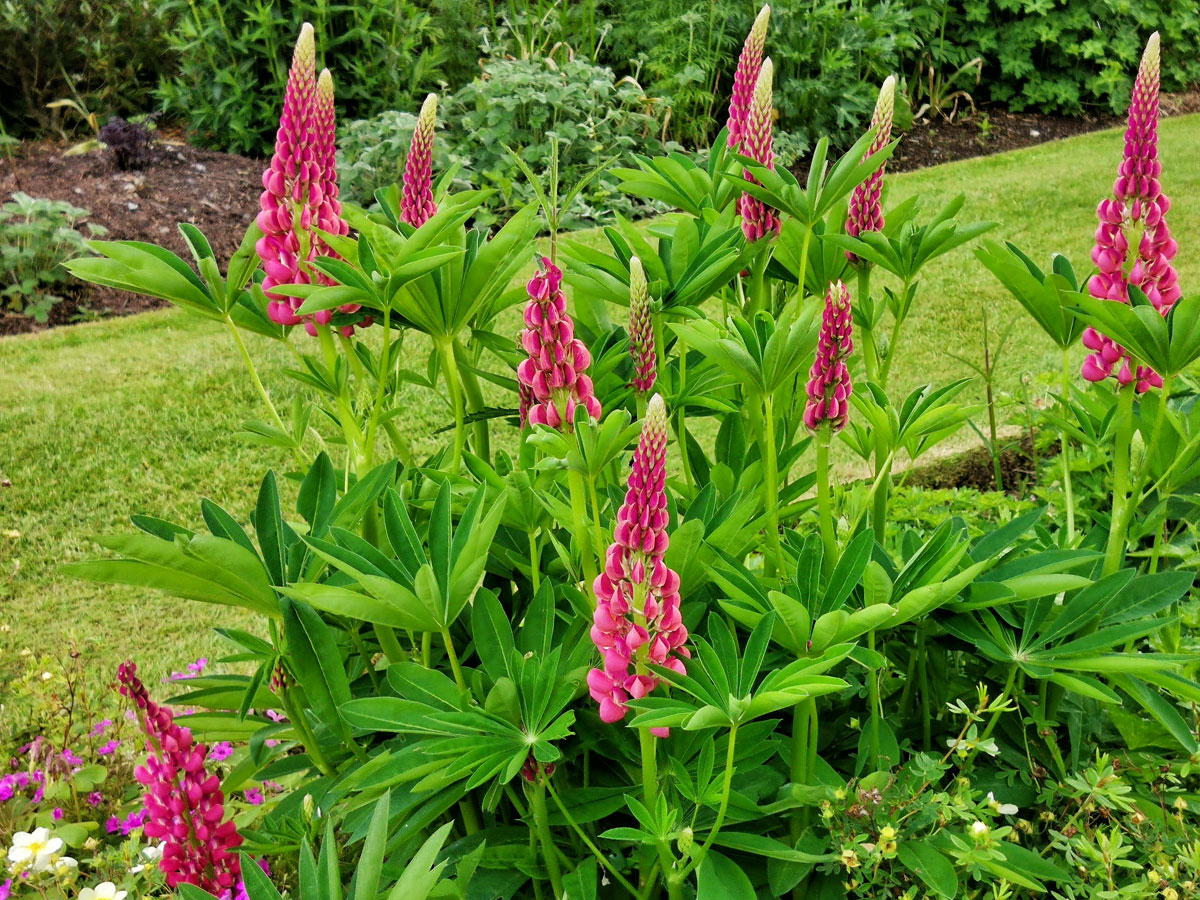
lupins
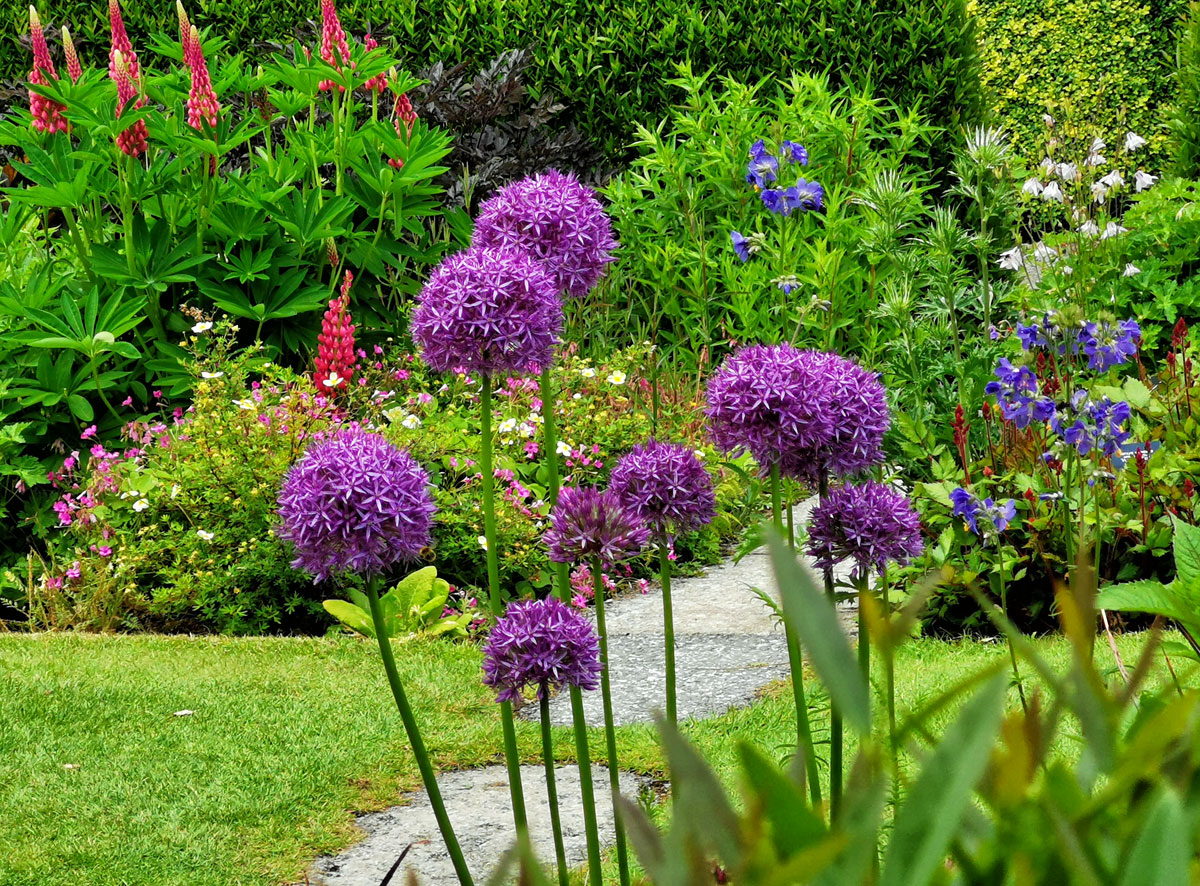
Alliums and lupins
alliums
Aconite / Monkshood
Wisteria
Wisteria
Paeonia ‘Coral Charm’
Paeonia ‘Bowl of Beauty’
Fennel
Hakonechloa macra ‘all gold’
Melianthus major
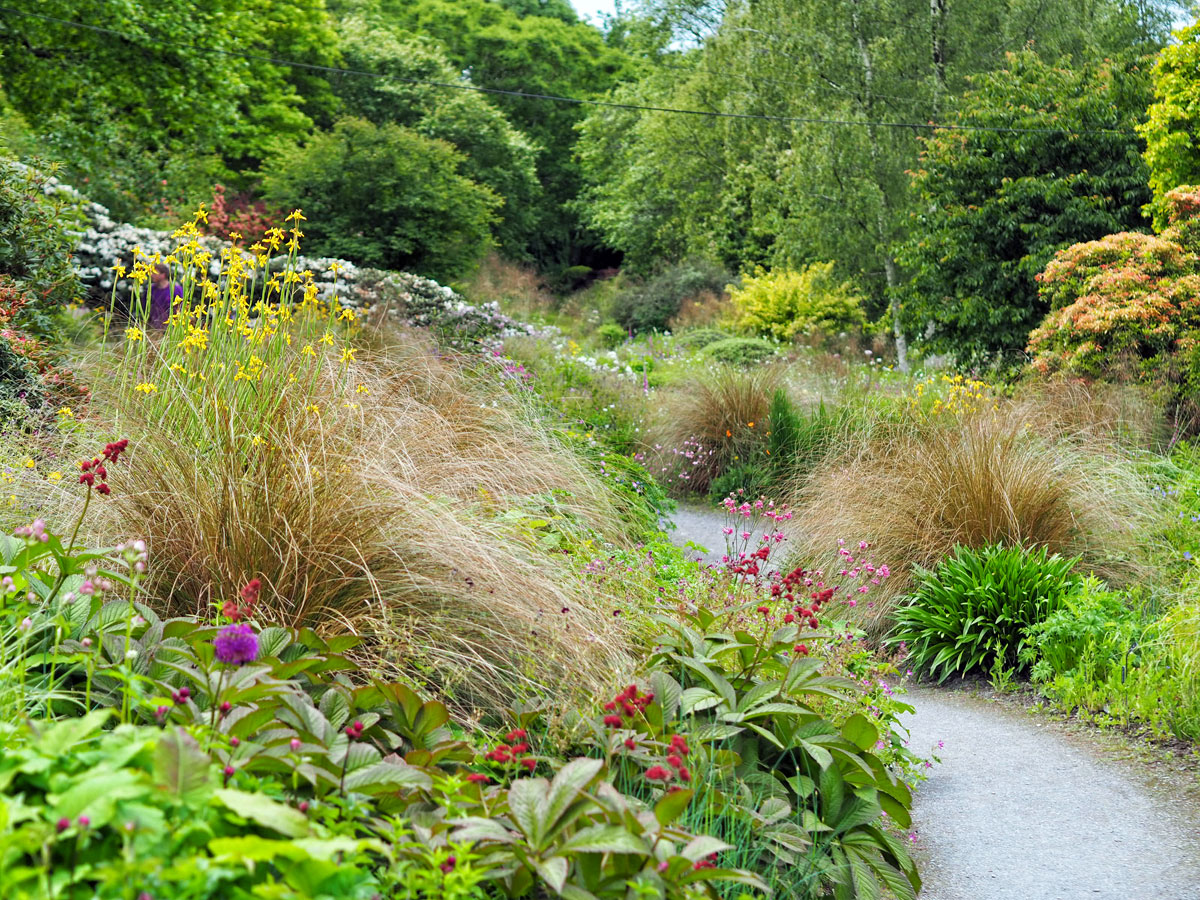
More wisteria, bronze fennel, grasses and architectural plants such as the Melianthus major, Hostas and Ligularia.
These lupins in particular caught my eye, I just love the deep magenta pink colour
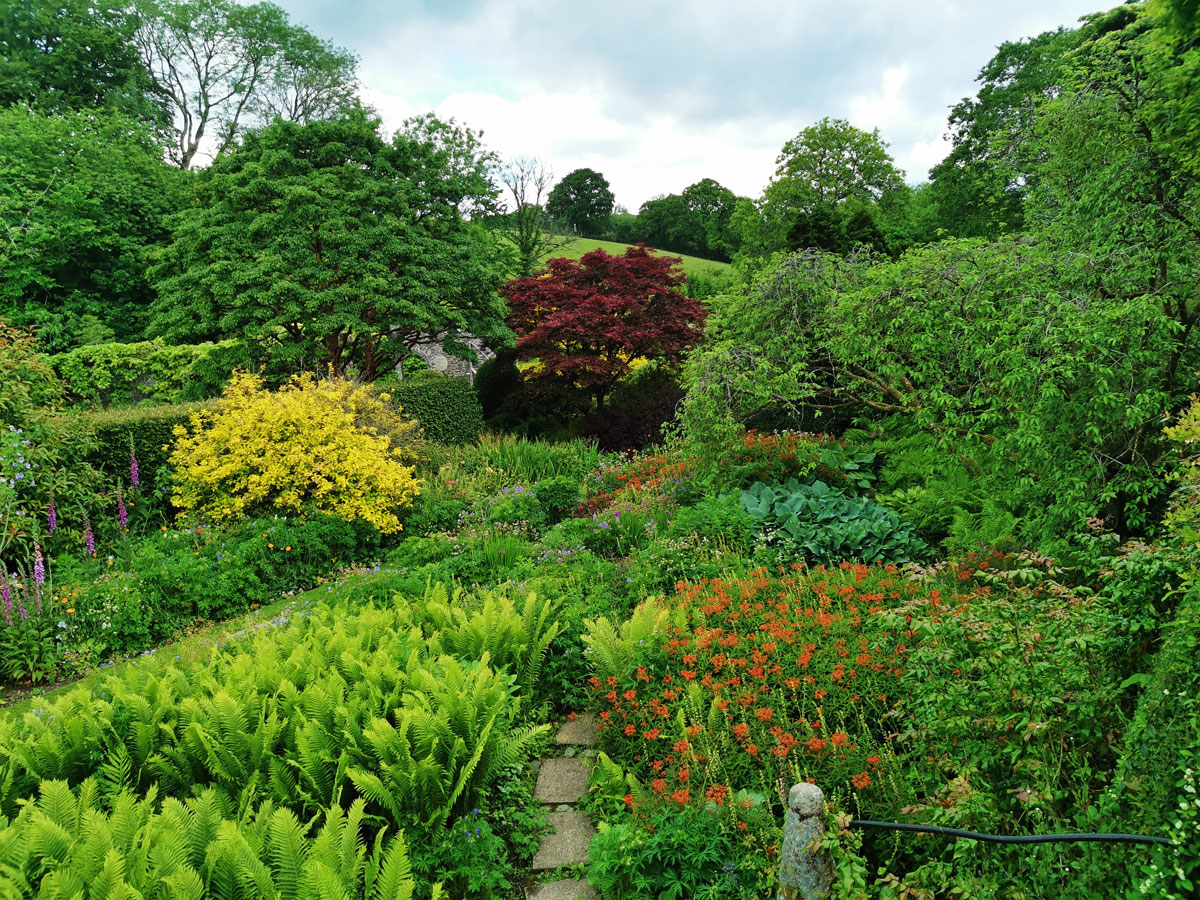
Eventually we made our way up to the Lower terrace and lawns to the café.
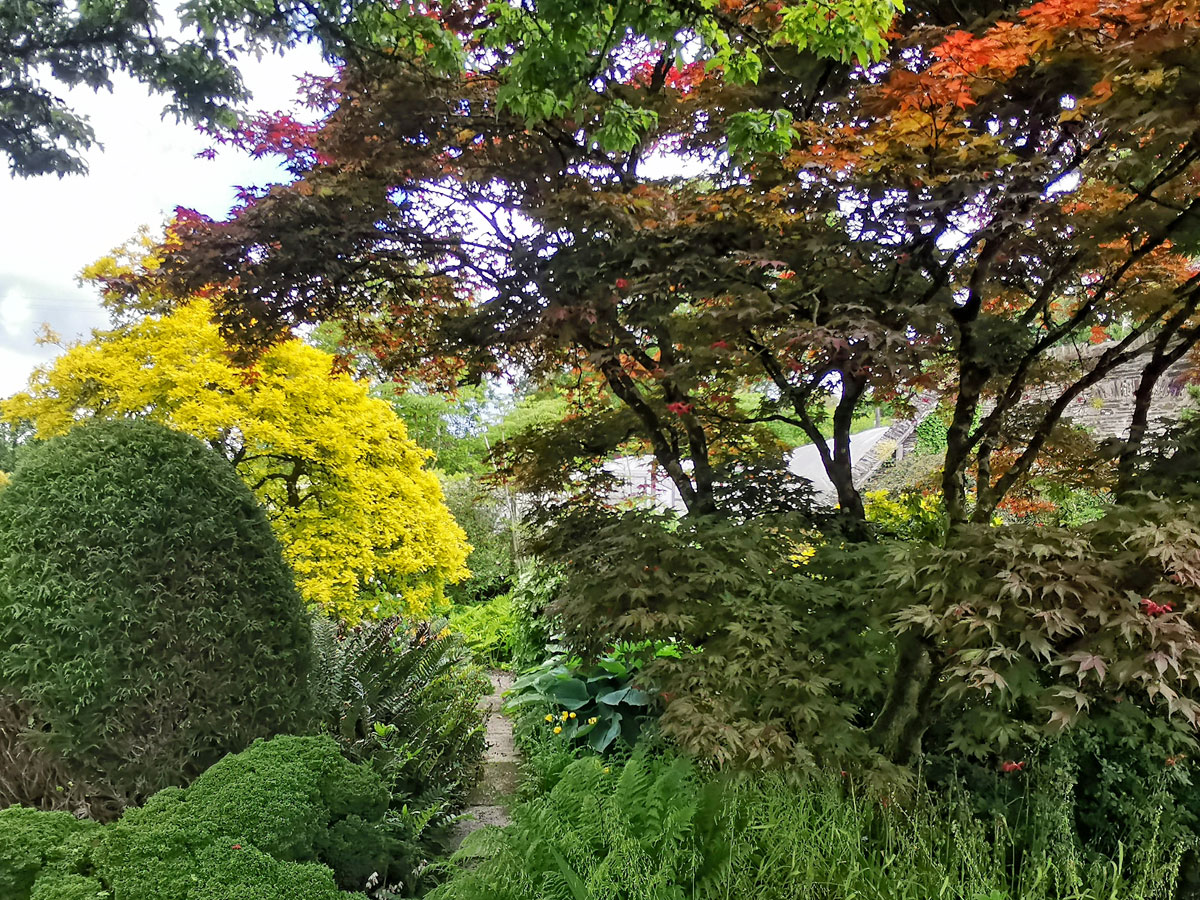
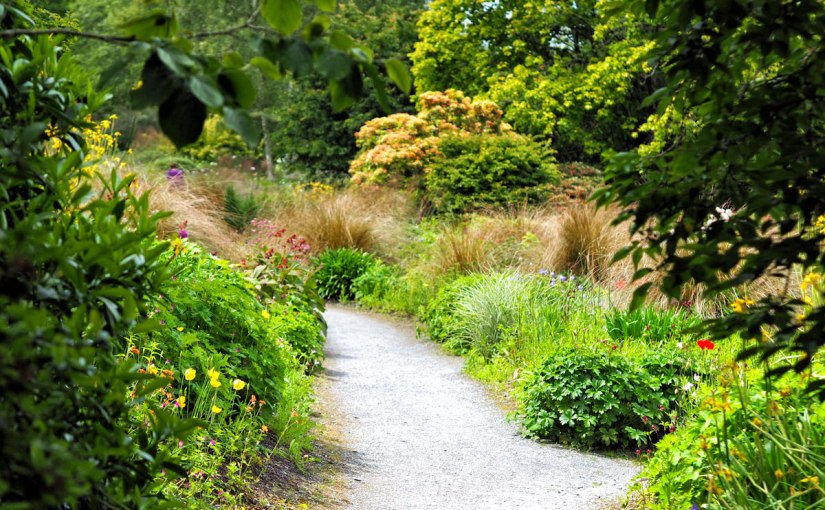
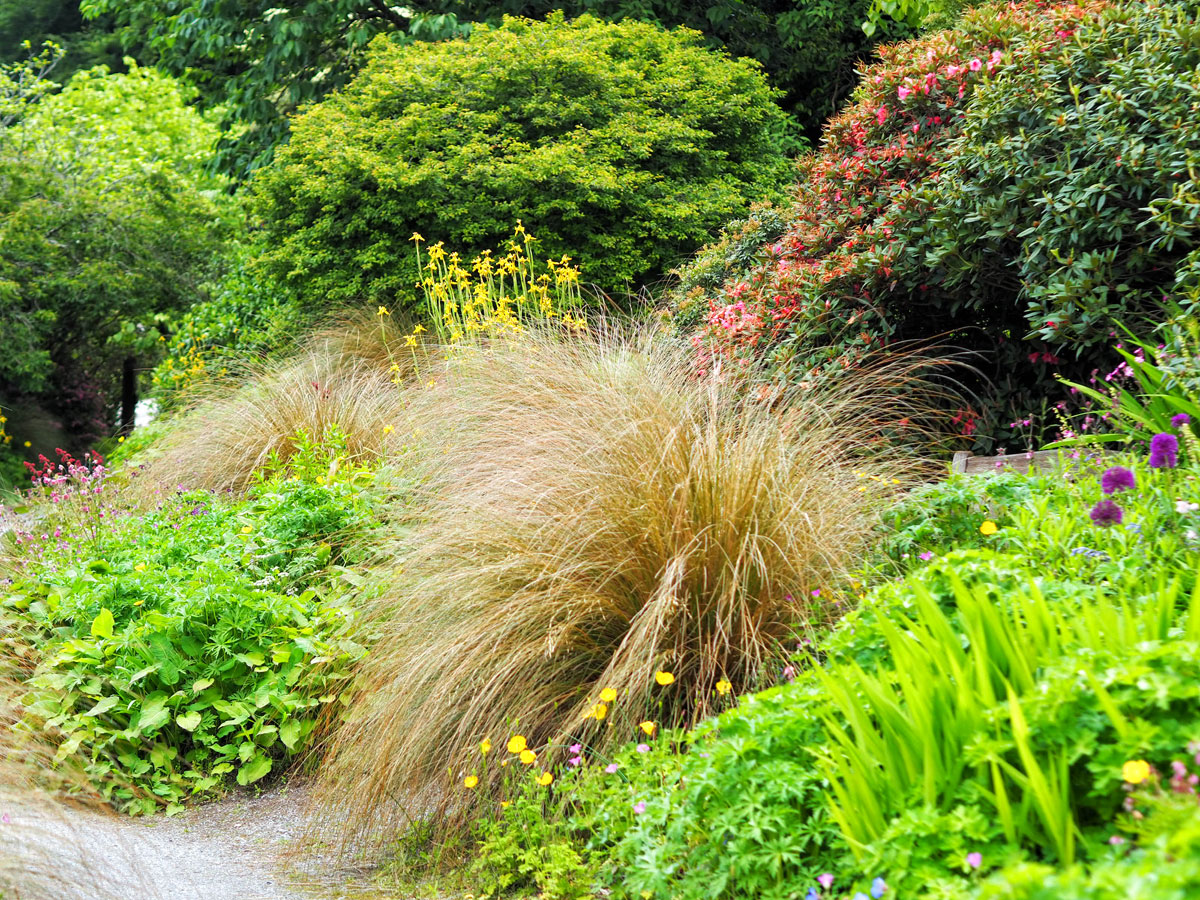
Behind the borders are more winding pathways among colourful shrubs and trees.
Geum
Impatiens
Corydalis
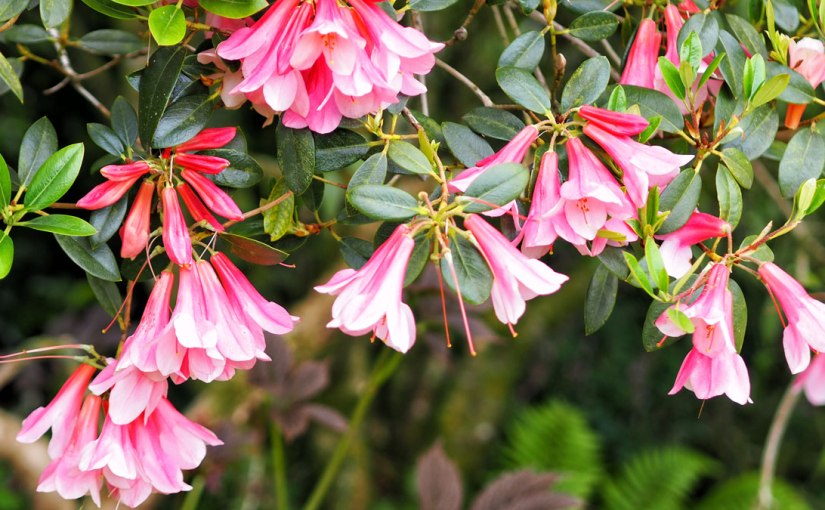
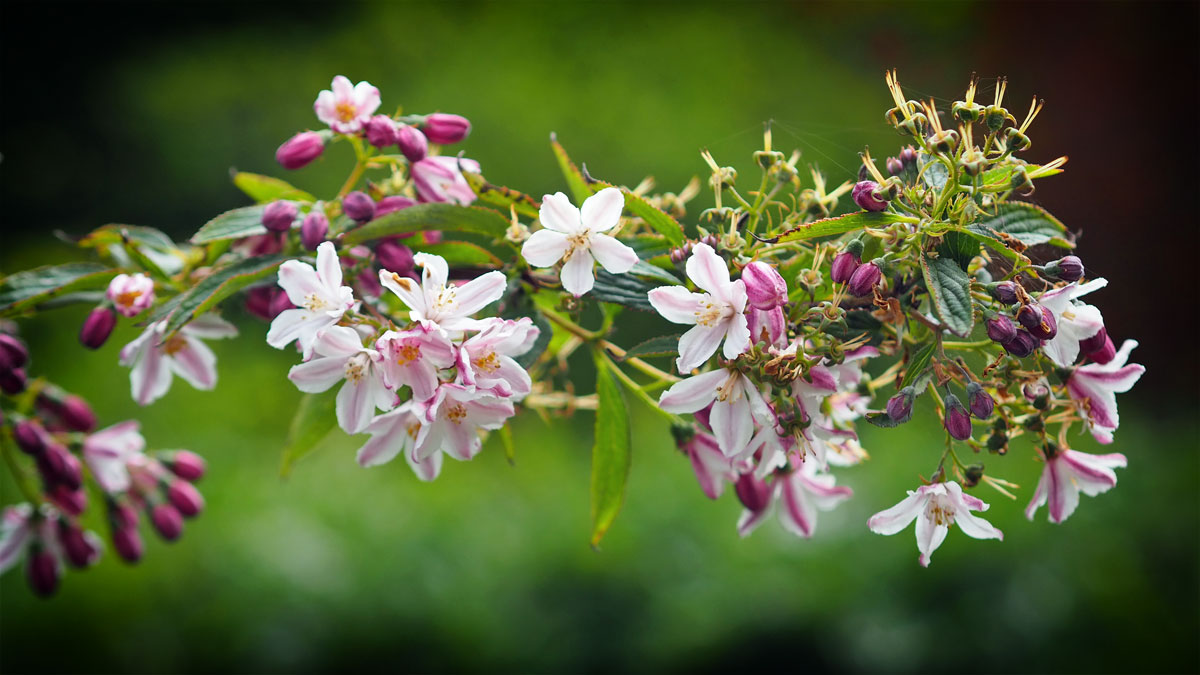
Rhododendron
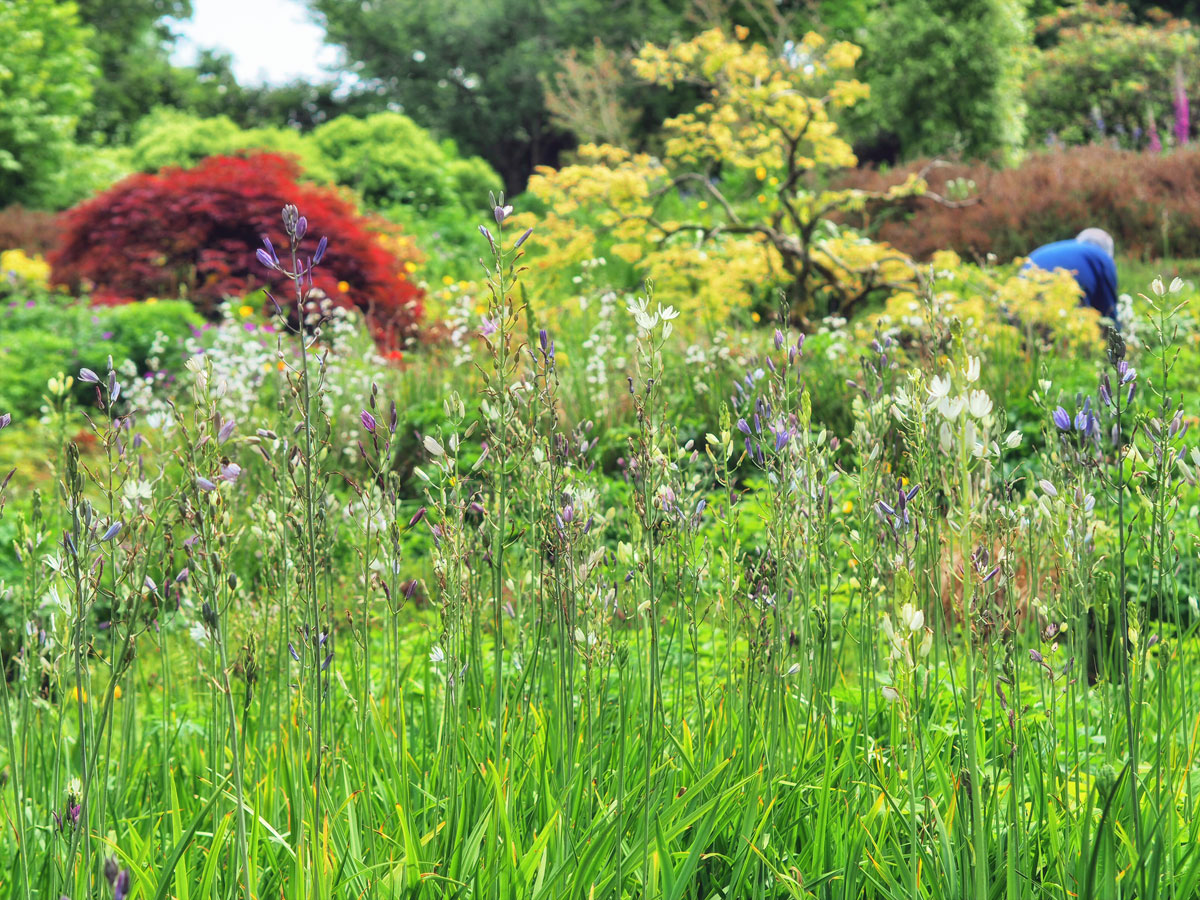
On every level there was planting to admire.
We didn’t have time to explore the lake and arboretum, as we wanted to have one last birthday treat and enjoy a Cream Tea – the Cornish way!
Naturally it was far too tempting not to have a look at the plant sales although I did intend only to look up the names of a geranium I fancied. However, resistance is futile and I walked away with a couple of new Hydrangea plants for the dappled shade border.
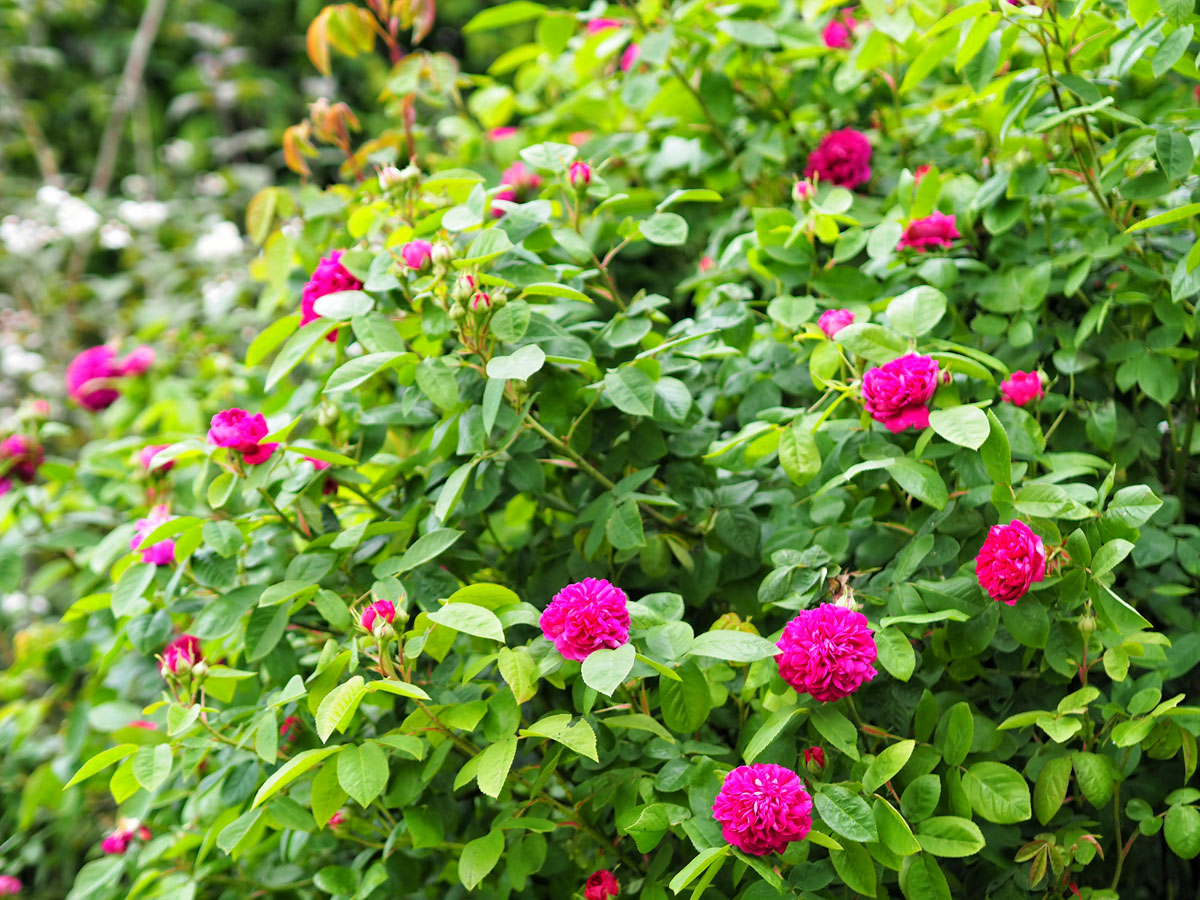
And there is always time to stop and smell the roses
It is a garden I would love to go back to in a different season and being less than 2 hours from home it is entirely possible that we can do it on a day out.
My visit to south Devon would naturally have to include a garden tour. This time The Garden House in nearby Buckland Monachorum, a mere 15 mins from the hotel we were staying in. I have read a lot about this garden so I was expecting good things.
Originally a family home and private garden purchased by the Fortescue family back in 1945, The Garden House is now run by the Fortescue Garden Trust, a small charity committed to developing and maintaining this special place, for everyone to enjoy.
Grasses
Thalictrum
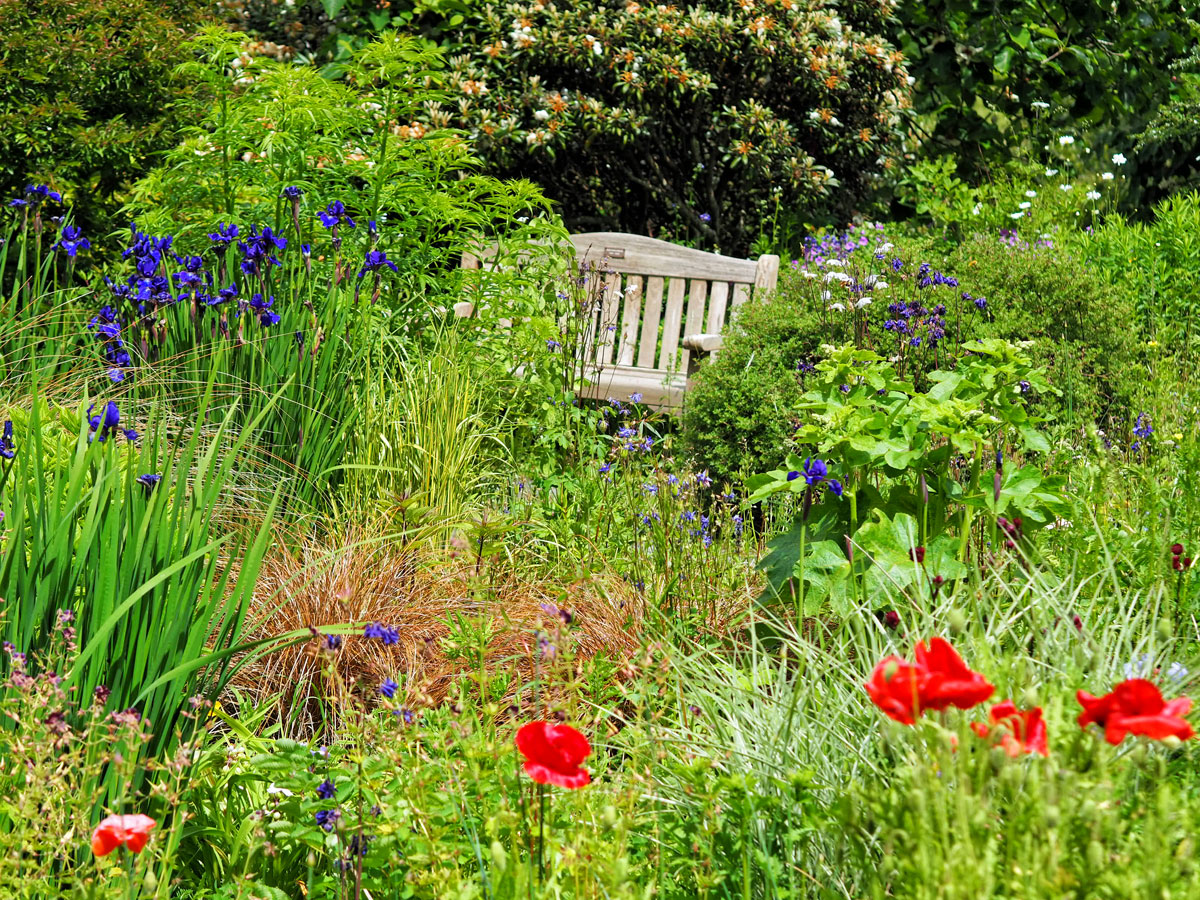
Poppies
Poppies
Alliums
It is a true plantsman’s paradise.
Aquilegias
Hardy Geraniums
I have split this post into two parts – this one will take you around the main garden which consists of several areas all connected by meandering pathways. In some ways it reminded me very much of the delightful East Lambrook Manor garden which we visited last year, only much larger.
The first area is the summer garden which leads through to the cottage garden and to the ‘Magic Circle’. You can’t rush. There are so many beautiful plants to see and admire.
Irises
Pimpinella major ‘Rosea’ / Pink Cow Parsley
Thalictrum / Meadow rue
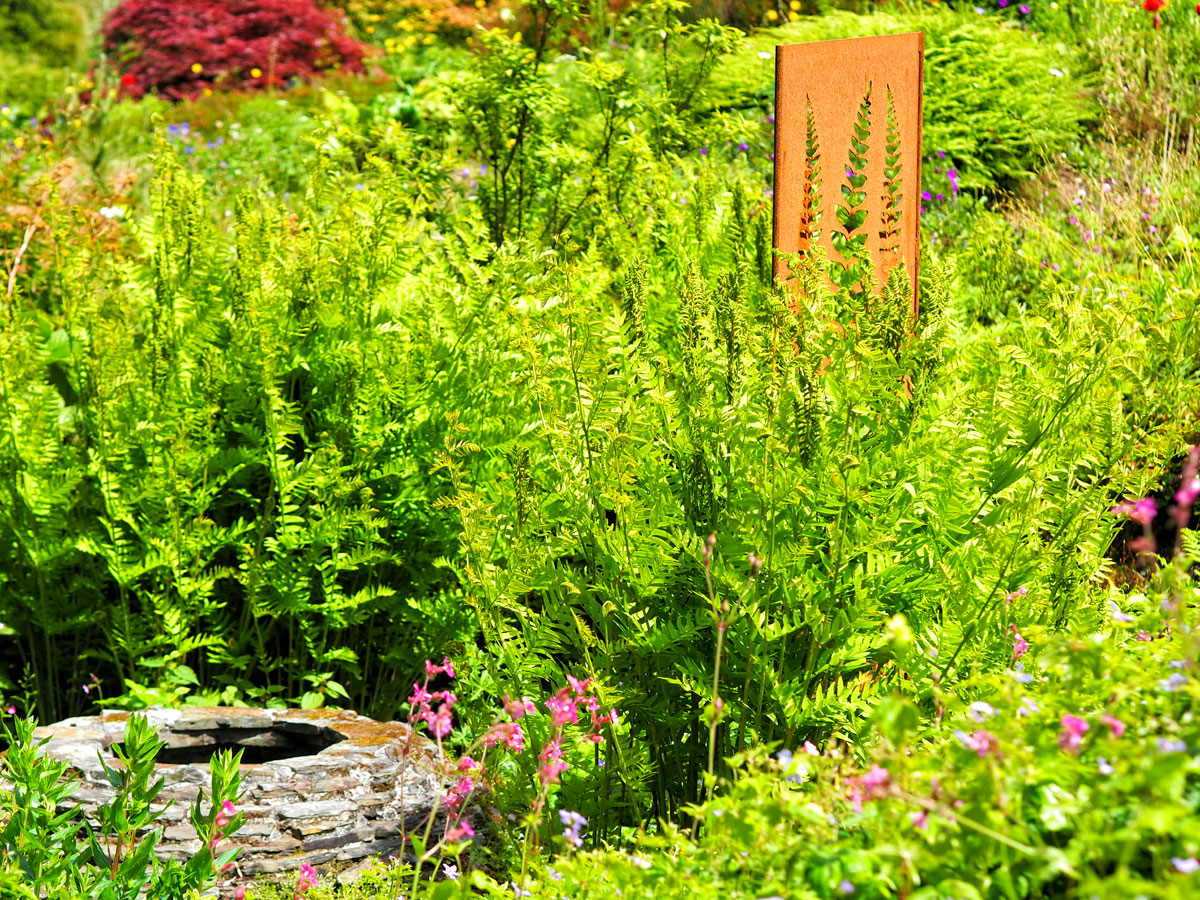
Quarry Garden
Quarry Garden
Quarry Garden
The Magic Circle
Poppies and Salvias
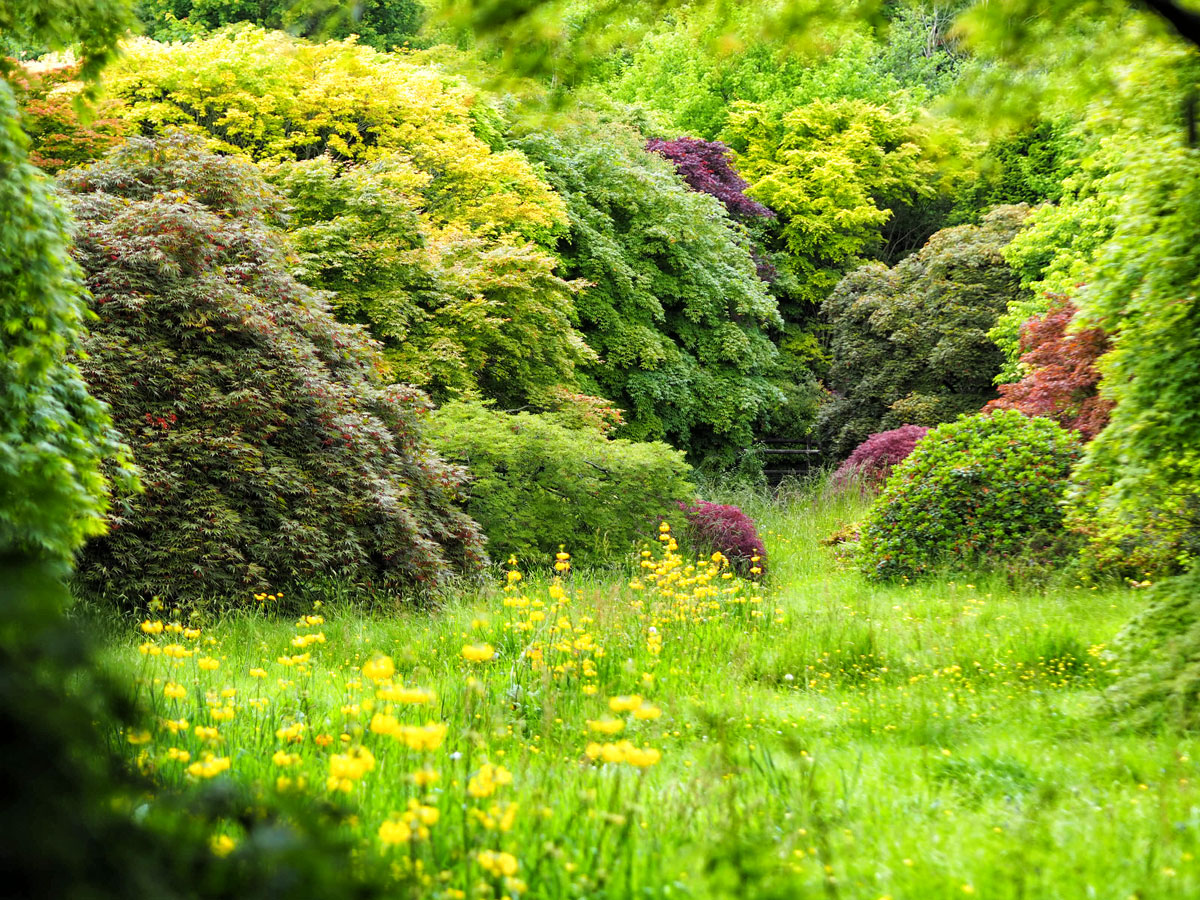
From there we wandered through the Acer Glade, around the Wildflower Meadow and along the Jungle Path to Wisteria Bridge. This part of the garden must look absolutely stunning in autumn dress.
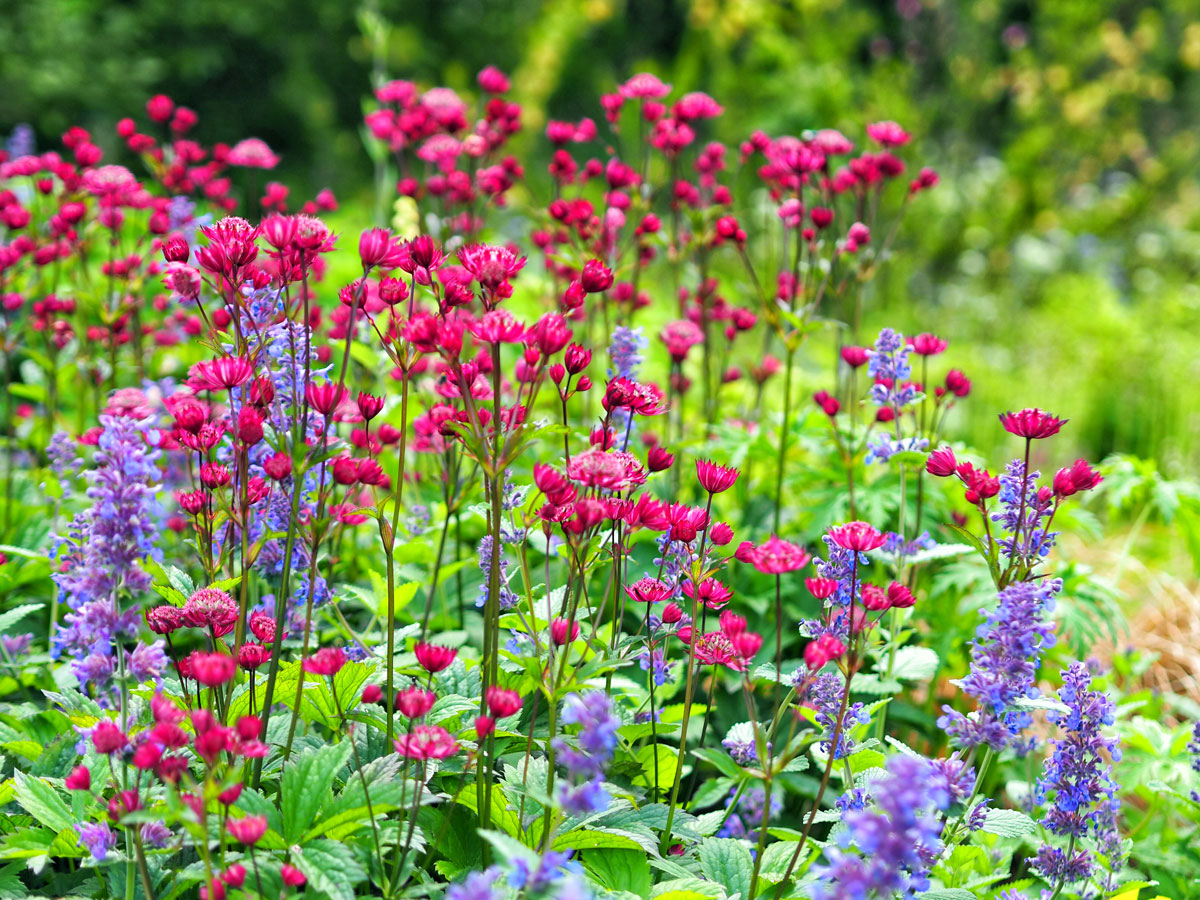
Astrantia
Astrantia
Views and Acer Glade
Stepping stones
Wildflower Meadow
Wildflower Meadow
Wisteria Bridge
Wisteria Bridge
Finally a Bulb Meadow takes you onto the lane across which you will find the Walled Garden which is the focus of my second post.
In the spring of 2017 we had a week’s holiday in the neighbouring county of Devon. South Devon to be precise because it was one area that we hadn’t explored much in many decades. Although we had a wonderful week we never had time to go into Dartmoor National Park so we were determined to go back. A lot has happened since then, but finally last week we did manage a short break.
Great Staple Tor
We based ourselves in Tavistock on the western edge of the park and for once we booked into a hotel with bed, breakfast and dinner included so we didn’t have to think about anything other than where we were going to go each day. I prefer holiday cottages but they are never a proper holiday for me.
The weather was a bit iffy – sunshine and showers forecast throughout the 4 days, but we didn’t do too badly. On the rainiest day we went into Exeter to tick off yet another cathedral from our list. And of course there had to be one garden visit.
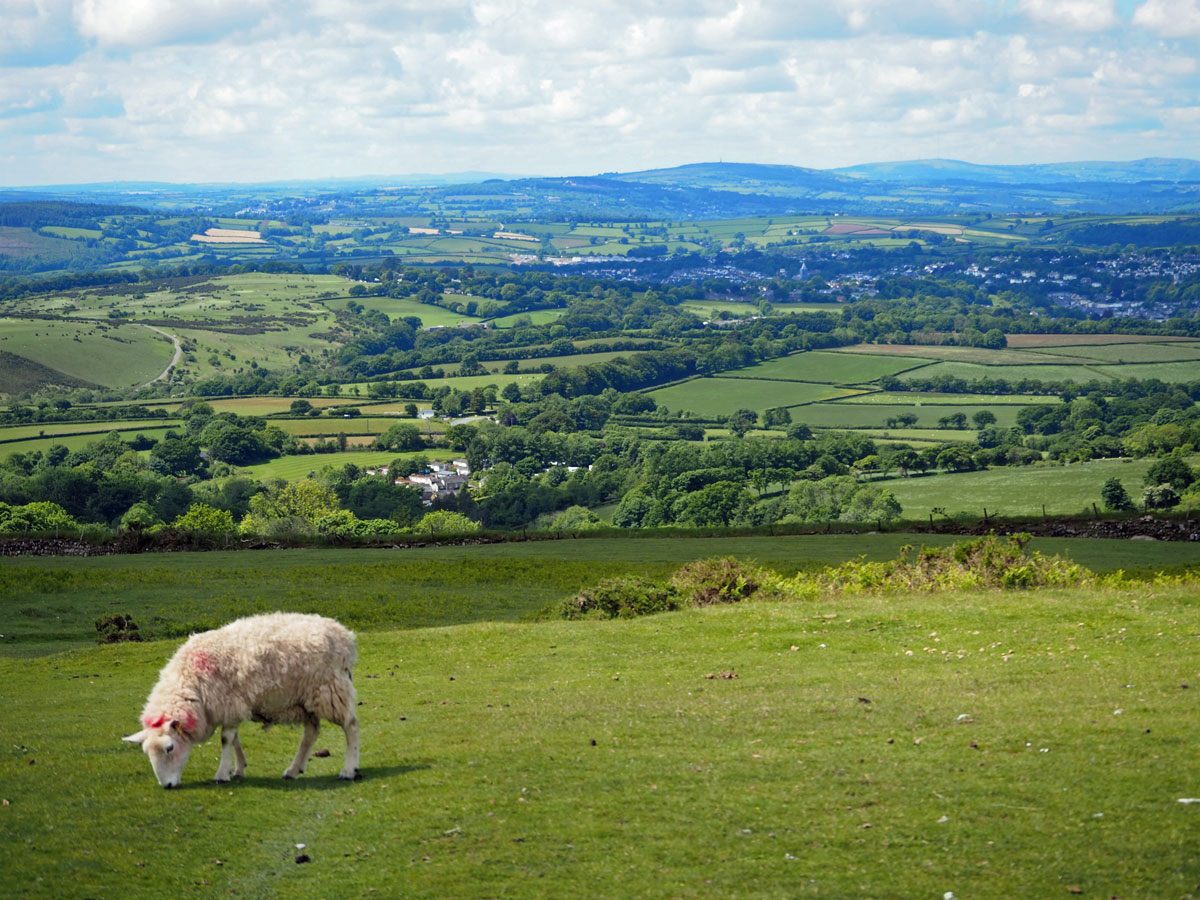
Views over towards Tavistock
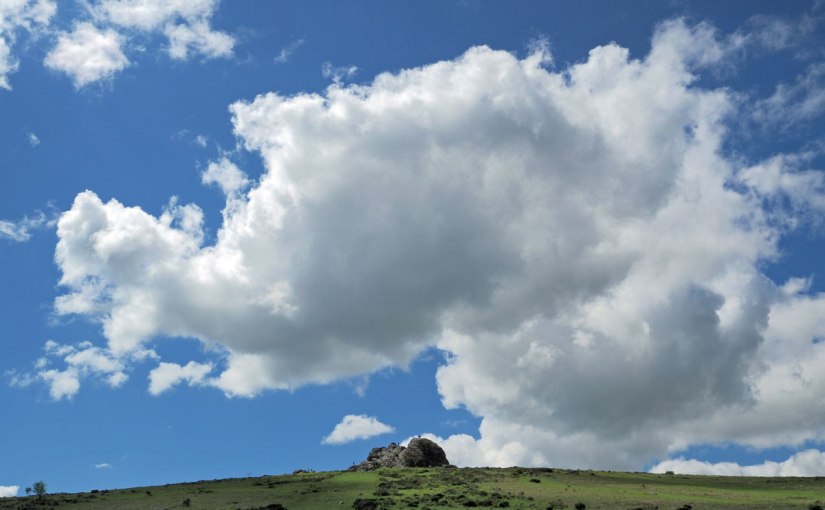
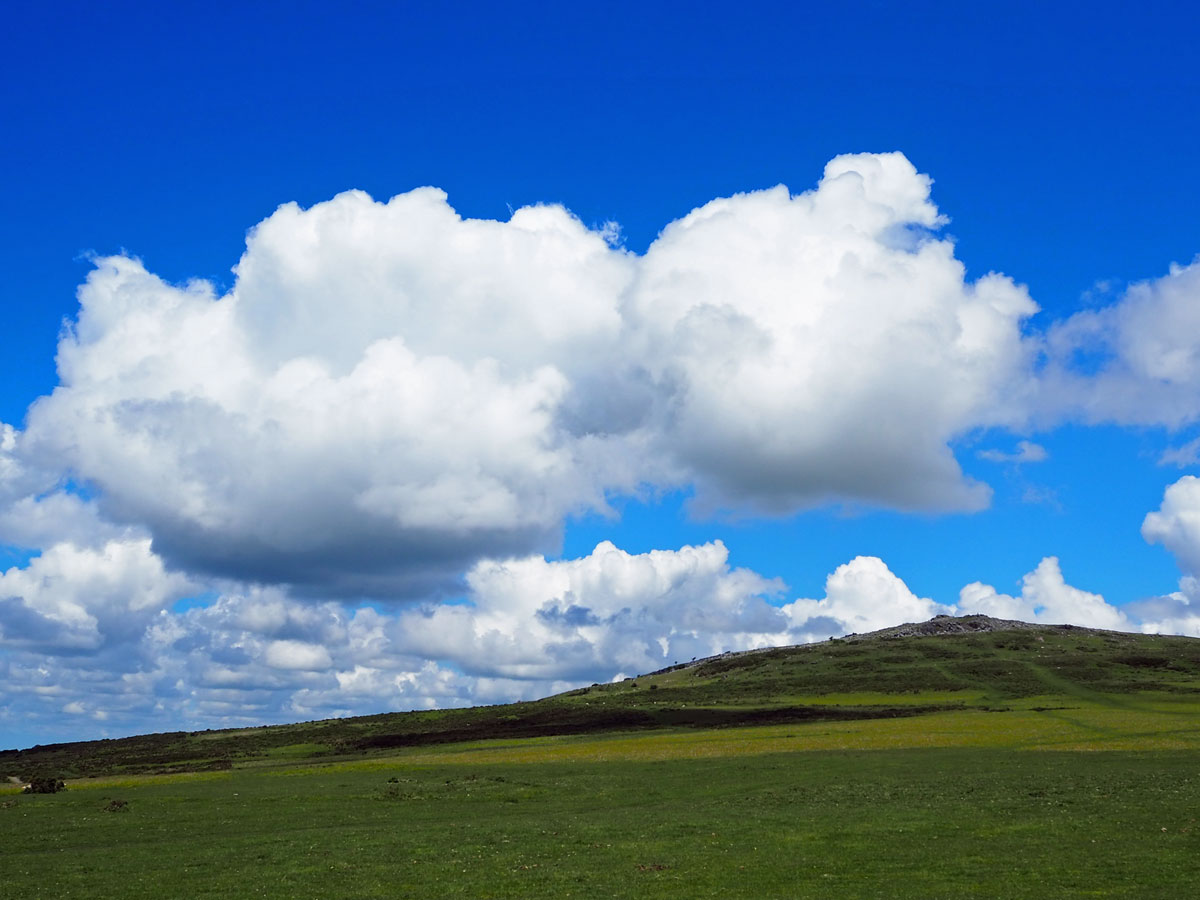
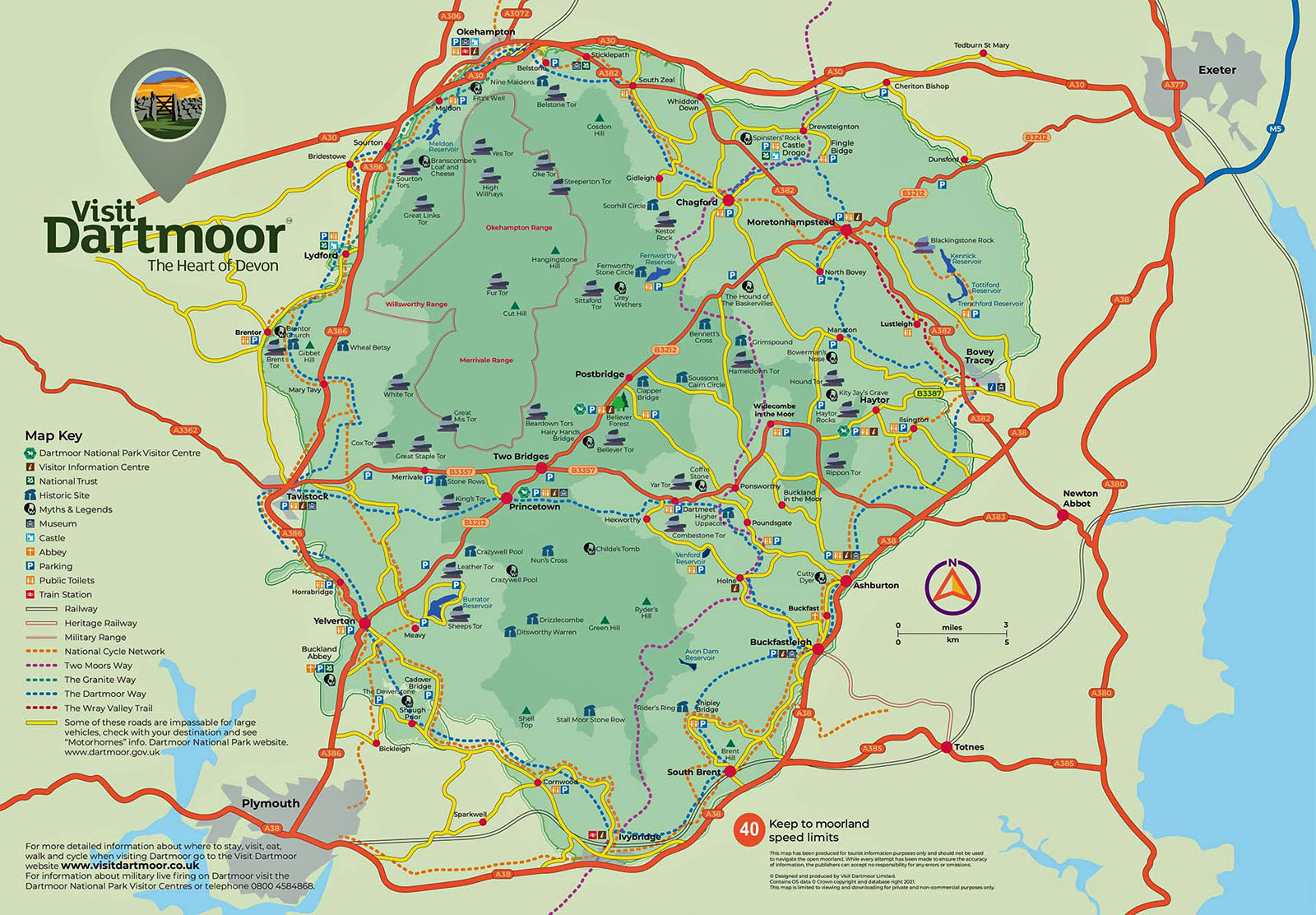
I planned a circular drive around Dartmoor with several stops to have a walk, enjoy the views and on the OH’s birthday we had a perfect day for it with blue skies, sunshine and wonderful fluffy white clouds. Our first stop was just inside the park, a bare 4 miles from Tavistock, at Pork Hill car park where you have amazing views over Tavistock and towards Plymouth to the south. Loads of parking and a good place for several walks / hiking trails / tors.
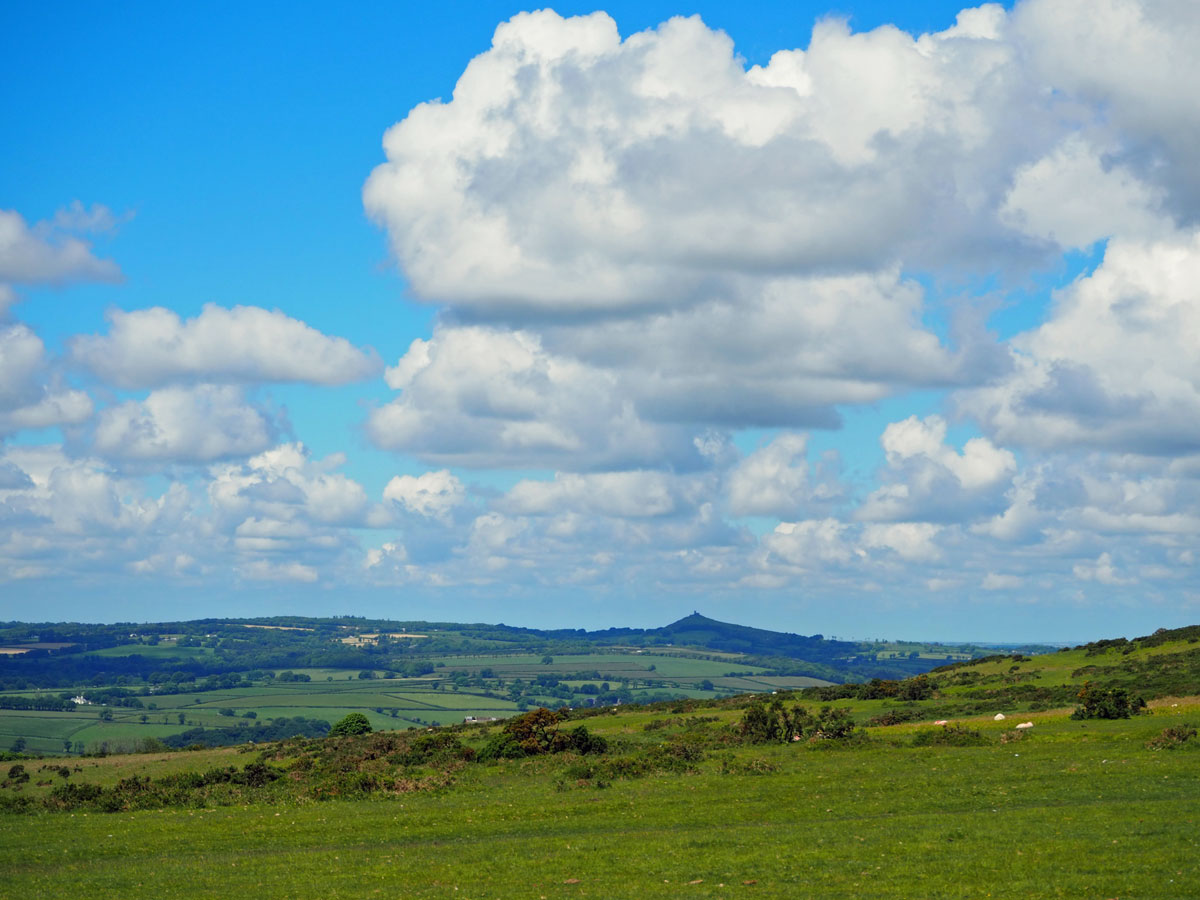
Brent Tor is one of the most impressive rock outcrops in Dartmoor. With St Michael’s Church at its top, it makes a distinctive and famous silhouette on the Dartmoor skyline.
And an ice-cream van. Though too early in the day for us.
Onwards to our next stop at Postbridge where you will find a large car park and toilets. There is a small museum and and exhibition about the local area which helps to explain the development of the moors and a shop selling books, maps, information leaflets to help you explore the area, including the Walks around Postbridge leaflet as well as local crafts and gifts. The staff are very welcoming and friendly too.
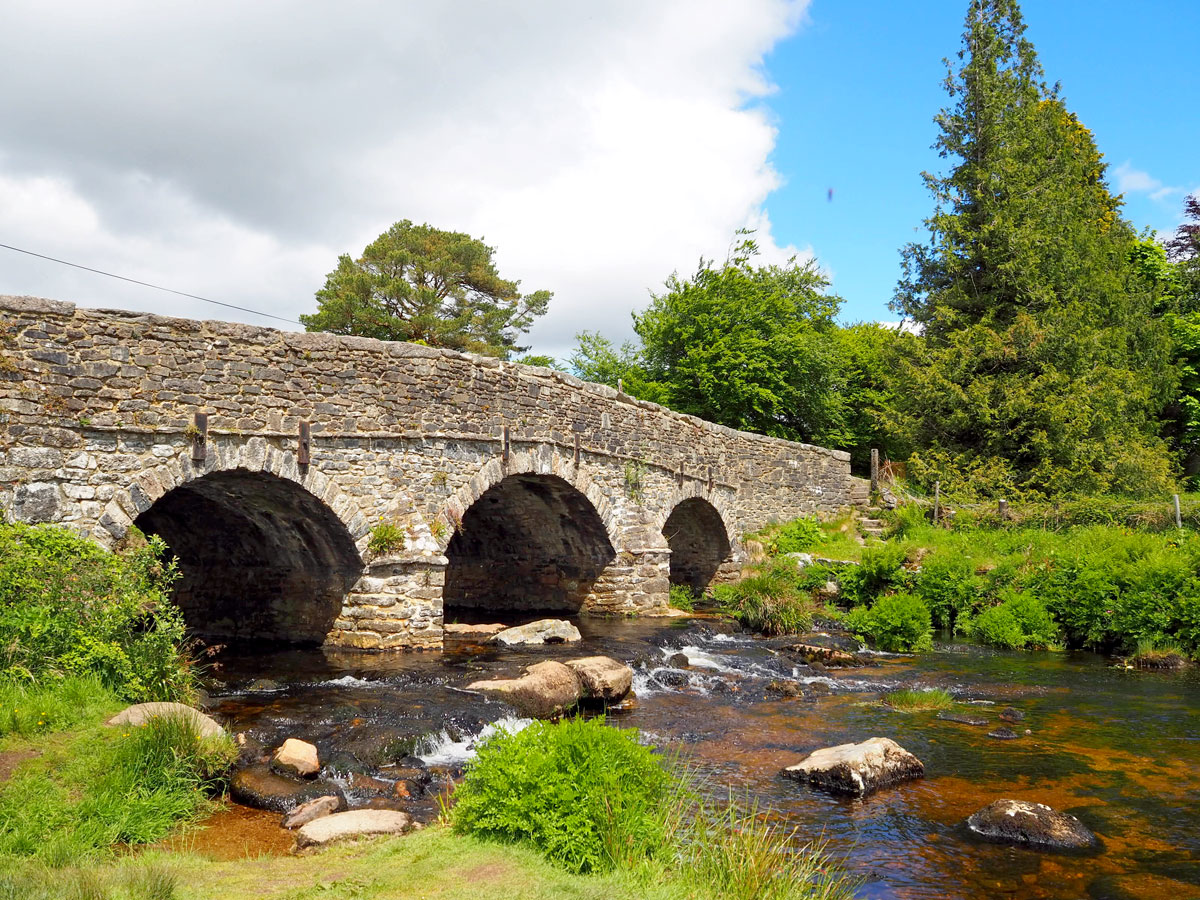
The ‘new’ bridge over the East Dart River
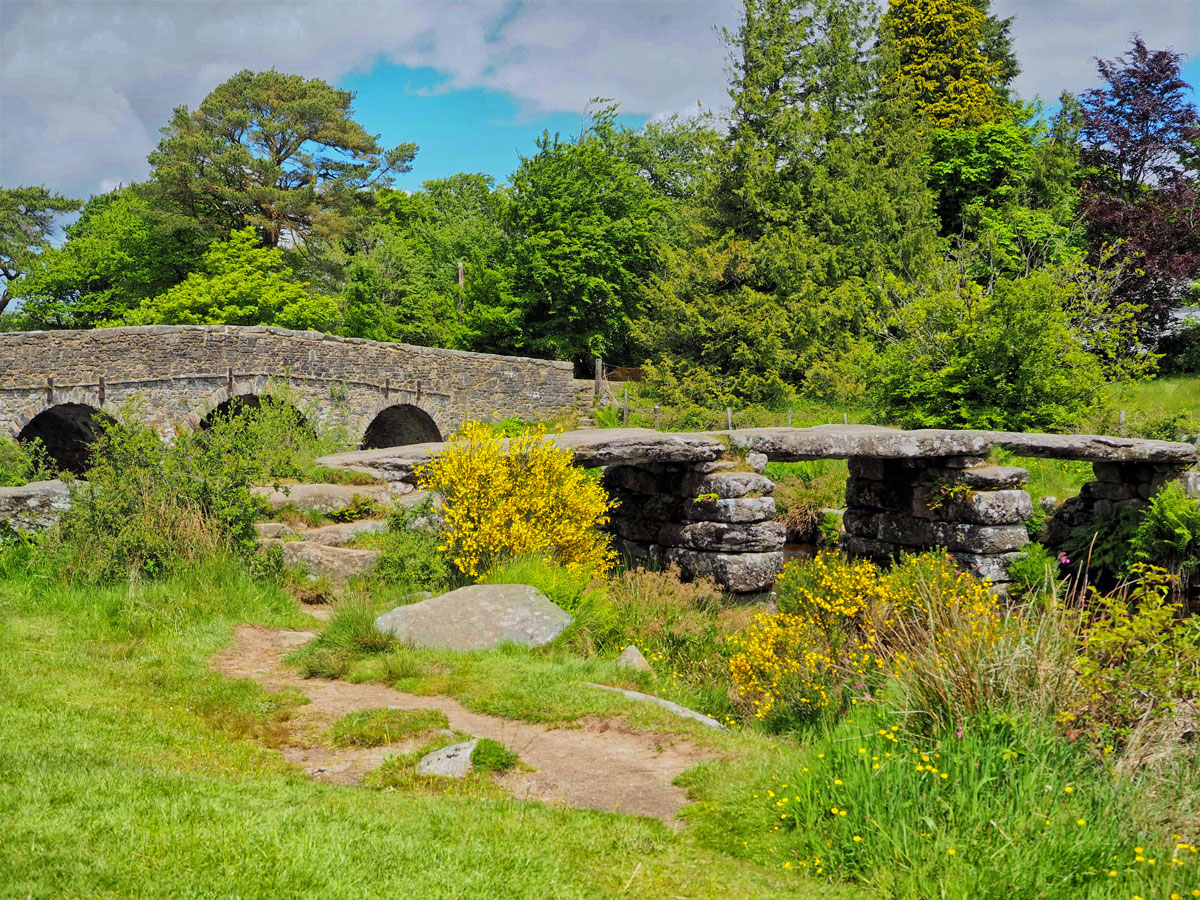
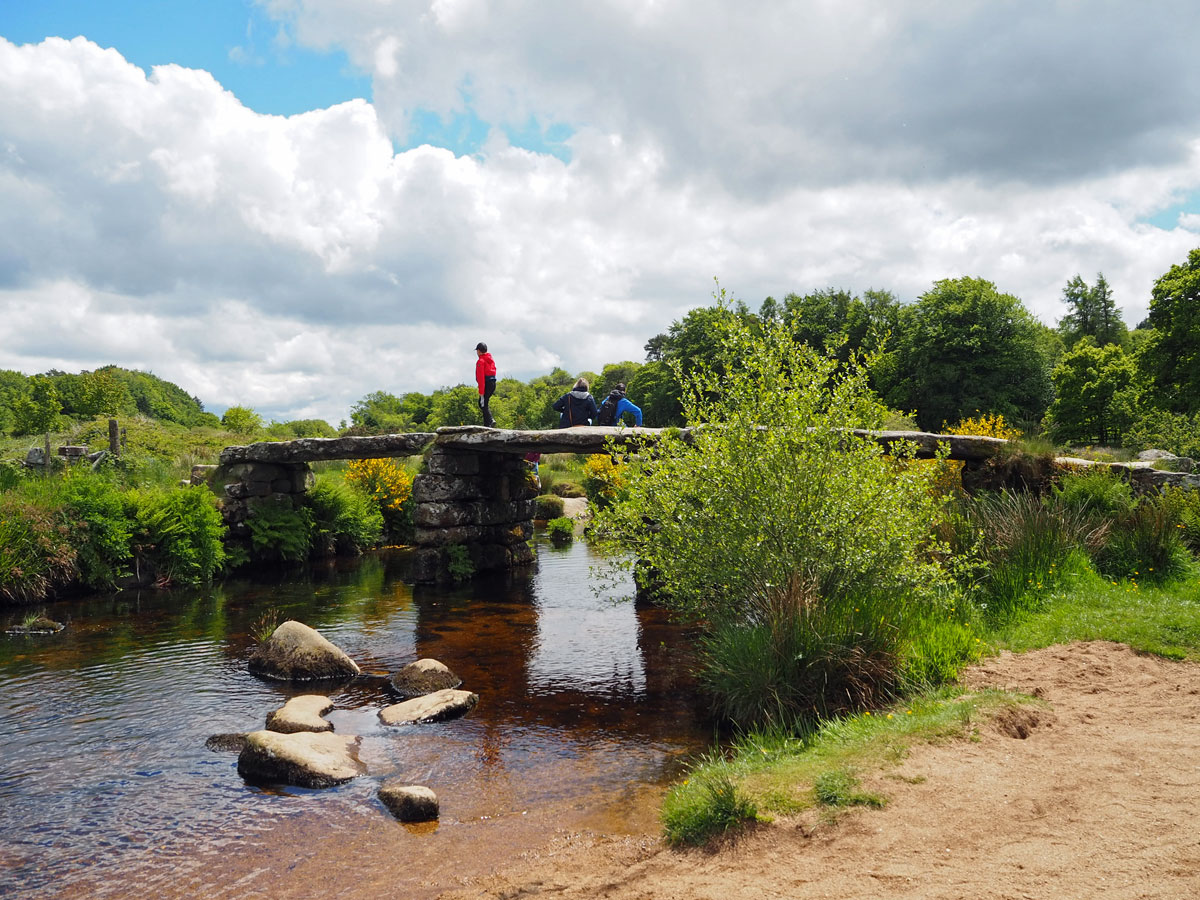
Close by you will find one of the best examples of an iconic clapper bridge. It is believed to date back to medieval times and would probably have replaced stepping stones to help packhorses cross the river. The bridge has two central piers spanned by three large granite slabs, or clappers.
New bridge and the ancient clapper bridge
The word clapper is thought to derive from the Anglo-Saxon word ‘cleaca’, meaning stepping stones, or ‘bridging the stepping stones’.
The clapper bridge
It’s a very popular place for families who love to paddle in the river with fishing nets for pond dipping (not sure what they can find) and also picnic in the meadow close by.
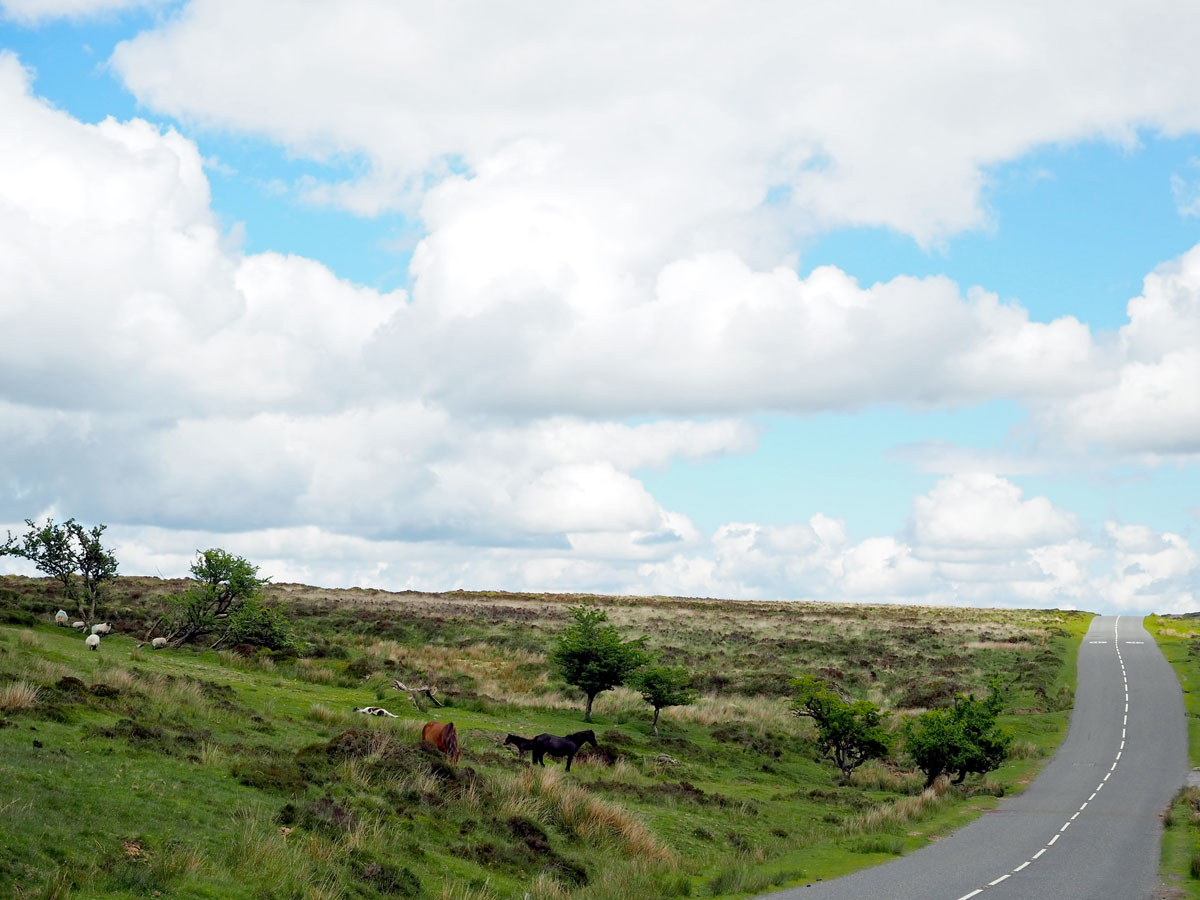
One of the nicest things about driving through the park is the sense of space. Despite it being the school half term holidays the park wasn’t very busy and most of the many car parks (usually free) were relatively empty which meant we could stop when and where we liked.
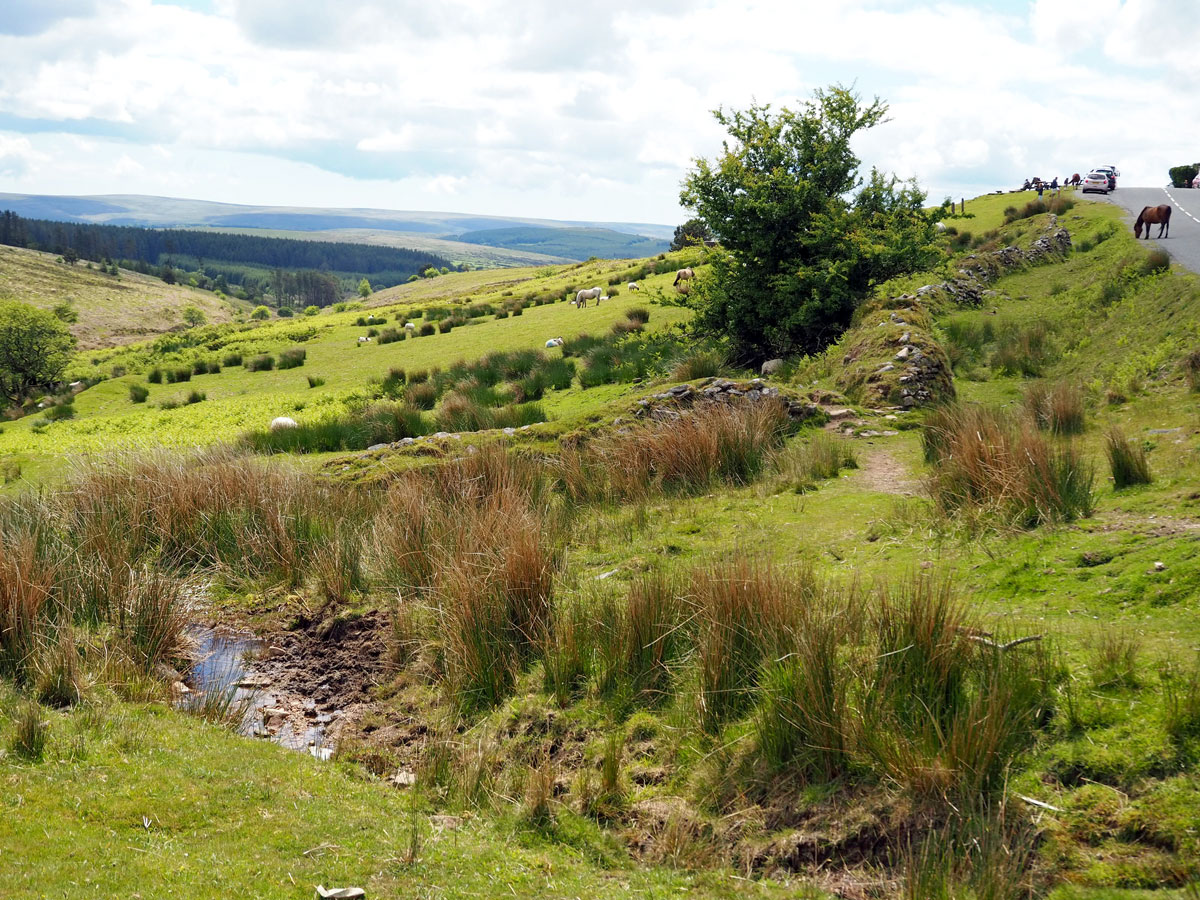
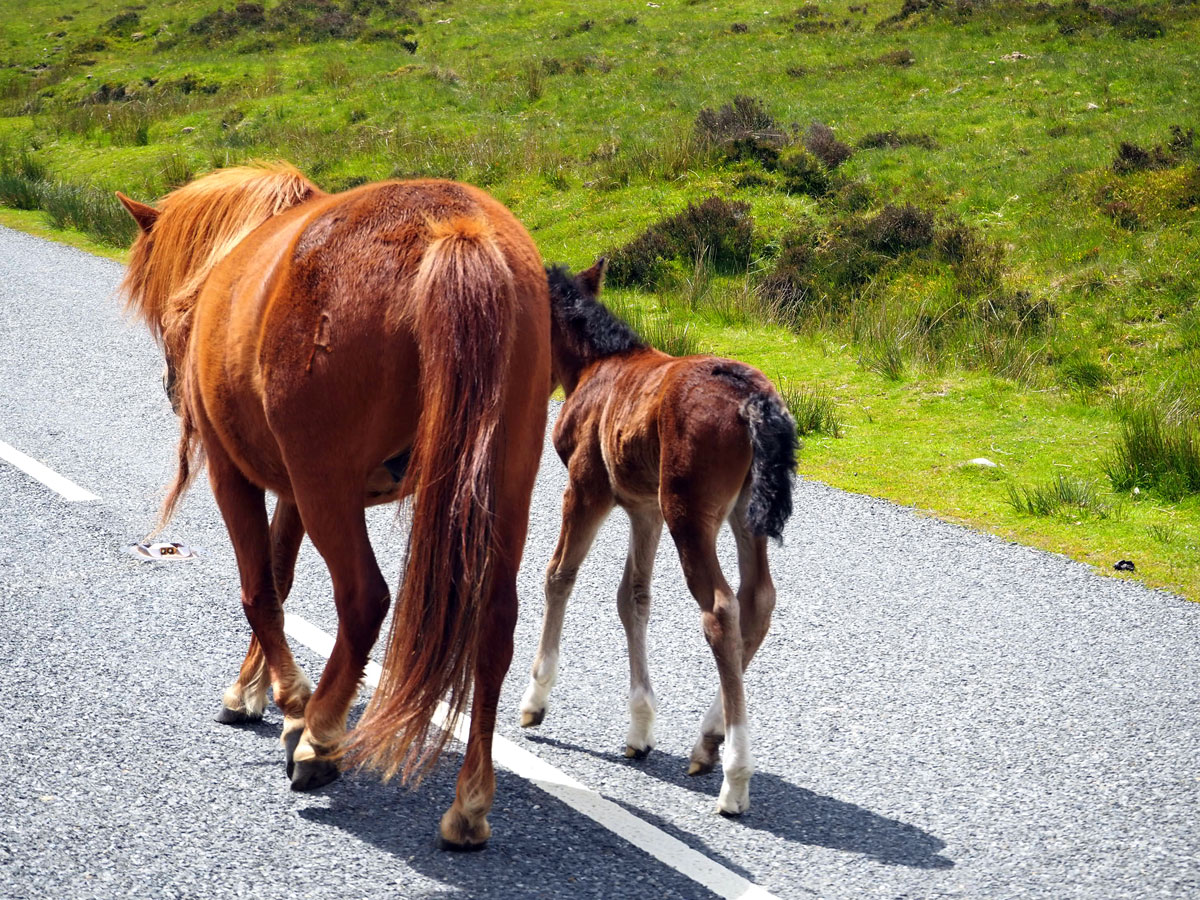
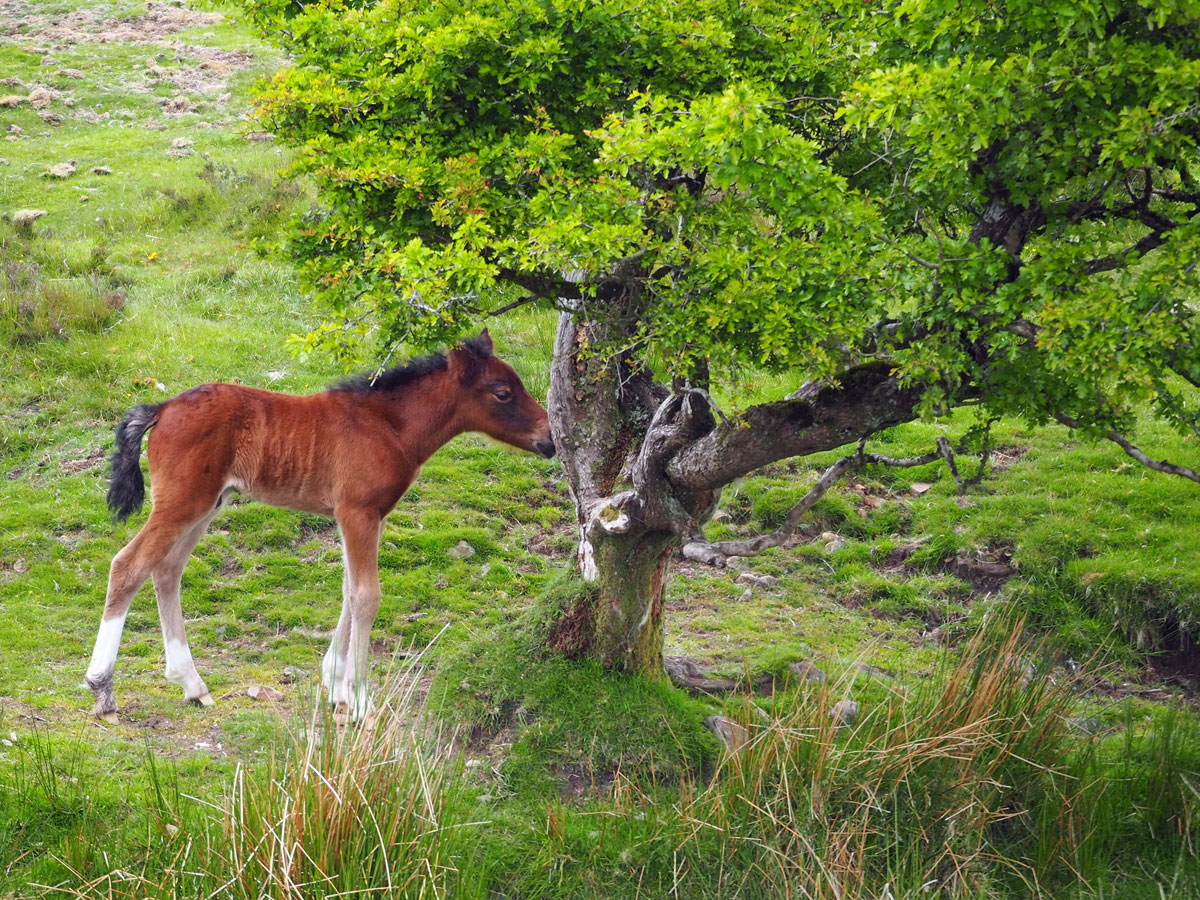
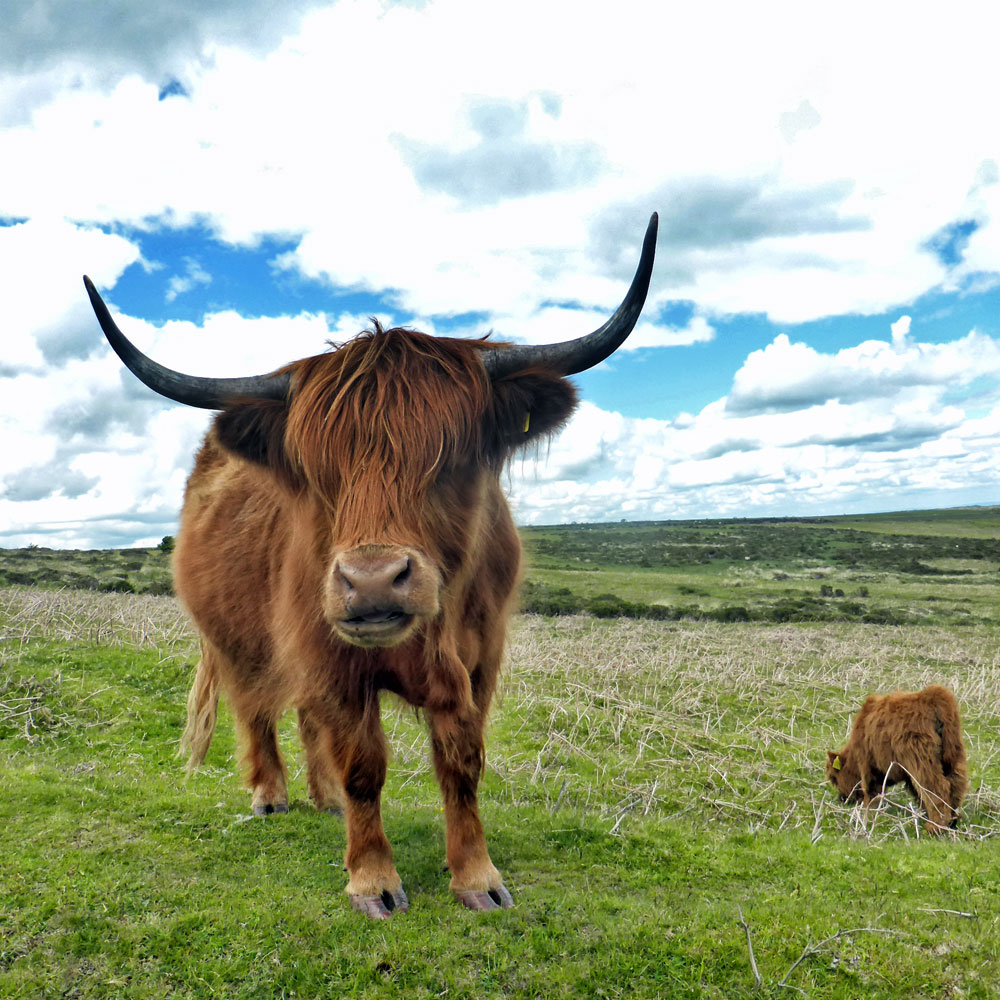
Of course stopping to look at the ubiquitous Dartmoor ponies was a must. The speed limit with the park is 40mph – but you always have to keep your eyes open for sheep, ponies and even cattle crossing or walking in the road. Slow travel at its best.
Is this edible?
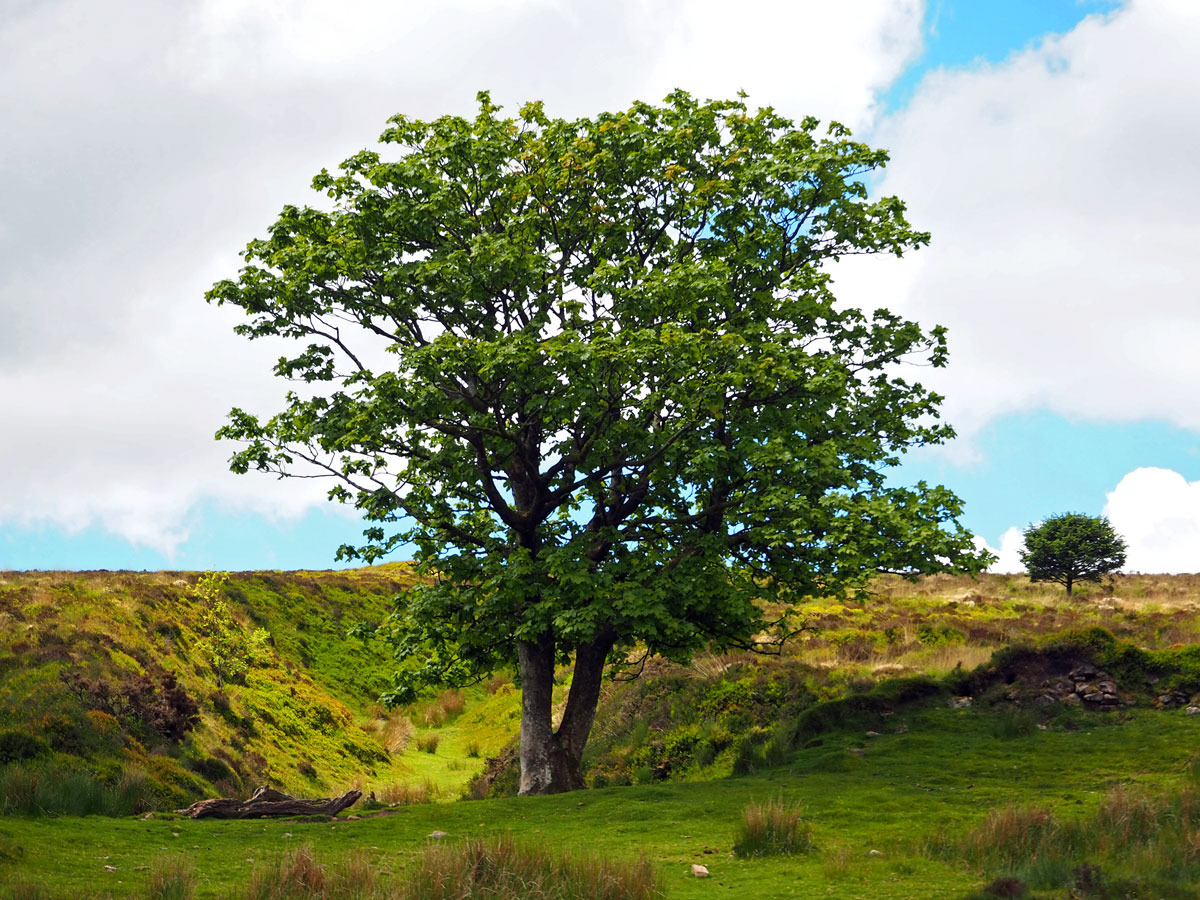
I was thinking about what makes Dartmoor different to other similar places I have visited, such as Exmoor, North Yorkshire, the Brecon Beacons. It seems a lot bleaker and desolate with so much space and very few signs of human habitation and perhaps a sense of history from Early Neolithic to the much more recent tin mining. The big skies and on this day, the clouds, are pretty amazing too though I wouldn’t want to be up here in the mist and rain.
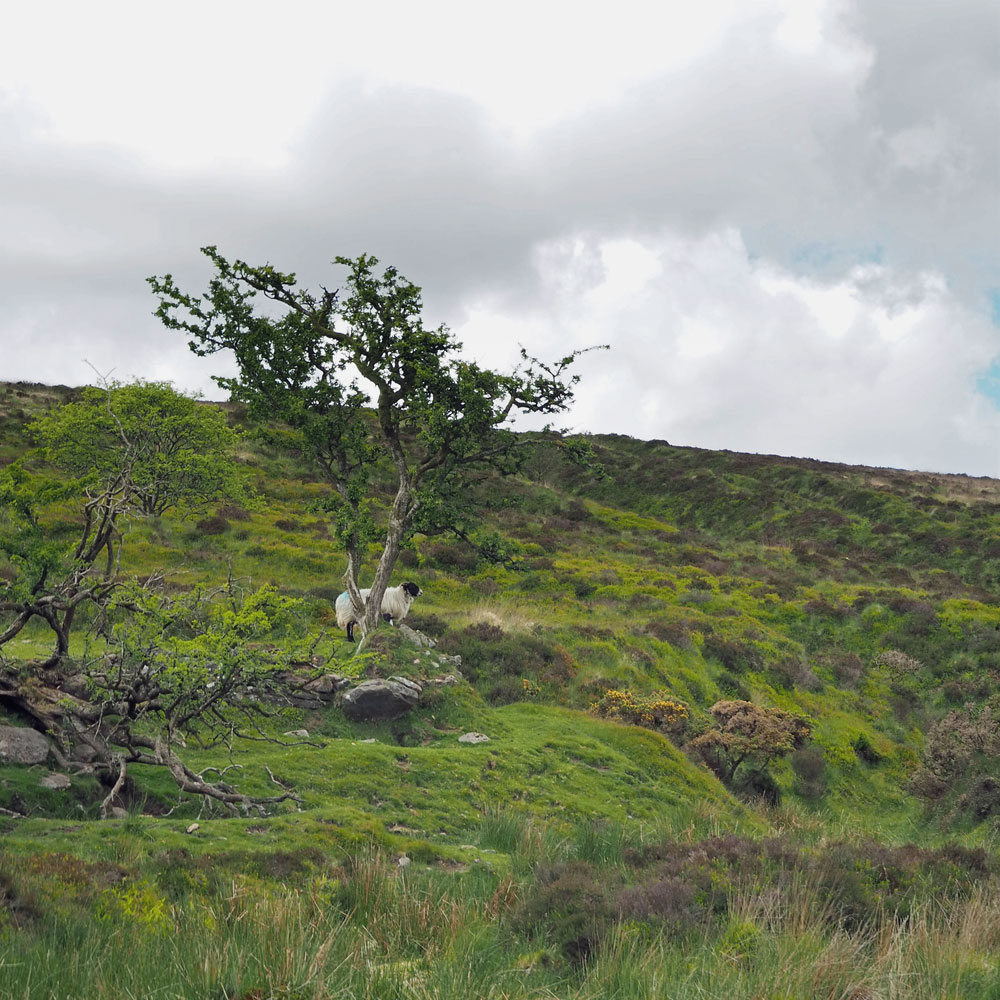
Sheep terrainInquisitive McMoos
Wending our way around the park via Moretonhampstead and Bovey Tracey our next port of call was the famous Haytor which lies between Bovey Tracey and Widdecombe in the Moor.
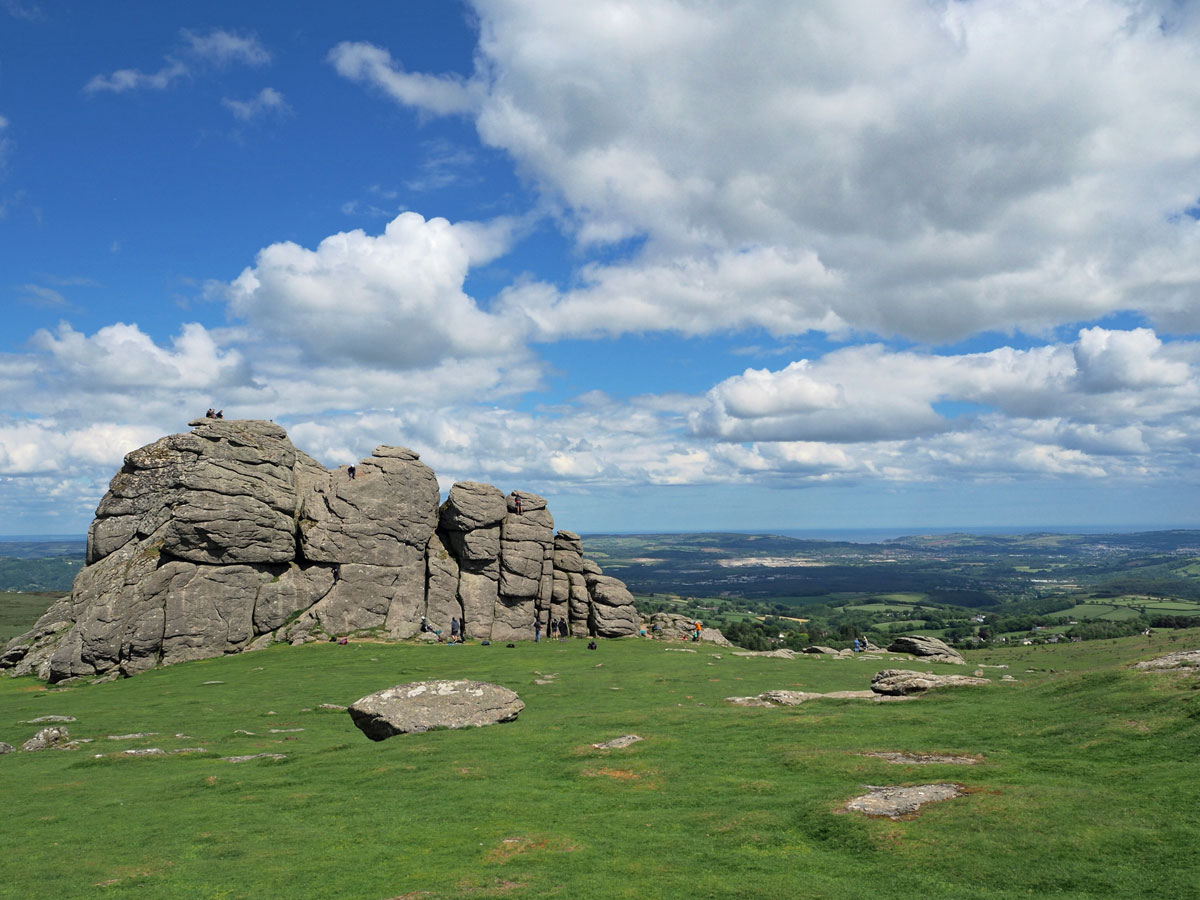
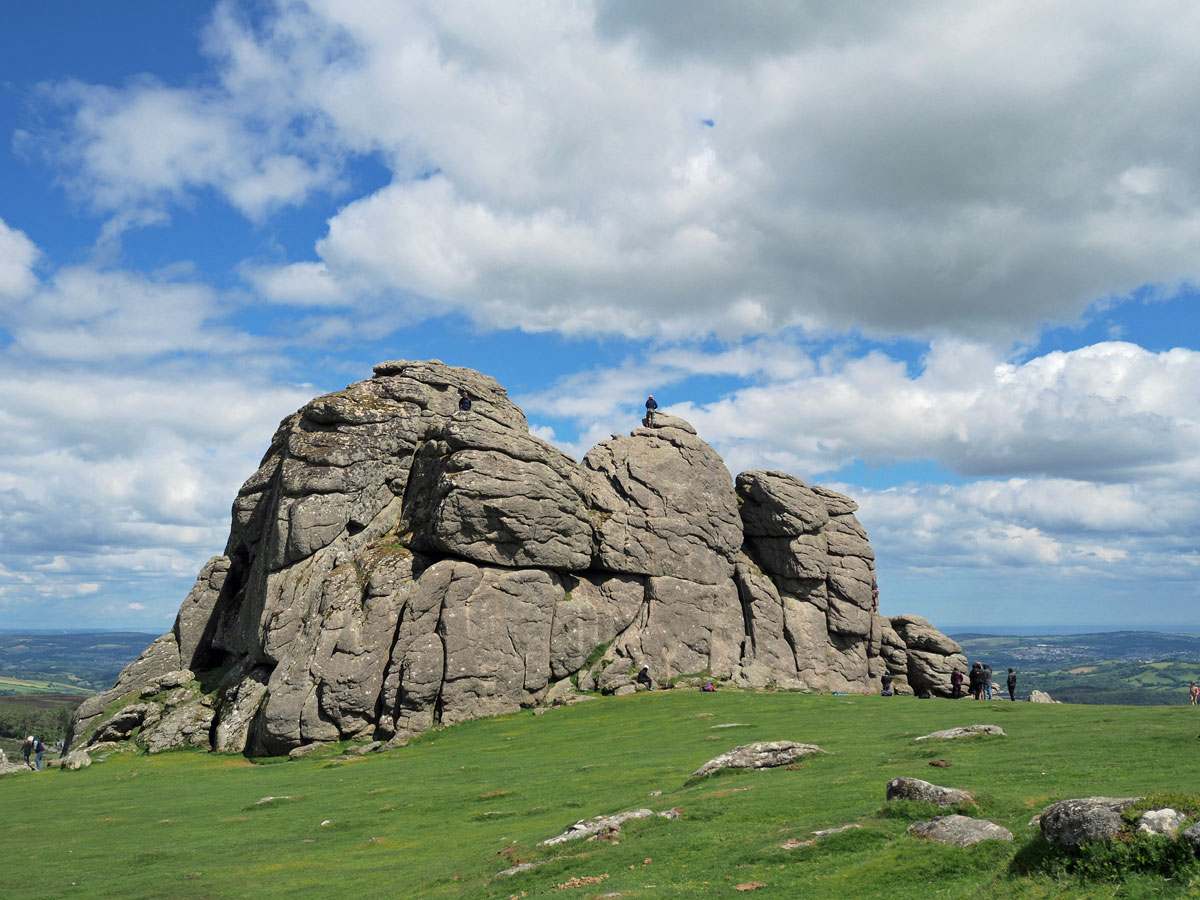
Haytor and the South Devon coast in the distance
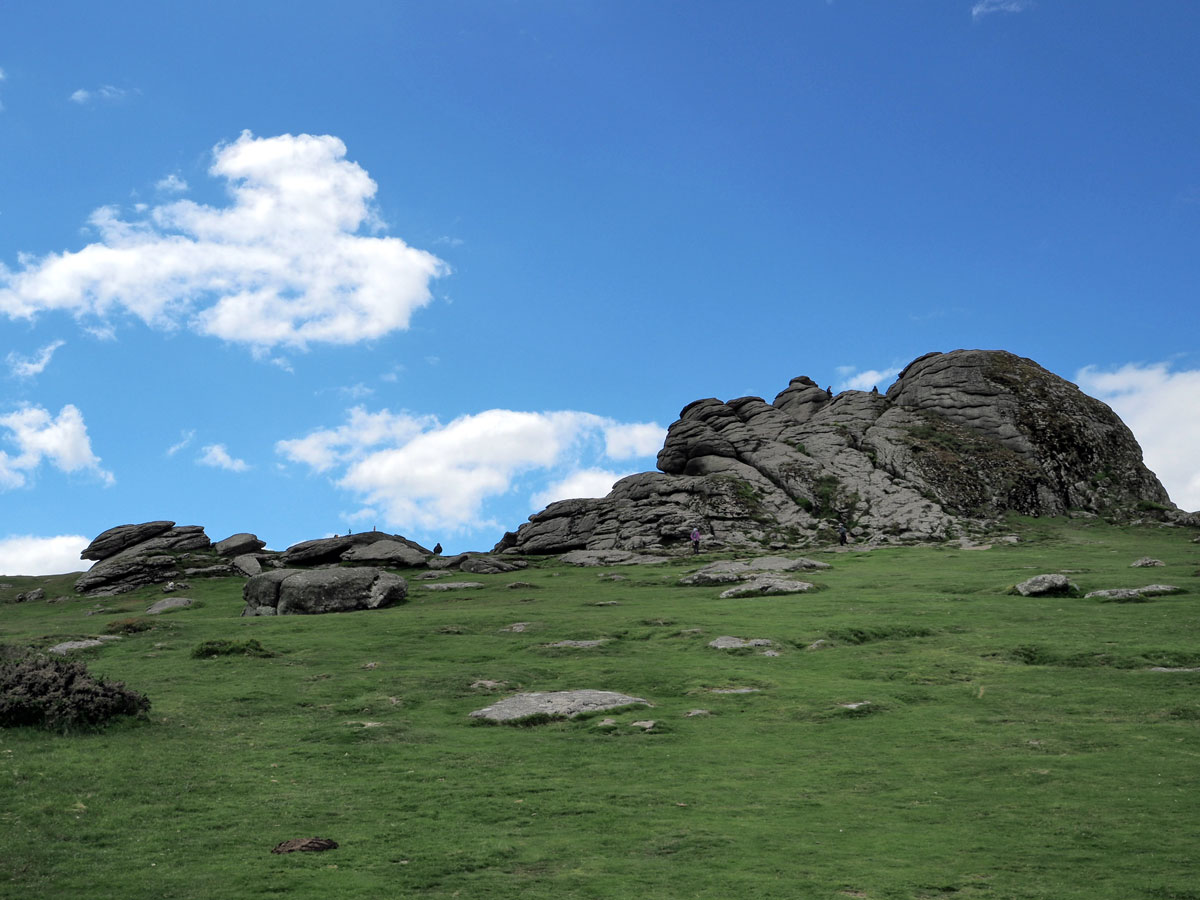
Haytor is perhaps the most easily accessible tor and has spectacular views across Dartmoor and the South Devon coast. I think we chose the steepest path up to the rocks though, but we made it!
The rocky granite outcrops (tors) that dominate the landscape were formed over 280 million years ago. People have been here for over 4,000 years, you will see the remains of prehistoric round houses, field boundaries and burial cairns.
It was the busiest place we came across during the day with a lot of people rock climbing and bouldering. There is a Visitor Centre here too where you can buy a ‘Walks around Haytor’ leaflet or the ‘Haytor’ booklet.
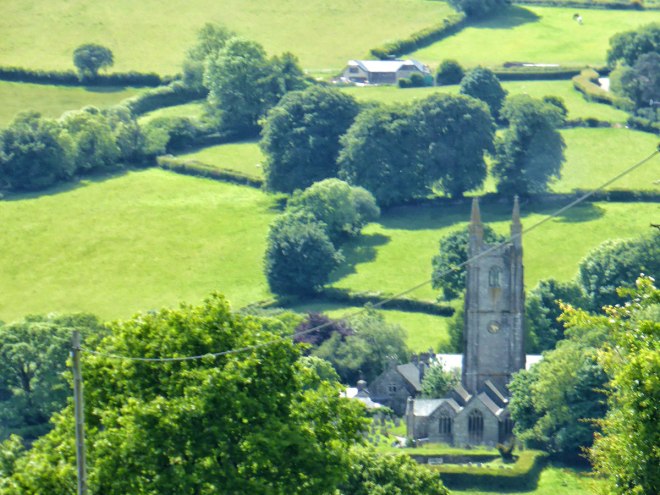
We didn’t stop in Widdecombe in the Moor which is famous for two things; The Church of St Pancras, colloquially known as the Cathedral of the Moors in recognition of its 120-ft tower, stands over the village green — helping to make Widecombe one of the most beloved villages on Dartmoor
and the folk song “Widecombe Fair” which immortalises the tale of Tom Pearce and the death of his horse at the famous annual fair which is held on the second Tuesday in September. It is a classic agricultural fair with horse jumping, rural crafts, a dog show and much more.
“Tom Pearce, Tom Pearce, lend me your grey mare.
All along, down along, out along lea.
For I want for to go to Widecombe Fair,
With Bill Brewer, Jan Stewer, Peter Gurney,
Peter Davy, Dan’l Whiddon, Harry Hawke,
Old Uncle Tom Cobley and all,
Old Uncle Tom Cobley and all.”
The roads here are quite narrow so there is much stopping and reversing and squeezing into passing places so not for the faint-hearted driver. I had planned my route to avoid the narrowest of roads, but some are unavoidable. All I can advise is to take your time and don’t panic!
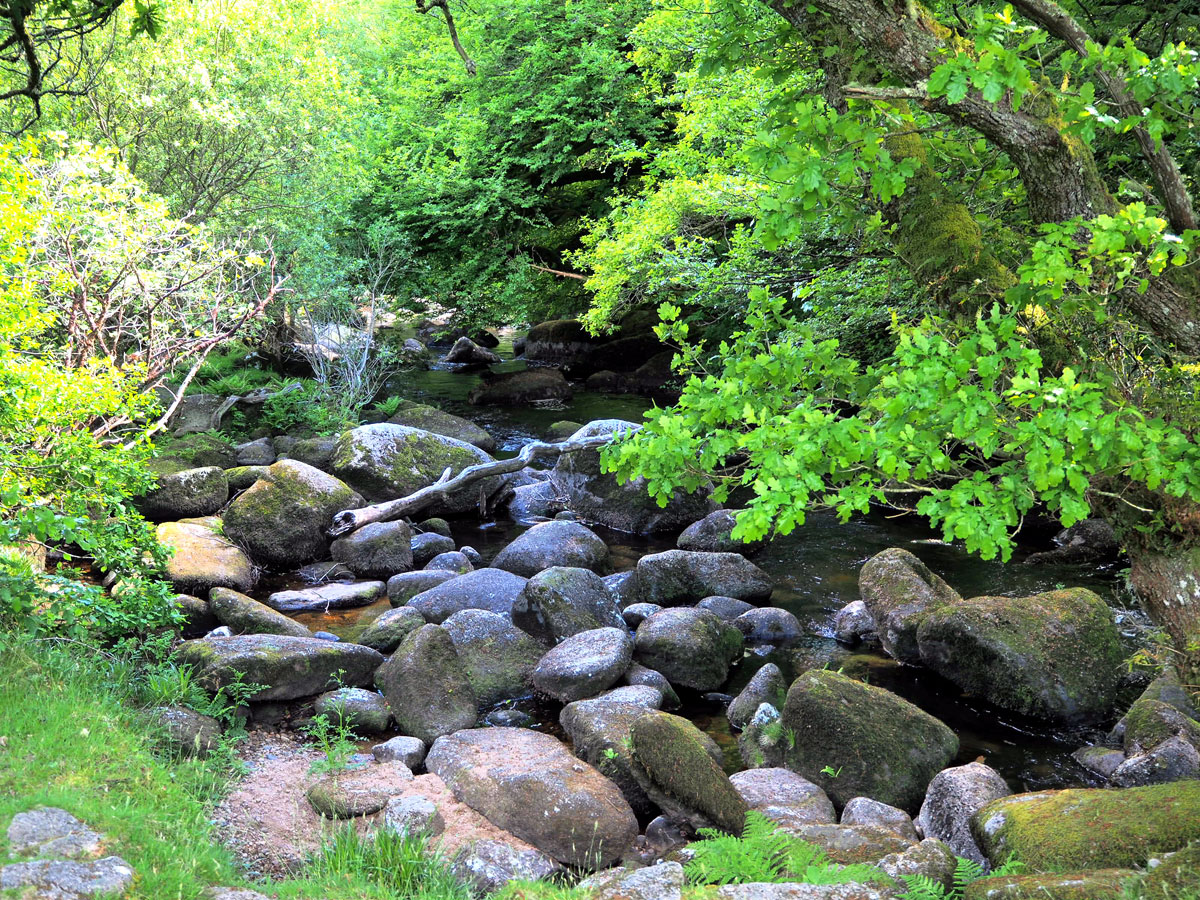
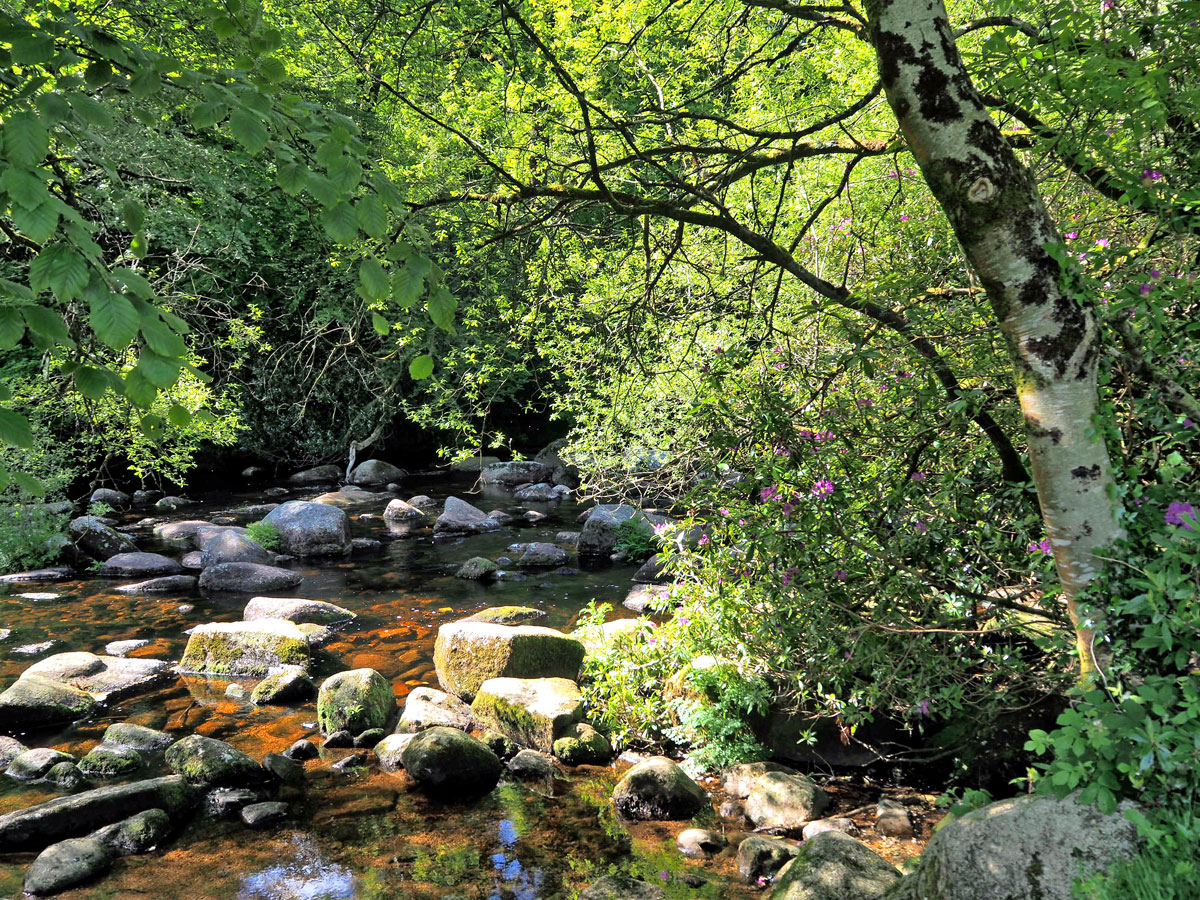
Boulders on the East Dart RiverEast Dart River walk
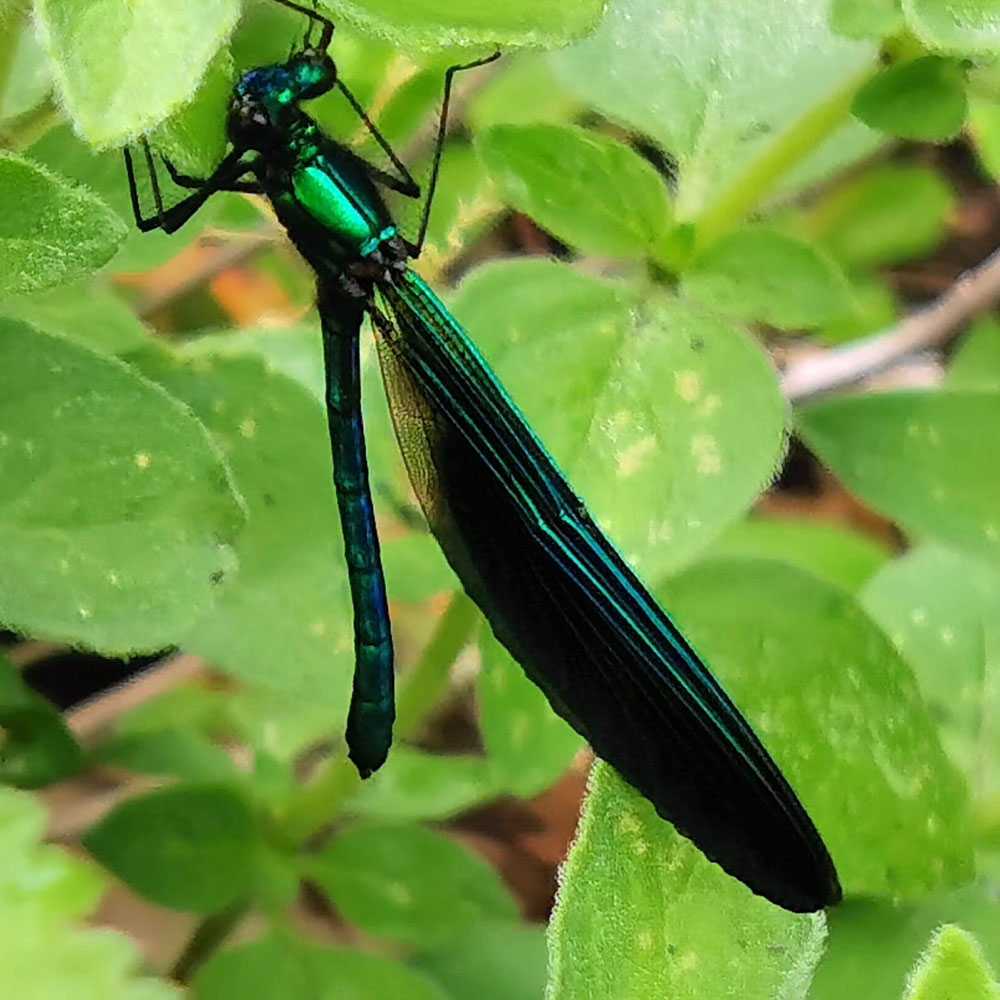
Our final stop was at Dartmeet where two rivers – the East Dart and the West Dart converge. After a short stroll along the banks of the river looking for damselflies, dragonflies and Kingfishers we called it a day once the route became too rocky for comfort.
A beautiful female Demoiselle which has metallic green-bronze body with translucent pale brown wings.
All in all a great day out, though to really make the most of Dartmoor you probably need to explore on foot and spread out the walks over several days.
Colour Your Senses in Kingston (upon Thames) was designed to welcome people safely back into the city after all the covid restrictions. The town centre has been dressed with colourful cross-street banners, bunting, floor stencils, floral displays and exhibition boards, providing a splash of vibrant colour.
Market trader whistling, Musicians singing, Oars swhooshing and Ducks quacking.
It’s a busy city centre and no more so than on a Saturday afternoon so the daughter and I headed off along the riverside whilst the granddaughters went clothes shopping for the all important 18th birthday family meal that evening.
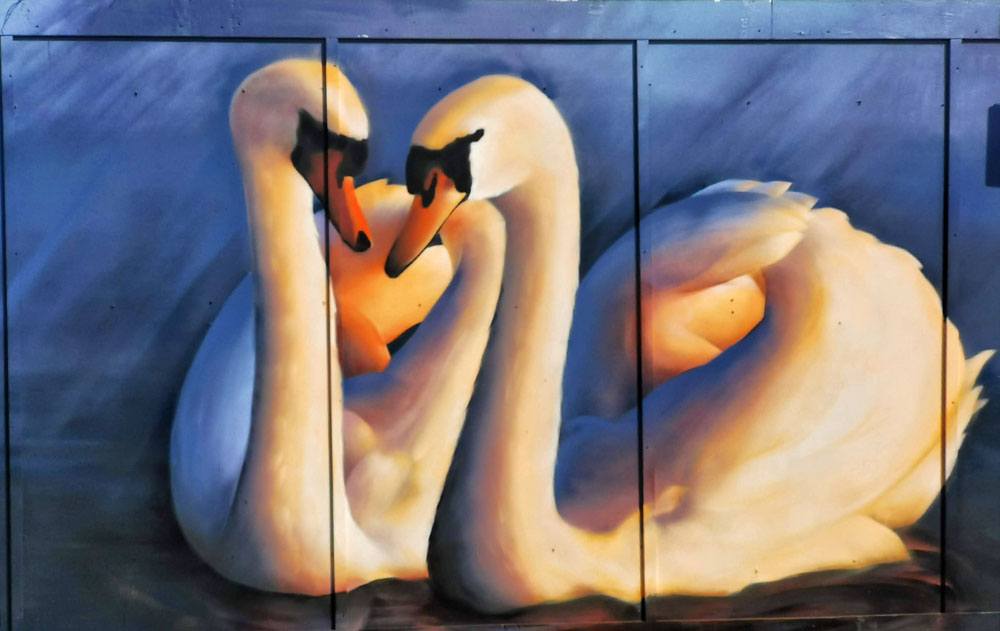
On our way back we came across some hoardings around an empty building plot behind the Bentall Centre that had been artistically and colourfully decorated. I included a few images of the hoardings in my Surrey round-up post, but there were more. I particularly liked this one.
I often wonder what an artist is thinking about when they create their paintings. Split personality? Torn apart? Gender confusion? Hanging by a thread? Who knows.
There can be no confusion about this one though. Swans as we know, mate for life, and the River Thames is well known for its swans. Possibly by Skyhigh.
My first impression of the one above was of penguins, but the one on the right is a woodpecker, not sure about the one on the left. It’s hard to track down these artists, but the A51 tag led me to Aspire who seems to paint animals and birds that are on the decline.
.EPOD His professional skillset (draftsman, fashion designer and illustrator) and the inspirations of his youth manifest vividly in his paintings and murals. Sultry figures draped in elegant materials. Mirrored vessels in otherworldly landscapes. Cigarettes hanging from kiss me lips.
281 bus rounding cape horn in a storm by Tom Pierce
Whatever you might think about graffiti or street art / murals and I confess that a lot are not to my taste, they do often brighten up what can be a dull and depressing area and being in a public space makes art accessible to all.
A few years ago I wrote my first post about post boxes – the ones you post letters in, not the mailboxes that belong to a house – and how many different ones there are. I am still searching for a Queen Victoria one, but think I have located a couple near me so I shall be heading off with my camera to track them down.
This one caught my eye due to the fact that someone had yarn-bombed it in support of the invasion of Ukraine which sadly is still happening.
Elizabeth II
There are over 800 different types of post boxes in the UK alone. Perhaps you have an unusual one to share? If you do then please post it and link to this one in the comments or via a pingback. I’d love to see it.
 The second part of my visit to The Garden House is of the Walled Garden and the terraced areas leading up to the Café.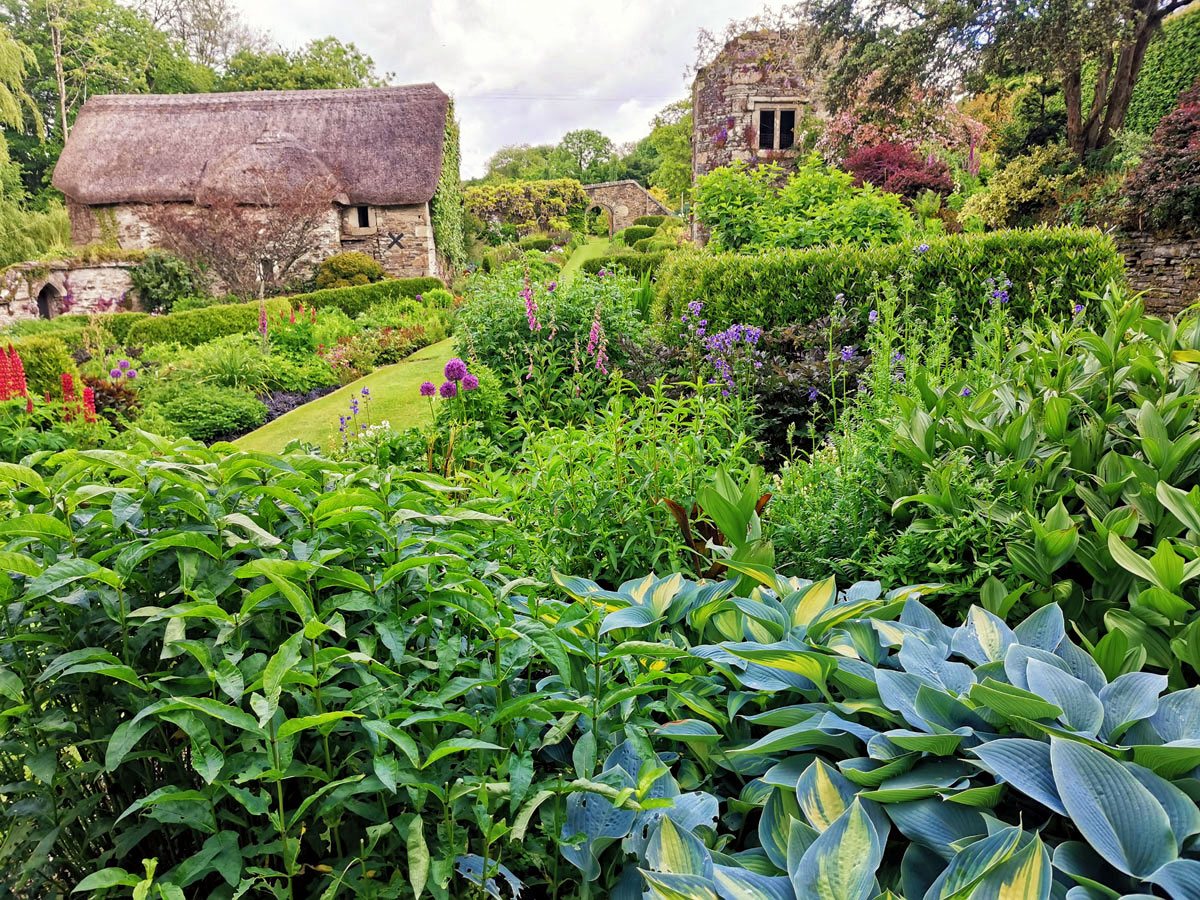













 and the folk song “Widecombe Fair” which immortalises the tale of Tom Pearce and the death of his horse at the famous annual fair which is held on the second Tuesday in September. It is a classic agricultural fair with horse jumping, rural crafts, a dog show and much more.







 TRAVEL WORDS