This week Paula encourages us to consider the differences between taking a landscape or portrait format. What factors make you decide which way to go? Is it the lens on your camera that forces you into a particular format, or are you making a more conscious decision about what it is you want to portray and what is the best way to do that?
These two images are of the haunting bronze sculpture that I have featured before in black and white. The close-up landscape version(s) were deliberate compositions to focus on the detail of the women and children as they wait for their husbands and fathers to return from sea.The decision to take a portrait shot was based purely on the desire to capture the entire sculpture and show exactly how small these figures actually are.
I tend to take most of my photos in the landscape mode unless I am photographing something particularly tall like a building or a tree. Of course with editing software it is easy to change any photo into any size afterwards, so it is not always necessary to make the decision at the point of clicking the shutter. I think the most important decision you should make when taking that shot is whether you have thought about what it is you are trying to capture and have you considered carefully that this is the best composition. That helps you take a great shot rather than several mediocre ones when you simply ‘hope for the best’.
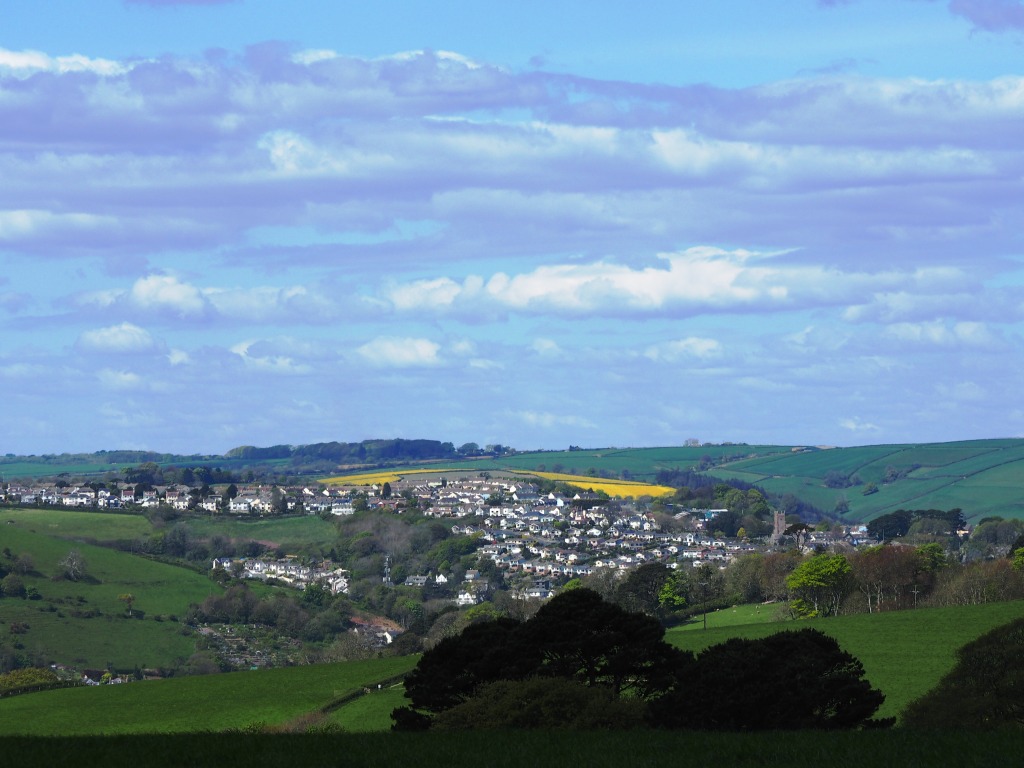
I booked a week away in south Devon in December when it was cold and dark and I needed something to look forward to in the spring months. We have always taken a spring break since we got together and as a teacher the Easter holidays were the first chance to get away. Even after leaving teaching the habit has stuck with us. In recent years we would return to the West Country and carry out research into where we would like to live. Now of course we have moved down to Cornwall so we can enjoy spring here without going very far.
Dartmouth
One of my projects is to visit every county in England (and possibly Wales and Scotland), preferably to stay a few days, but at least to have driven through other than on a motorway. So for these ‘at home’ breaks (I refuse to use the word staycation), I look for somewhere where I haven’t been.
A Devonshire lane
Cow Parsley
Alexanders
South Devon is only a couple of hours drive from us and a region I haven’t been to since I was 12 years old and on holiday in Buckfastleigh with my parents and dog. It was the year when we were supposed to be having a week in Devon and a week in London, but the car broke down shortly after Exeter and we found ourselves spending extra time in Devon. I do remember an amazing farmhouse breakfast where we stayed overnight and also stopping off at Stonehenge and running around the stones (you could do that in those days), but I recall absolutely nothing about London! My mother had a friend living in Orpington, then in the Kent countryside, now just another part of the Greater London sprawl. Continue reading Just Back From…. South Devon
I’ve looked at clouds from both sides now
From up and down and still somehow
It’s cloud’s illusions I recall
I really don’t know clouds at all…
~ Joni Mitchell
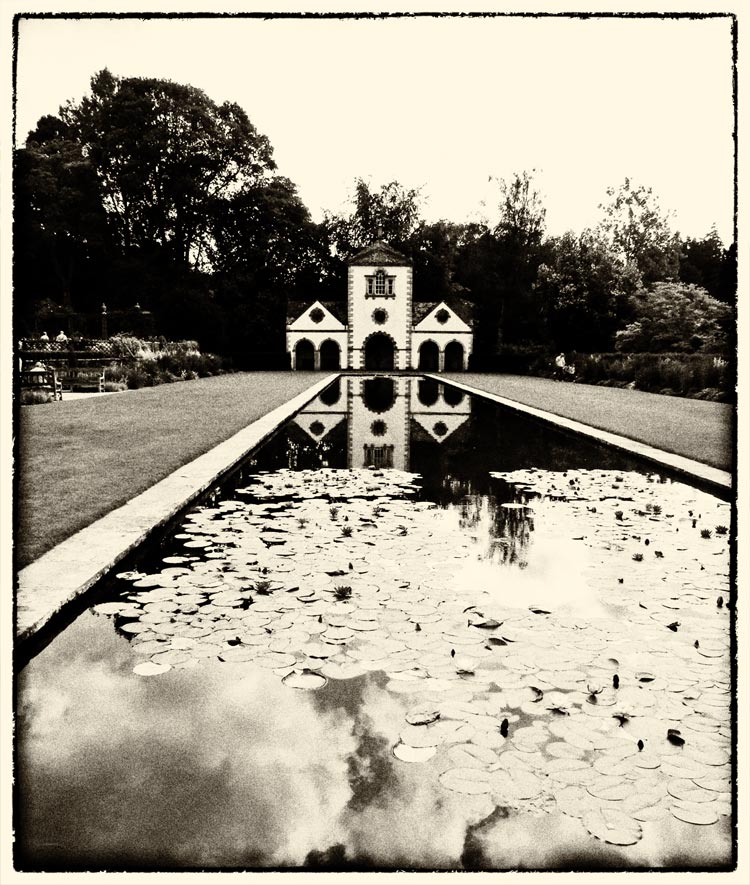
The Pin Mill, Lily Pond Approach at Bodnant Gardens, Conwy
Before being re-erected at Bodnant in the 1930’s, the building was originally put together in 1730 as a picnic house or shooting lodge, or it is thought it may have been used as a garden house. Later, the building was used as a factory for making dressmaking pins with two furnaces for that purpose inside the building.
An imperfect photo? Surely not However the subject of this image was seriously flawed.
Thursday September 15th 2016: We deliberately meandered along the foggy shores of the Firth of Forth on our way to Edinburgh with the purpose of stopping in North Berwick and having seafood chowder or lobster bisque for lunch from the well-known Lobster Shack.
Mouths watering in anticipation we made our damp way to the harbour and then saw that the shutters were down. Gutted! Closed except for weekends.
Please visit Paula to see other representations of this week’s challenge.
Back to the lovely monastery of Pedralbes in Barcelona, which is a delightful place to visit and includes an exhibition of the Monastery Treasures. The founder of the monastery, Queen Elisenda of Montcada, created a convent of great spiritual and cultural importance. Her wealth, and that of the women who entered the convent, who had a high social background, brought valuable contributions to its assets.
…presents a unique collection of works of art, furniture, and secular and liturgical objects from the monastery treasure, built up, conserved and restored over the centuries by the Poor Clare community.
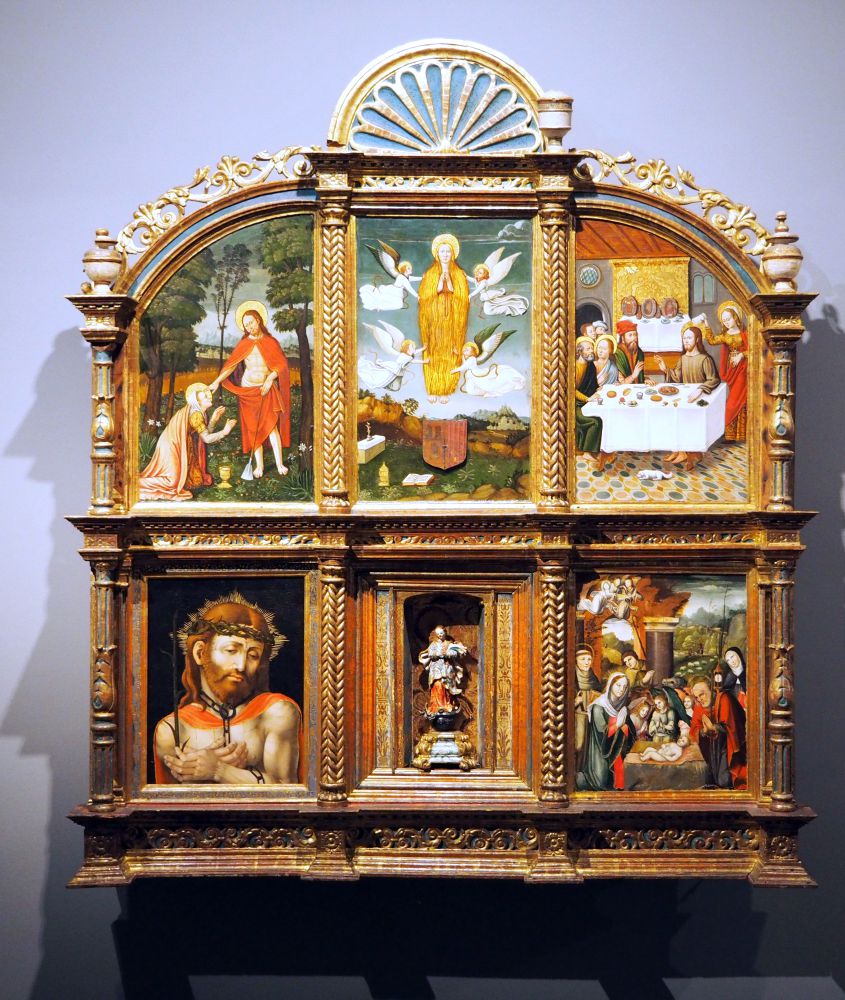
All of the paintings in this factitious altarpiece are the work of artists active in Catalonia during the first half of the 16th century.
Factitious Altarpiece of Saint Magdalene. 1540-1560
The upper elements of the piece below are panels of a triptych, in which the side panels were the doors.
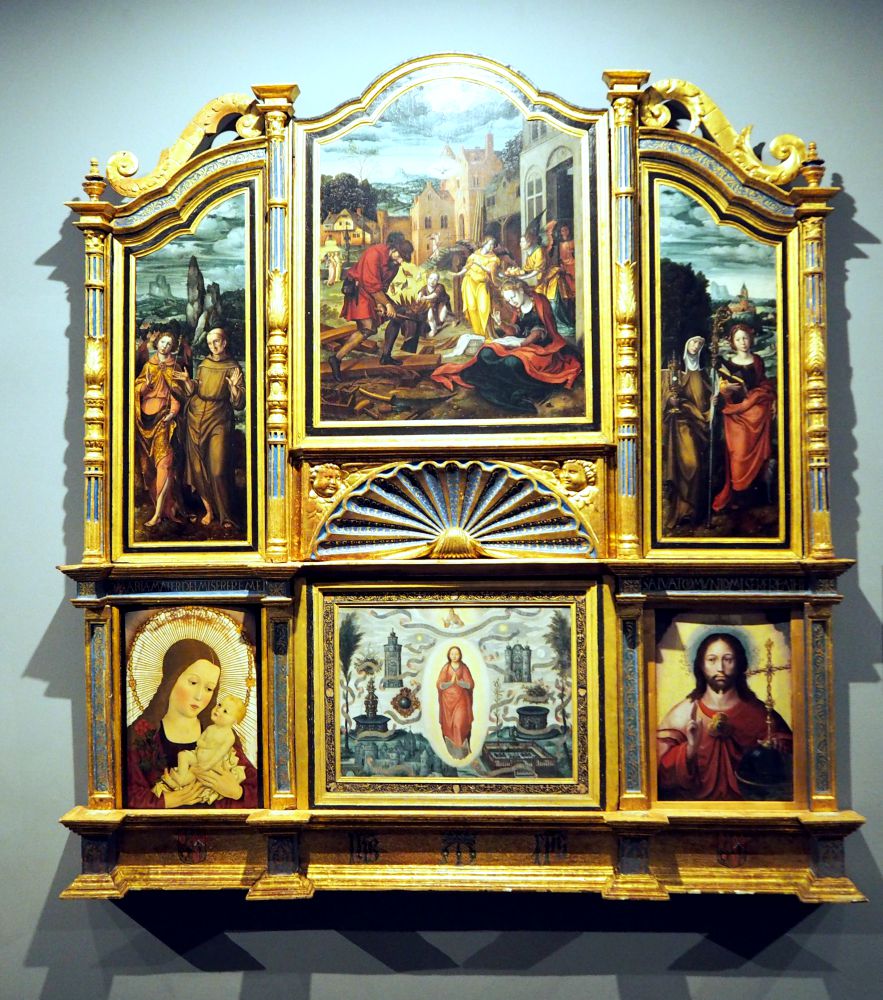
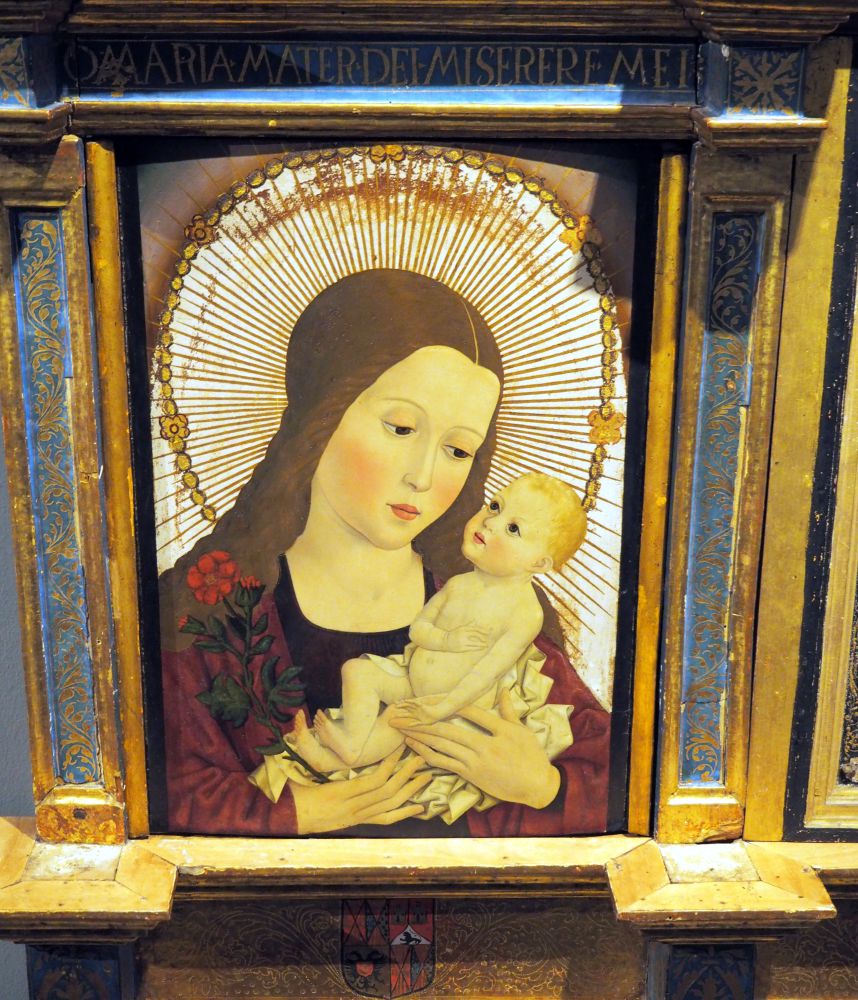
Factitious altarpiece acquired by the abbess Sister Teresa de Cardona 1540-1560Mother of God. end of 15th century
The most notable piece of this factitious set is the Virgin with the child in a landscape (bottom right), which may be attributed to Joachim Patinir and his workshop.
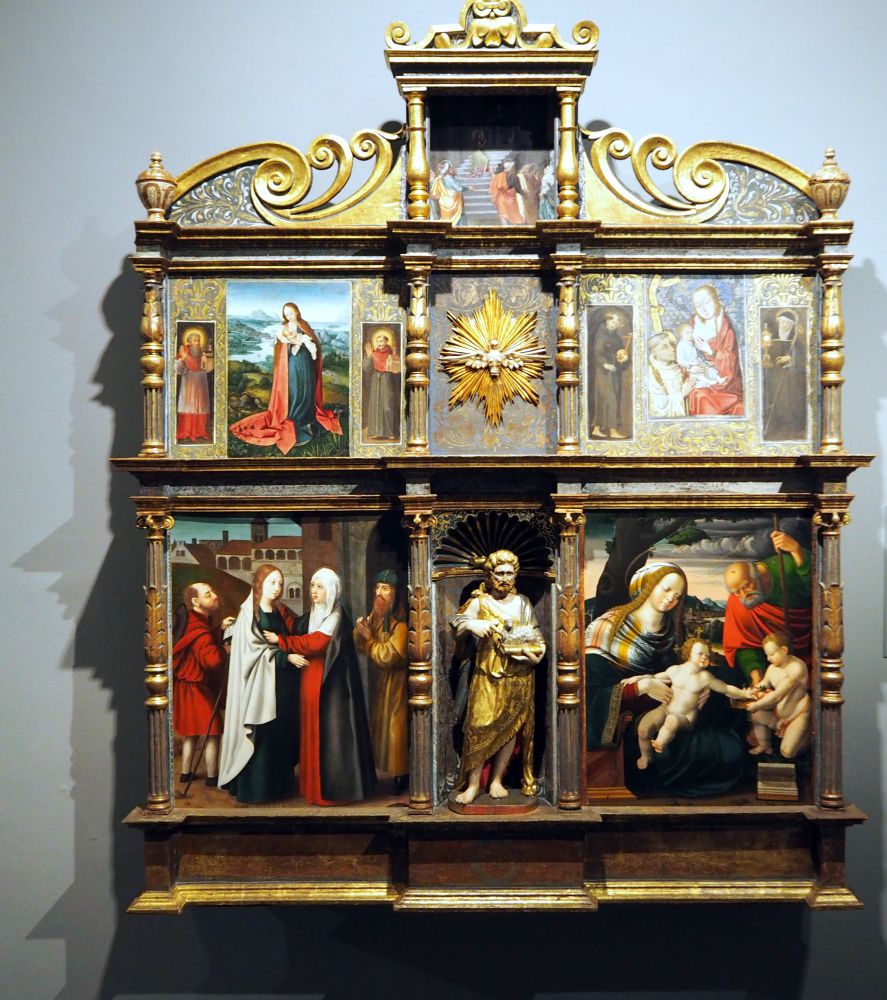
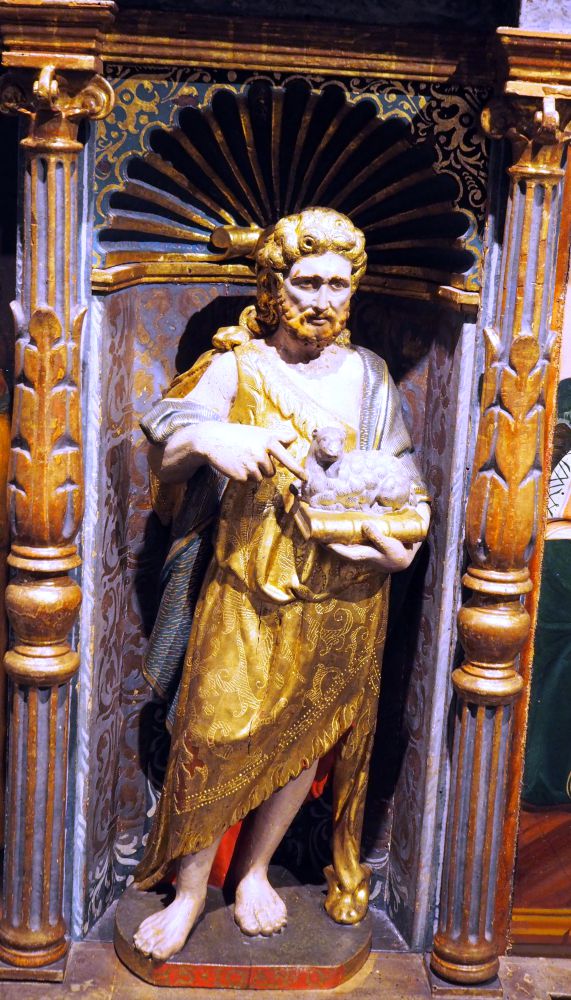
Factitious altarpiece of the cell of St John the Baptist. 1540-1560Sculpture of St John (unknown artist) Mid 16th century
Towards the end of the 15th century the monastery entered a period of reforms driven by Ferdinand II of Aragon. Life in the cloistered community became stricter. At the same time the importation of Flemish artwork into Catalonia took place as close trade relations were formed between the Spanish and northern Europe.
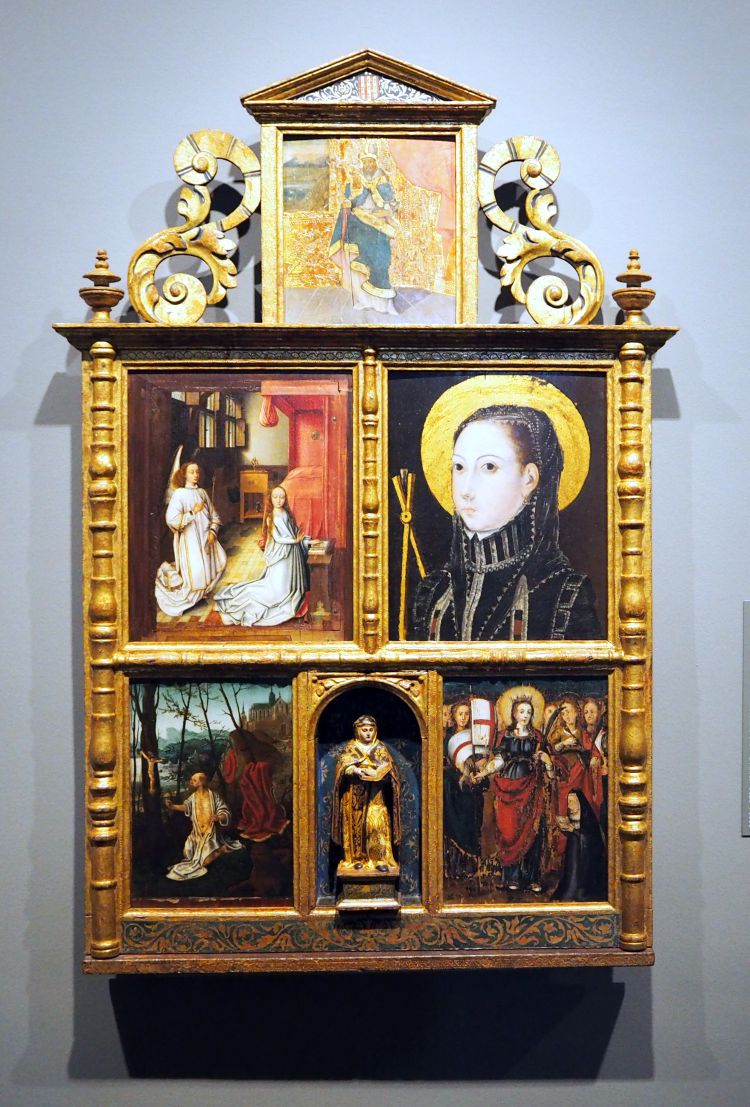
Factitious altarpiece bearing the Rocaberti family coat of arms
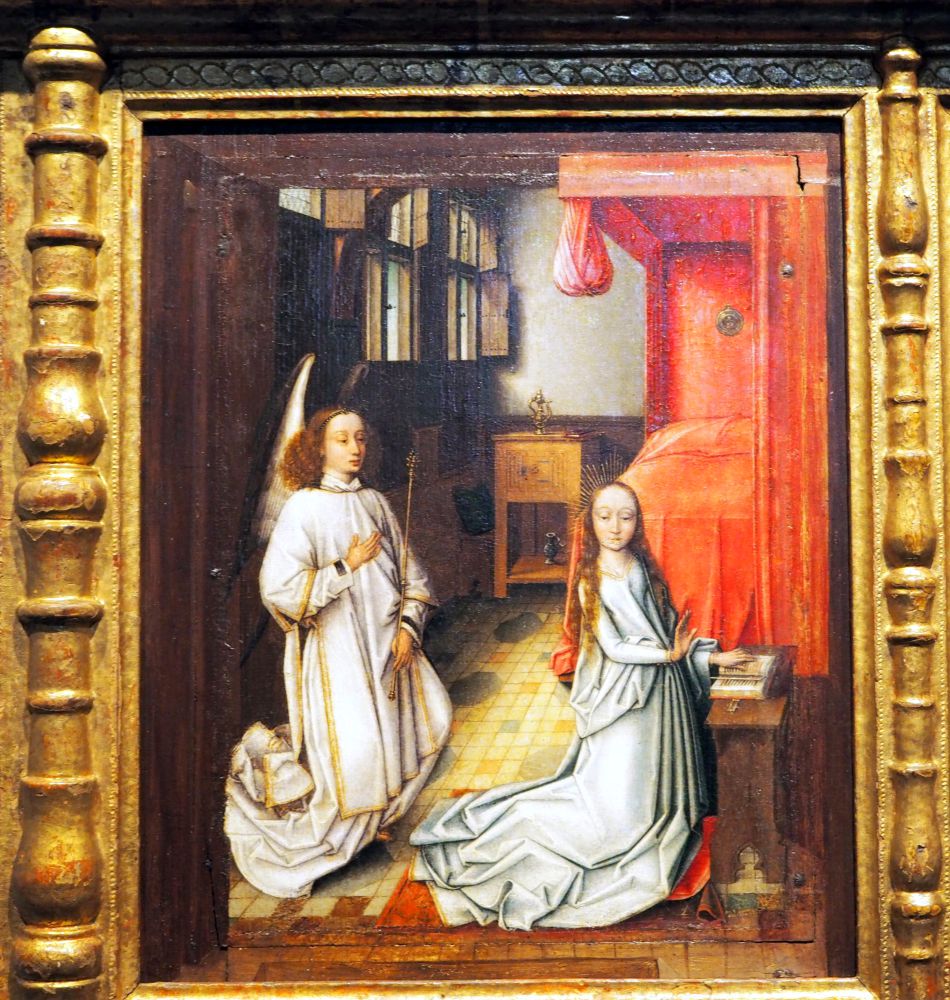
The most significant piece of this factitious work is the Announcement (top left) which may be attributed to an unknown Flemish artist known as the Master of the Legend of Saint Catherine. The domestic interiors are reminiscent of the Jan van Eyck models that Van der Weyden had reproduced.
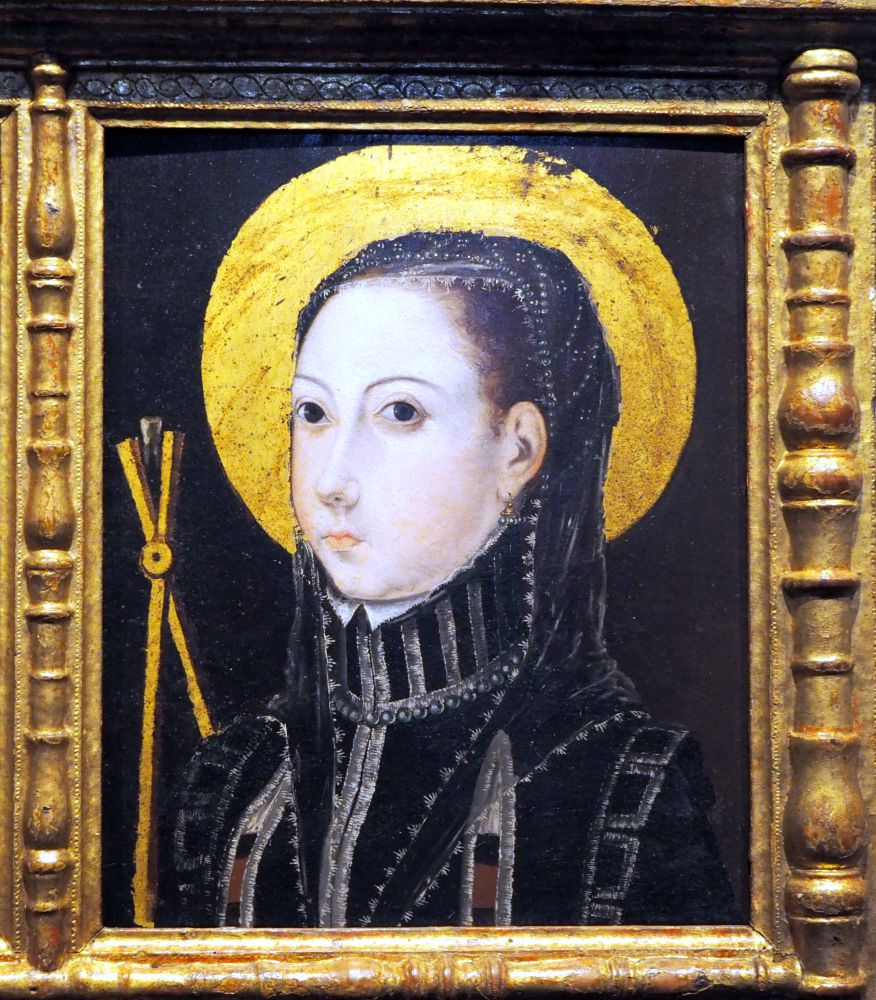
The AnnouncementSaint Apollonia, unknown artist
‘Factitious’ altarpieces combine pictorial and occasionally, sculptural sections of different provenance and styles. So we find Spanish and Flemish works side by side. The tableaus have often been trimmed to size to fit into the new structure. They were generally made in the mid-sixteenth century and inspiration for their manufacture may have come from the classicist architecture at the time. Three of them preserve the heraldry of the nuns who paid for their production or owned them.
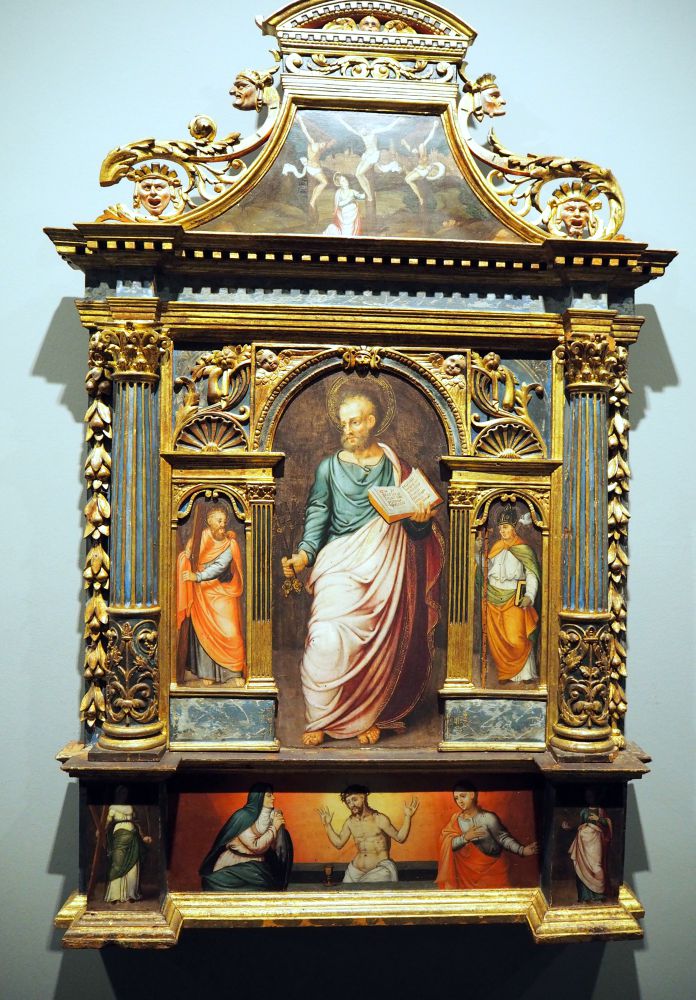
Altarpiece of St Peter 1570-1585
Of a similar format to the factitious pieces of Pedralbes, this is a unitary collection. Its paintings may be attributed to the Catalan artist Joan Mates.
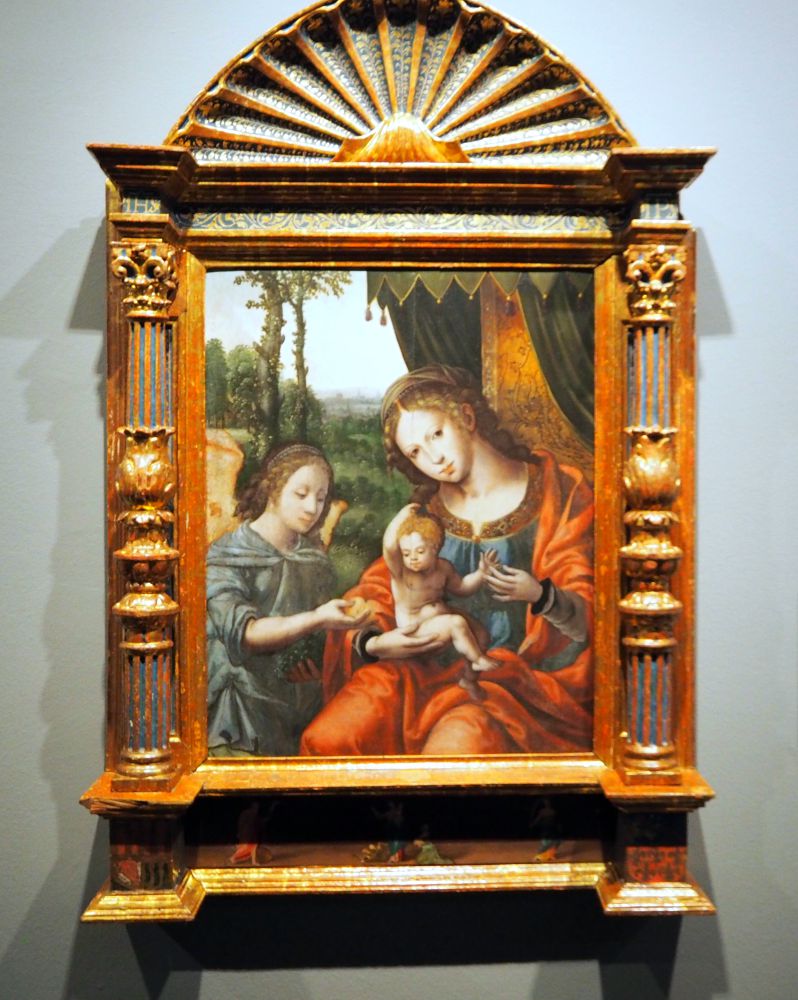
Virgin with the Child and an Angel 1530-1550
The two central figures derive from a model by Jan Gossaert while the added angel and landscape is an idea from Pieter Coecke van Aelst.
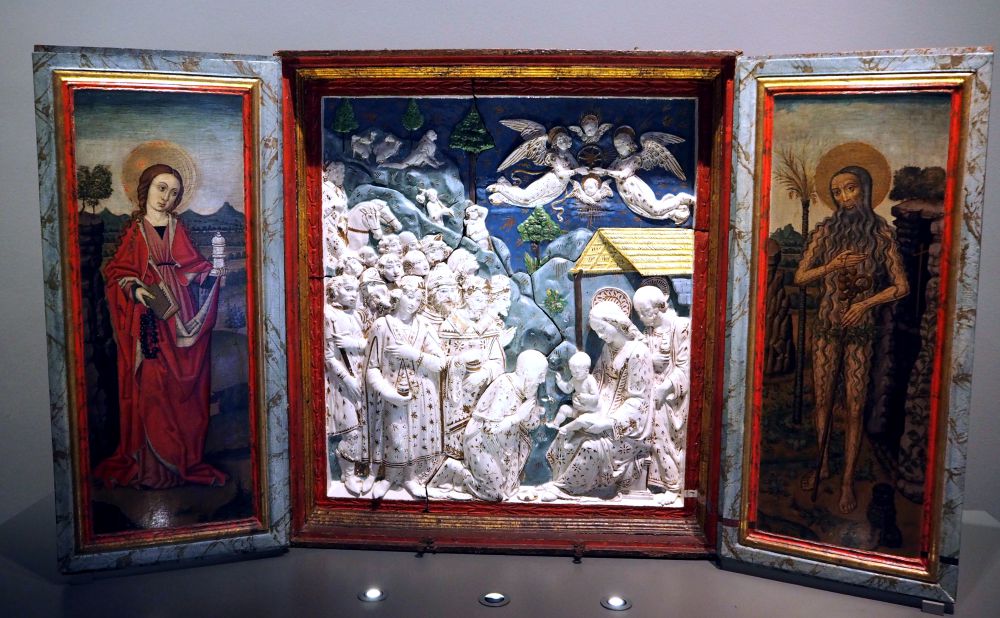
Altarpiece of the Adoration of the Kings 1475
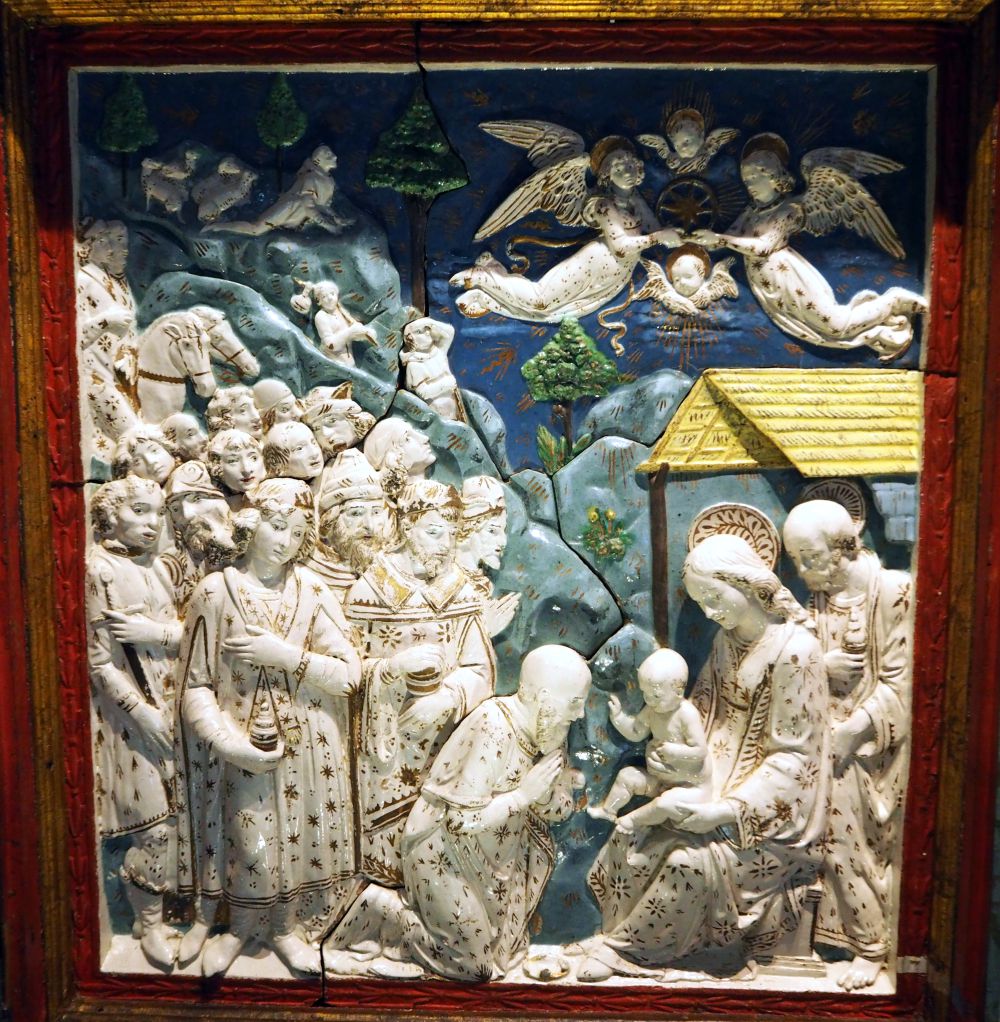
A factitious triptych with doors added to the central relief. A work of art from the Italian Renaissance was exceptional. The relief which feature the Adoration of the Kings but with an Announcement to the shepherds in the background, is made from the characteristic glazed terracotta of the Florentine workshop of the Della Robbia family.
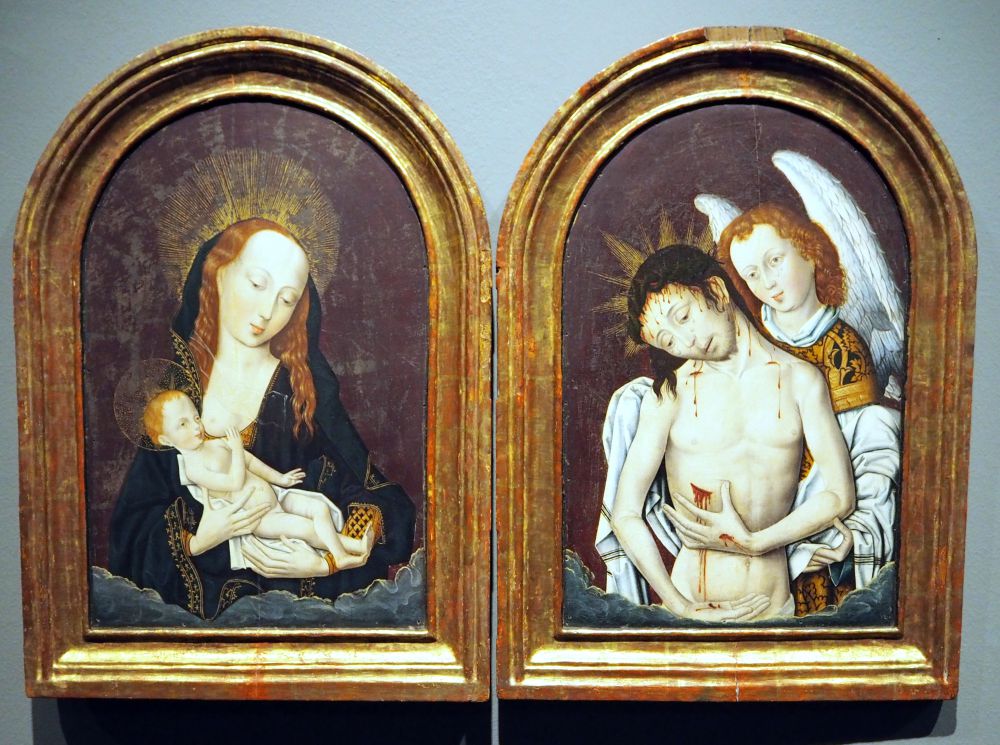
Adoration of the KingsDiptych of the Mother of God, the Milk-Giver and the Pity of Christ c1500s
This diptych is one of the characteristic formats of “devotional painting” of the former Low Countries. The unknown painter probably had a workshop in which such paintings were almost mass-produced, exploiting models tracing back indirectly to the works of Rogier van der Weyden.
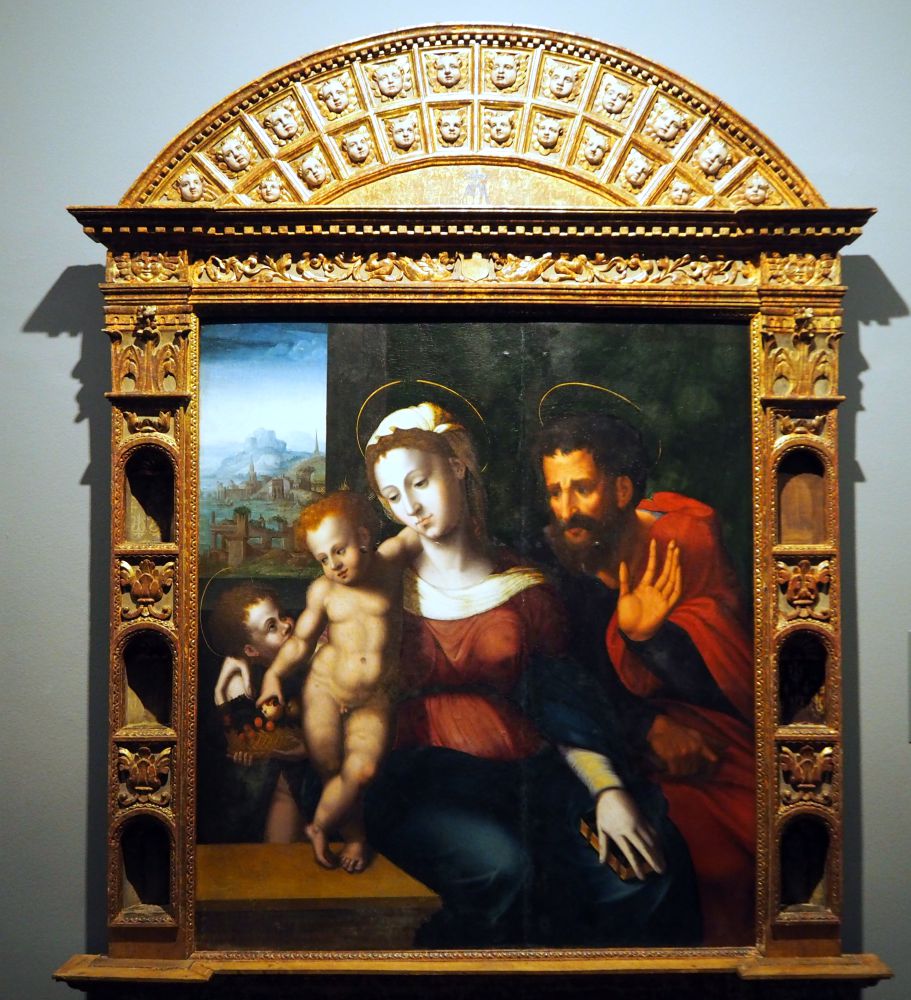
Sagrada Familia – Holy Family with the young St John
The descriptive tendency and open window in the background point to a Nordic artist of discreet quality with knowledge of Italian Renaissance as regards typologies and body language.
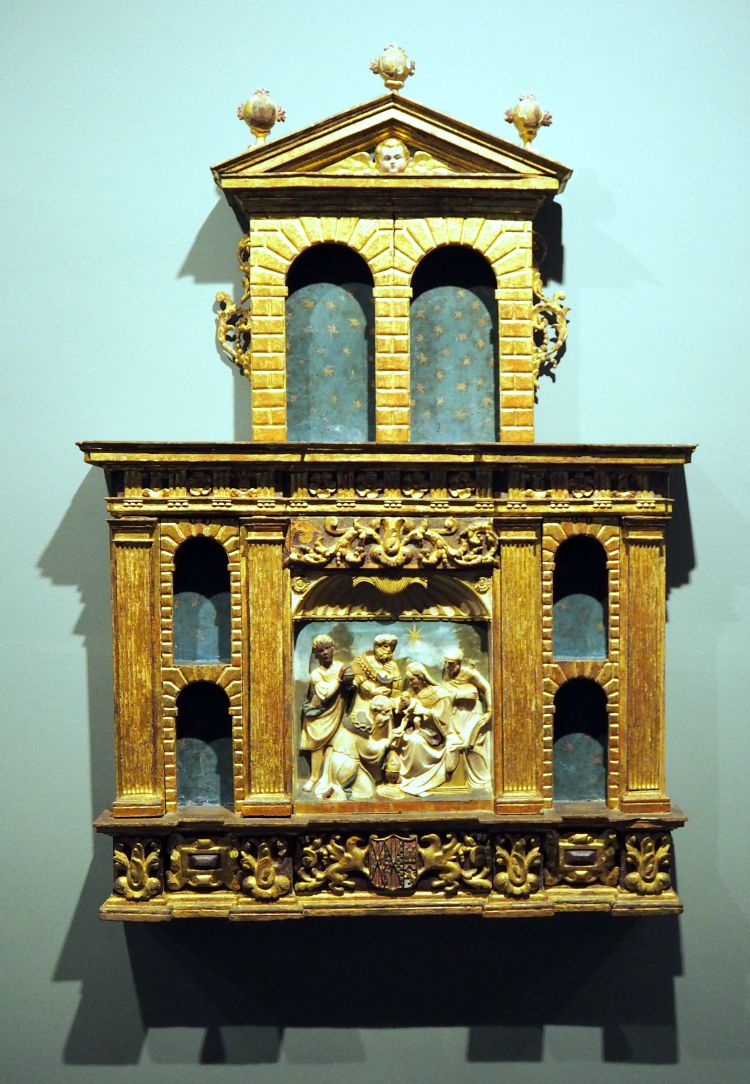
Epiphany Altarpiece 1533-1536
The sculptures in the niches of this altarpiece may have been lost in the Spanish Civil War. The relief of the Epiphany comes from the workshop of Damia Forment. The coat of arms links this to Sister Teresa de Cardona who was the first cousin of King Ferdinand II.
By the beginning of the seventeenth century the community in Pedralbes had witnessed a gradual but relentless decline in their income. Subsidies from King Phillip II and aid from the Council of the One Hundred assisted them in building the infirmary and renewing their cloisters. The Catalan Revolt of 1640 worsened their position as did the 18th century War of the Spanish Succession. At the end of that century further royal donations came to their assistance and helped to renovate and improve the building and the liturgical ornamentations. Despite the precarious financial situations the nuns would not renounce the maintenance and renewal of their liturgical adornments and some interesting works of art were purchased during this time.
Please visit the website of the monastery to find more about this exhibition.

 The decision to take a portrait shot was based purely on the desire to capture the entire sculpture and show exactly how small these figures actually are.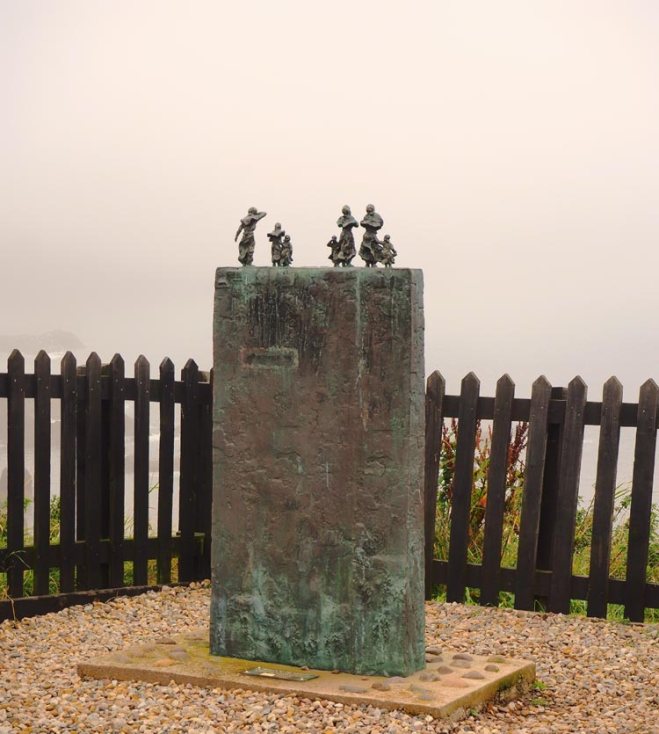



 However the subject of this image was seriously flawed.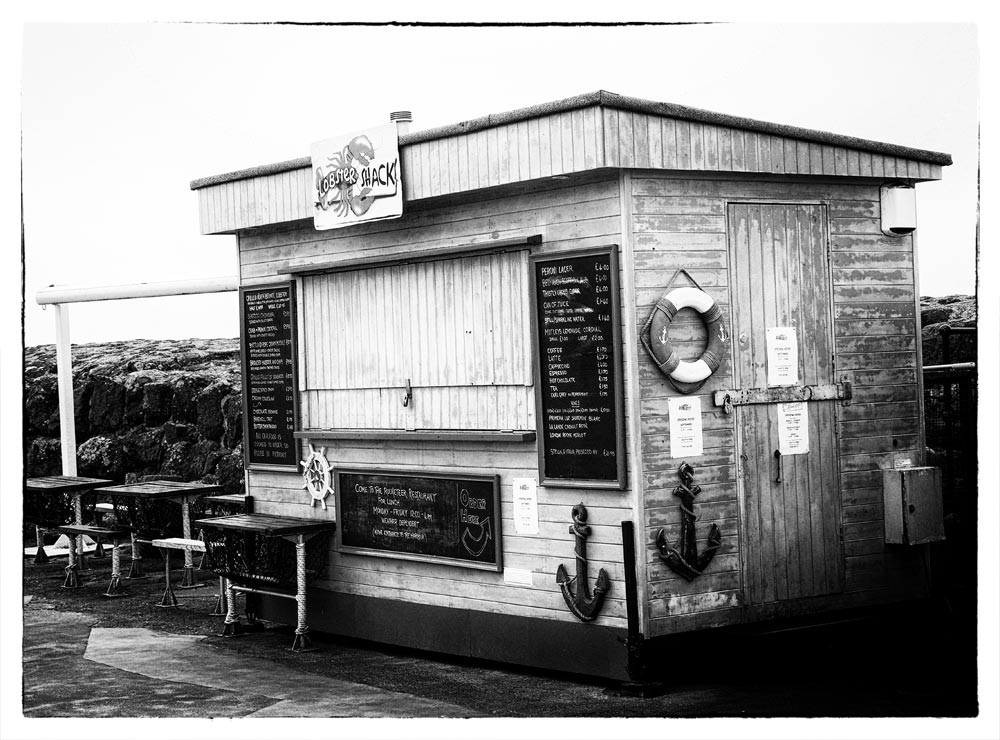

 TRAVEL WORDS