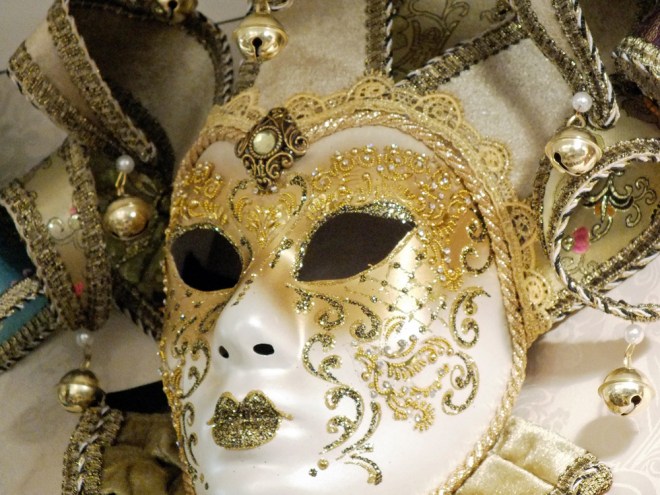
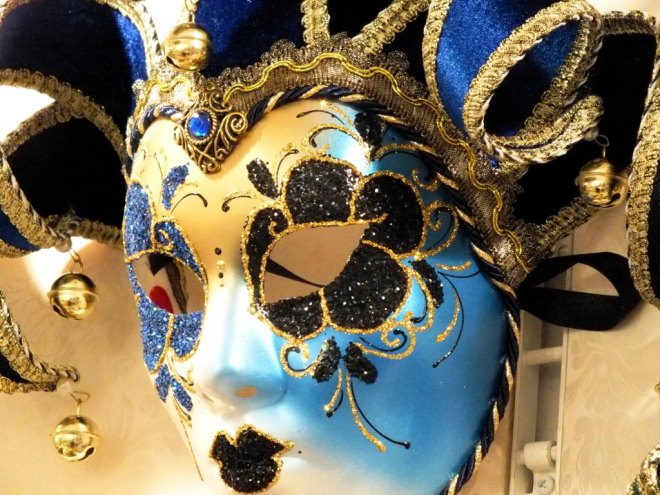
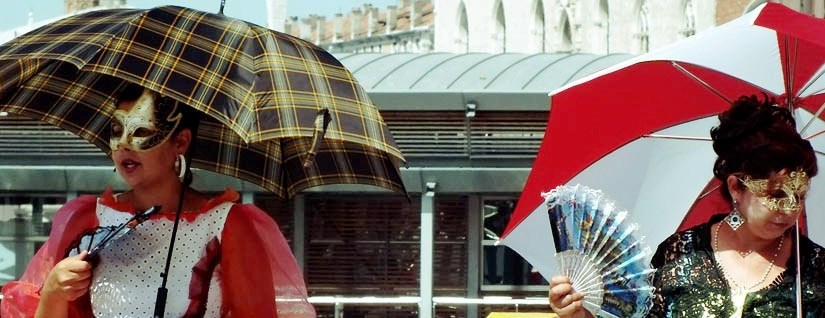
I’m not a wearer of masks, but couldn’t help being attracted to these beautiful carnival masks in Venice. I quite fancy the blue one below and regret not buying it or maybe the bird mask. Pop over to Ailsa to unmask more interpretations.


I’m not a wearer of masks, but couldn’t help being attracted to these beautiful carnival masks in Venice. I quite fancy the blue one below and regret not buying it or maybe the bird mask. Pop over to Ailsa to unmask more interpretations.

Paula’s (Lost in Translation) challenge this week is Life Size
Other public artworks by Černý that are worth seeking out are his statues of babies. Three of these large statues are at the entrance to the Museum Kampa, and more are on the TV tower in Žižkov. The large, crawling rugrats have disturbing machine-like slots on their faces. These Babies are part of Černý’s project to make the Žižkov TV Tower more beautiful, as it has been named one of the world’s most ugly buildings. A swarm of the mutant babies crawls on the tower’s exterior. At night they are lit up in the colours of the Czech flag.
Paula over at Lost in Translation runs a weekly Black and White Sunday challenge. I have been intending to write some posts about the castles and priories I have visited in Wales, but like other posts, I haven’t quite got around to them yet. But when I saw this week’s theme I thought about the ruins I have photographed and which, to me anyway, always convey that moody atmosphere which clings to ancient buildings. You can almost hear the chanting of the monks, the slap of leather sandals on Welsh slate floors, the swish of robes through the Cloister and the murmur of voices in the Chapter House where the ‘Black Canons’ assembled each morning.
And of course the background of the Welsh hills and the glowering clouds in a wet January only serve to enhance the mood.
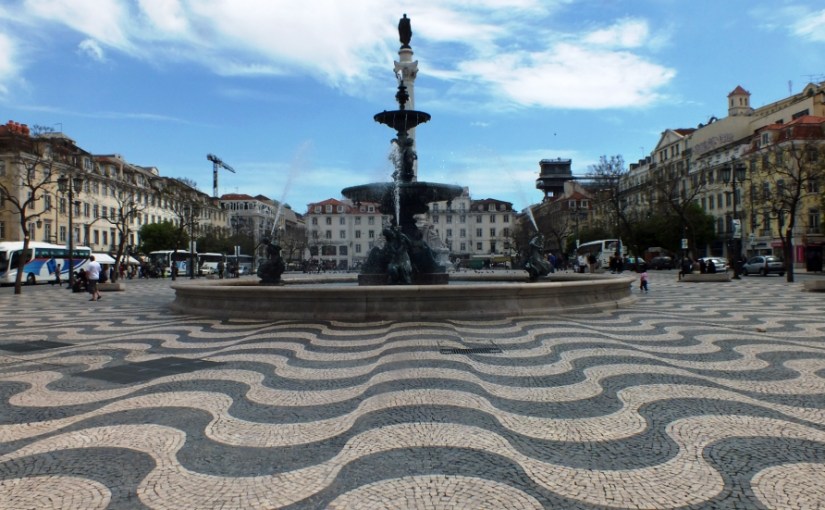
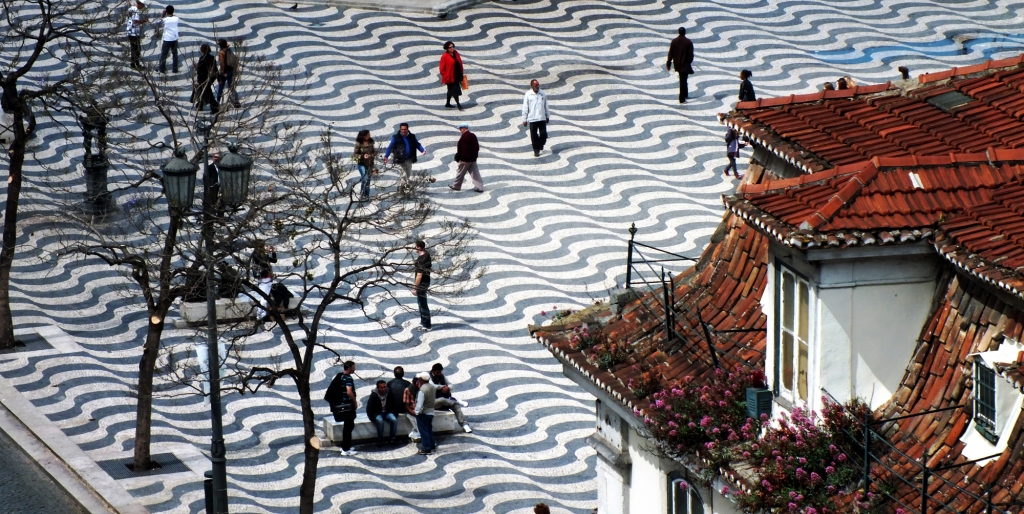
A city where it is impossible not to look at what is beneath your feet is Lisbon, Portugal. The endless intricate patterns of the cream and black cobbles automatically draw your eyes down. Known as calçada (Portuguese Pavements) some, like the wave pattern above and below in Praca Dom Pedro IV Square (Rossio), can even interfere with your balance and make people look as though they are floating above the pavement.

In Belém coloured marble is used with the flat cobbles to create patterns and pictures including a map of the world depicting the voyages that Portuguese explorers made during the Age of Discovery.