Paula’s (Lost in Translation) challenge this week is Tall.
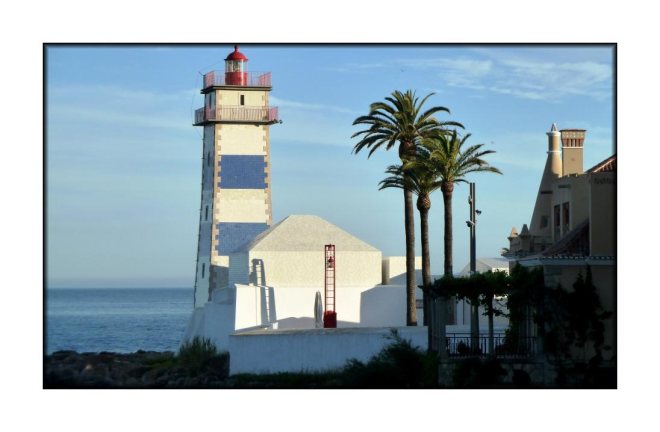
Following her idea of a lighthouse I have opted to show this beautiful blue and white striped pepper-pot structure, which is topped by a small glass beacon.
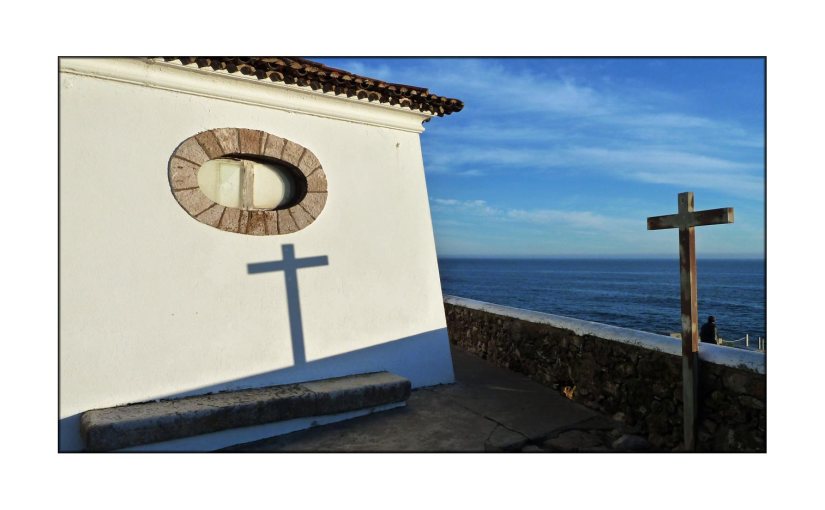
During the 1750s, on a rocky shoulder overhanging the sea, a small fort was erected that was part of the maritime defence of Cascais until the 19th century. In 1762 it was modernized, and began its function as a lighthouse in 1868 after losing its military value.
In the lighthouse museum are gathered representative pieces that illustrate its activity whilst it was a lighthouse, featuring a series of optical devices from the 19th and 20th centuries as well as an audiovisual centre where a multilingual documentary about the lighthouses of Portugal is exhibited.
You really need to wear good sunglasses when visiting this site – the white glossy tiles of the exhibition centre and auditorium throw off a blinding light in the sunlight which quite hurts the eyes! The tiles are laid slightly unevenly so the apparently plain surfaces catch the light and have a subtle iridescent quality.
I have been promising to show this to my blogging friend Jo for a very long time! I hope she enjoys it 🙂