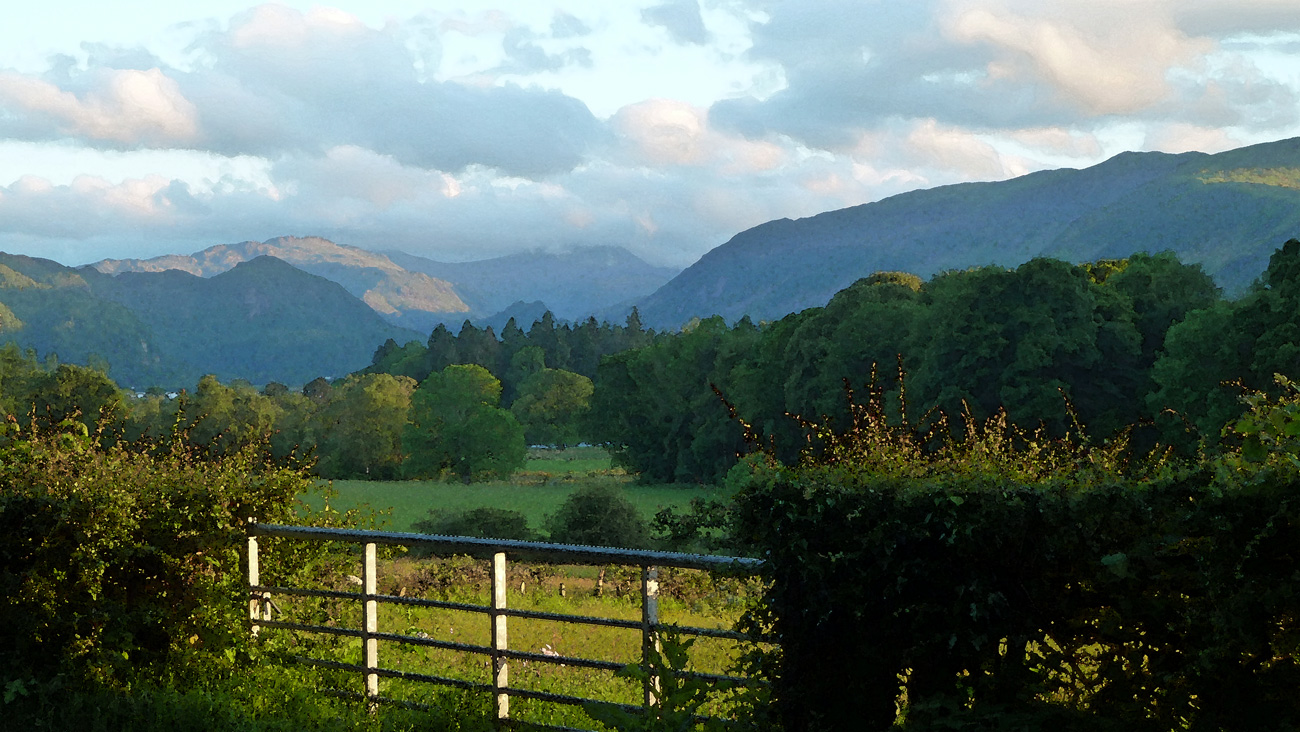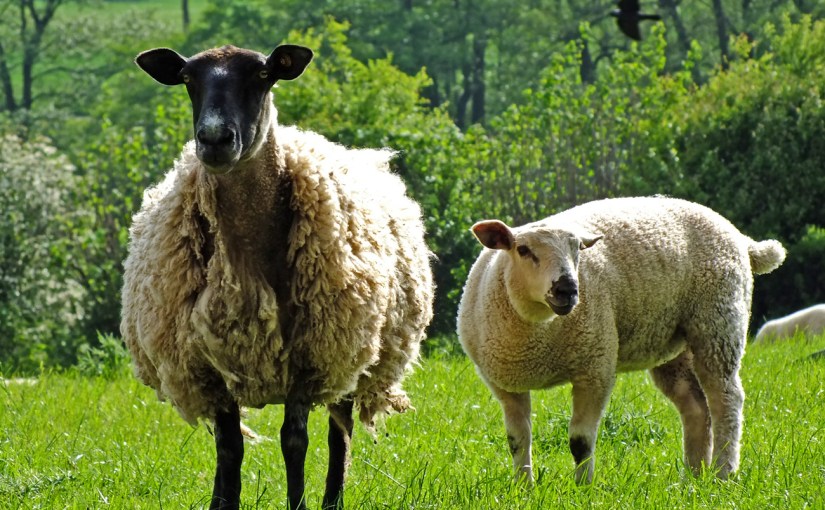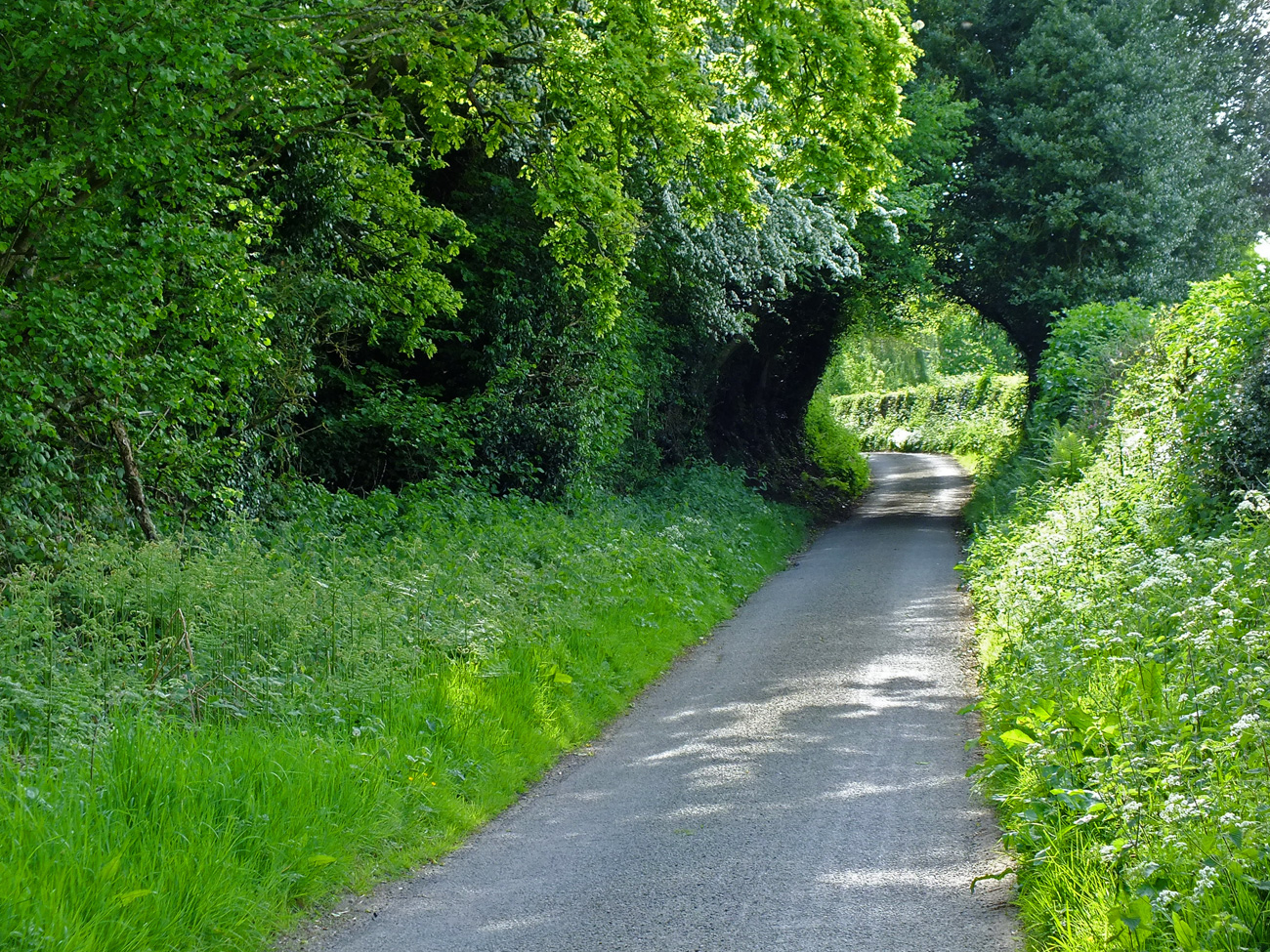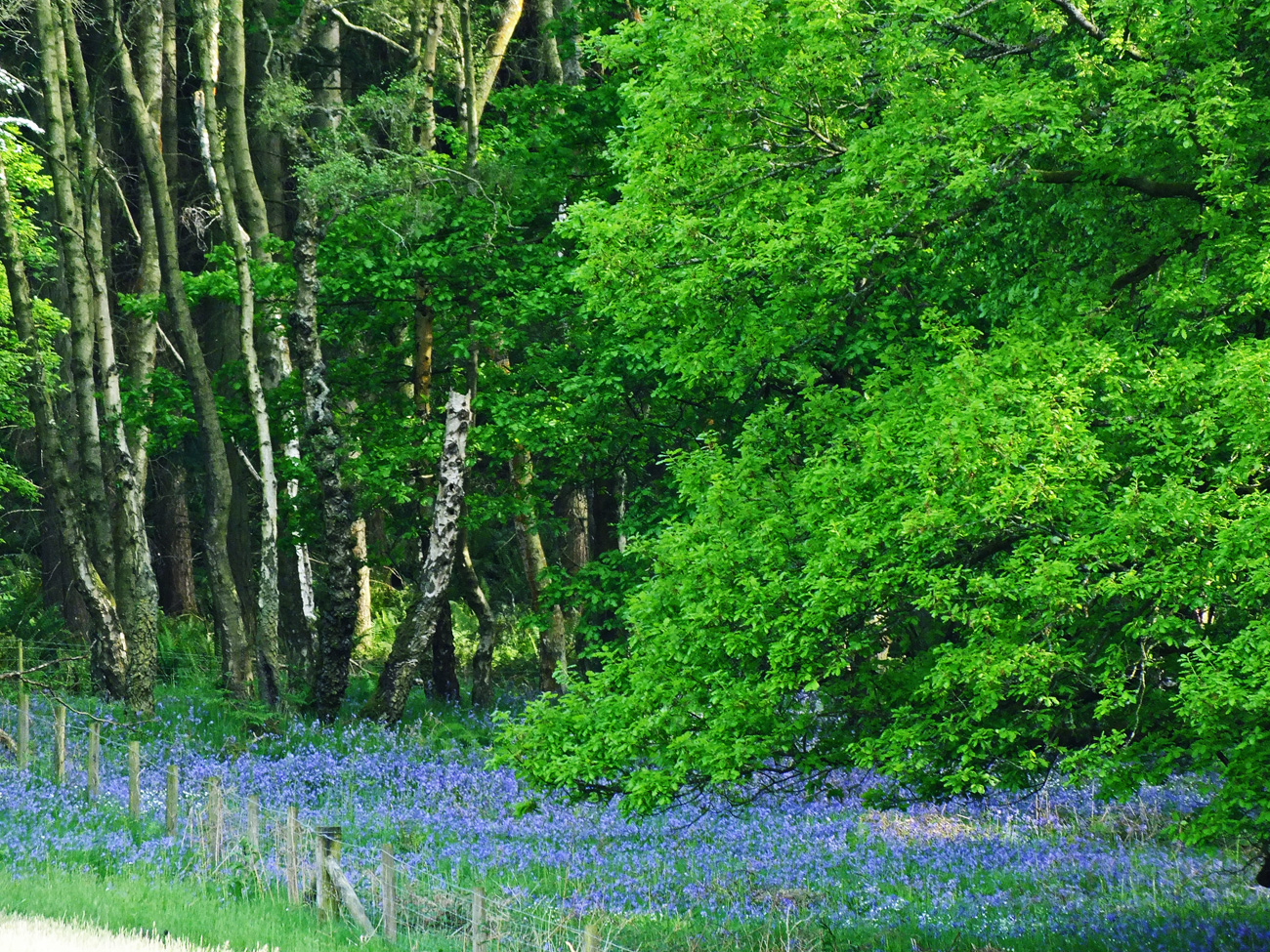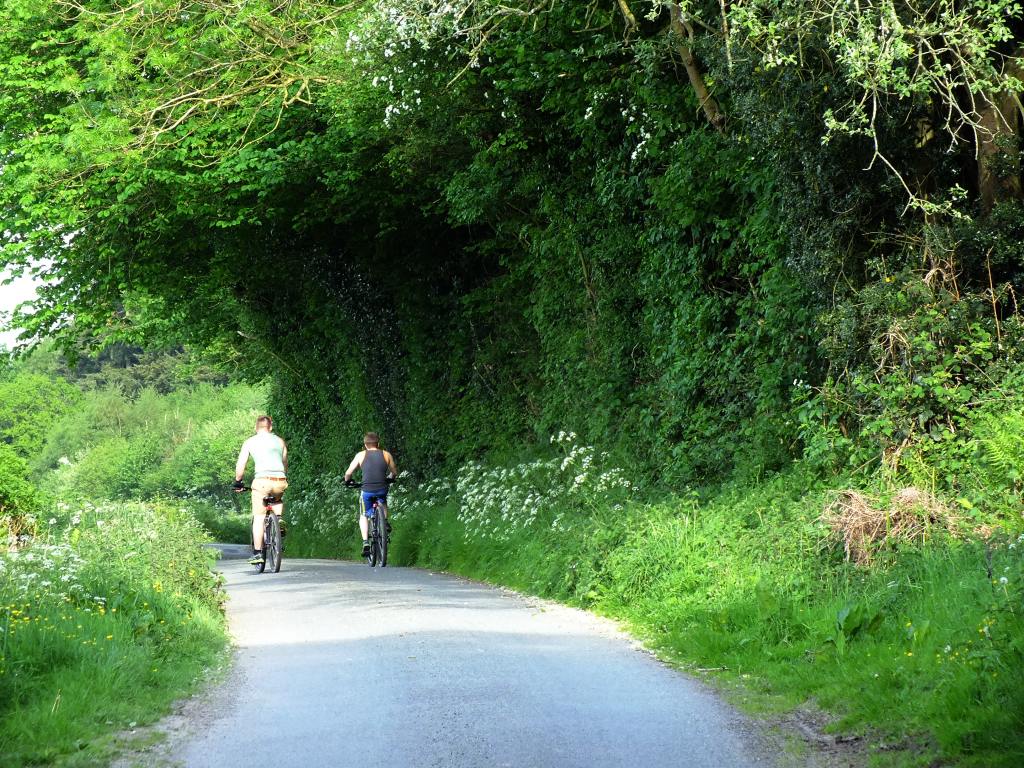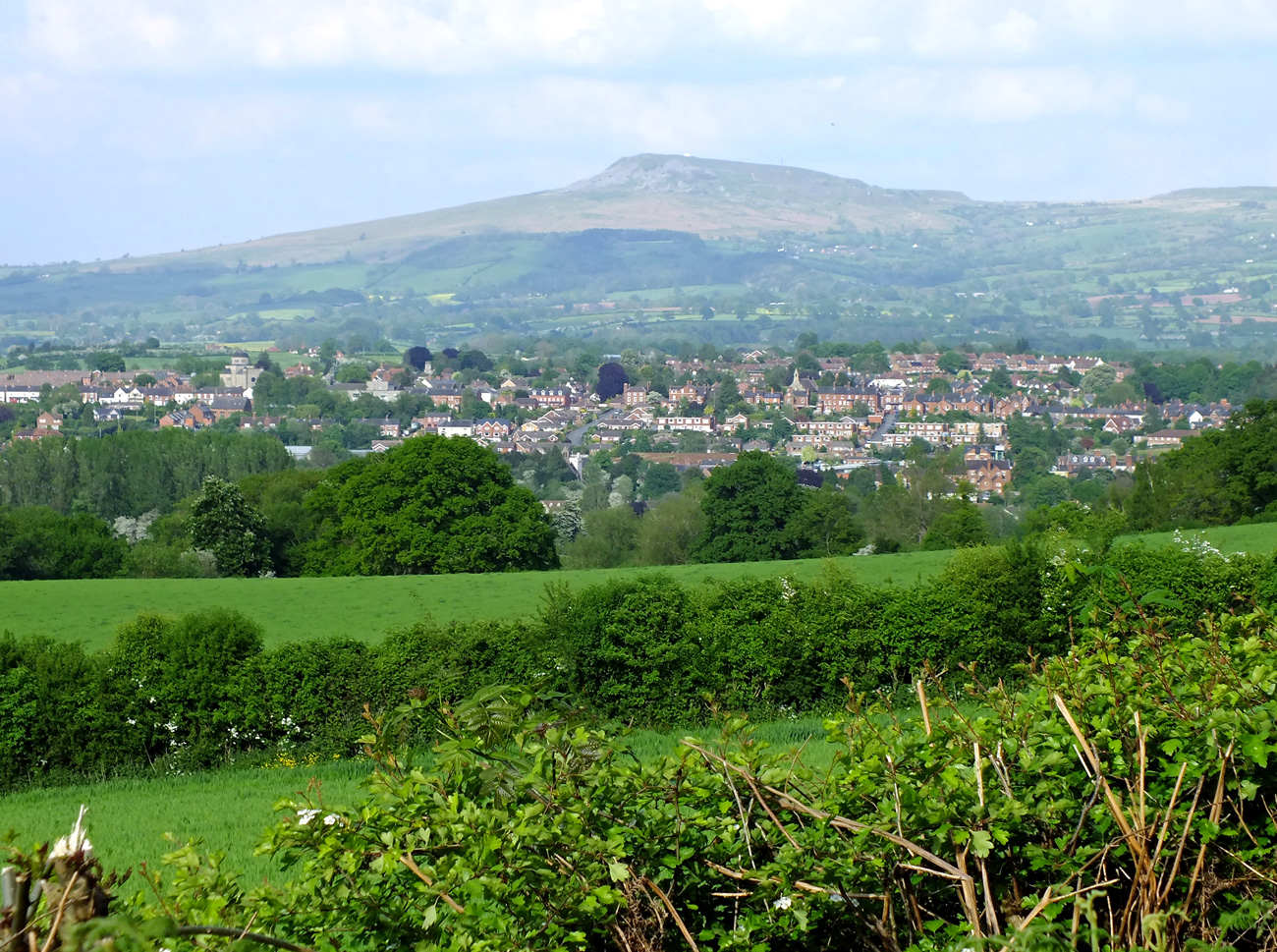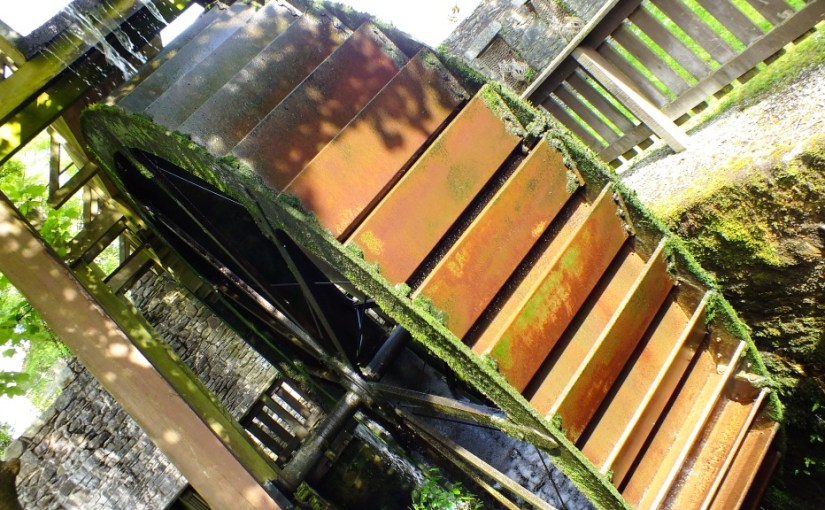
I’ll let Jo explain: “It’s not a challenge, you see. Walking is one of the great pleasures of my life. Ever since I began my blog I have enjoyed introducing people to new places, and the walks are another way to do it. Many of them are local and well known to me in my north east of England home. Others are a bit more exotic. So, how does it work? Every week I will publish a walk on a Monday. If for any reason I can’t make it, I will let you know. When the walk is published, anyone is welcome to leave a link in my Comments, to any walk that they have taken. It doesn’t have to be on a Monday. It can be at any time and of any duration. The amount of detail/photos, etc. is up to you. Free and easy, you see?”
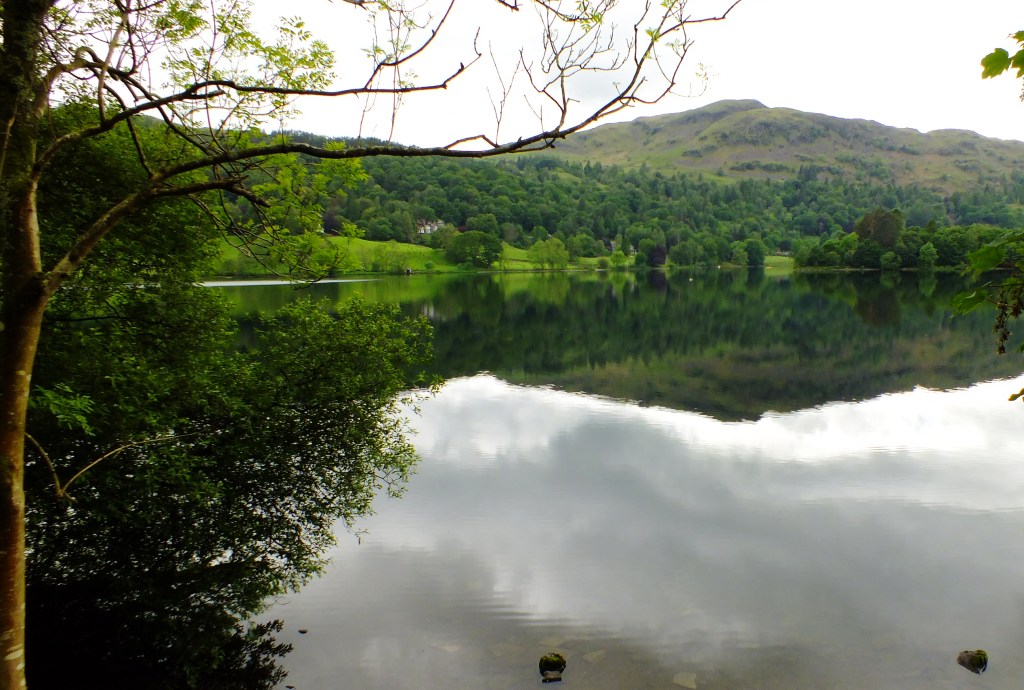
It rained on Thursday 5th June, but not too heavily. After a lazy start and some essential shopping in Keswick, we drove to see the Catlerigg Stone Circle above Keswick and then on to Ullswater, stopping for an early dinner in a traditional pub, The Horse and Farrier, in Dacre on the way back. On reaching Keswick it had turned into a lovely evening, with the sun shining and the air warm. Time to take another stroll around the lake – OK, not ALL the way round – just a short circuit past the Keswick launches, along the foreshore and up to Friar’s Crag then around a beach full of lambs playing tag and hide and seek, skirting Cockshut Wood, up towards Castlehead Wood and back into the town. About an hour’s gentle stroll.
Head on down to the lakeside from the town passing through Hope Park where the flower beds are full of pretty blues like these geraniums and irises.
Hardy Geranium
Ink blue bearded-iris
alongside the new Theatre by the Lake
with a glance across Crow Park where sheep roam and people gather for picnics and the 360 degree views of the surrounding fells – Borrowdale to the south, Catbells to the west, Skiddaw and Blencathra, north-east.
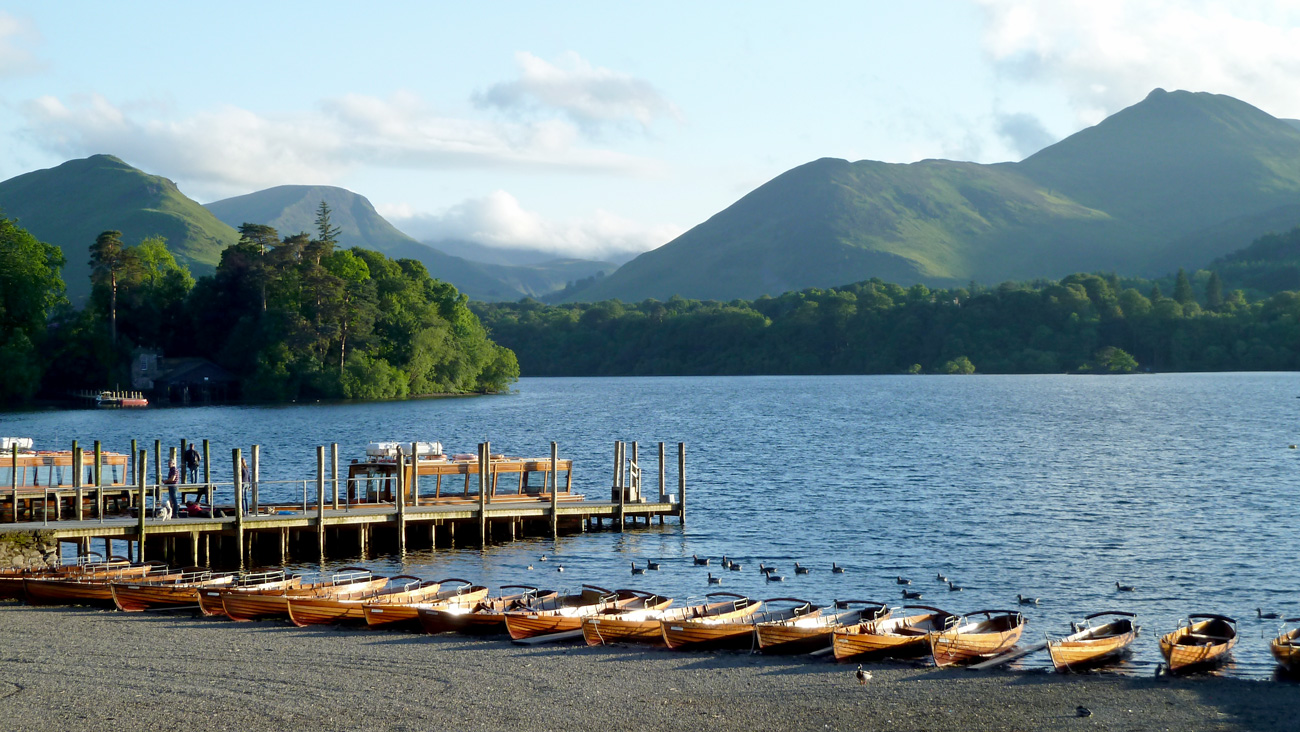
Carry on along to where the road terminates at the Keswick Launch jetties. There are lots of benches to sit on and watch the sun set over Derwentwater
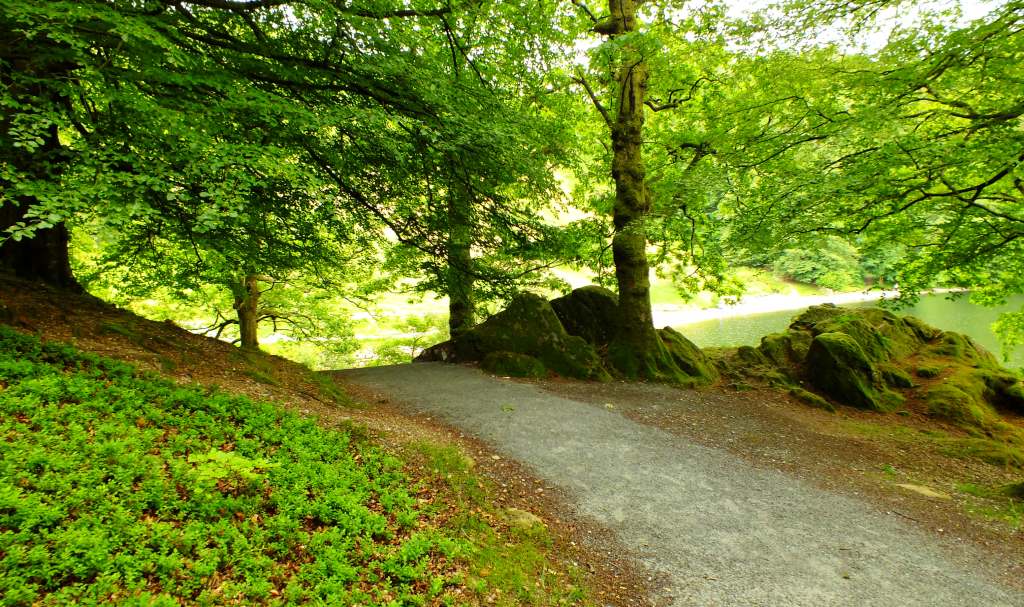
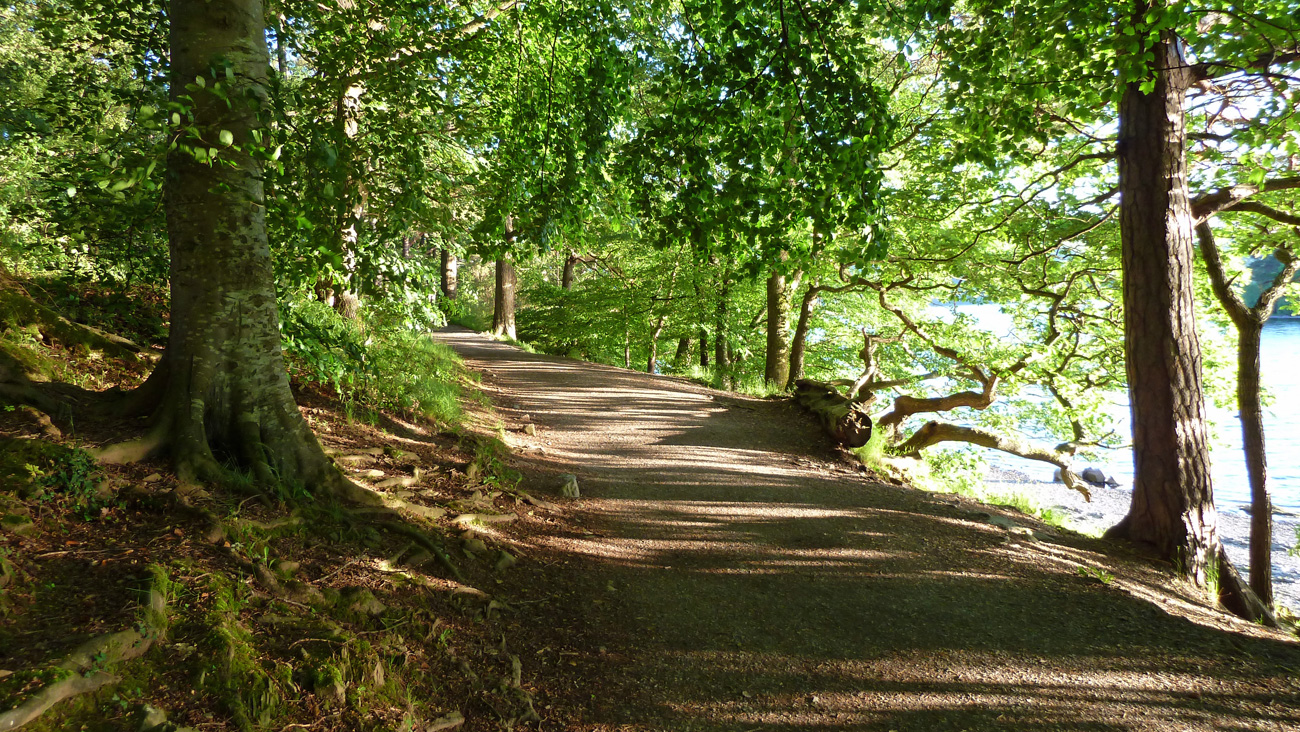
And it continues as a broad pathway which follows the lake shore through shady trees to Friar’s Crag
which is named because the craggy headland is said to have been the launch point for monks making a pilgrimage to St Herbert’s Island.
(St Herbert’s Island was the setting for Owl Island in Beatrix Potter’s book ‘The Tale of Squirrel Nutkin’. )
Bear left to visit a memorial to John Ruskin in amongst the trees, then head down some steps to another path which leads through a gate and onto the shoreline.
CatbellsViews south to Borrowdale
Where a group of young lambs were play-fighting and chasing one another along the shore.
At this point you can continue around the lakeside through another gate leading to Calfhouse Bay, but we left the shore and headed back towards Keswick via Cockshut Wood.
Footpath to Cockshut Wood
A Gaggle of Geese
Lonely Tree
View to Derwent Isle
Path along the foreshore
Sun going down
Boardwalk through the meadow
Through another gate into the wood, watch out for deer and red squirrels, then at a clearing, exit right through a gate towards Castlehead Wood, up on a hill in front of you.
We didn’t go up there on this evening as we’d been up before and it’s a rough scramble at the top to a view-point. That’s another walk!
At the road, turn left along a path which runs parallel to the Borrowdale Road and back into the town. We left it at the churchyard and cut through the lane beside the church back to our apartment.
Looking Back at the Lake
A fine evening with a crescent moon
St John’s Church
Where we had a lovely cold G&T.
If you enjoy a walk, short or long, then you may enjoy visiting Jo’s Monday Walk where you are in for a treat.
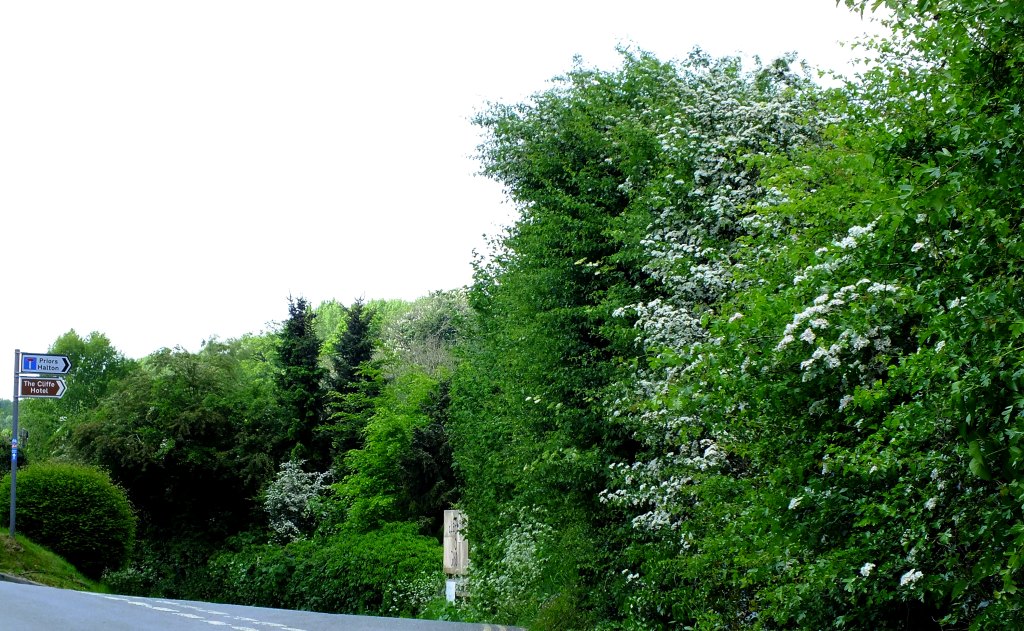
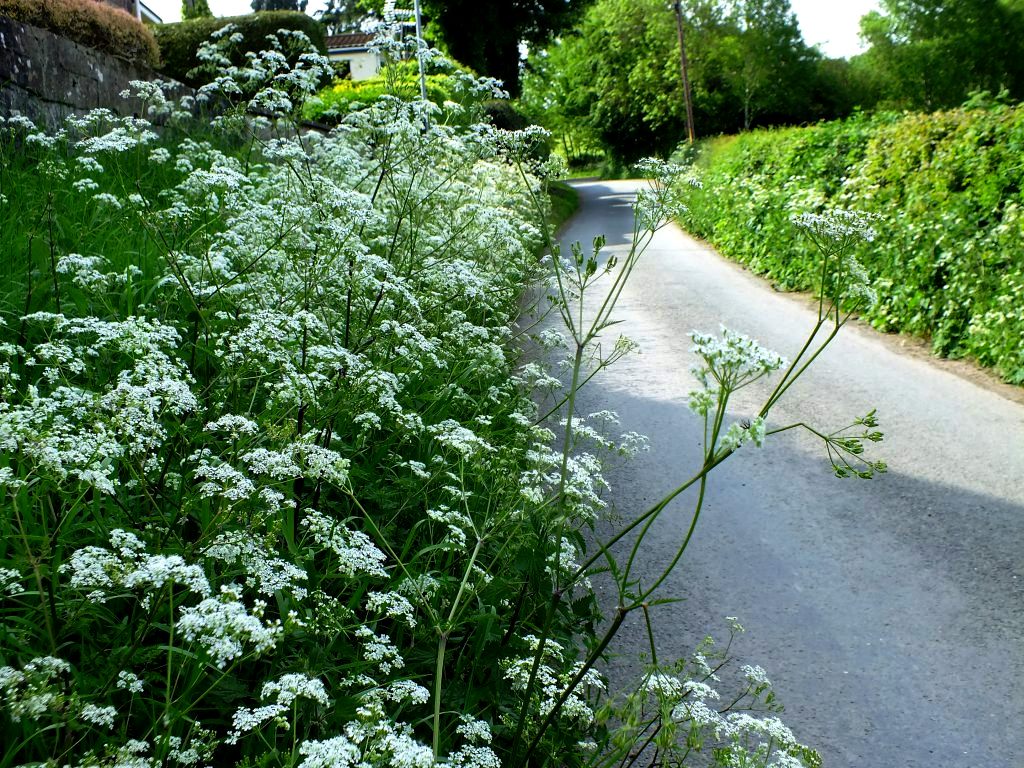
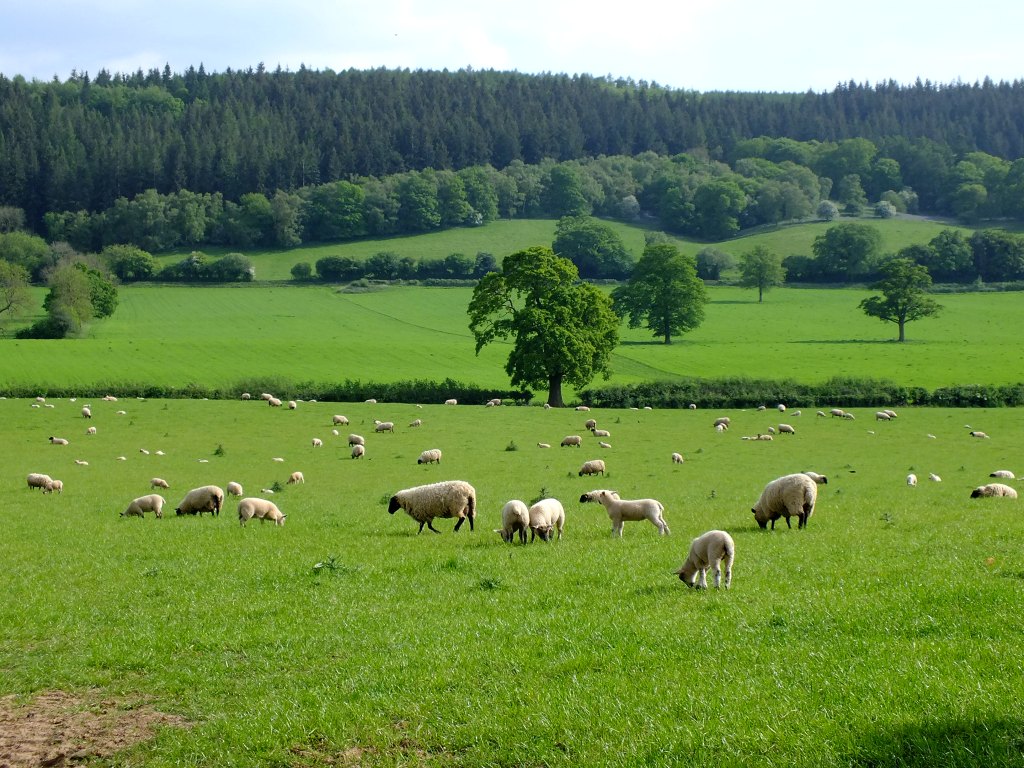
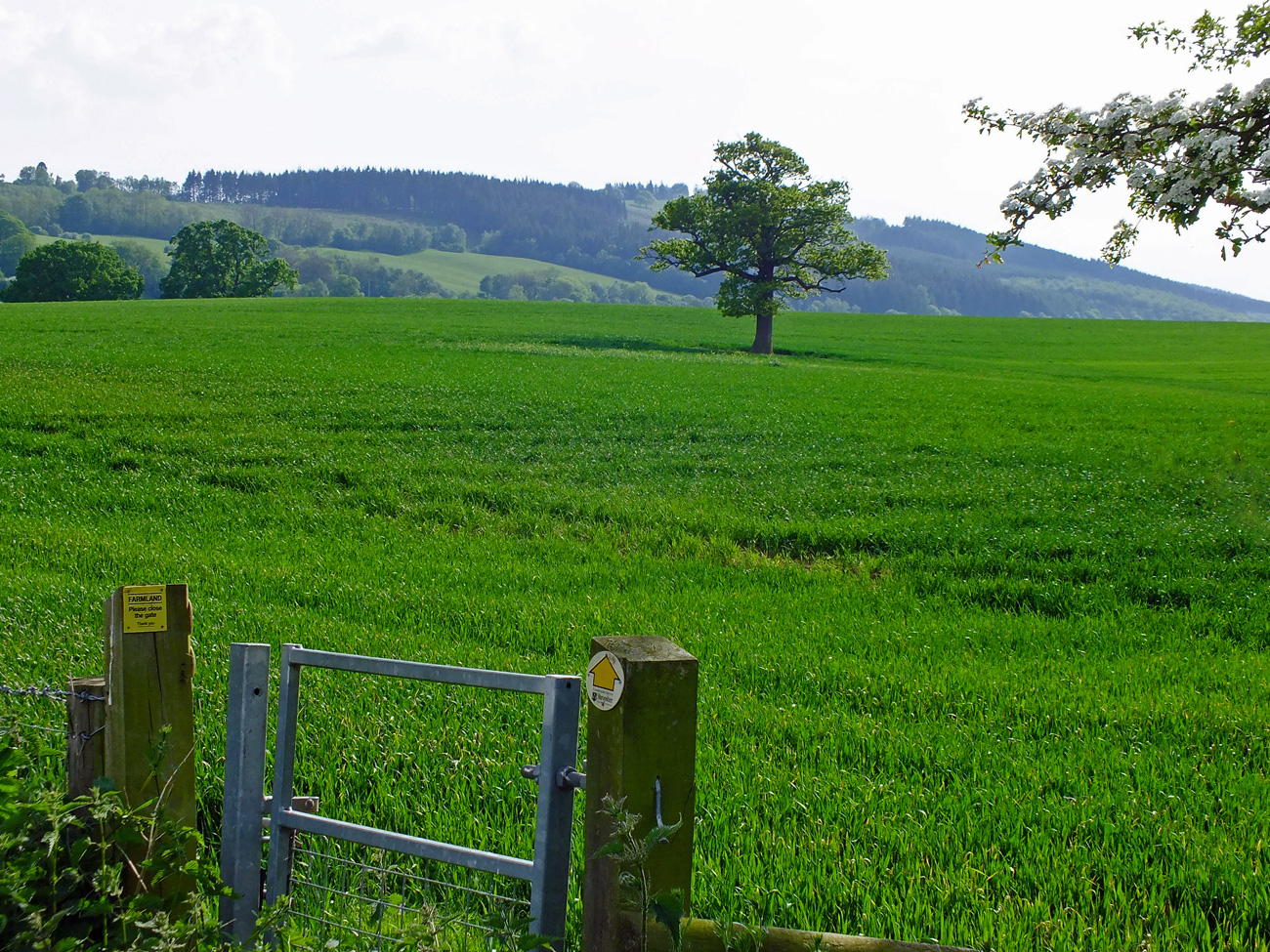
With the recent good weather I have been trying to get out for a daily walk. Last Sunday we set off towards Priors Halton farm, about a mile or so outside of Ludlow. It is one of the few flattish walks around here, as Ludlow is surrounded by hills.
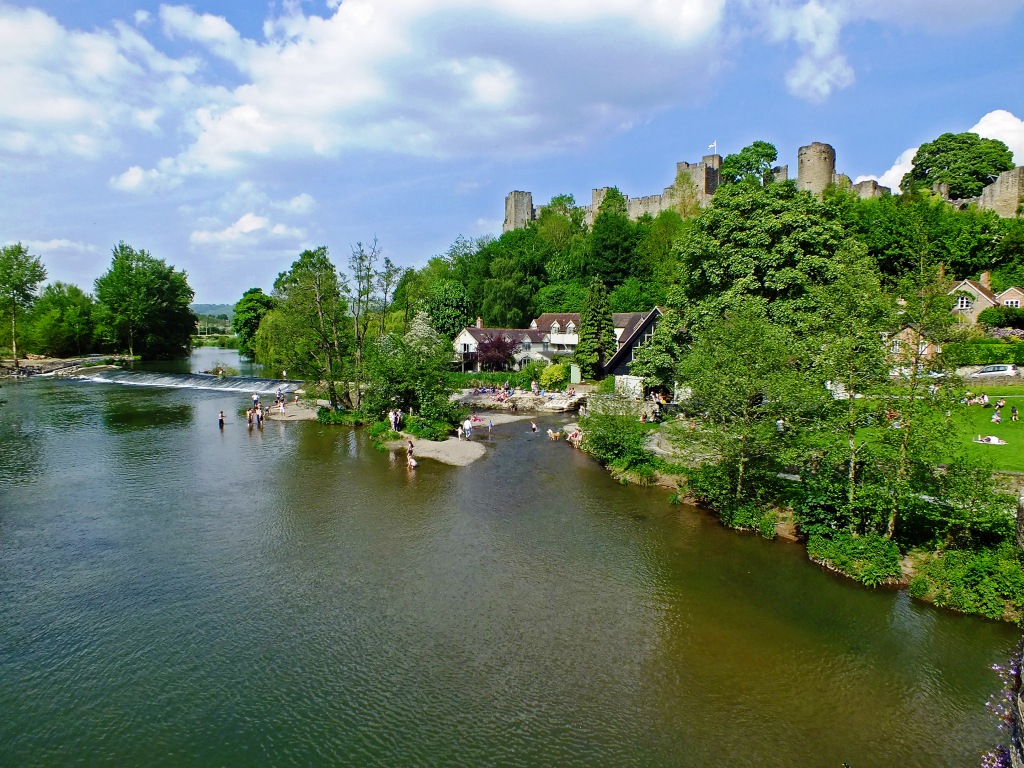
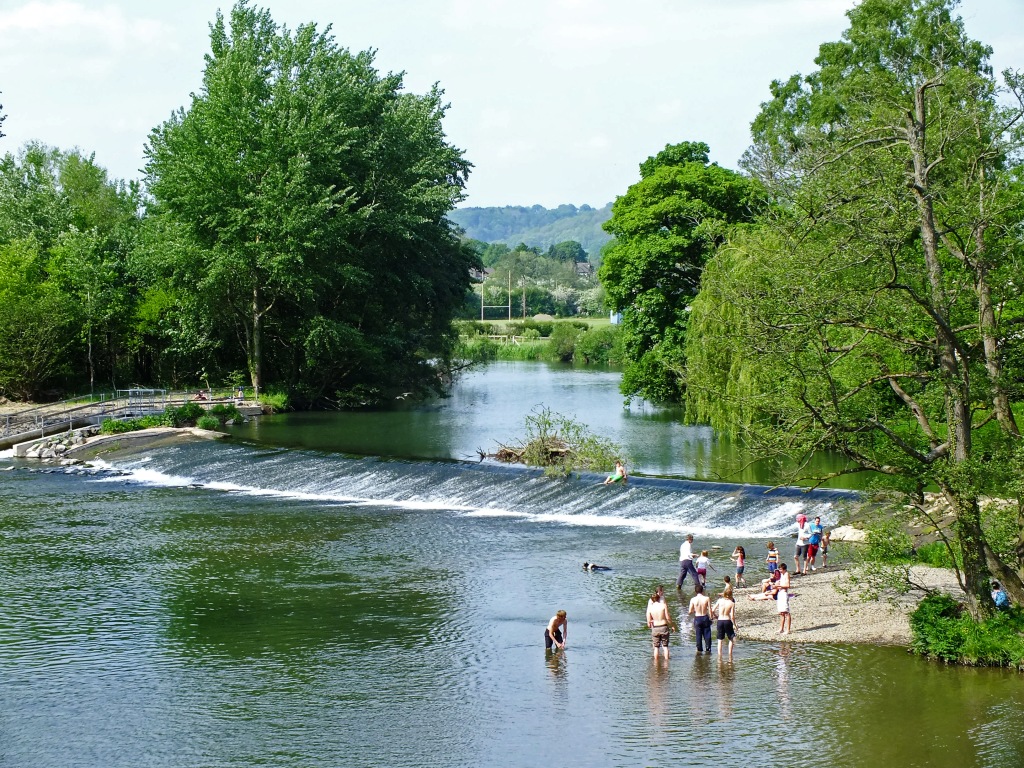
Most walks in and around Ludlow begin with crossing a bridge. This time Dinham, with a glance at ‘Ludlow Beach’, as locals name the area on the Teme where it is often safe to paddle. Repairs are being made to the weir (including a by-pass to allow salmon moving 50 miles upstream to spawn an easier way through the river ) has meant changes to the ‘beach’ too. And today there are many more youths than usual. It is a hot day, though they are a bit big to swim in the extremely shallow waters – amazing to think how high the water level was only a couple of months ago.
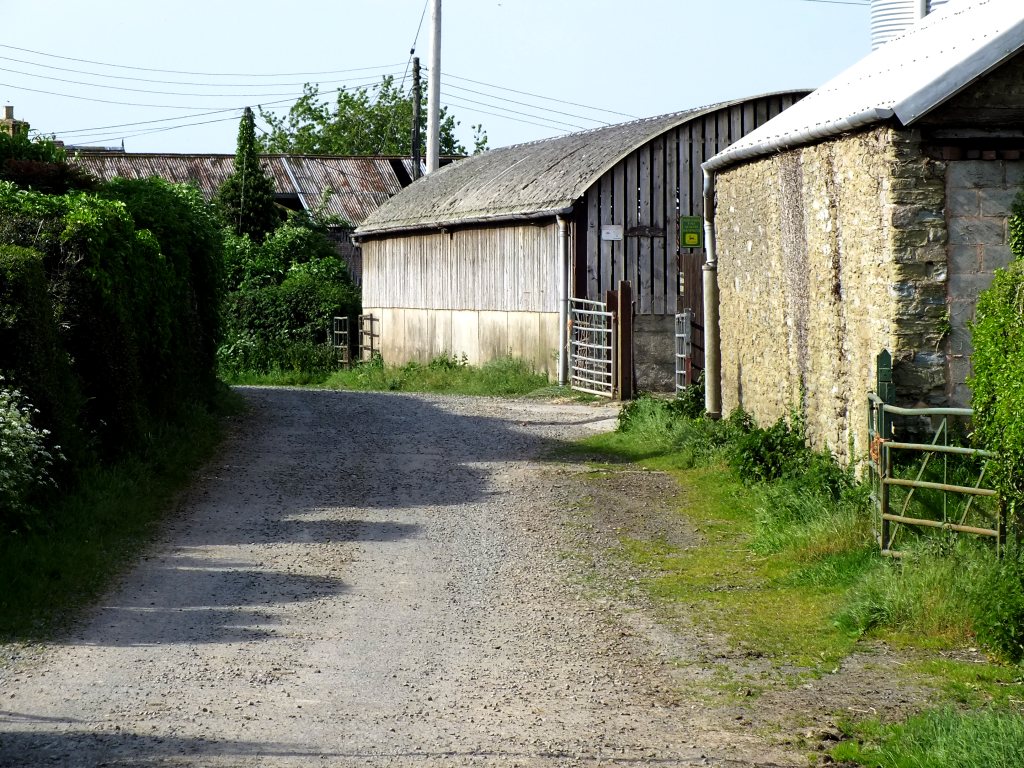
Instead of heading left along the Bread Walk or ahead up the Donkey Steps onto Whitcliffe Common, today we are continuing along the road towards Priors Halton. The road ends at Priors Halton farm, but you can continue on foot or bicycle to Lady Halton or Oakly Park and even Bromfield where you will find Ludlow Food Centre, a café and restaurant.
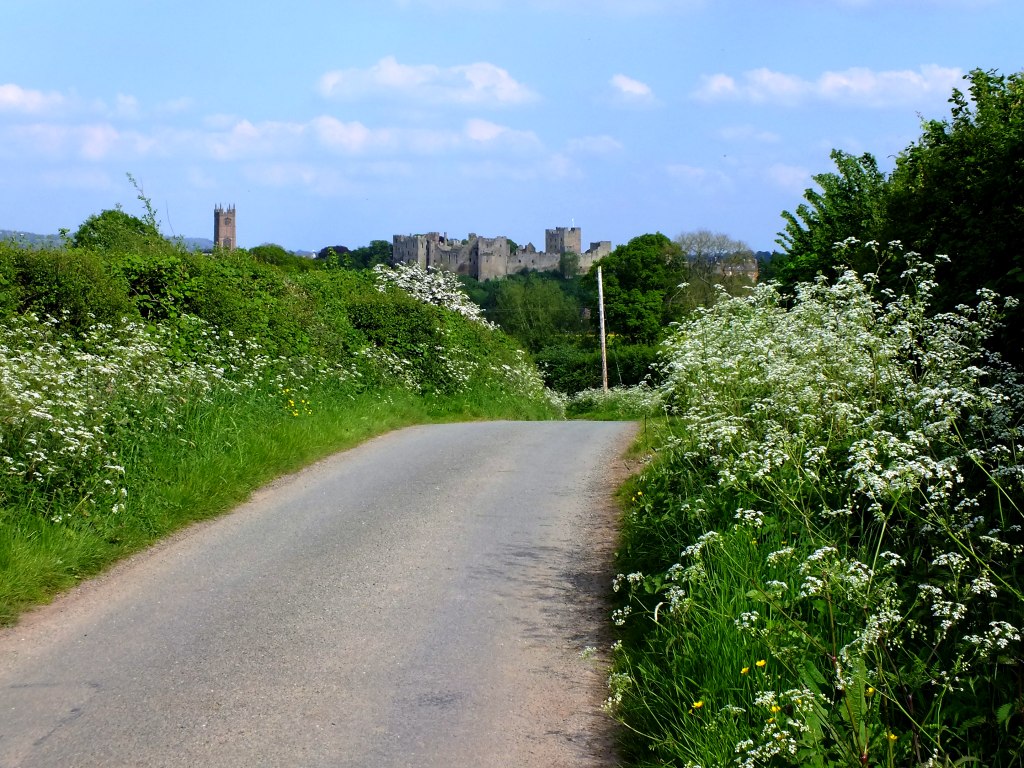
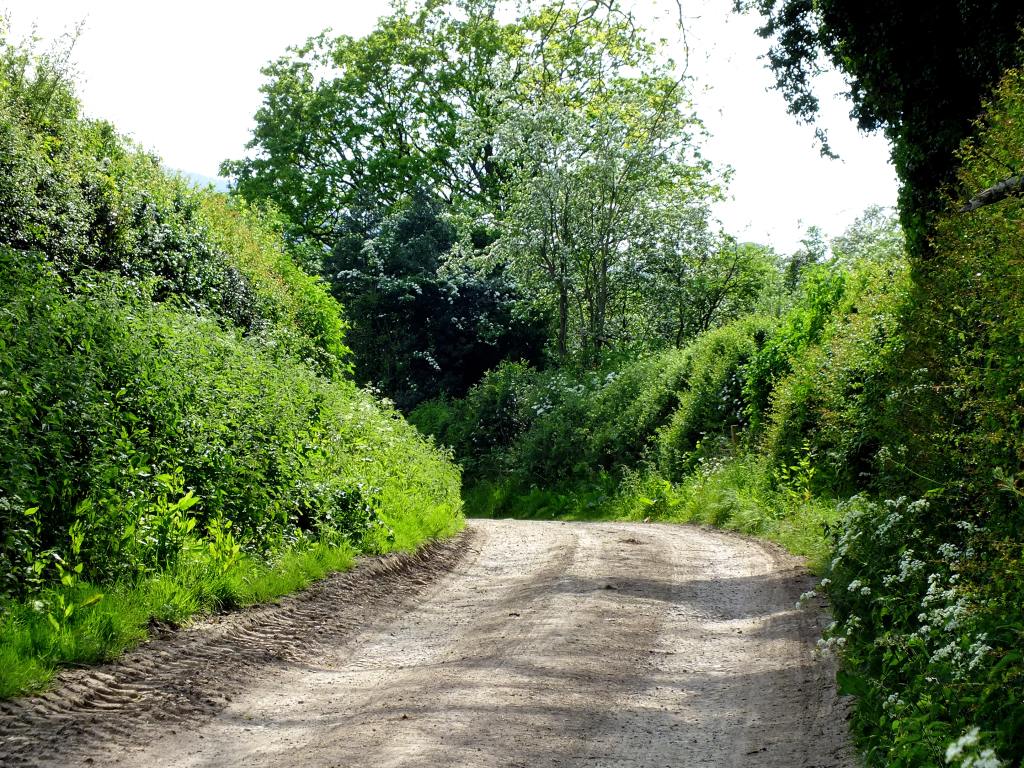
Lots of wild flowers in the hedgerow hidden amongst the clouds of cow parsley and May trees are flowering.
Knapweed
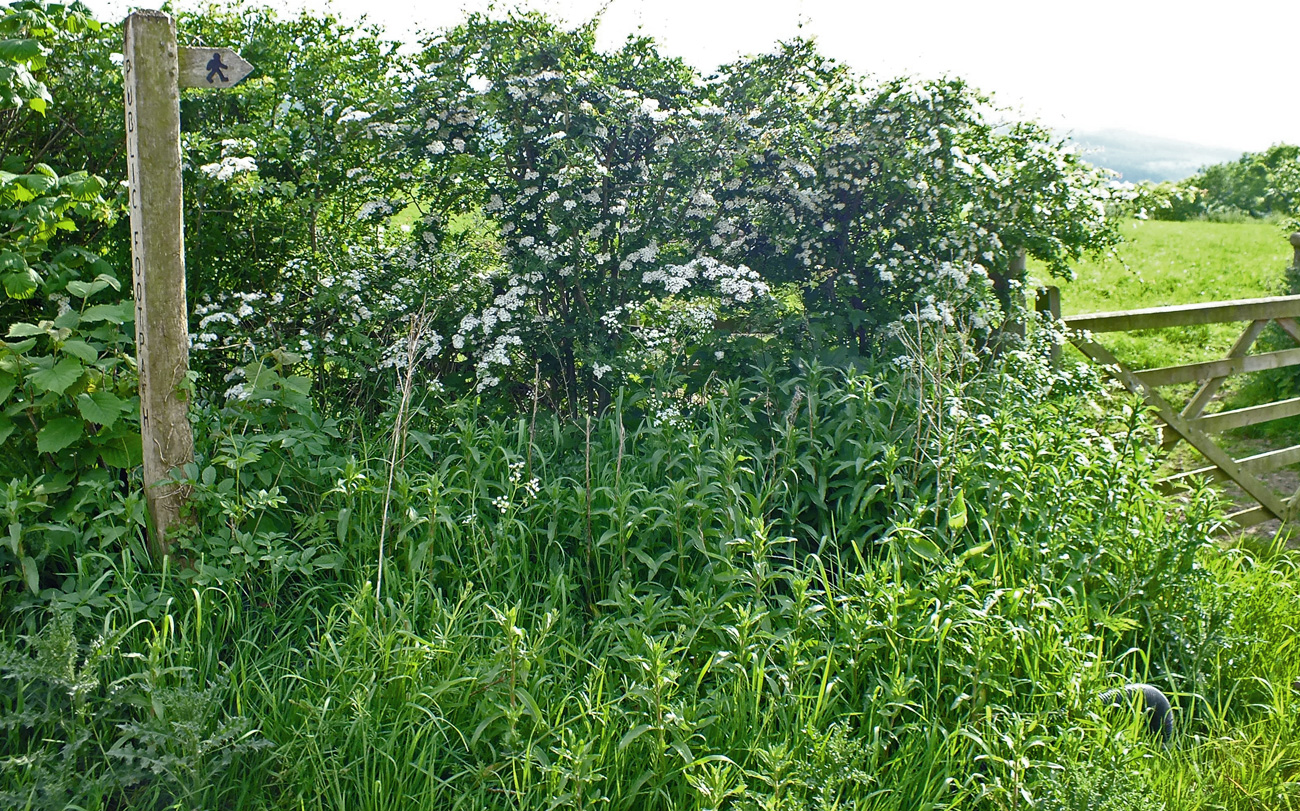
Hawthorn blossom
Stitchwort
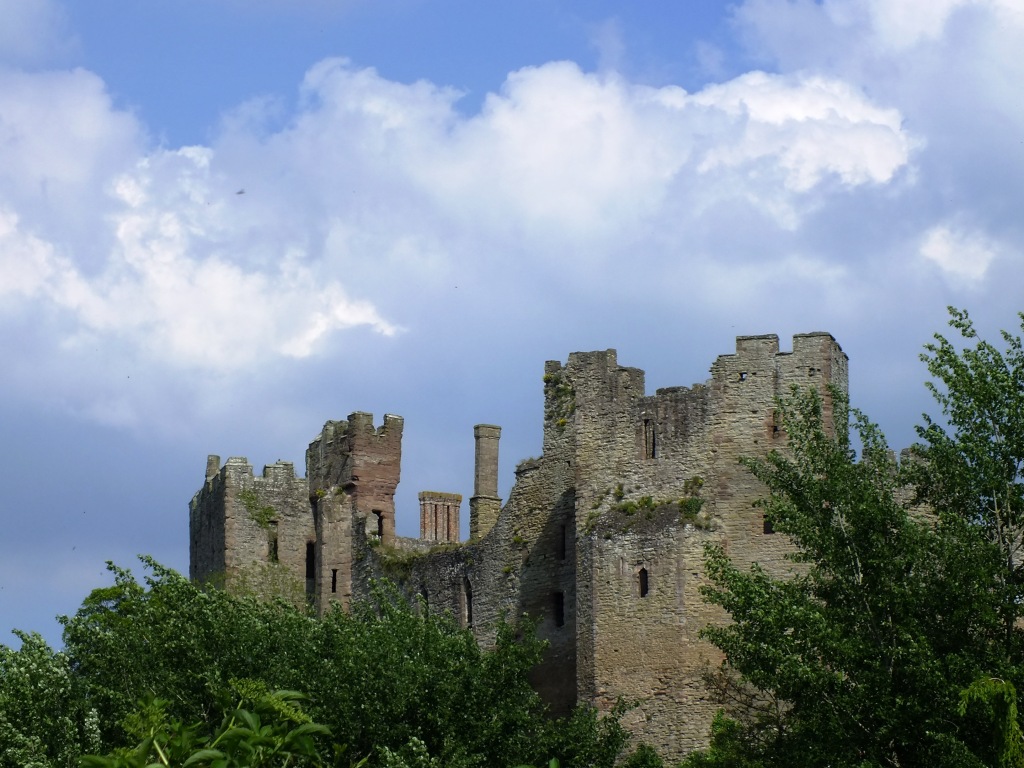
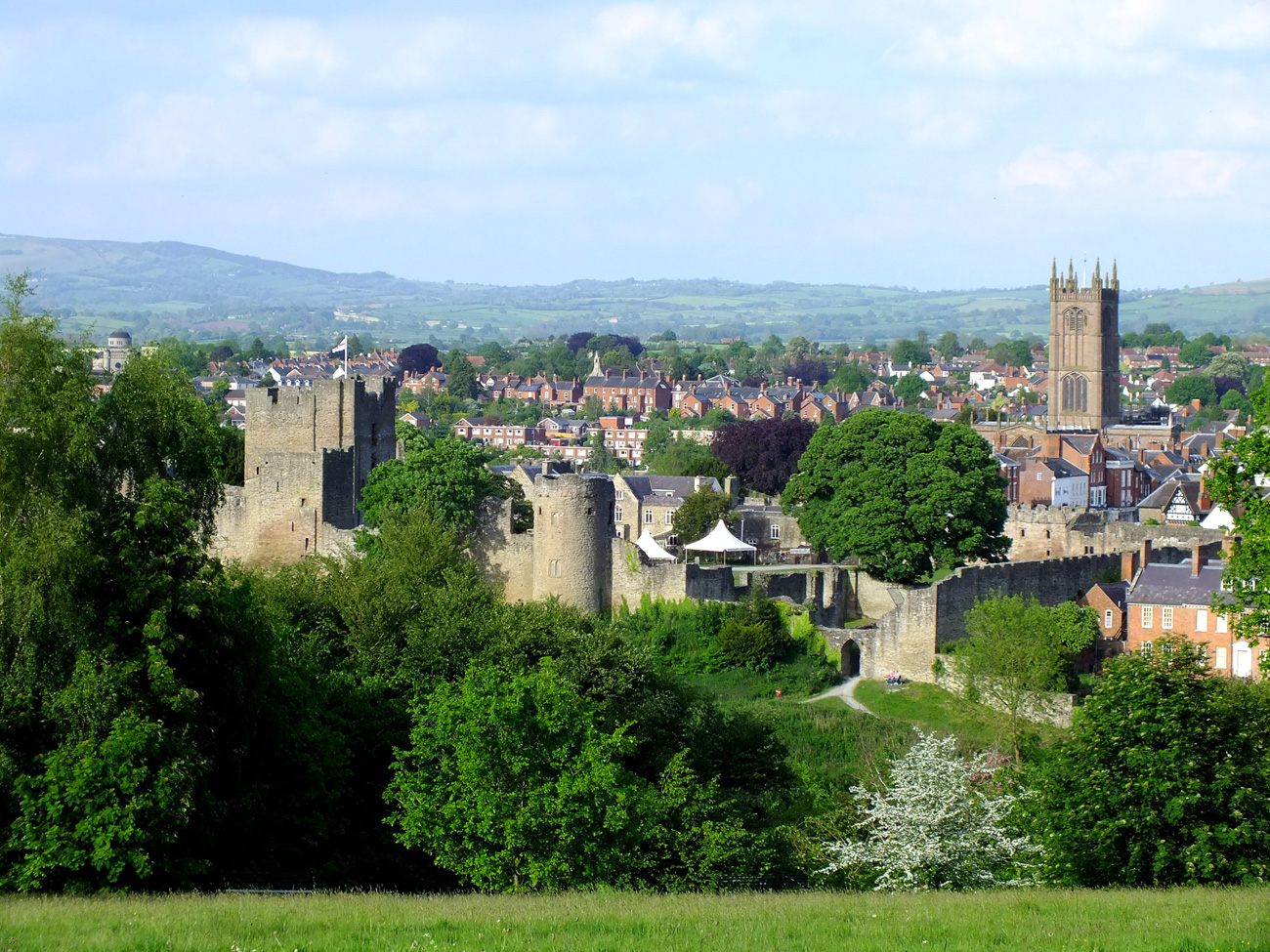
Look back and you’ll be rewarded with a dramatic view of the castle in its commanding position, chosen by Norman builder, Roger de Lacy in 1085.
It’s amazing that only half a mile away from the town you feel deep in the heart of English countryside. The only sound is that of birds…
Which Way?
Lilac tree and hill of Clee
Cows in the meadow
Along the road
Rich earth
and sheep bleating…
At the farm we decided to return to Ludlow via one of the public footpaths, thus shortening the walk to around 3 miles instead of a 5 mile loop.
A public footpath which during this dry weather, is easy to walk on. This is not always the case as, unlike the lane, this route is unpaved and gets very churned up and muddy.
May trees
Oak tree
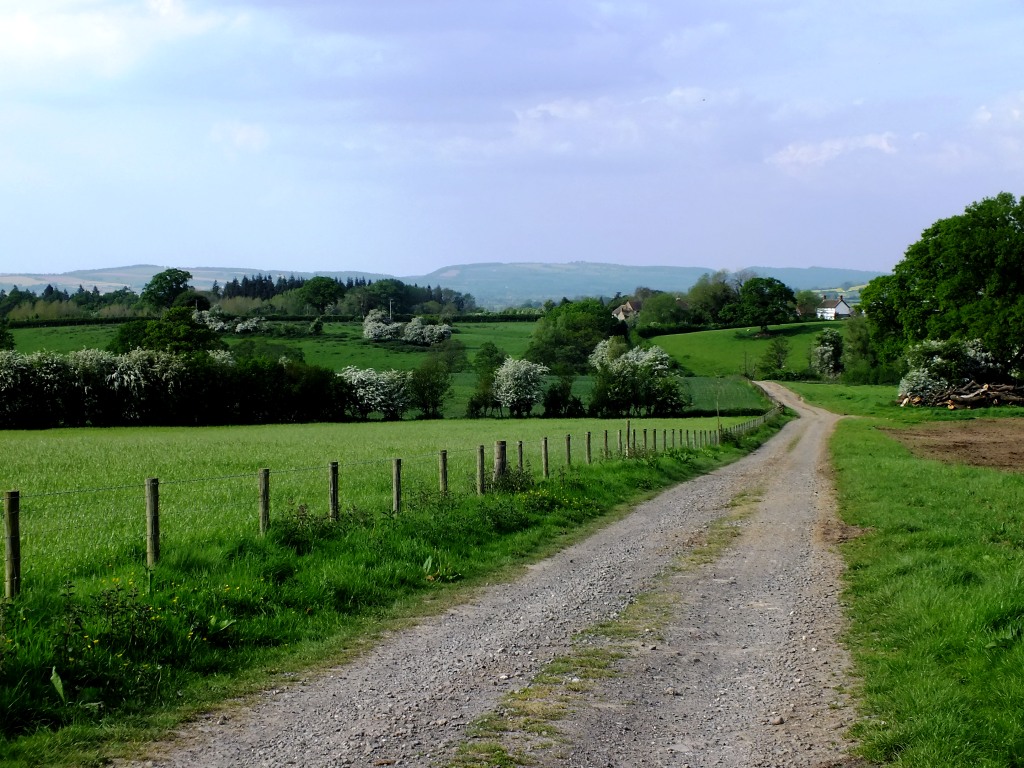
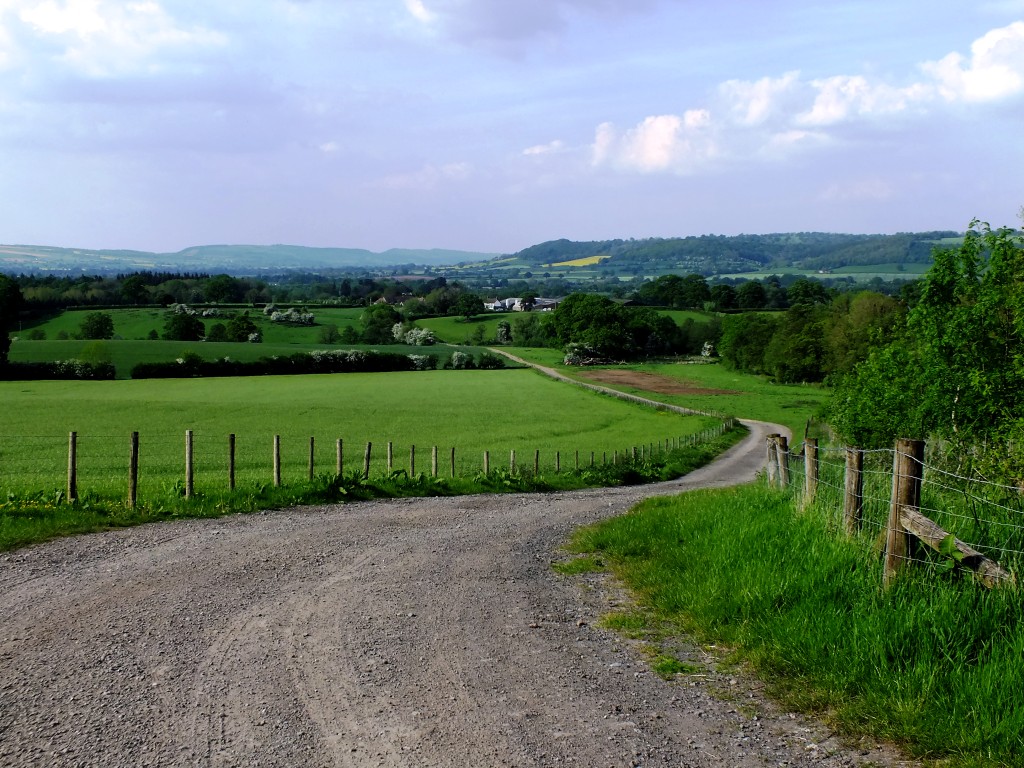
Another public footpath leads to Lady Halton alongside the farmer’s field, but we’ll continue along this track today, heading towards Mortimer Forest. It is slightly uphill but a gentle climb.
The views are good now that we are out of the high hedgerows. Look back towards Priors Halton and you can see the farmhouse and also the south Shropshire hills in the background.
We reach Middle Wood Road and turn left back to Ludlow.
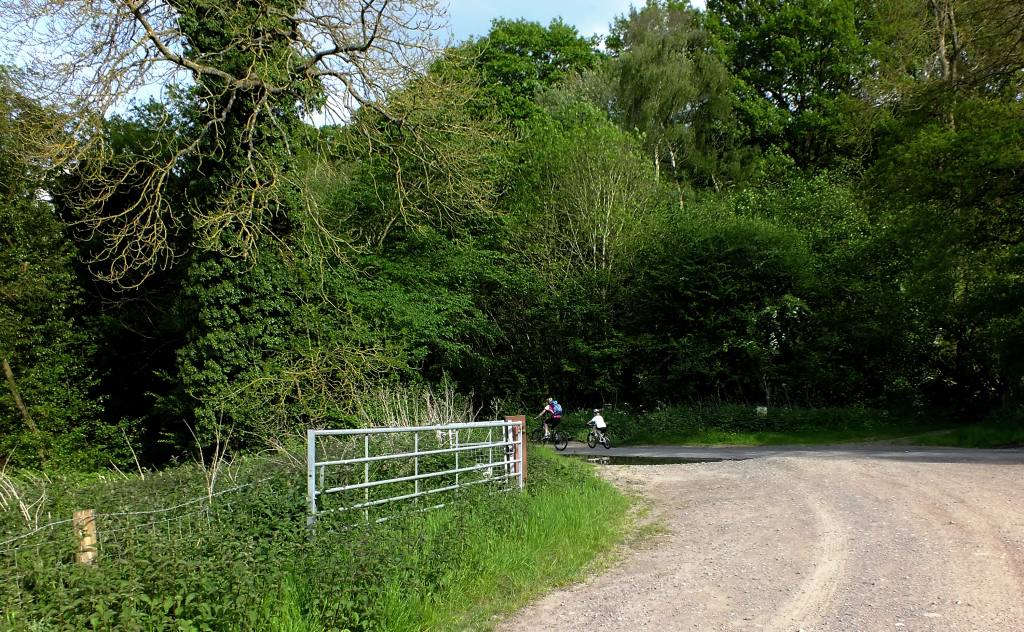
Watch out for speeding cyclists!
It is lovely and shady along this road as we walk along the edge of the woodland. Ludlow can be seen in the distance, crouching beneath Titterstone Clee Hill, which is about seven miles distant.
And we are accompanied by orange-tipped butterflies flitting along the hedge, but never stopping for a photograph. Bluebells can be spotted up in the woodland, cow parsley appears again
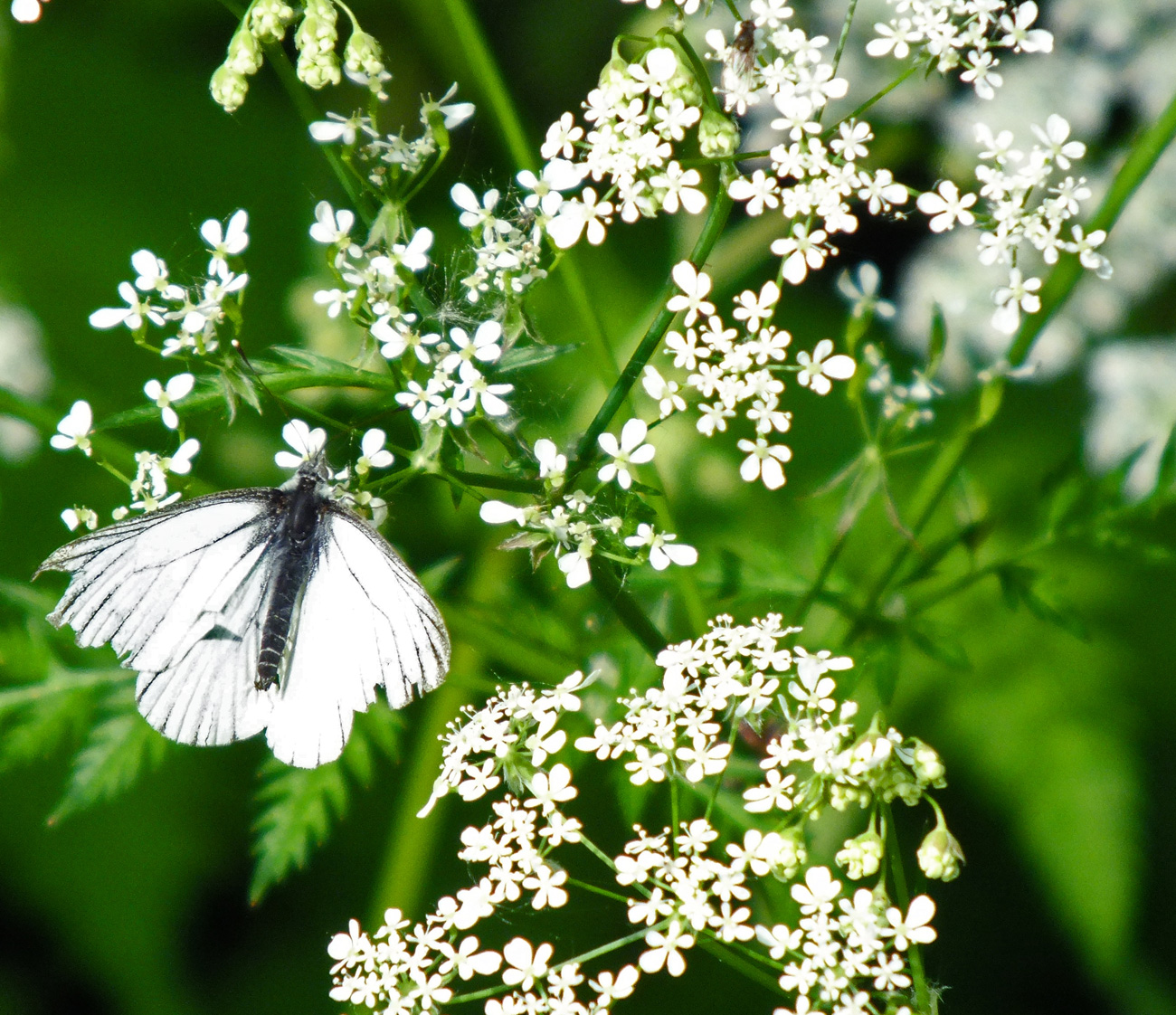
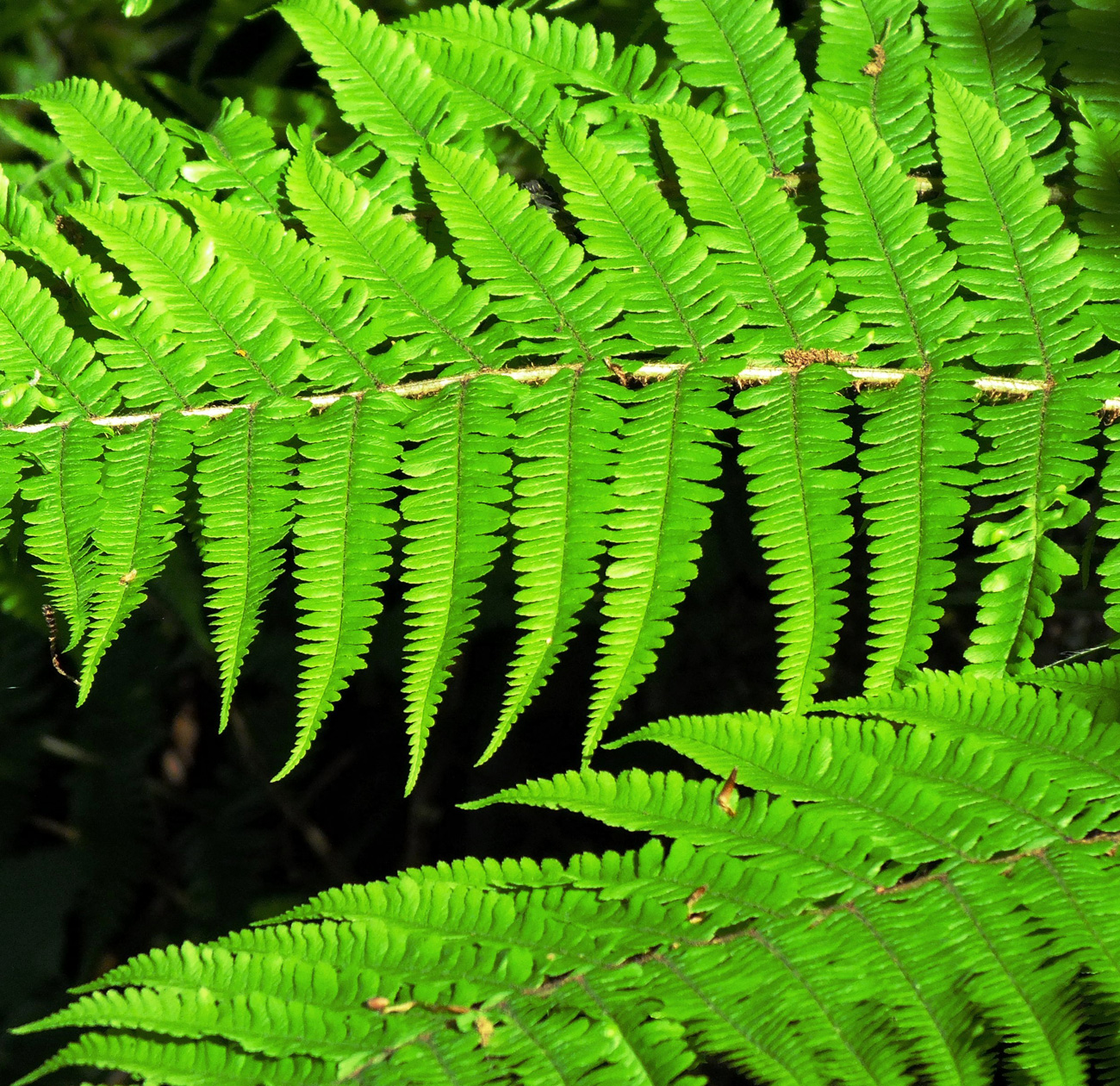
and we did get a shot of this little fellow, who may be a Wood White butterfly and some lovely new ferns.
Finally we reach Lower Road and Whitcliffe Common, where we found a bench to rest and enjoy the view of Ludow and the castle where a couple are enjoying their view from the bench next to the archway, which I mentioned on my Castle Walk.
If you enjoy a walk, short or long, then you may enjoy visiting Jo’s Monday Walk where you are in for a treat.
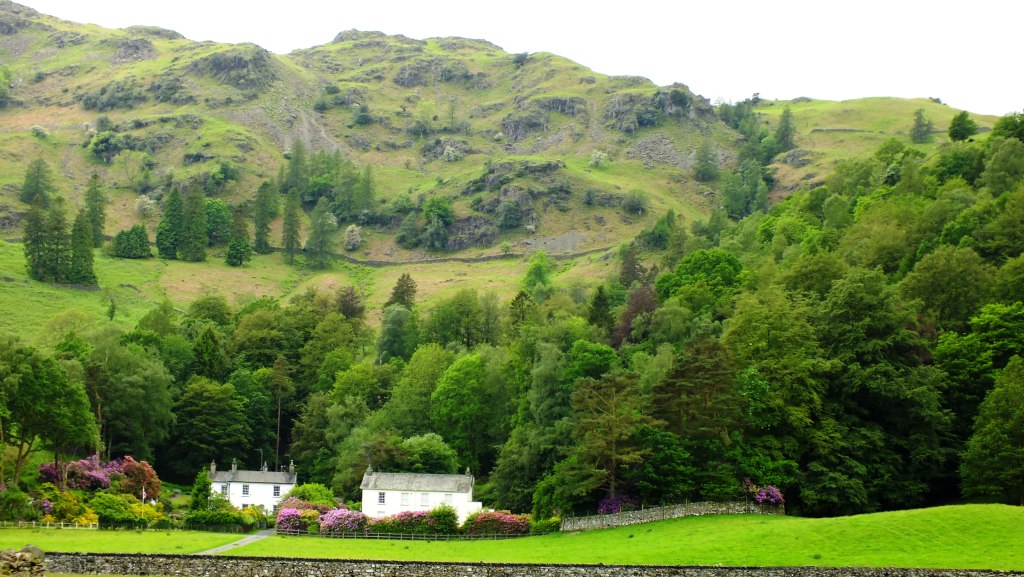
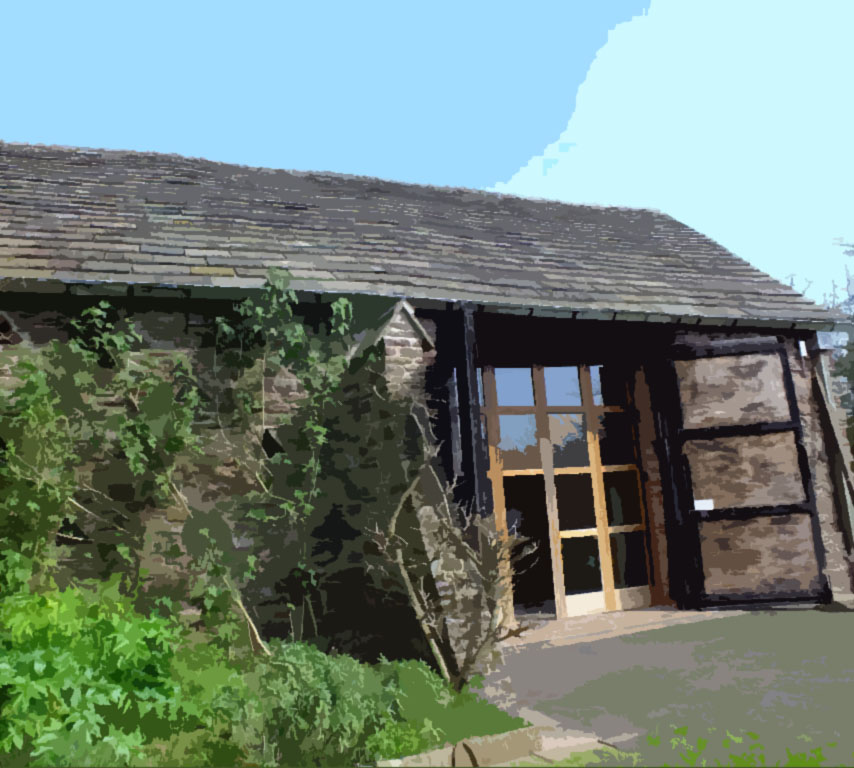
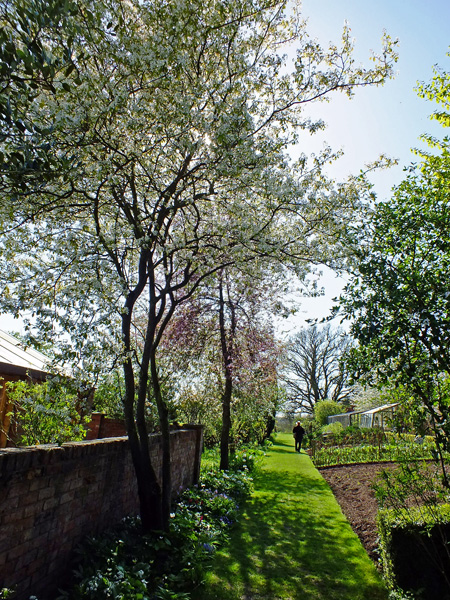
I discovered another garden not too far from here a few weeks ago. Apparently it is used as a location in ‘The English Garden’ magazine if anyone reads that. It also has a small café in a beautiful Tithe barn serving lunches and cakes, warm lemon & treacle tart anyone? So definitely worth a visit, although on this particular day I was feeling rather ill so had to sit and watch the OH devour a lovely chicken sandwich.
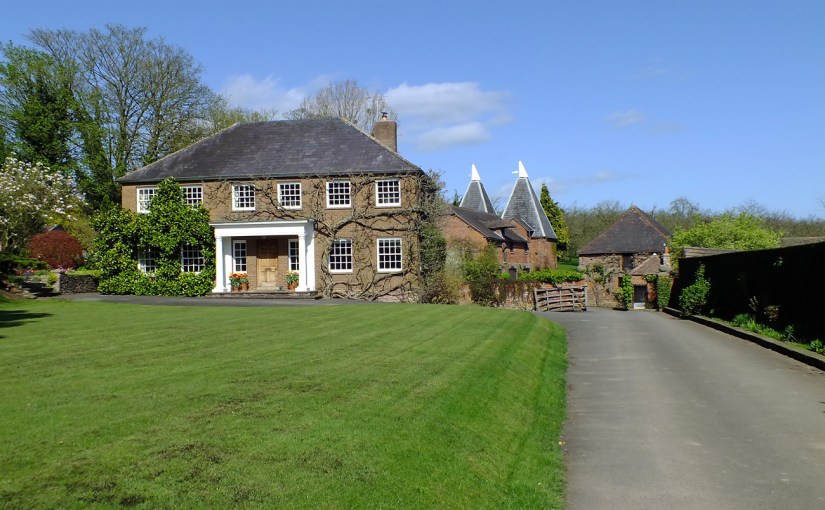
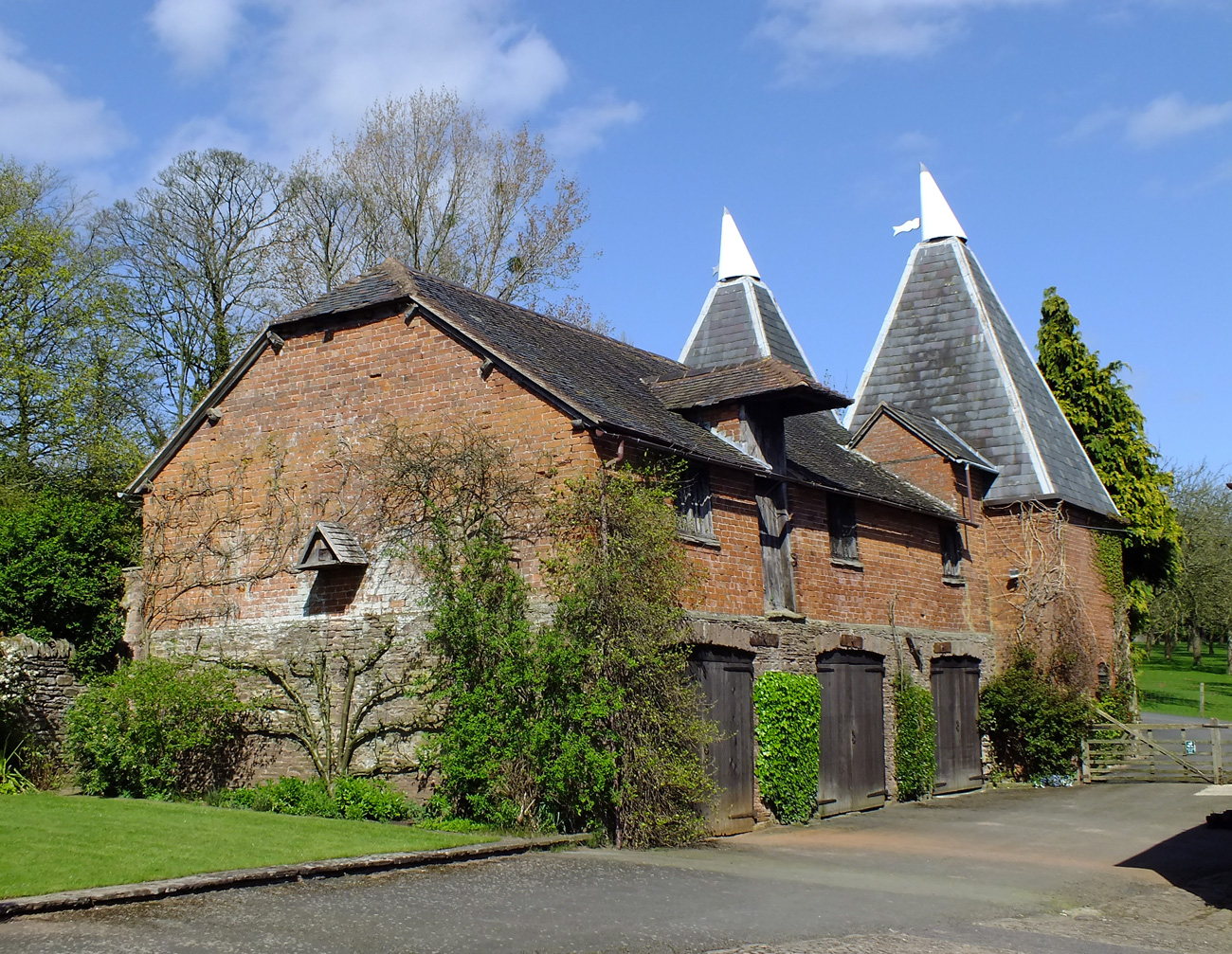
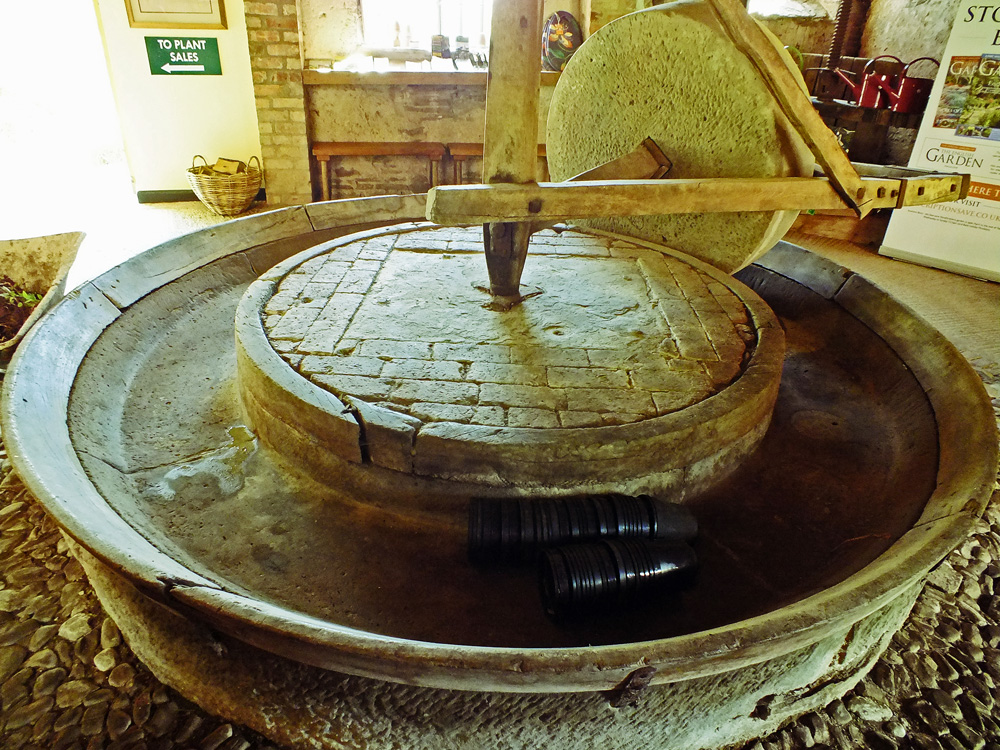
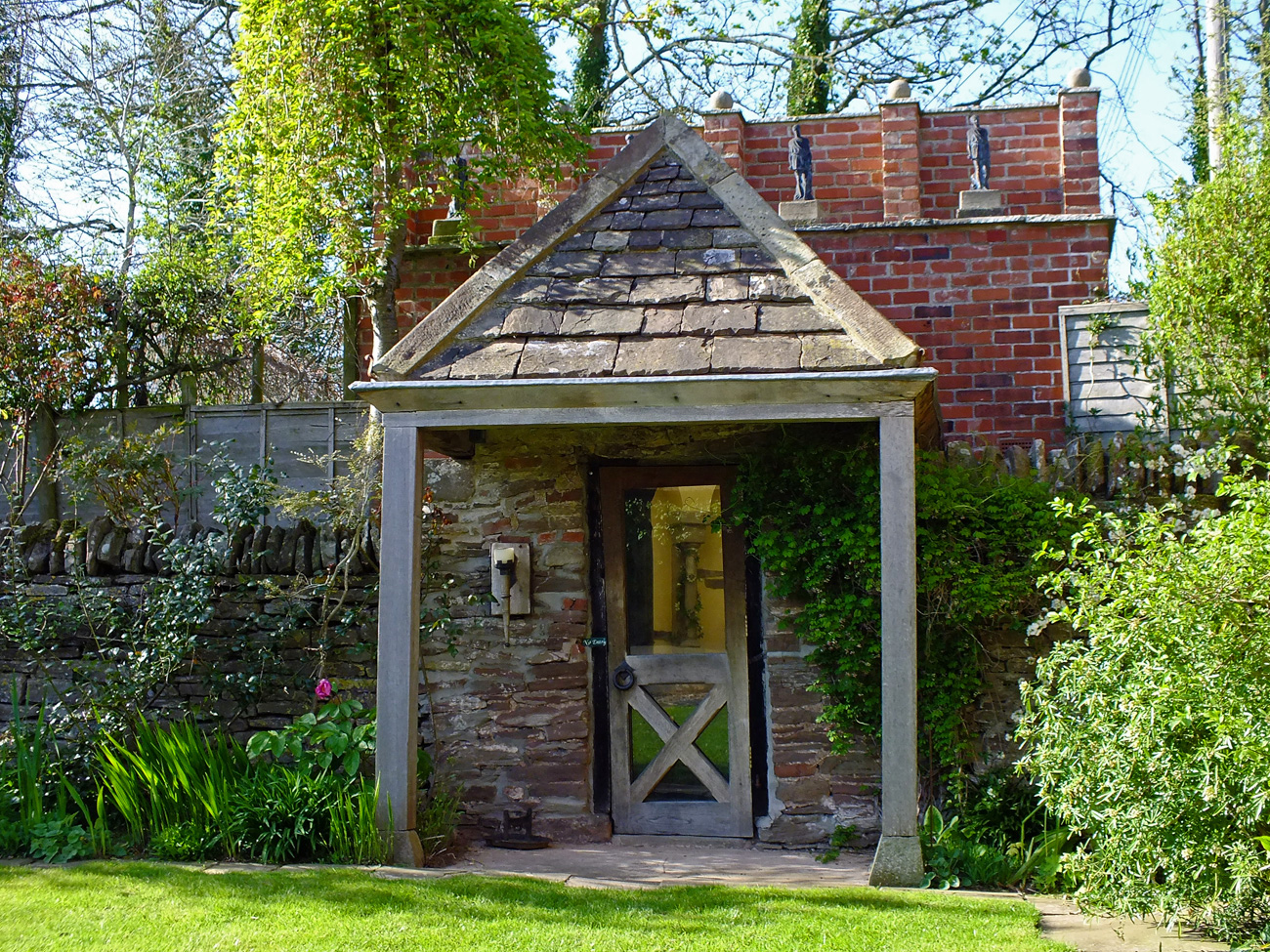
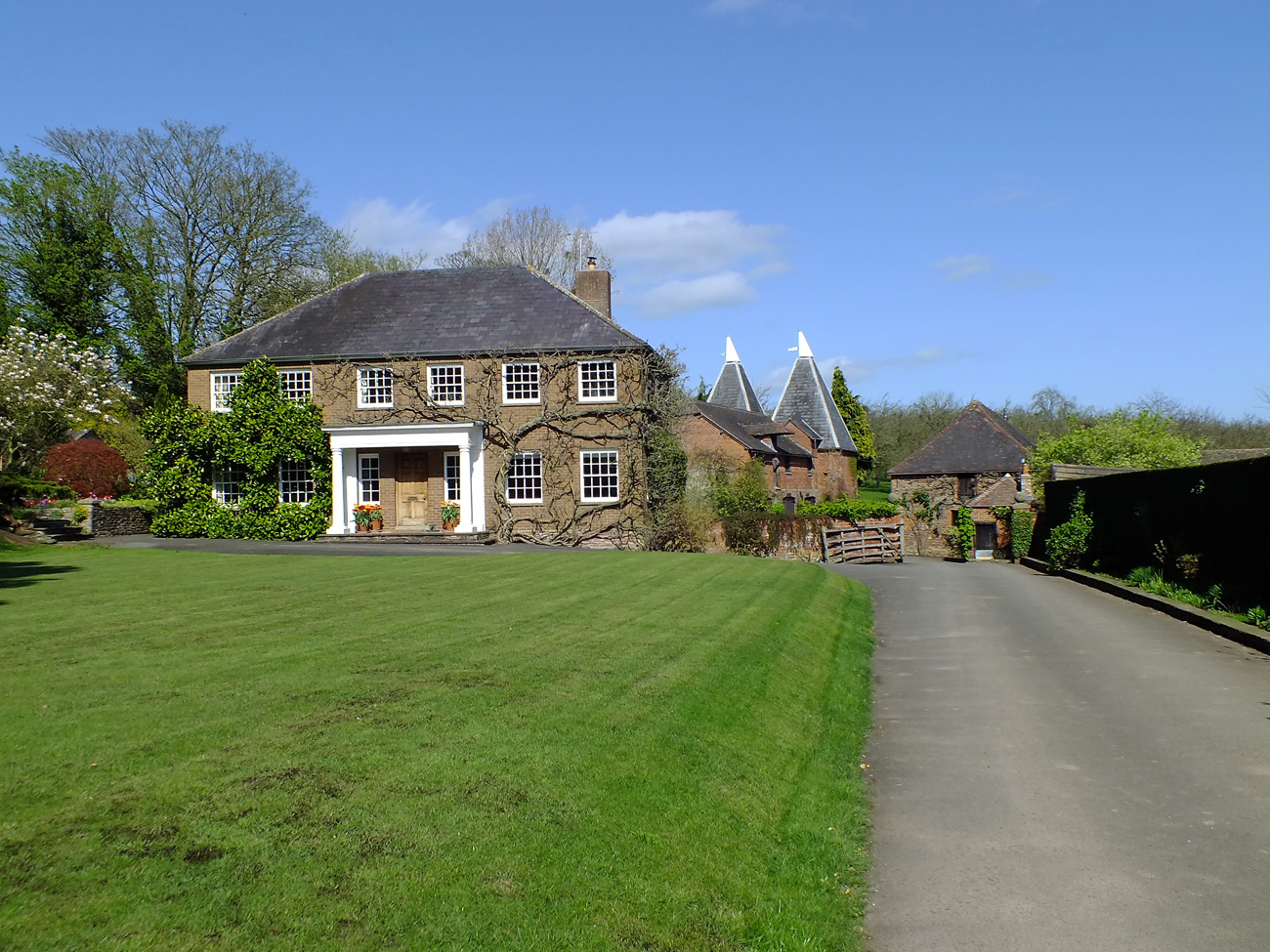
Probably the first thing you notice once you enter the gardens through the Cider Press, is this gorgeous Granary with the Oast Houses. I used to think Oast Houses only existed in Kent. Not so, there are quite a few in Herefordshire and Worcestershire and still plenty of hops in the fields.
I spent a fair while just photographing these gorgeous old buildings before venturing into the gardens themselves. But what a treat awaited me.
Steps on the Cider Press
Tulips
Redbuds
The problem was where to start? The Pigeon House Garden? The Spring Garden? What a choice.
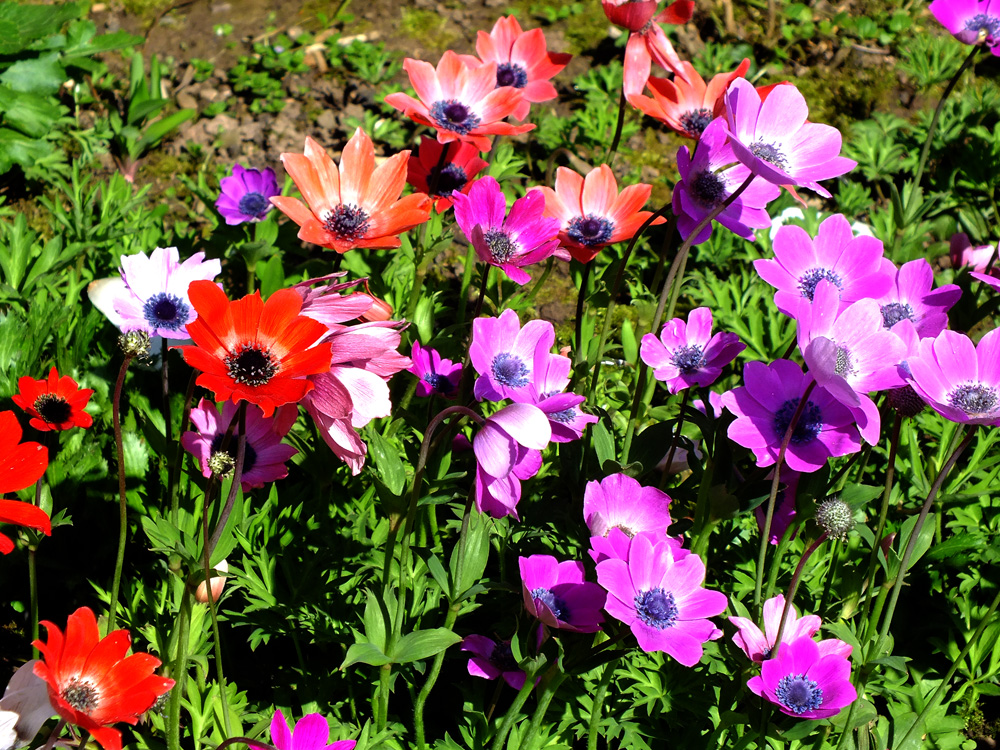
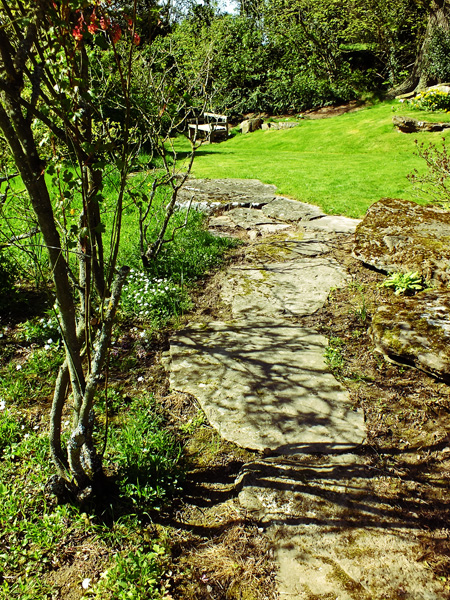
The Spring Garden was a delight with these jewel-like anemones flowering in the sun. A crooked path leading to a sweet little summer-house with magnolia blossom overhead.
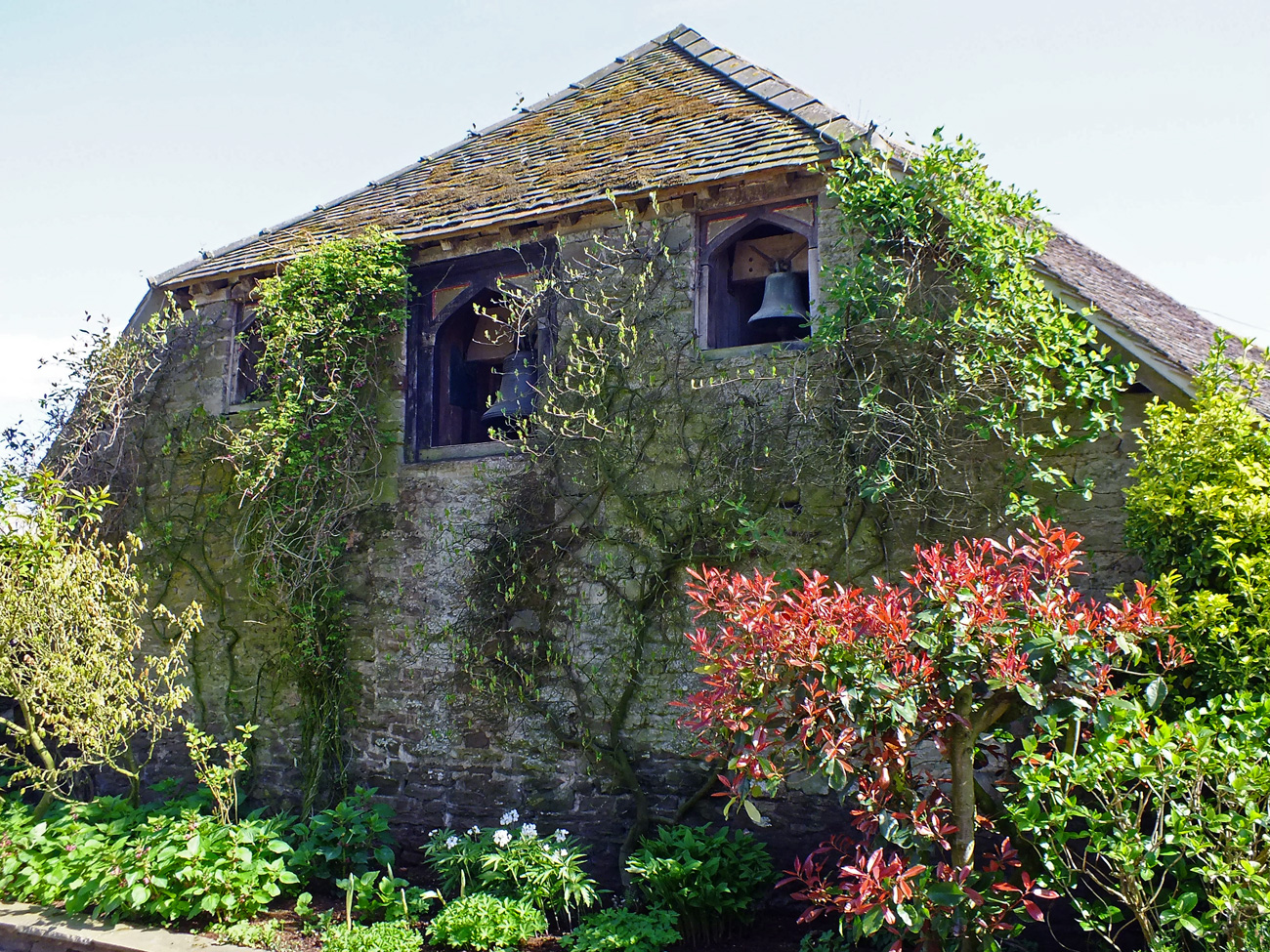
Leaving the Spring Garden behind brings you out in front of the Manor House, with pots of bright tulips outside the porch and walls festooned with budding wisteria. The Main Lawn softens the driveway which leads to the farmyard. And a barn with bells.
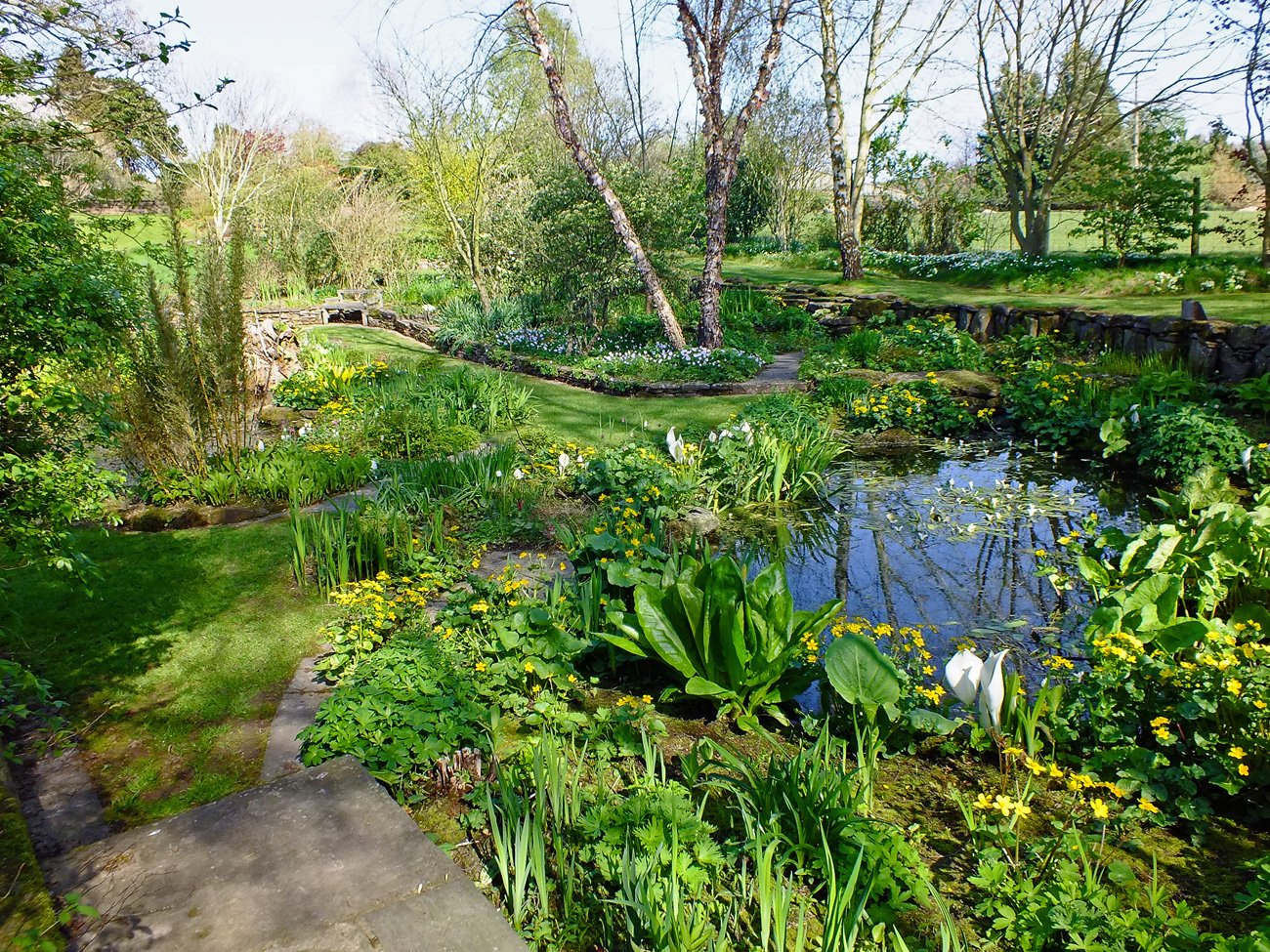
The Bathing Pool Garden was intriguing, especially as this leads to the Rock Pools where Fritillaria meleagrisand Pulsatillavulgaris flowered around the pool and blossom hung overhead.
Fritillaria meleagris
Chaenomeles japonica
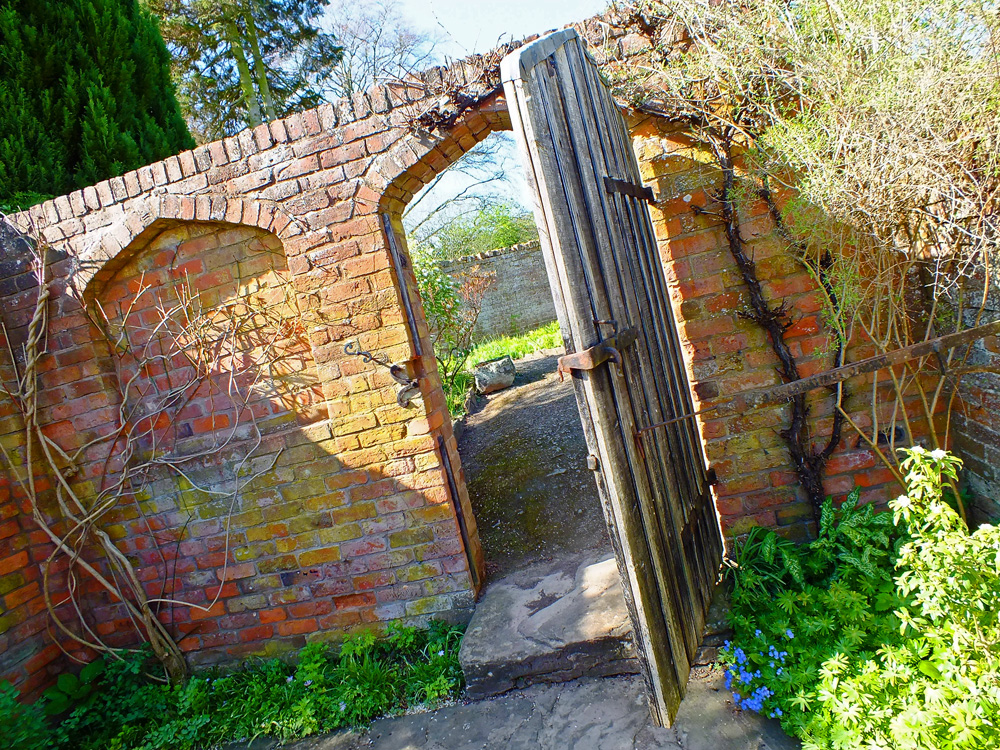
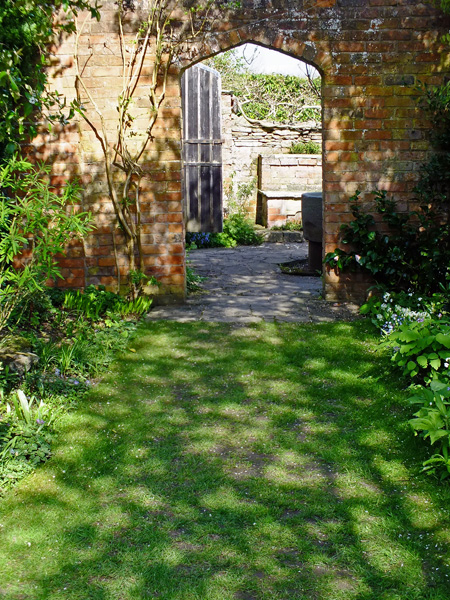
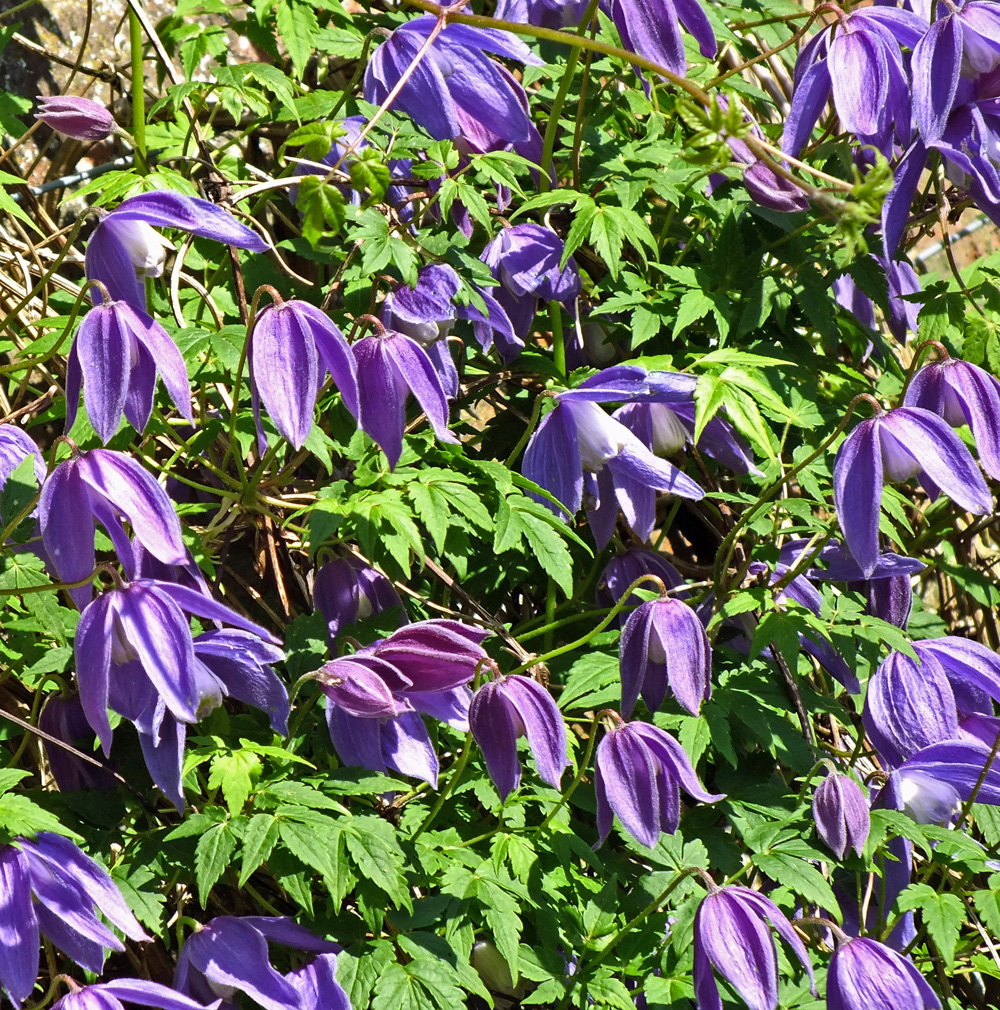
Doorways and water features entice you into the Elizabethan Garden with violet-blue clematis dripping over the wall.
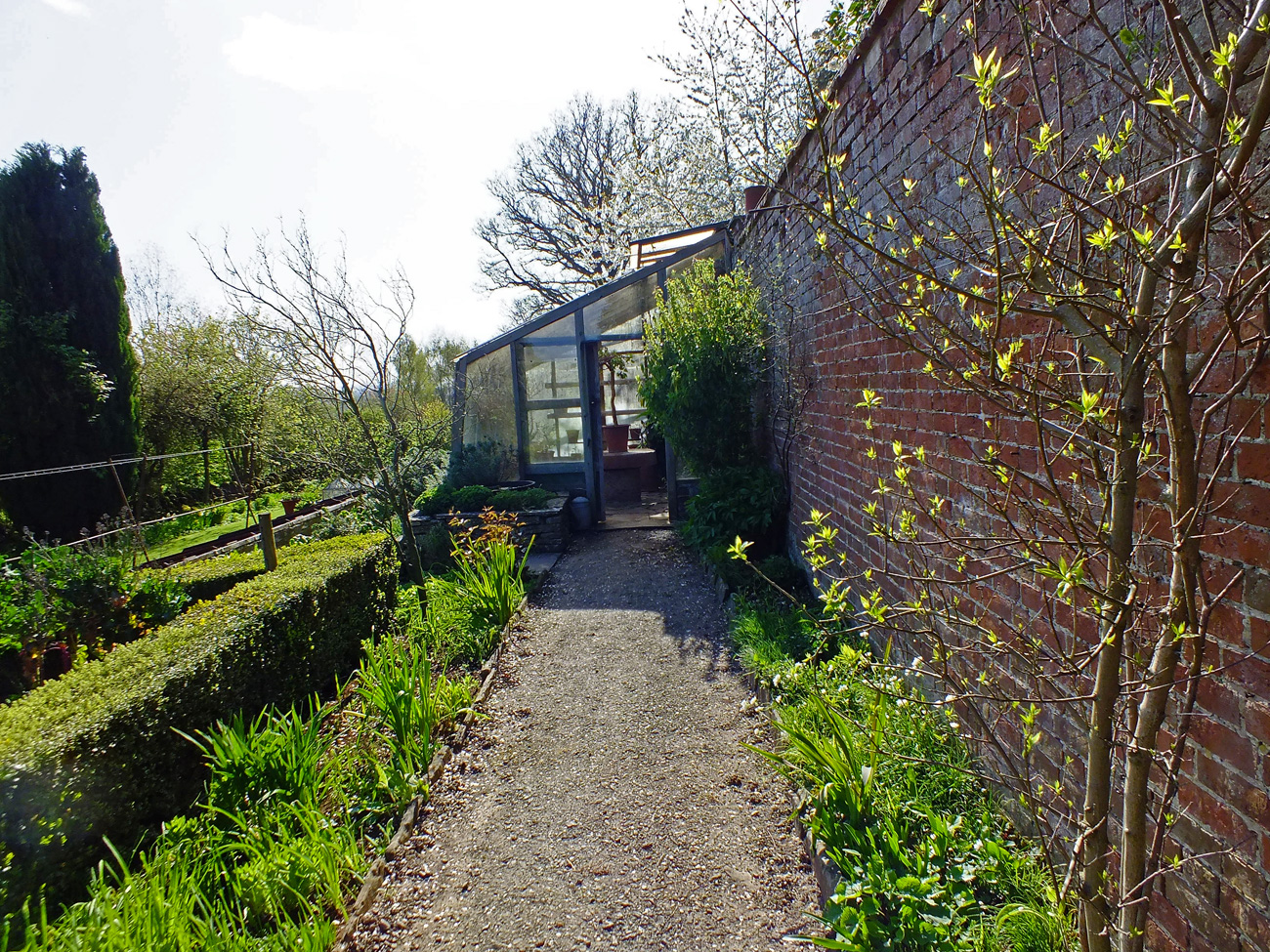
Next the Long Walk leads you past the Kitchen Garden, the Sunken Garden, the Pillar Garden and finally the Paddock Garden. See the blossom?
With plants and pots and watering-cans to catch the eye.
Pots
Erythronium
watering-cans
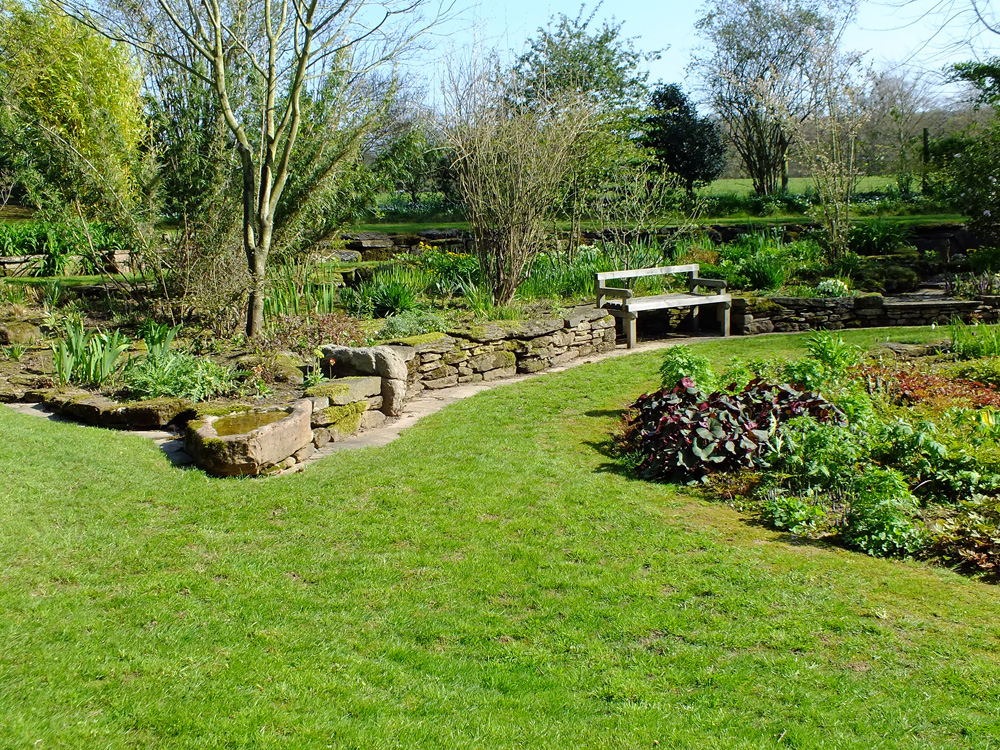
The path leads down to the Dingle, the furthest area of this lovely garden and where the Spring and the Grotto can be found. A very peaceful place to stop and rest and absorb the beauty of nature.
Lots of little paths to wander along.
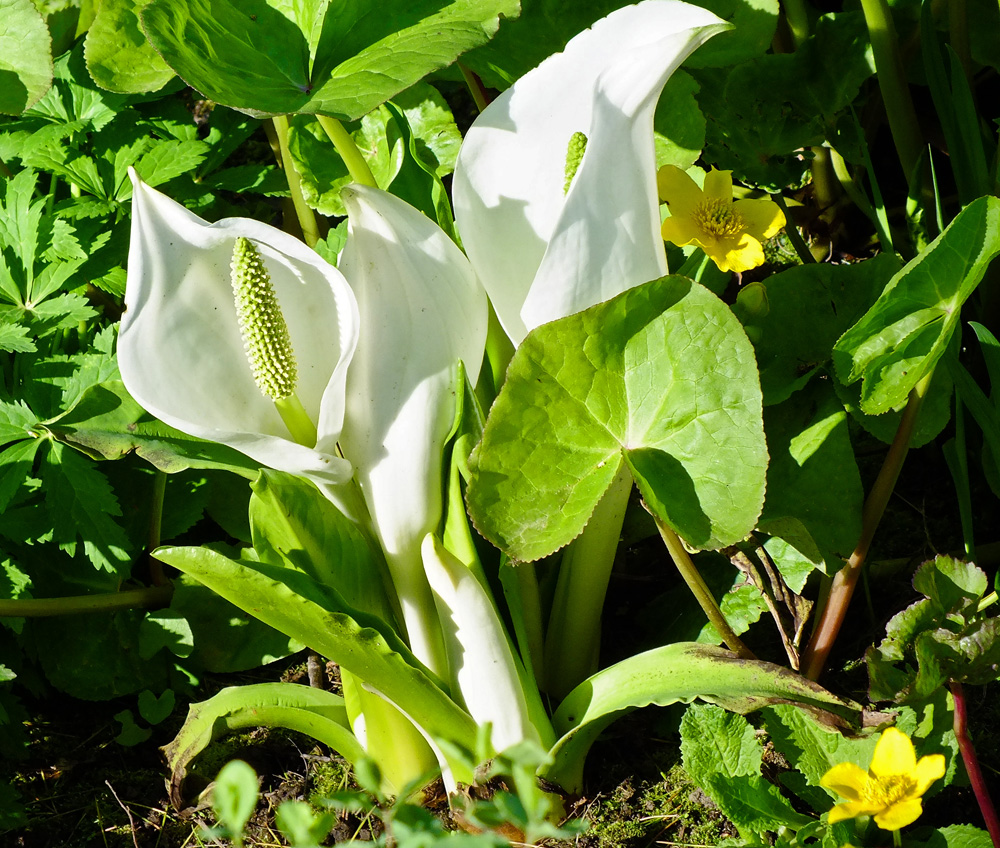
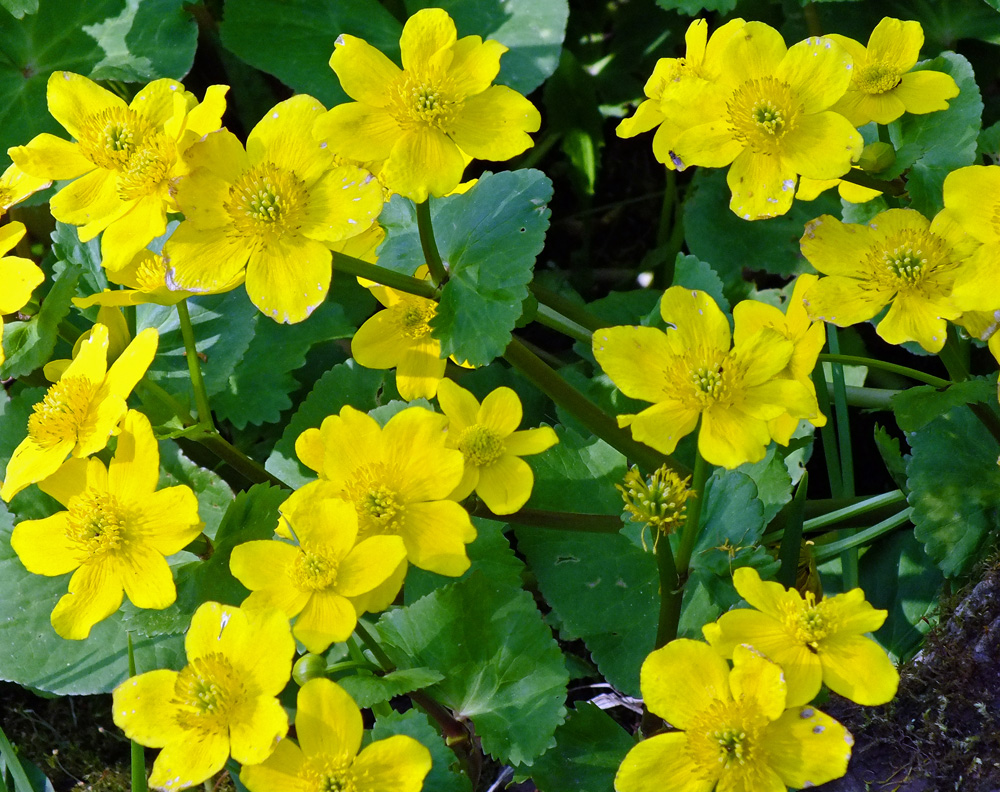
marsh-marigolds
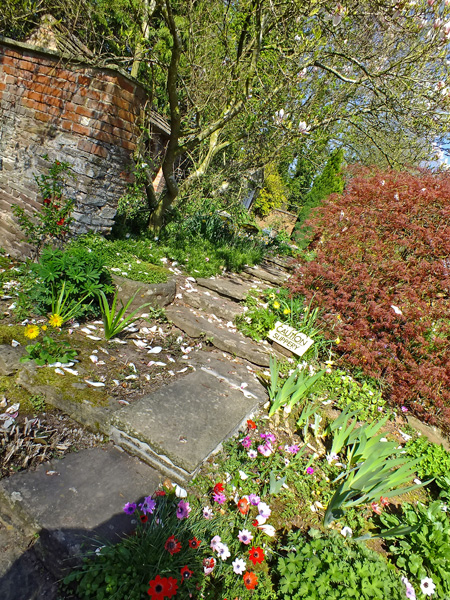
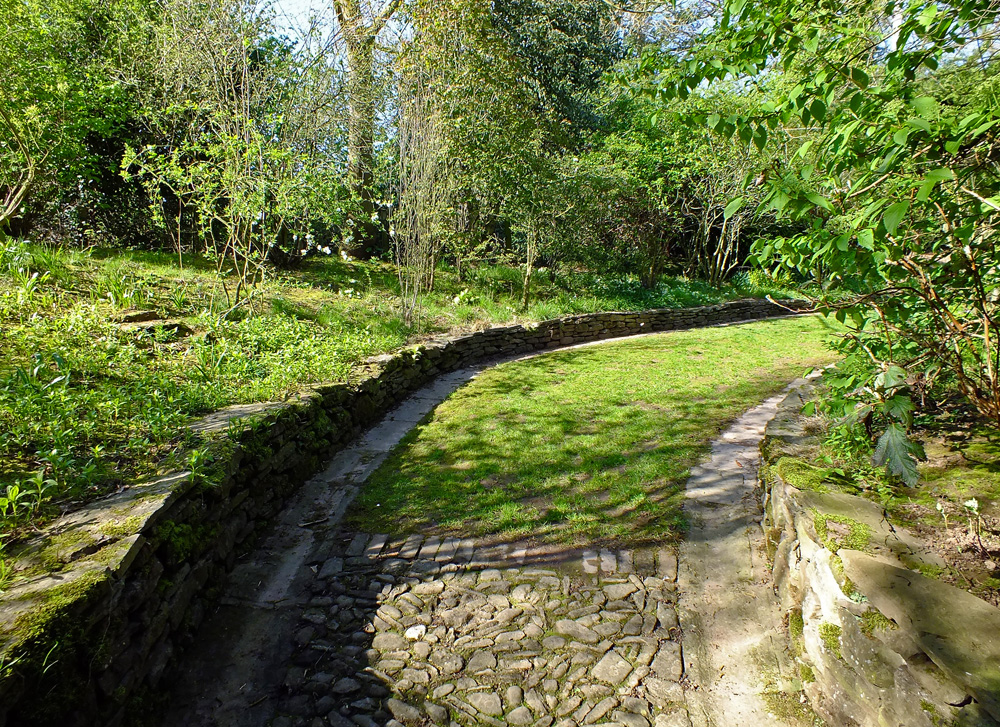
And a wider one which leads to the Grotto. But watch your step!
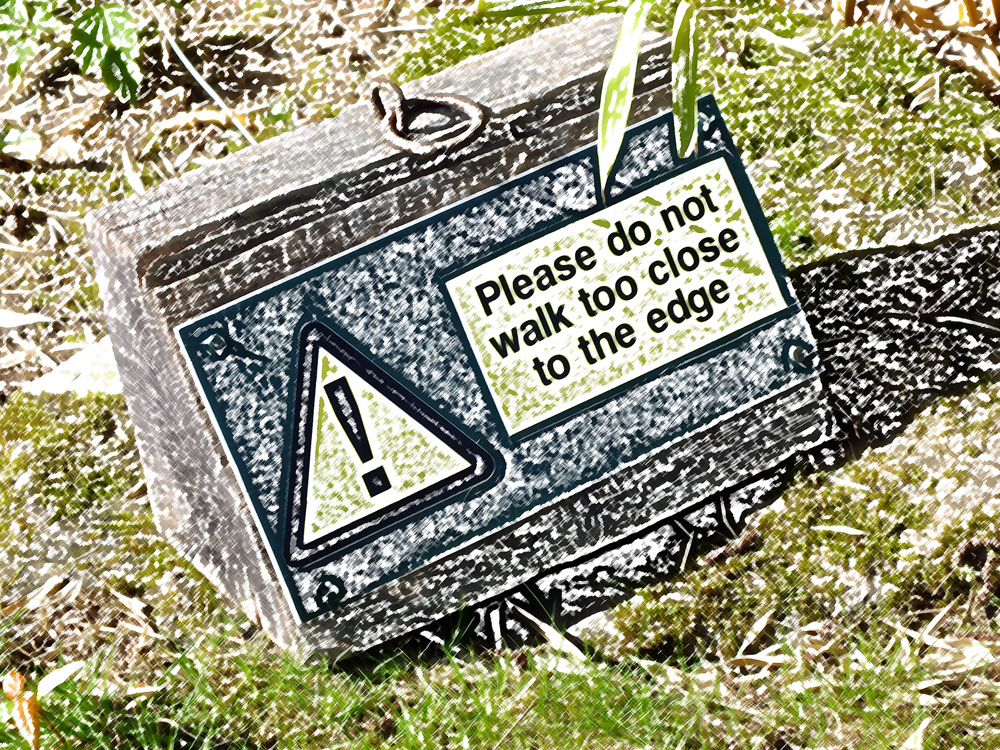
warning
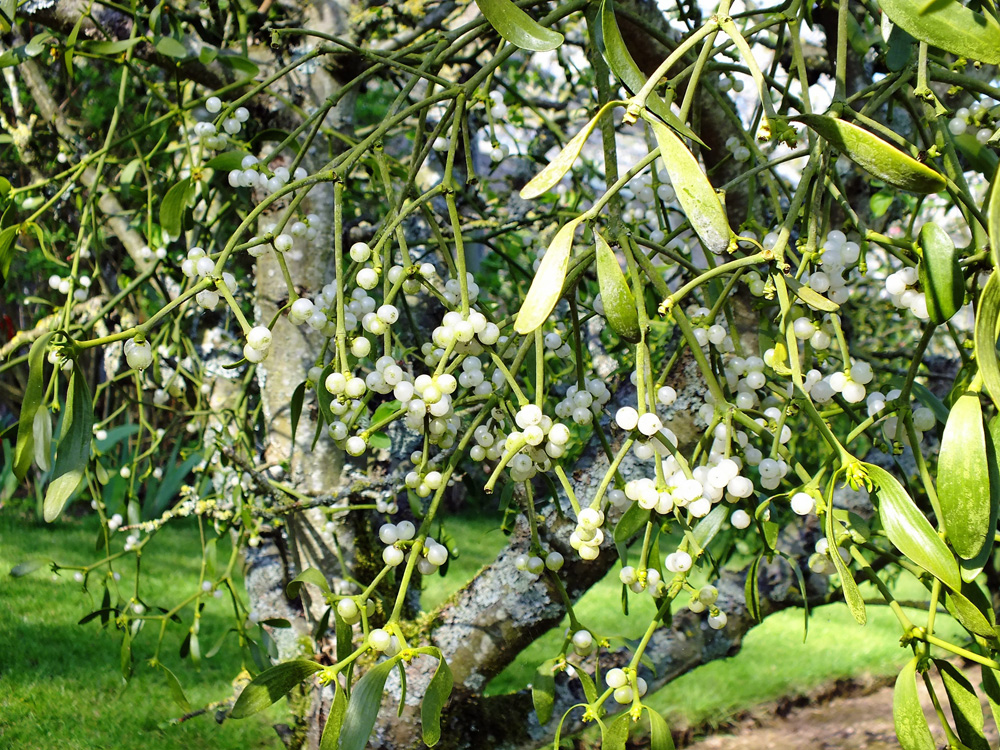
Finally on the way back to the exit there are the Iris Walk and the Greenhouses which I can never resist having a nosey in. The irises weren’t in flower, so another visit is required, very soon. But I did find some mistletoe growing on a fruit tree.
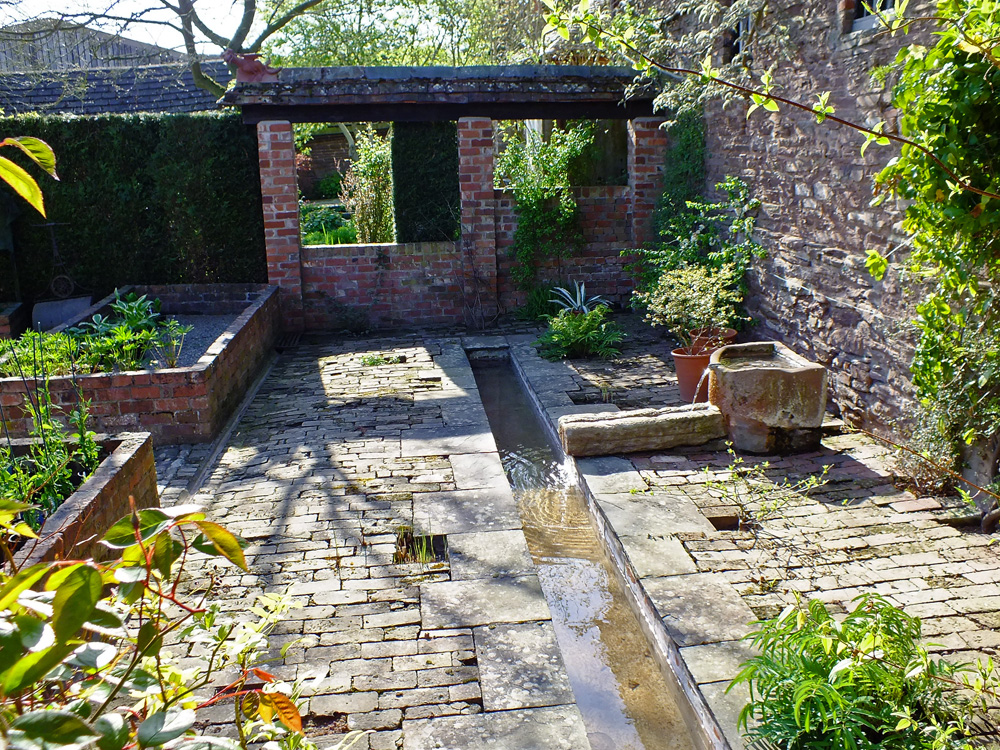
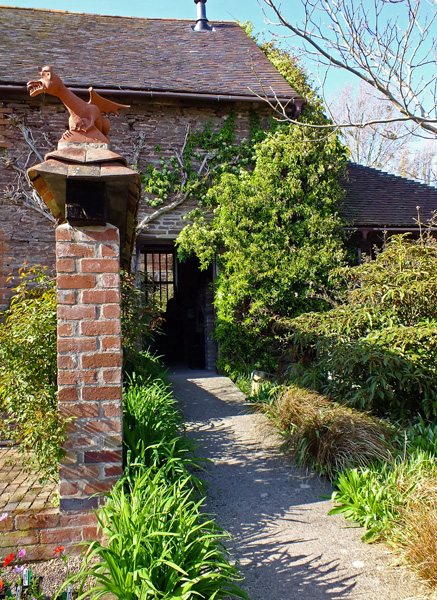
Before you leave, have a browse around the plant sales which is behind the Cider Press and where you’ll find the Rill and a pair of Welsh Dragons 🙂
I hope you have enjoyed your visit to Stockton Bury Gardens in Herefordshire. It has a very long history as there has been a dwelling on this site since 660. The ‘Bury’ is a Saxon word for Court House or Mansion House and was given the status of a Manor in the reign of Edward III.
“May comes sweet and complete in every detail.
Along every lane and hedgerow bank
spring a thousand small and seldom
considered things – Nature’s embroidery,
to finish off her festal robe to perfection…
Such hedgerows in May are everybody’s garden…”
~ Flora Thompson in A Country Calendar
On Sunday when the sun was shining I thought I’d grab the camera and go for a walk along the Bread Walk, which is a walk alongside the River Teme, here in Ludlow. After the pavements of London it made a nice change to have the earth beneath my feet again, well not literally of course, though I do like bare-foot walking on grass or sand.
I have mentioned the Bread Walk before in my first ‘Guide to Ludlow‘ and basically it was an early form of the dole, where unemployed men were paid in bread and blankets to re-build the pathway, destroyed by flood, so they wouldn’t drink away all their wages in the inns on their way home.
We’ll start by walking through the Broadgate, the only surviving gate in the town (there were seven) and have a nosy at the container flowers grown outside the cottages in Lower Broadgate – they are kind of rivals in the Ludlow in Bloom competition held each year. I have to say they are looking good. But judging isn’t until June so these beauties will be long gone by then.
Cherry Blossom
Aquilegia
Tulips
Tulips
Now across the Ludford bridge, past the Charlton Arms, no stopping for a pint just yet, and round the corner, up the steps to Whitcliffe Common. The steps are very dry, which is unusual because I thought there had been rain whilst I was away. Anyway, dry is good as they can be slippery when wet with all the mud and leaves.
Onto flat ground and time for a breather as we admire, yet again, the view over the town. I don’t think I shall ever tire of this view. And today there is something different about it as the May Fair is in town and you can just about make out something on the horizon called the ‘Explosion’ which swings people around like a giant mixer.
From here you can continue on the flat and across to Whitcliffe Common, and through the woodland, but we have done part of that walk before. Today I’m going down more uneven steps onto the path beside the Teme.
There’s always something different to see along this walk, wild flowers, birds, ducks, dogs swimming, sheep across the river in the paddock now with their lambs, reflections in the still water and the sound of birds trilling in the trees trying to make themselves heard above the rush of the mill weir.
The Mill Weir
Labrador Swimming
Treacle
Today there is some debris caught at the top of the weir, and two Labradors enjoying a swim. Looking up to the top of the cliff everything is a vivid new green – ferns and trees unfurling their spring shoots.
If you look ahead you can just glimpse the castle and Dinham bridge where the walk ends. It is a very short walk. Dandelions line the path here, but further on we’ll find some different wild flowers.
Above us is another path leading up to the common through the broadleaf woodland. The foliage is so lush at the moment it is difficult to see anyone. But look carefully.
The path curves around past clumps of forget-me-nots and alkanet (both members of the Boraginacae tribe) and patches of wild garlic amongst nettles and dock leaves and blackberry brambles.
Forget-Me-Not
Wild Garlic
Alkanet (Borage)
As we reach the end of the walk there are two pathways leading up to Whitcliffe common. Packhorse Path known locally as the Donkey Steps, climbs steeply ahead of you through the woods. So called from the long-established folk tradition that it was used by packhorses to carry ore from the Clee Hills to the ironworks at Burrington.
Packhorse Path
The Mortimer Trail which is signed through the woods to your right is a long-distance footpath established in 1996. It runs for 30 miles from Ludlow castle to the centre of Kington in Herefordshire.
The River Teme powered several mills in the past controlled by a series of weirs. It remains a clean river, clear well-aerated waters support a healthy population of fish and aquatic insects. These are fed upon in turn by birds such as kingfisher, dipper, grey wagtail and heron which will sometimes be seen from the Bread Walk.
We are now at the end (or beginning) of the Bread Walk and to return to the centre of town you need to cross the Dinham Bridge.
Where you will get the classic Ludlow view of the castle and the Dinham Weir, which is the only place where I have seen a heron.
And if it is open, the Green Café on the Millennium Green serves a good lunch, but sadly not today.
Now head up Dinham where the Dinham Gate (demolished in 1786), a medieval postern gate with a chamber over an arched entrance through the town wall, faced towards Wigmore and Wales. Look out for a hedgerow of lovely fragrant lilac and then follow the old town wall back to the castle square.
Lilac Blooming
A Living Wall
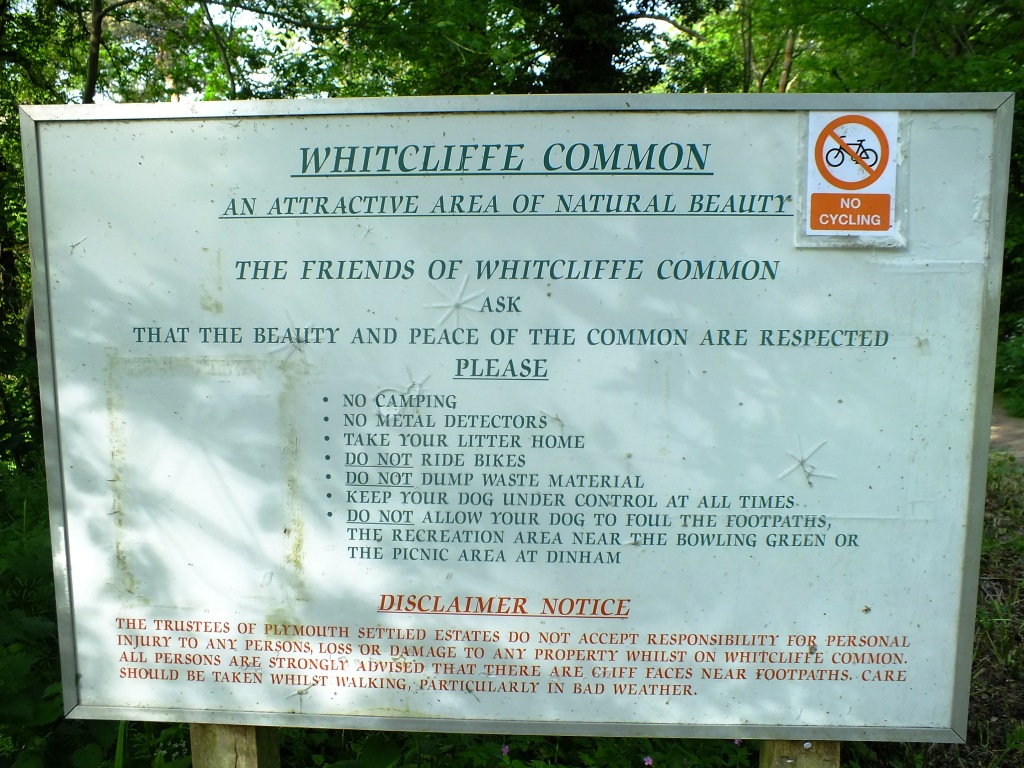
The Walk:Source of information from the Ludlow Civic Society blue plaque (Dinham Gate) and the information board commissioned by the Trustees of the Friends of Whitcliffe Common (Whitcliffe Common)
I’m combining Cee’s Which Way Challenge with Jo’s Monday Walk again this week as they complement each other.
” And so they came to Ludlow, which some say is the fairest country town in England. In the twelfth century its walls were pierced with seven gates of which only one now remains, but everything else about it today is overshadowed by its magnificent castle, a memorial to the days when its courtyards echoed to the ring of steel and armoured knights rode over the drawbridge to fight the marauding Welsh.” Malcolm Saville, 1958
(click on an image to enlarge)
Start in the castle gardens
Choose a pathway
Looking back
Last Monday the weather was so good that I popped out for a stroll around Ludlow Castle. This is a ruin, but quite an interesting one, and it dominates the skyline from the river side of the town. It has a combination of architecture from Norman, Medieval and Tudor times. Parts date from the 11th century when built by Walter de Lacy.
It was enlarged by Roger Mortimer in the 14th century and has been in the hands of the Earls of Powis since 1811. The castle was a seat of government for Wales for a time and it was involved in the Wars of the Roses. Often events are held in the castle such as the Christmas Medieval Fayre (late November) and the Ludlow Festival held in the summer which features an open-air production of Shakespeare.
Red cars seem popular
Always look up
Welsh Harp
Starting in the castle gardens at the end of Castle Square (where the open market is held at least three times a week) , this walk takes you down Dinham, past a few Georgian houses and this timber-framed example which must have been a public house once as there is a Welsh Harp hanging outside. Then exit right through the outer castle wall.
Through the arch
Sheltered Walk
Towards the other arch
After leaving the path next to the outer wall you find yourself above the River Teme and Dinham Bridge. With the castle behind you, turn right along a dirt track which leads around the base of the castle. This leads to a lovely bench where you can rest and admire the beautiful views.
Turn right
Follow the track
And find the seat
And admire the views and the river below
Unless you have the feet of a goat, and I don’t, you need to turn round here and head back to the archway, then make your way down hill and around the castle on a lower level path.
Looking back at the castle and arch
On the lower path
This way leads down to the river and Dinham Bridge
The path splits and you can head even further down to the river and the Dinham bridge and a lovely café where you can have lunch, or tea and cake or simply an ice-cream. But we are going to carry on up the hill and make our way around the castle back to the square.
Carry on up the hill
The imposing castle ruins
This way?
This is a very short walk, but it can take a while, if like me, you stop to look at the views, take photos and sit and enjoy the sun. At then end of the walk, near the square you’ll find another bench to rest your feet, before completing the loop.
The end is near
Maybe another rest?
And a quick peek through the gates.
Have a final glimpse of the castle through the gates. If you want to enter it will cost £5 per adult or more for special events like Knight Jousting or the Food Festival. There’s lots to explore inside the grounds and you can climb the towers for spectacular views over the town and countryside. Maybe another time 🙂
I’m combining Cee’s Which Way Challenge with Jo’s Monday Walk this week as they seem to complement each other.