Down the Cot Valley

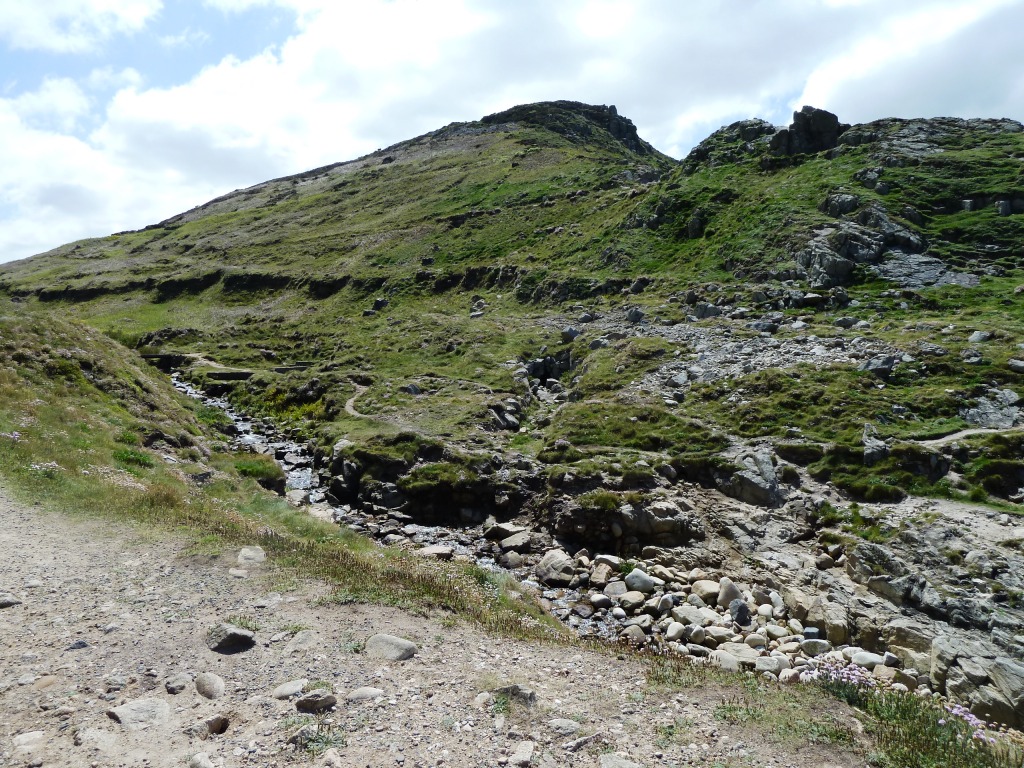
Another drive (or walk if you are so inclined) from St Just is down the Cot Valley following the Cot stream to the shore at Porth Nanven. Once this area was crowded with tin-dressing floors, stamps, settling tanks, reservoirs and wheel-pits. Now long abandoned and overgrown, it can make walking off track somewhat dangerous. The road is very narrow so take it slowly and there is a small car-park at the end.
P1210457

Porth Nanven is unusual in that the cliffs are formed from rounded boulders of an ancient raised beach, formed in the last ice-age. It is illegal to remove any stone from this location, though many might crave a few for their rockery. Continue reading Down the Cot Valley

A walk in the past

West Penwith. The furthest west you can go on British mainland and where you will find Land’s End. An area which was once rich in mineral wealth and is therefore riddled with mine shafts and abandoned engine houses. It is also an area rich in megalithic and archaeological sites. Fields of standing stones, stone circles, rocks with holes in the middle and a quoit or two.

Bojewyan

Staying near the former mining village of Pendeen which lies between the sea and moorland gave me a chance to explore this wild and rugged region. The sun shone brightly every day, although the accompanying wind from the north reduced the temperature to a mere 14°C and made walks on the exposed coastline ‘interesting‘ difficult to stand up in.

Higher Bojewyan

A rather more pleasant walk was inland to find Chûn Quoit and Chûn Castle (though the castle is reduced to a heap of stones as most of it was used to pave the streets of Penzance) as much of the route was along a sheltered lane with high Cornish hedges at either side.

Finding the start of the public bridleway was the first hurdle as it isn’t marked from the road, but consulting the Ordnance Survey map we had with us it appeared to start at the back of a group of houses/farm in Higher Bojewyan just around the corner from our cottage.

Continue reading A walk in the past

Pendeen Watch

It was our first day in Bojewyan – a bright cornflower blue sky, cloudless and bright. Though the wind was sharp for the time of year and lazy at that as it cut straight through you. We walked the mile into Pendeen for a cooked breakfast at Heather’s café and sat outside in the minuscule courtyard, sheltered from the wind, basking in the sun and ate a full English along with a mango smoothie, followed by a flat white. It tasted good. It felt good. And it set us up for our stroll down to the coast to look for a lighthouse.

Looking back at Pendeen from the lighthouse road

It’s only about a mile, but it took us a while as we stopped every few yards to take a photograph. So much to stop and look at. Chimneys on the horizon of abandoned and disused tin mines. Drystone walls brimming with wild flowers. A ruined cottage. The sea. Interesting gates featuring roses and an engine house. Continue reading Pendeen Watch

Boscastle Harbour Walk

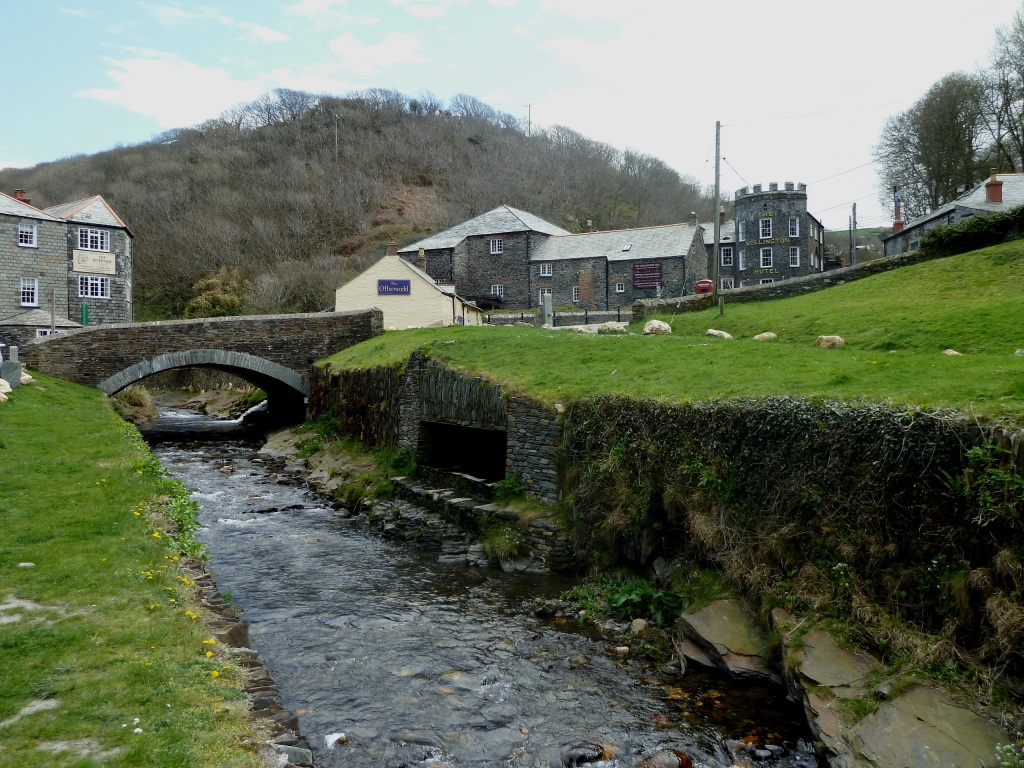
P1190075This is a gentle, level one mile walk along the river to the ‘blow-hole’ and has lovely views of the village and the harbour. At the end there are some steps to climb and the rocks here can be slippery when wet.

P1190084Now I could fancy one of these cottages. What about the pink one? It already has a bench in the garden for me.

P1190090We’ll walk along one side of the river to the next bridge (footbridge) passing by the witch museum, a lovely National Trust shop, a tea-room and the YHA. I love the Cornish walls in which you can plant a host of flowers, including these beautiful tulips (header photo). Look out for wild flowers too, such as the Danish scurvy traditionally considered a coastal plant with its love of salty places, salt marshes and sea shores grass. Full of Vitamin C, it gets its name from sailors chewing it to avoid scurvy. Continue reading Boscastle Harbour Walk

Lizard Point

The Lizard peninsula is the most southerly part of the British mainland, a place apart from anywhere else. Dramatic and historic coastline, complex and unique geology and interesting flora and fauna.

P1190966

The Lizard Lighthouse Heritage Centre with its distinctive twin towers marks the most southerly point of mainland Britain. It is open from March to October and you will find interactive displays and exhibitions about the history of the building. A tower was first built here in 1619 at the expense of philanthropist Sir John Kilgrew. The current beam can be seen for 26 miles. For those of you who love lighthouses,  (Jo, I hope you are reading this), you can climb up to the top of the tower and even sound the foghorn or send messages in Morse code. Continue reading Lizard Point