Lincoln Castle: Medieval Wall Walk

Lincoln has a magnificent cathedral, but practically opposite there is the castle. Not any old ruin, but a grand Norman castle with two keeps and a complete curtain wall. Its highly strategic position has given it continuing historical importance – the site of many battles, sieges, medieval wheeling and dealing and it houses one of the four surviving examples of that monumental document – the Magna Carta.
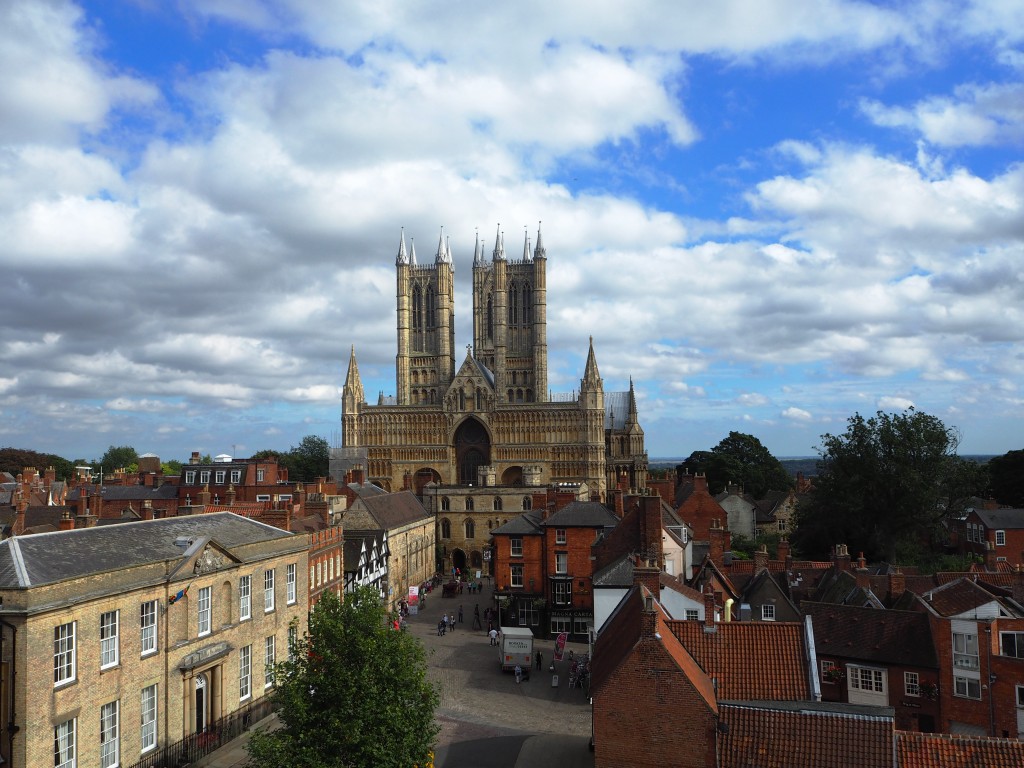
The castle faces the cathedral and market place in the upper town

Nowadays it is a wonderful museum telling the stories of life as both Georgian and Victorian prisons, the rebellions, the Battle of Lincoln in 1141, which came about because of the struggle for the throne between Matilda, the daughter and chosen heir of Henry I and her cousin Stephen; the siege of Lincoln 1191; the Magna Carta, 1206, and the civil war siege in 1644. From 1660 it ceased to be a military stronghold and became a jail and courthouse.
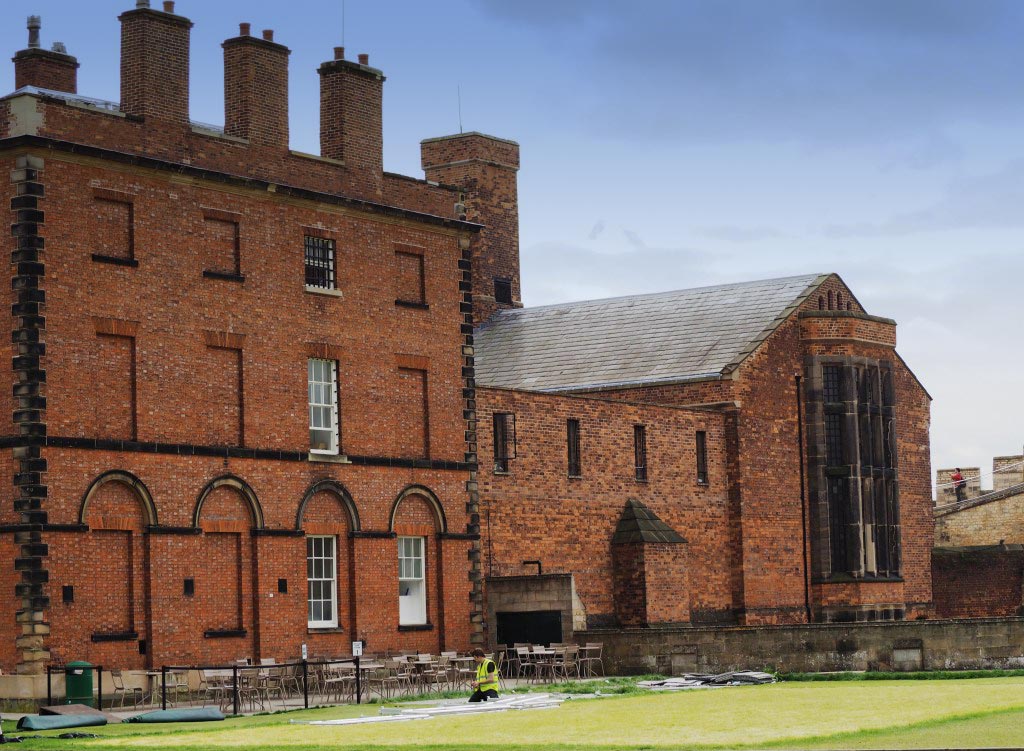
Georgian and Victorian prisons

We decided to join a free tour of the castle and grounds which was very interesting and we learned a lot about the history of the site. Afterwards we wandered around the prison cells where they have short films telling the story of individuals and why they were in prison and also went to have a look at the ‘Magna Carta’ and the ‘Charter of the Forest’. Then I left OH resting on a bench in the sunshine whilst I walked around the Medieval Wall Walk.
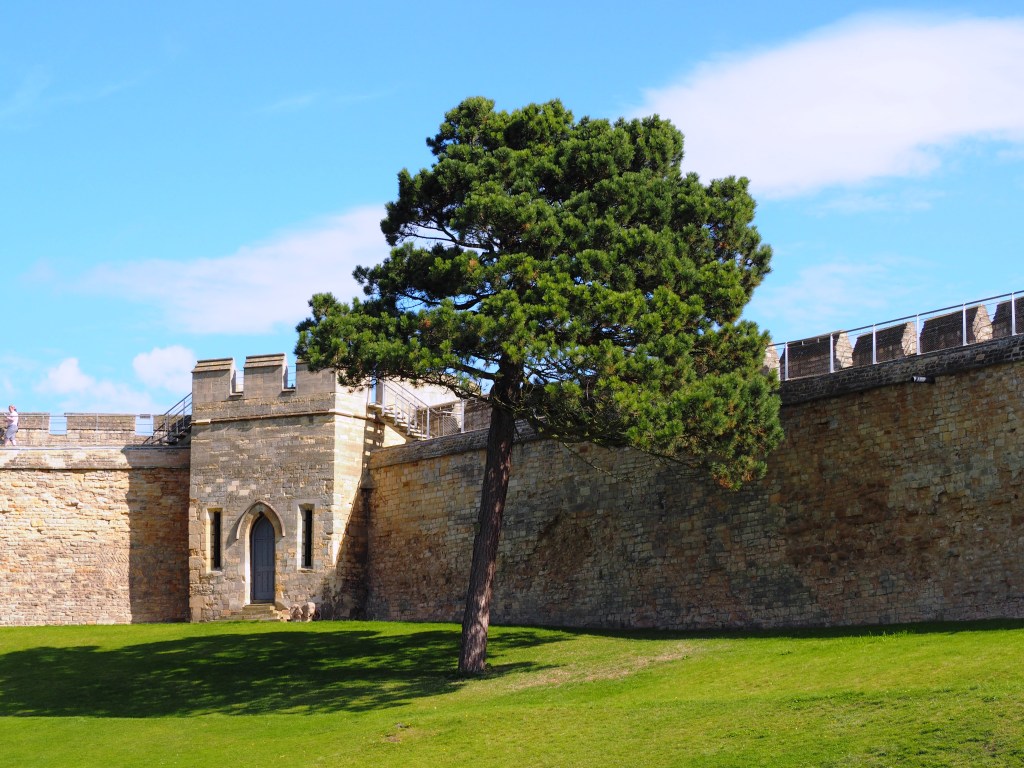
Cobb Hall
Cobb Hall

Cobb Hall is the latest of the three towers, estimated to have been built between 1190 and 1220. The tower defended the castle’s north-east quarter. Although flat on this side, externally it is rounded and inside the walls have been carved with graffiti by prisoners and bored guards. Between 1817 and 1859, 38 prisoners were hanged on a wooden gallows from the top of this tower.
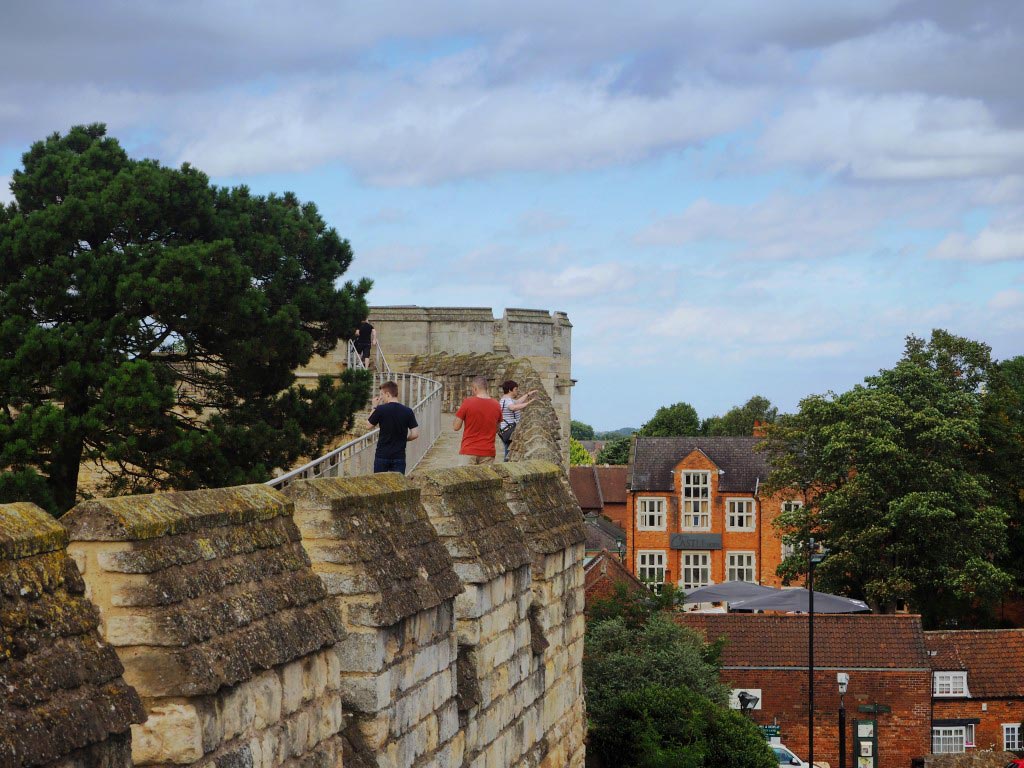
On the wall heading to Cobb Tower
p9120055
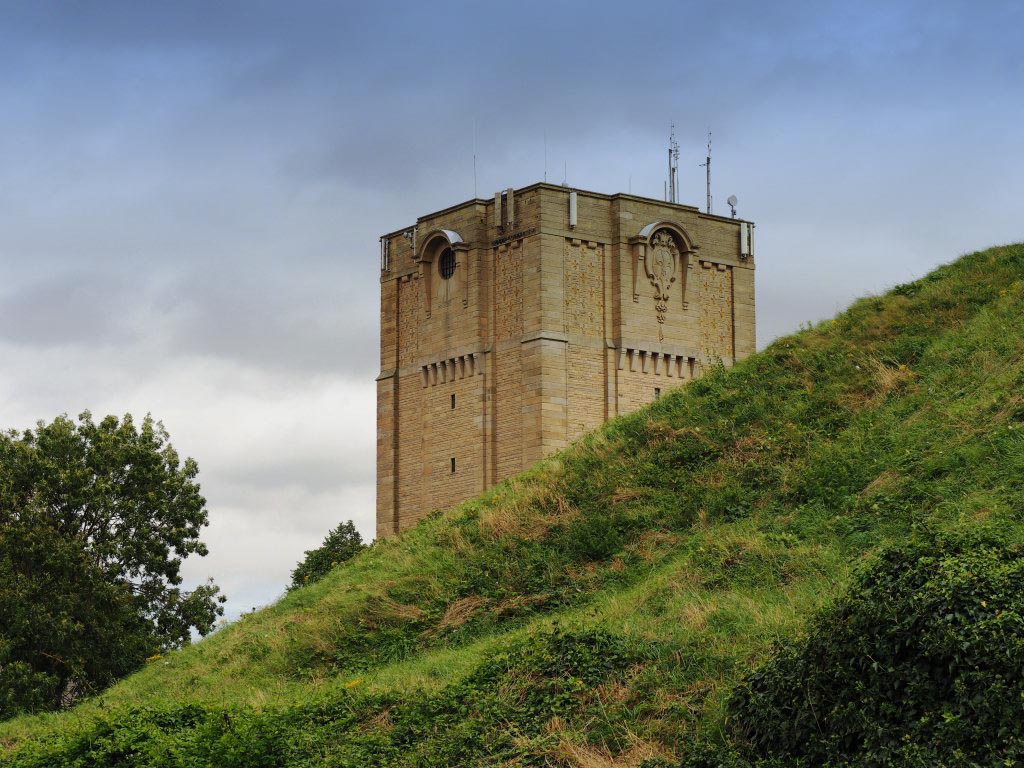
Water Tower built in 1911 after a typhoid epidemic.

Although outside the castle walls you cannot avoid noticing this impressive tower. The 120-foot-tall building was constructed a result of a Typhoid epidemic in Lincoln that started in late 1904. 113 people died from the outbreak which was one of the city’s biggest peacetime disasters. The building was completed in 1911, decorated with the fleur-de-lys – the symbol of Lincoln Cathedral’s Patron Saint, Mary Mother of Jesus. It is supplied by piping water from a reservoir 22 miles away at Elkesly, Nottinghamshire.

Lincolnshire flag
The new Lincolnshire flag
And whilst we are talking about the fleur-de -lys, it is also present on the newly designed flag which was unveiled in 2005 to promote the county’s profile.

The red cross is the Saint George’s Cross representing England. Yellow represents the crops grown in the county, as well as the nickname “Yellowbellies” given to people born and bred in Lincolnshire. Blue represents both the sea of the East coast and the wide skies of Lincolnshire, and green symbolises the rich lushness of fenland fields. The fleur de lys is a recognised symbol of the City of Lincoln.
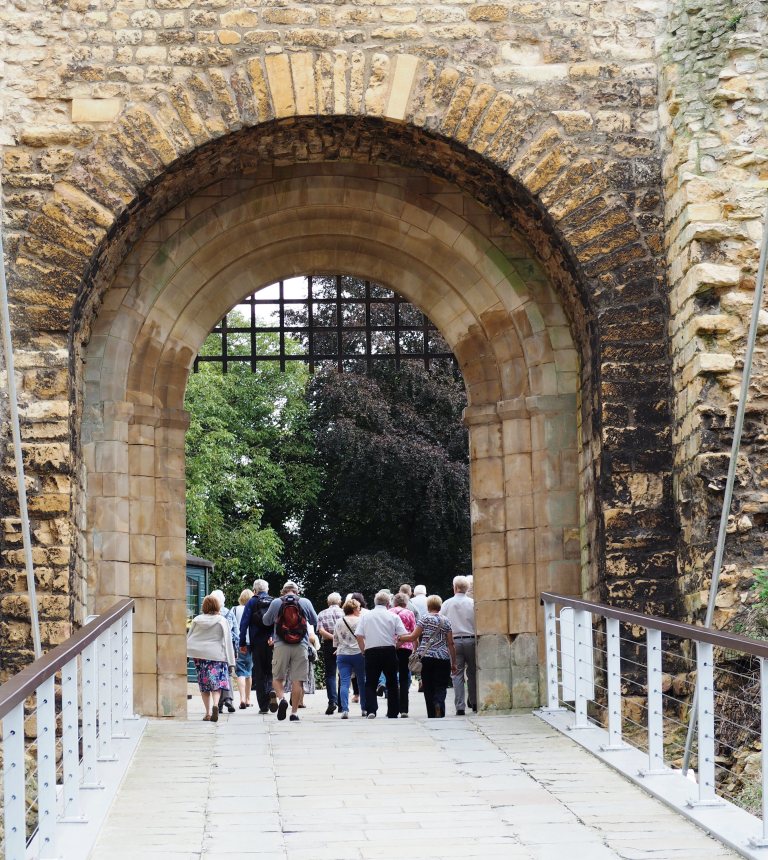
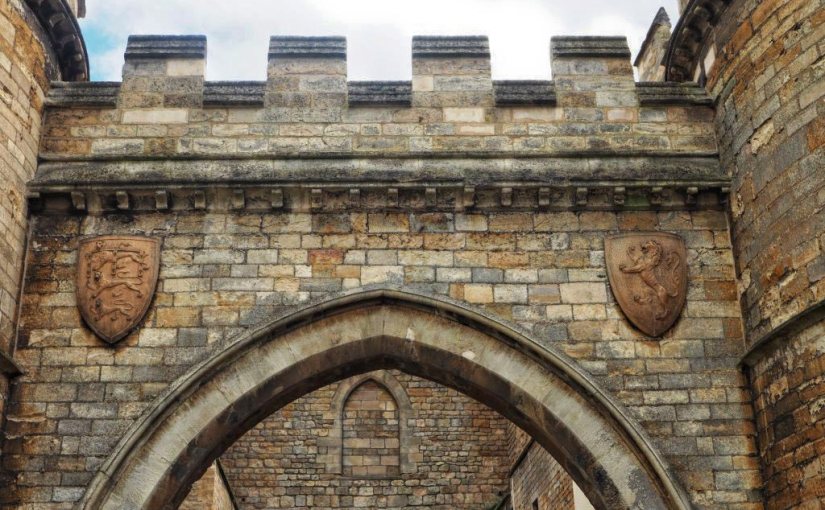
The East Gate
The East Gate
p9120095
The Lucy Tower

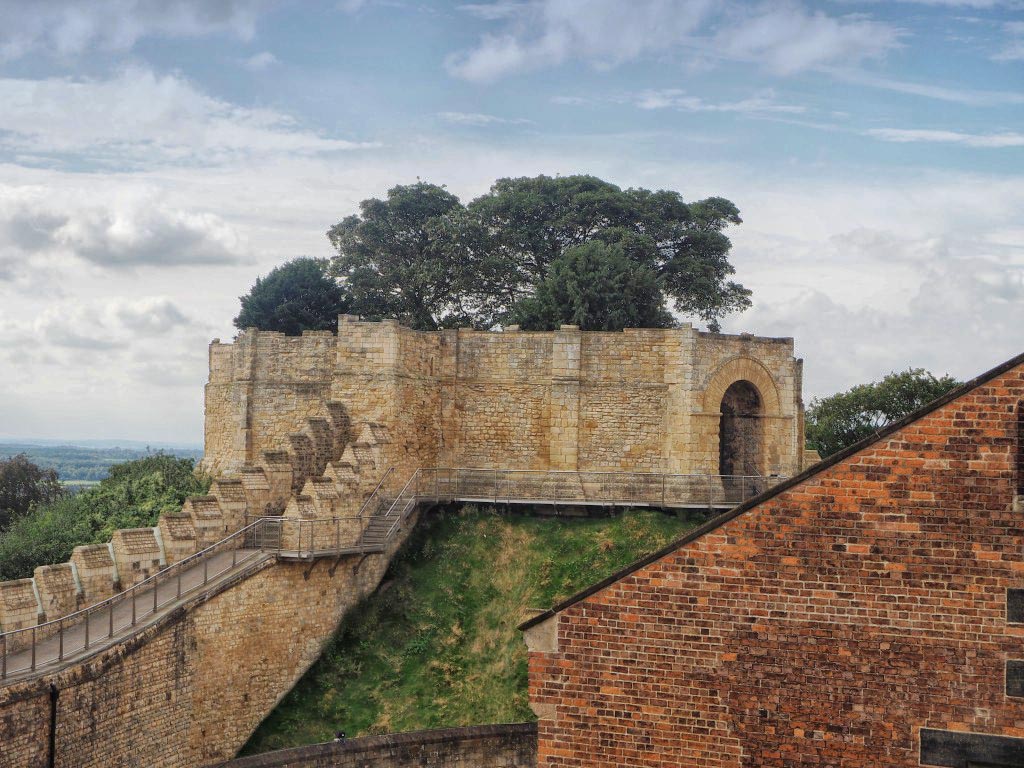
The Lucy Tower is named after one of the formidable women linked to the castle. It was built on top of its Norman mound and is a polygonal shell keep, the internal space was kept open.
Observatory Tower
Observatory Tower

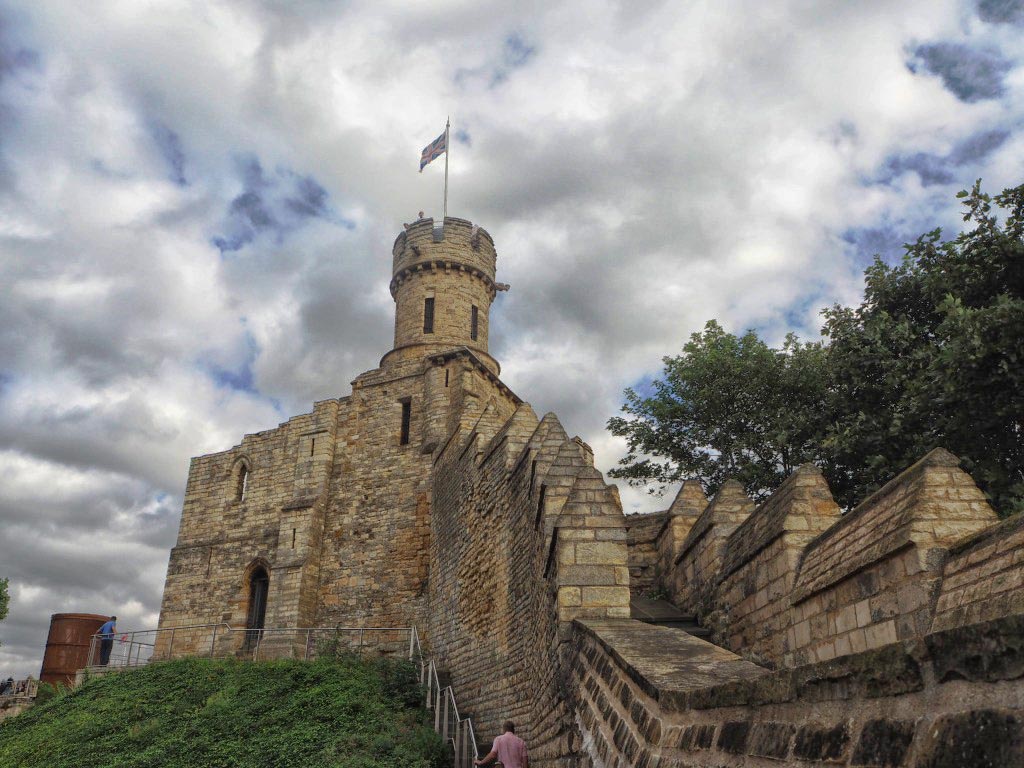
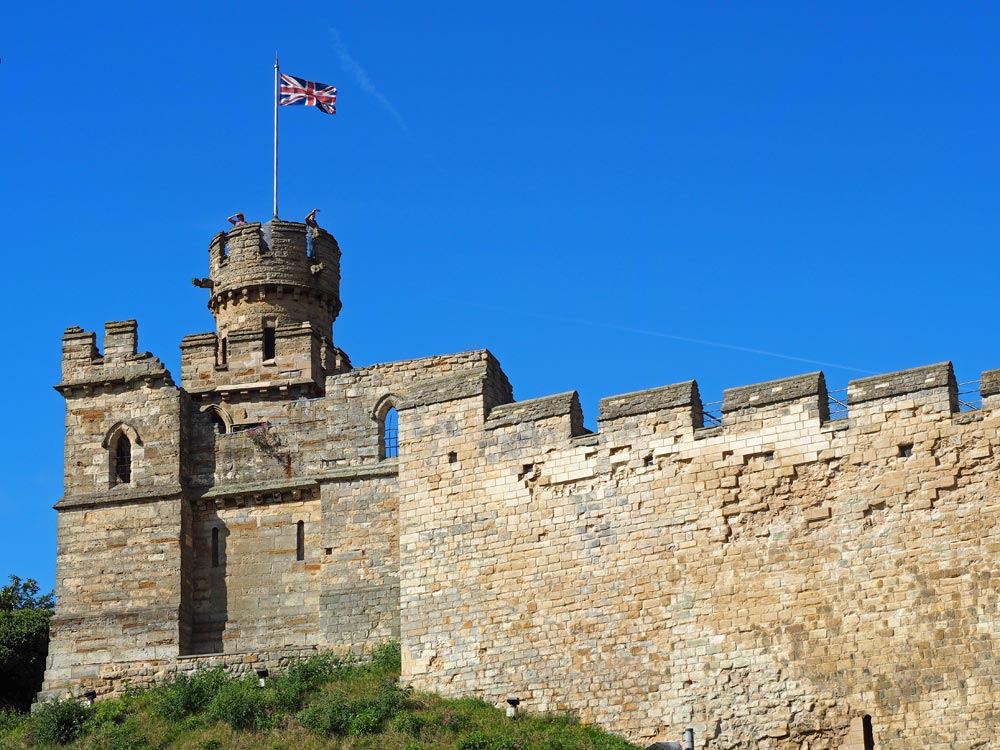
The wall walk continues around the back of the Victorian prison to the Observatory tower which was built on the smaller of the two mounds that join the south curtain wall. The additional tower was added in early †19C by prison governor John Merryweather who was a keen amateur astronomer.
The Observatory Tower

IF YOU ENJOY A WALK, LONG OR SHORT, THEN HAVE A LOOK AT JO’S SITE WHERE YOU ARE WELCOME TO JOIN IN WITH HER MONDAY WALKS.

Bodiam Castle

In the south-eastern corner of England you can find several impressive castles – Hever, Leeds, Dover, Rochester, Deal and Bodiam amongst them. Historically the region has always been vulnerable to attack from foreign shores.

information

As we were staying in the Weald of Kent for a few days, which is on the East Sussex border, we decided to take the historic steam train from Tenterden to Bodiam and walk to the moated castle, often glimpsed from the road when passing by. We could have driven there in about 10 minutes, but sometimes it is nice to take things slowly and enjoy the journey as much as the destination.

6619

In 1377 French ships raided the Sussex coast, causing widespread damage and panic among the local population which led to the building of nearby Scotney Castle. The French later raided nearby Winchelsea in 1380, so when a new French invasion threatened in 1385 Sir Edward Dalyngrigge (one of Edward III’s knights) applied to King Richard II for a license to fortify and strengthen the existing hall he lived in.

DSCF2544

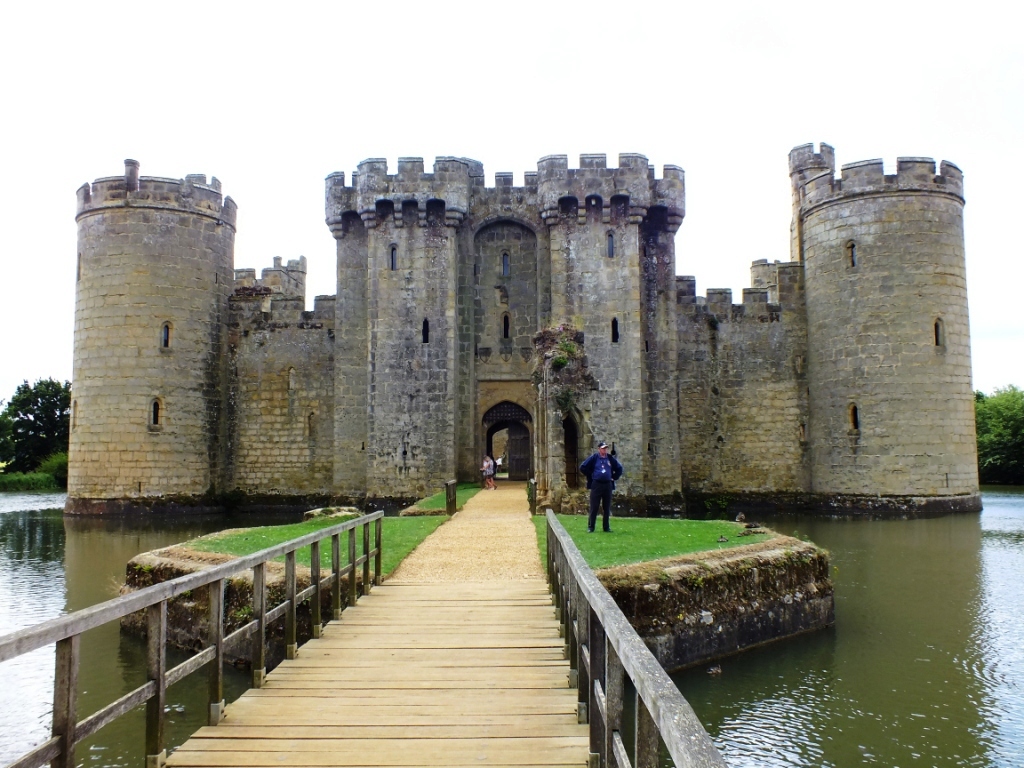
Having been granted permission he decided to build a new sandstone fortress near the River Rother, which at that time was navigable to the coast. Though its primary aim was defense, Dalyngrigge made sure that Bodiam was also a comfortable abode, as much a fortified residence as a military stronghold. And of course a visual symbol of his wealth.

DSCF2560

Bodiam Castle is considered to be the finest example of  medieval, moated, military architecture in Britain.

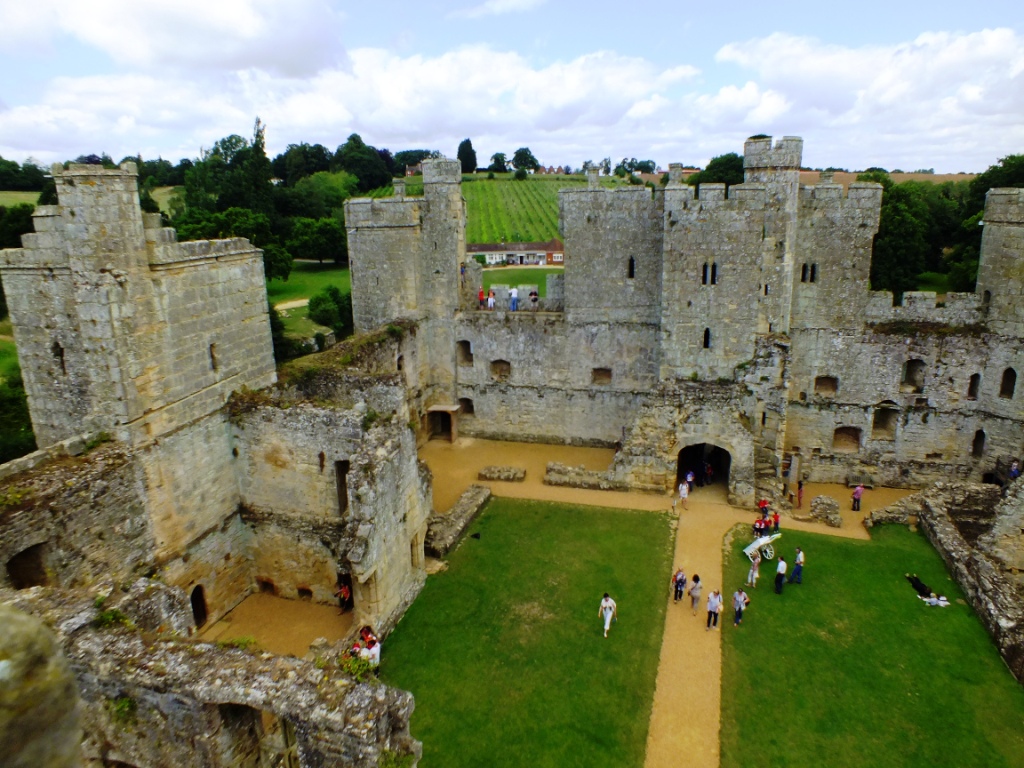
The interior from the Postern Tower

The French invasion never took place, and Bodiam’s impressive defenses were never tested until 1484 when the castle fell to a siege by Richard III.

Do you have a favourite castle?

Historic Dumfries and Galloway

Historic sites are scattered through the glorious region of  Dumfries and Galloway. Being the border county with England there is a history of battles. Till the 12th century, when it came under the Normans, the eastern Solway had alternated between English and Scottish rule.

We passed several interesting looking properties on the way to somewhere else, though nearly always during the evening when the grounds were closed. Fortunately some were quite small and close to the road so we were able to take photographs.

Threave Castle

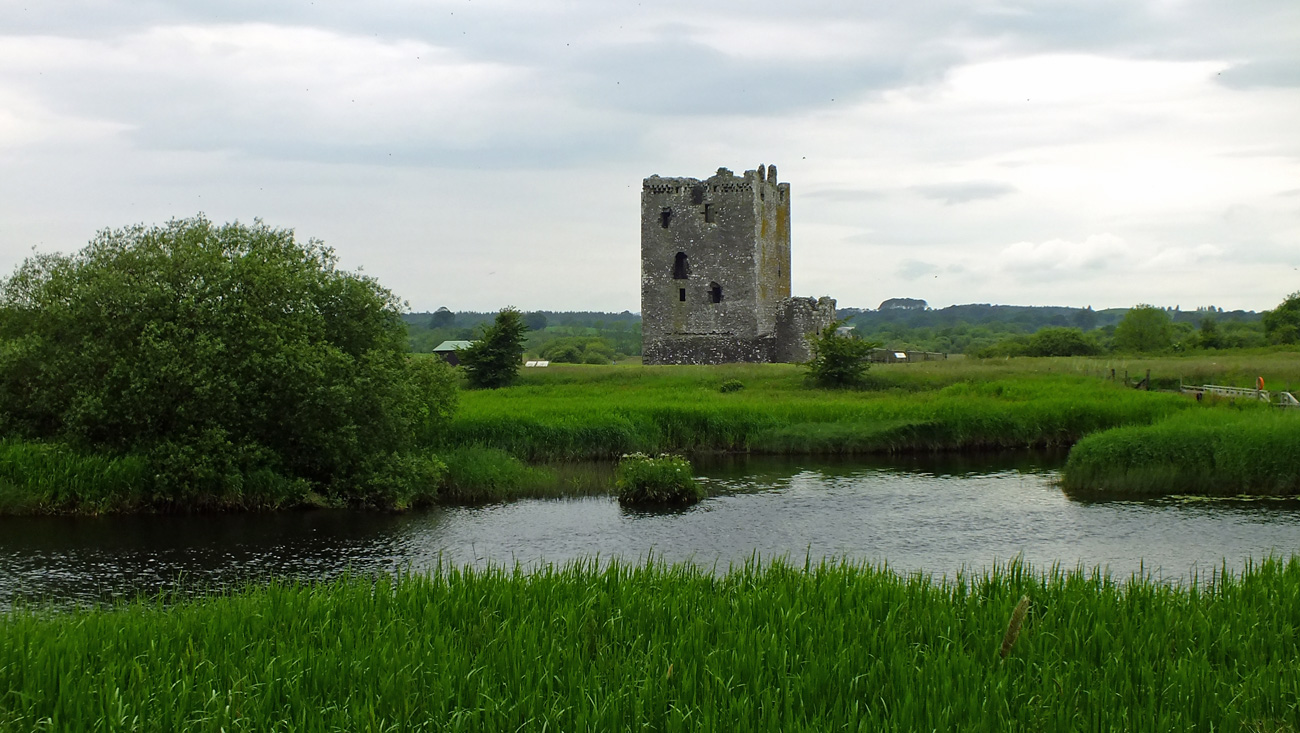
Located in one of the more interesting locations, this castle is built on an island in the middle of the River Dee and you have to take a small boat across. A lovely circular walk from the entrance takes you through Kelton Mains farm to a small wood leading to the river. A number of bird hides can be found along the route, including one to view an osprey nest.

Threave-Castle-1

This massive tower house was built in the late 14th century by Archibald the Grim, Lord of Galloway. It became the stronghold of the Black Douglases and still today, round its base you can see the artillery fortification, an innovative defence years ahead of its time, built before 1455 when James II besieged the castle. (Threave Castle)

Cardoness Castle

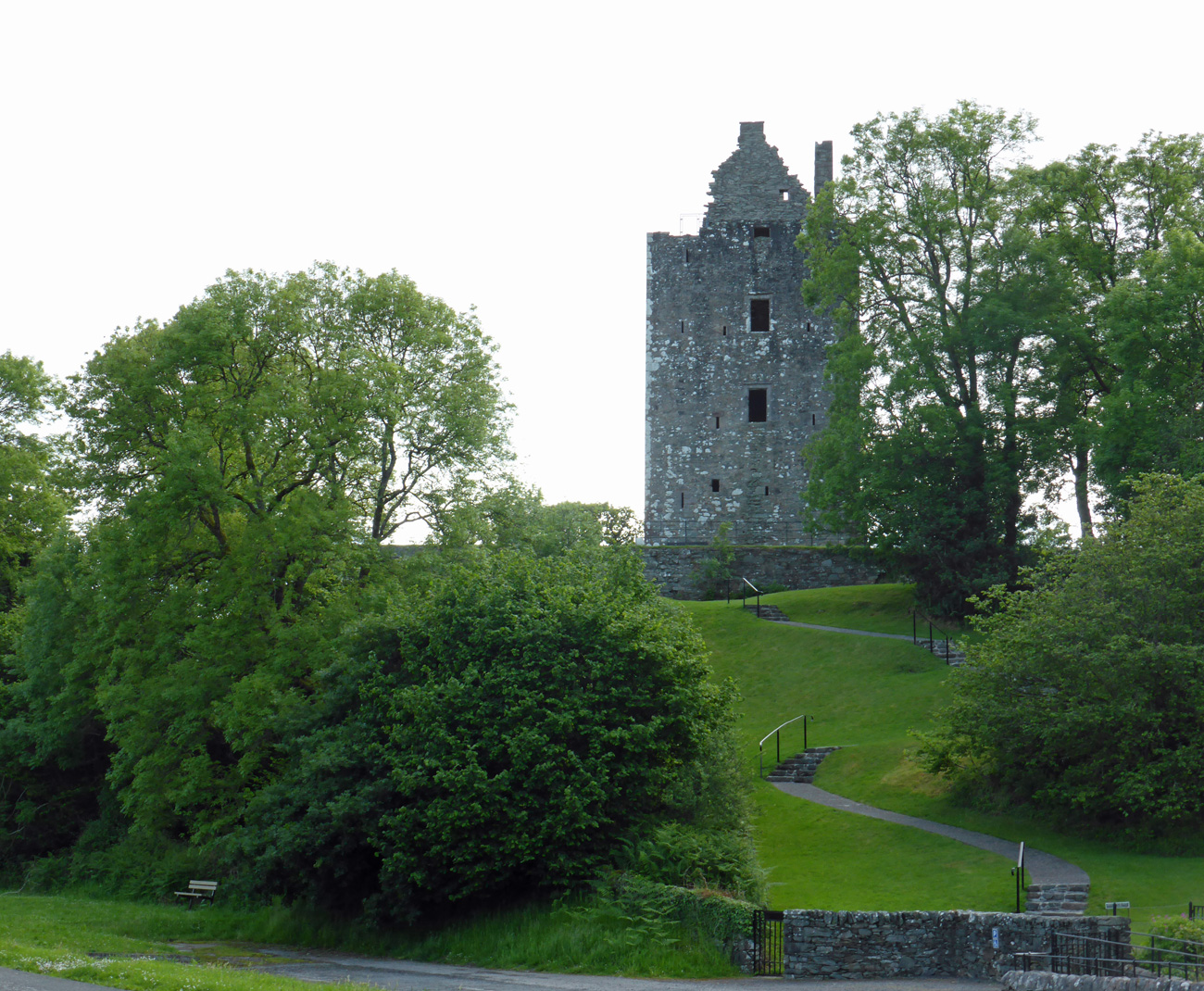
A fine example of a six storey Scottish tower-house castle, Cardoness Castle was built in the later 15th century as the fortified residence of the McCullochs.  Its battlements command excellent views over Fleet Bay.

P1120880

MacLellan’s Castle

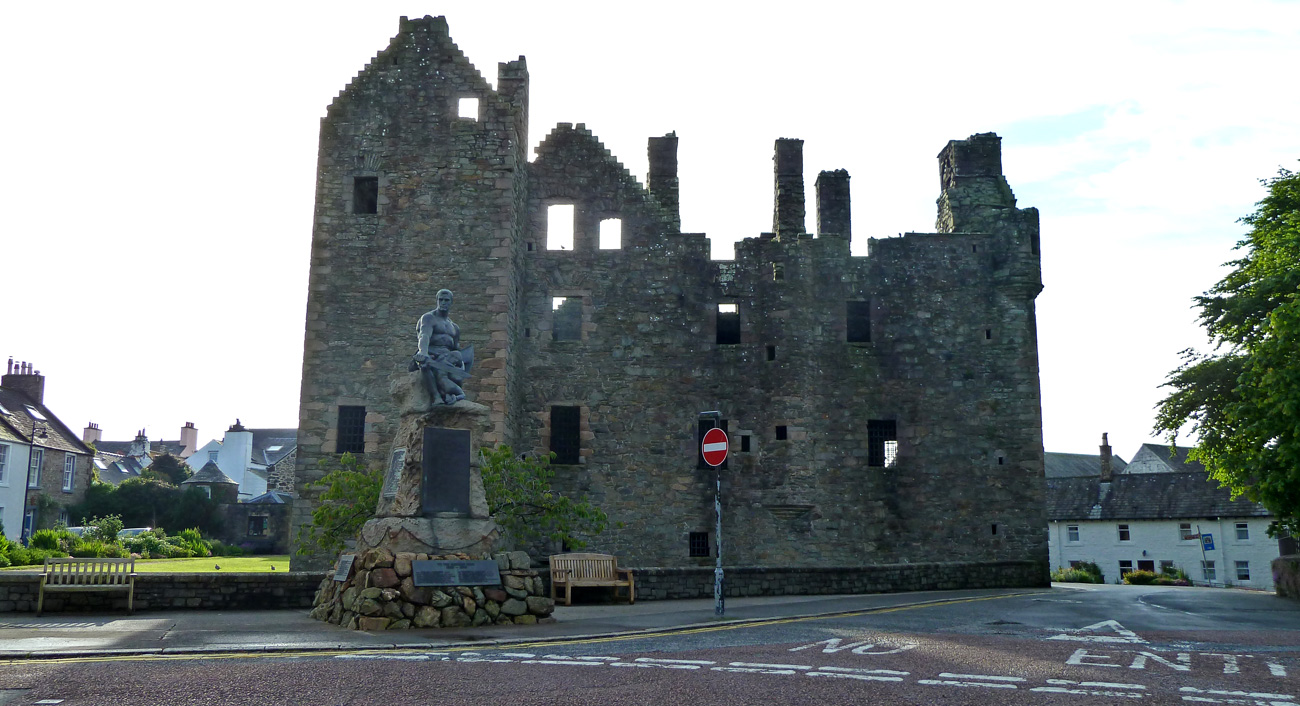
MacLellan’s Castle was named after Sir Thomas MacLellan of Bombie (d. 1597). Sir Thomas was provost of Kirkcudbright and a powerful man in local politics. Following the Protestant Reformation in 1560, he acquired the site and buildings of the convent of Greyfriars, established in the town by James II in 1449, and set about building himself a new residence in its place. By 1582, MacLellan’s Castle was sufficiently complete for him to move in. Five years later, he and his second wife, Grissel, entertained their sovereign, James VI, in this spacious house.

P1170588

The remains of this late 16th century house shows how architecture changed from the heavily defended tower house to a new, more domestic scale.

Dundrennan Abbey

Dundrennan Abbey was founded in 1142 by Fergus, Lord of Galloway, with the help of King David I of Scotland. The white-robed Cistercian monks came from Rievaulx Abbey, in North Yorkshire. After establishing the abbey at Dundrennan, monks went forth to found two more Cistercian abbeys in Galloway – Glenluce, near Stranraer, around 1190, and Sweetheart, in the village of New Abbey, south of Dumfries, in 1273.

DSCF8356

The abbey‘s most famous visitor was Mary Queen of Scots. On 15 May 1568, she was welcomed at the gates following her escape from Lochleven Castle, near Kinross, and her defeat at Langside, beside Glasgow. Mary was making for England and the comparative safety, so she thought, of her cousin, Elizabeth I of England. On the following morning she boarded a boat bound for the Cumberland coast. She never returned to her native land.

Sweetheart Abbey

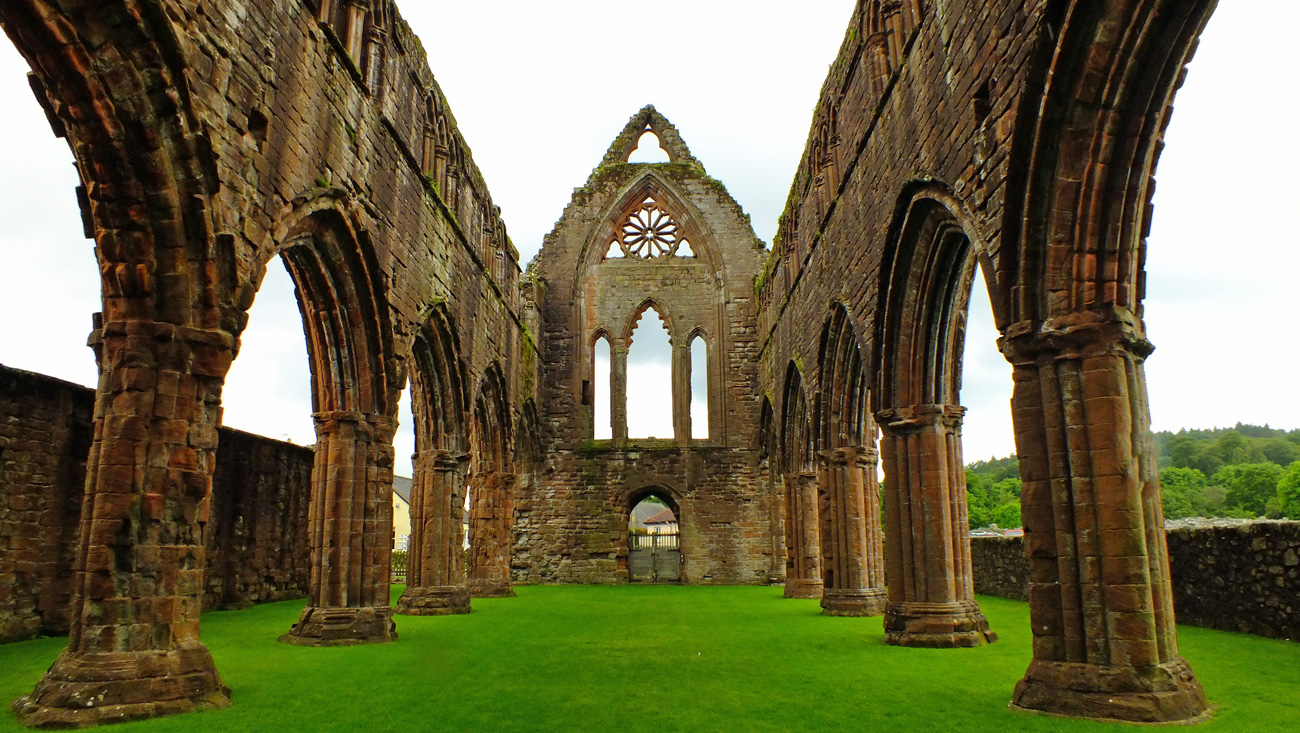
Sweetheart Abbey was founded in 1273 by Lady Dervorgilla of Galloway in memory of her husband John Balliol. In 1268, Lord John Balliol died. His grieving widow, Lady Dervorgilla of Galloway, had his heart embalmed and placed in an ivory casket. She carried it with her everywhere. When she too died in 1289, she was laid to rest in front of the abbey church’s high altar, clutching her husband’s heart to her bosom.

3

The graceful ruin nestles between the grey bulk of Criffel and the shimmering waters of the Solway Firth, whilst its blood-red sandstone walls contrast with the lush green grass at their feet.

Carsluith Castle

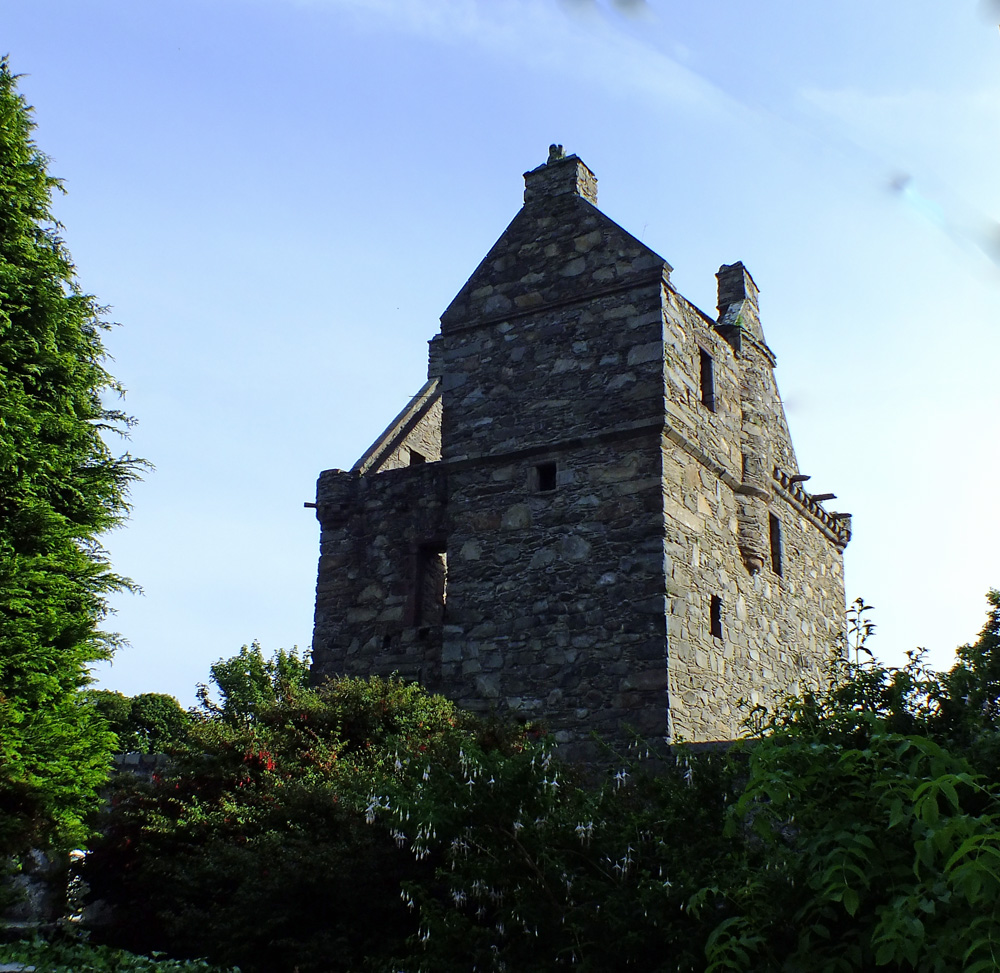
Carsluith Castle is a lightly-defended tower house. It is typical of the many L-planned tower houses built by the landed gentry throughout Scotland after the Protestant Reformation of 1560.  This eye-catching tower is on the road between Newton Stuart and Dumfries. And next to it is the Markbury Smokehouse.

DSCF9347

Norfolk: Castle Acre Priory and Castle

The village of Castle Acre lies further south of the county, only 4 miles north  of Swaffham and 15 miles east of King’s Lynn. It is well worth the drive to see such a lovely medieval planned settlement with the broad tree-lined Stocks Green where you can find a café and a pub. The town was entered in the 12th century by the Bailey Gate, now the only remaining gate of the town. Many of the houses in the town have been built from blocks of stone from the priory.

We stopped here on our way to Oxburgh Hall which is south of Swaffham mainly to see the Priory, but we were quite taken by the charming village and the castle too.

Castle Acre Priory, which is under the care of English Heritage, is a beautiful and peaceful place with some of the most intact Cluniac priory buildings in England. For 450 years it was the home and workplace of monks and their servants, a refuge for pilgrims and a stopping point for royalty, clergy and nobility. While rooted in the economy and society of Norfolk it was also part of a vast monastic network centred on the great abbey of Cluny in France. Walking around this site you get a feeling of the size and serenity of this place and if you use the audio tour provided then you can listen to the monks tales and walk in their footsteps.

Whilst in Castle Acre we also visited the Norman ‘motte and bailey’ castle which was abandoned in the middle ages, and although what little of the building left is in ruins, there are impressive earthworks.

A great day out except for the weather which was a little damp!