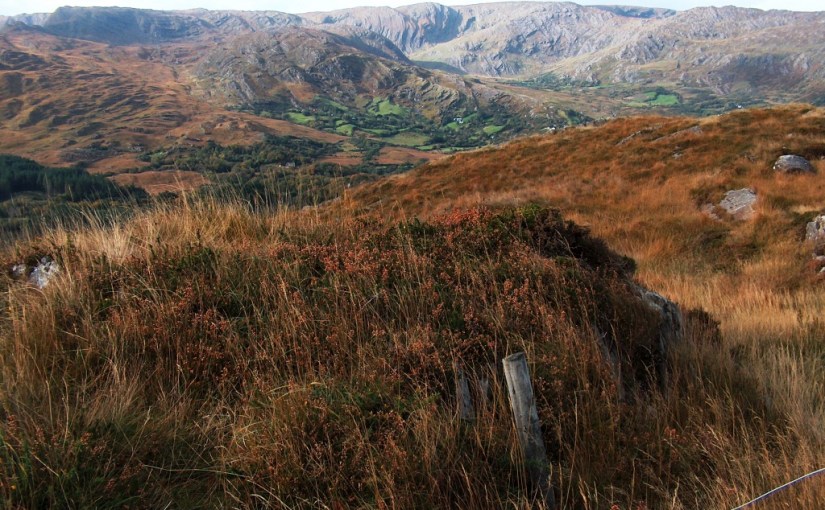
This week’s place from Liberated Traveler is Ireland, so I have had to cast my mind back to the one and only time I visited this country for four days in October 2003. I could only have four days because at the time I was doing a PGCE course to become a secondary school teacher. Although it was half-term and in theory we should have had a week’s holiday, the training school insisted we went in for three days for additional lectures. So making the most of a very cheap Ryan Air flight to Dublin from Birmingham (£1 one way) we arrived in a very wet Dublin airport on an early Wednesday evening. Continue reading Travel Journey of the Week: The Emerald Isle
Category: Europe

Just Back From… Laugharne
…and some like myself, just came one day, for a day, and never left; got off the bus, and forgot to get on again…”
~ Dylan Thomas
Laugharne (pronounced Larn) is probably most famous for being the last place where renowned Welsh poet Dylan Thomas lived, wrote, drank and is laid to rest; he died in New York.
His Boathouse and Writing Shed overlooking the wide Tâf estuary draw in the crowds and you can even get a cup of tea at the Boathouse, though not when we visited as it was closed for filming a new film about Dylan Thomas’s fourth and final reading tour of America which is being made to mark next year’s centenary of his birth. The play “Under Milkwood” and “Poem on his Birthday” were written here. There is even a ‘Birthday Walk’, which if done on your birthday entitles you to a complimentary birthday gift. Climb up Sir John’s Hill for mind-blowing views across three estuaries (River Tâf, Towey and the Gwendraeth) and over the bay to the Gower Peninsula.

Dylan Thomas Grave

The Boathouse (right)

The Writing Shed
It’s not all about Dylan though, there is also a ruined castle built in the thirteenth century with more spectacular views of the estuary and out to Carmarthen Bay, an interesting clock tower on the town hall, and a unique Tin Shed Experience – a quirky 1930s – 1940s museum. It is also one of the oldest self-governing townships in Britain, presided over by the Portreeve wearing his traditional chain of gold cockleshells.

Clock tower

Tin Shed Experience

St Martin’s Church

The Taf Estuary

Laugharne Castle
Close to Laugharne is the seven mile beach known as Pendine Sands which was used to set world land speed records as it has a wide, flat and firm surface. Several generations of the Campbell family have raced there and there is a Museum of Speed. And if you travel a little further west you will discover the turquoise waters of Amroth, reminiscent of neighbouring Saundersfoot and Tenby in Pembrokeshire.
Carmarthenshire is often overlooked by people rushing through to the beautiful Pembrokeshire coastline, but it has much to offer itself with a new Coast Path which passes through a range of habitats including fresh water marshes, salt marshes, sand dunes and pine forests.
North Norfolk: Walsingham
Walsingham is an unusual village in a remote part of the North Norfolk countryside tucked into a valley of the river Stiffkey. Unusual because it had been an important place of pilgrimage in Europe before the Reformation and, along with a good Farm Shop, restaurant and fish and chip shop, you can find tourist ‘pilgrim’ shops. I really didn’t know what to expect.
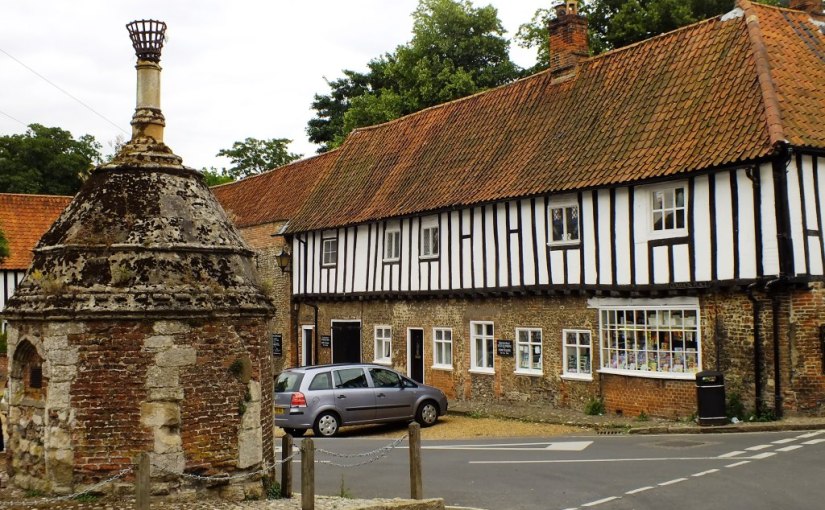
We first drove to the village on a Saturday afternoon and found it to be quite busy with several coaches parked on the outskirts. After a gentle stroll along the High Street viewing some lovely looking half-timbered jettied buildings and noticing interesting street signs such as Friday Market and Swan Entry we returned to Common Place with its 16th century pump-house and the former Shirehall, the entrance into the Abbey grounds. Unfortunately we’d left it too late as the grounds closed at 5 p.m. and it was now 4:30 p.m. So we had another wander around the village before heading for the Farm Shop and buying some good steaks for dinner. (There is a good chocolate shop on site too, but I managed to resist that one).


Walsingham grew, along with the increasing numbers of pilgrims, with the founding of the Priory in 1153 and every English monarch from Henry III in 1226 to Henry VIII visited the Priory until its destruction and the destruction of its shrine in 1538. This was followed by a period of abrupt decline. Today the Anglican Shrine in Walsingham and the RC Shrine at the Slipper Chapel in Houghton St Giles are still visited by thousands of pilgrims.
After the dissolution the land was sold and passed down until in 1720 a house was built in the grounds of the former priory and it became referred to as ‘The Abbey’. It is the grounds of the Abbey and the remains of the priory church and buildings that we wanted to see, although apparently the best time to view the grounds is in early spring when the 20 acres of woodland are carpeted by snowdrops.
We returned to Little Walsingham on the following Monday when the village was much quieter and the grounds open for exploration. Despite being too late for the snowdrops and the wild-flower meadow the grounds are lovely and tranquil and you are allowed to picnic within them, so my advice would be to pop into the Farm Shop beforehand and make up a picnic lunch, although you can leave the Abbey grounds and return if you so wish. Entrance is a very reasonable £4.


Although most visitors to Walsingham come, like us, to view the Abbey grounds it would be a shame not to walk the few hundred yards along the High Street and left into Church Lane to see St Mary’s Church. It is a large sprawling church and noticeable by its green roofs and tall spire. It can seen from the Abbey grounds whilst walking around the Turnstile and Park View or glimpsed from the River Walk.


The church has a medieval exterior, but a light and modern interior as it was almost completely destroyed in 1961 by fire. The long nave has long, wide aisles and large clerestory creating an extremely light and spacious interior which is richly decorated . The magnificent Seven Sacrament octagonal font is its crowning glory with beautiful detailed carvings, though it was slightly damaged in the fire, and the original tomb of Sir Henry and Lady Jane Sydney had to be replaced with an alabaster cast. The East window was designed by John Hayward in 1964 and portrays Walsingham’s history.
Other churches in Walsingham include two other Anglican churches, St Peter’s of Great Walsingham and St Giles of Houghton and the Anglican Shrine built in 1931. There is a new RC church in the centre of Little Walsingham, a Methodist chapel in Friday Market and two Orthodox churches, the Church of the Holy Transfiguration in a former Methodist chapel in Great Walsingham and the Chapel of St Seraphim with a miniature onion dome in the former railway station.


It is as I said at the beginning of this blog, a very unusual village and even if you are not interested in the religious attractions it is definitely a place to visit if you have the chance for it simply oozes history and, when all the pilgrims have disappeared, peace.
Just Back From… the Cotswolds
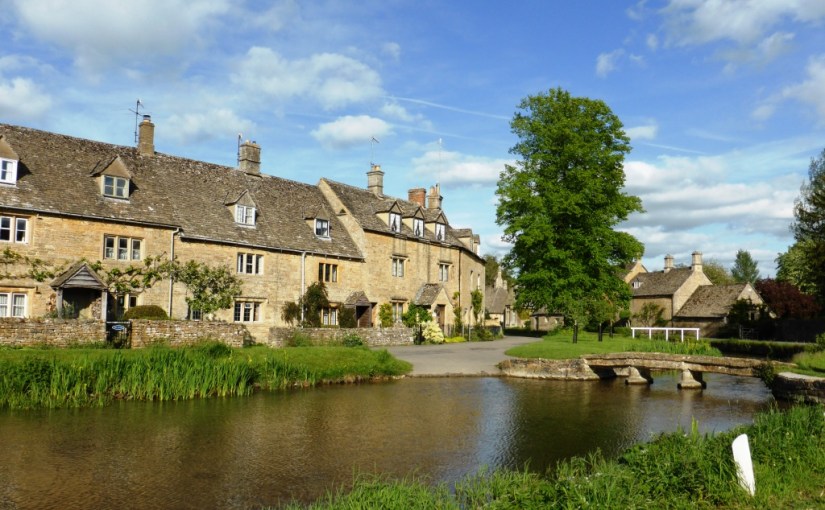
 When you think of the Cotswolds it is the warm honey-coloured limestone and cute thatched cottages inviting romance and tranquillity that spring to mind and where market towns (formerly centres of the wool trade) have wide squares and streets and are the centres of activity. Brooks and rivers bridged by tiny stone arches meander through the hidden villages in the rolling hills and farmland where country pubs have flagstone floors, beamed ceilings and inglenook fireplaces with log fires.
You may also think of crowds of tourists and visitors from London up for the day, often on large touring coaches, ancient churches and manor houses, picture-book tea-rooms, expensive antique, retro and vintage shops. You’d be right about all of these things, but there is another side to the Cotswolds to be explored.


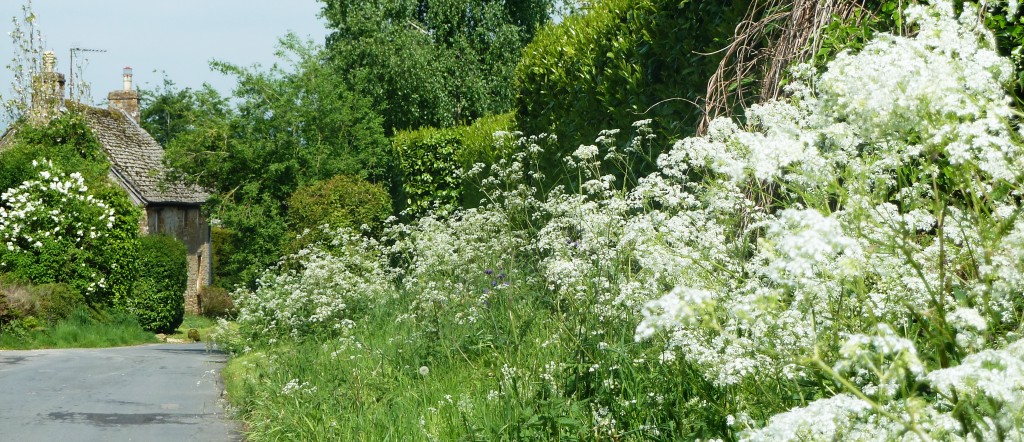
The Cotswolds district is mainly in the counties of Oxfordshire and Gloucestershire with parts of Warwickshire, Wiltshire, Worcestershire and Somerset at the edge. It is an area filled with hundreds of small towns and villages that don’t appear on the calendars and book covers or hog the limelight, but are equally attractive. Discover them by driving along the plethora of narrow, winding roads which often provide the most amazing views over the Wolds and the valleys. There are public footpaths, national trails and bridleways galore. Find yourself in a charming and unspoilt village away from the main tourist spots and walk around listening to the birdsong and admiring the chocolate box cottages and striking parish church. In the late spring sunshine, with so many shades of green it is impossible to count, you may stumble across a woodland carpeted with bluebells.
 In the north of the region take a romantic circular drive from Moreton-in-Marsh to Stow-on-the-Wold stopping at Broadway Tower and Country Park for a picnic with a view, Broadway village with its wide main street , Snowshill Manor with its collection by the eccentric Charles Paget Wade, Snowshill Lavender farm in the summer, and Hailes Cistercian Abbey ruins, a most peaceful spot on the Cotswolds Way. Continue through Guiting Power with the ‘Hollow Bottom Inn’ and the picturesque Lower Slaughter with the tiny River Eye running through it.


There are dozens of lovely homes and gardens for you to visit, some owned by the National Trust, others in private ownership. Some are large estates such as Sezincote or Hidcote and attract the coach parties, others are smaller and often quieter. All are worth a visit.
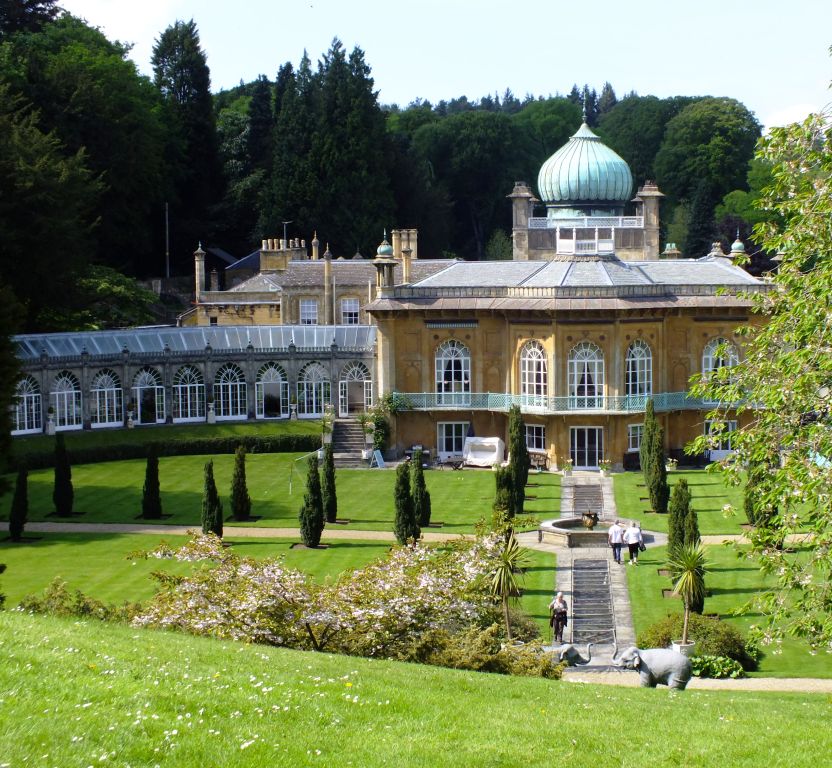
The Cotswolds is a vast region and requires several days to explore it thoroughly. We only touched on a small part in four days; there is a lot more to discover.

Just Back From… Cornwall
March 2013 will probably go down as one of the coldest on record. The usual cheery daffodils that dance in the spring sunshine around Mother’s Day were noticeable by their absence. My pots full of spring bulbs planted carefully in layers last September were full of frozen earth, the winter pansies and violas shrivelled and sad. A few tentative tips had pushed their way to the surface, but it didn’t look like anything would happen any time soon. Continue reading Just Back From… Cornwall
 TRAVEL WORDS