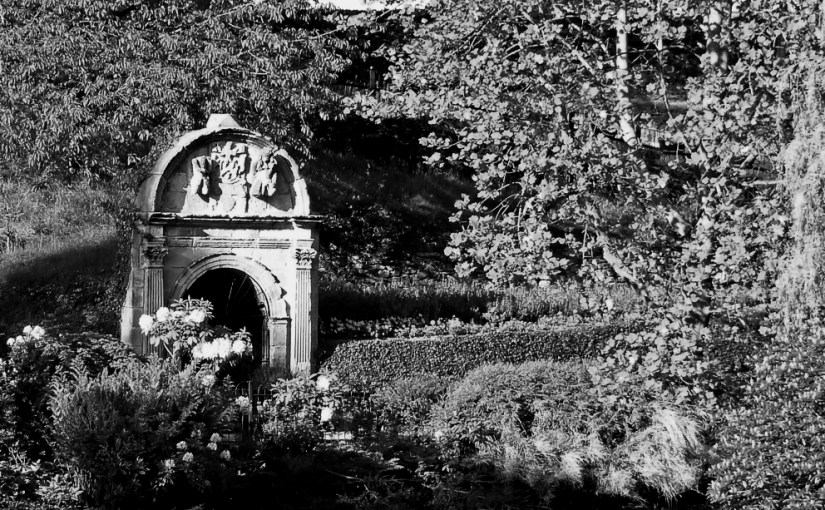
Paula’s black and white Sunday this week is ‘Traces of the Past’.
“We are but images of stone, Do us no harm we can do nonne”.
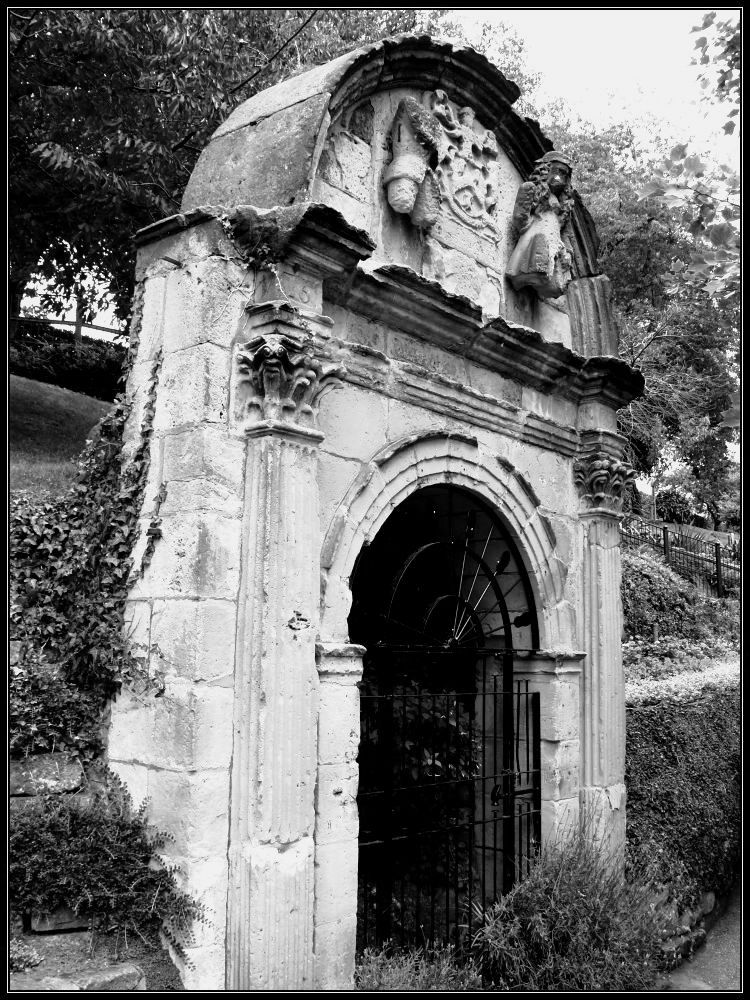
What scenes of revelry these old mutilated effigies must have seen in those far-off days, but then, can stone eyes see? Can stone hearts feel? Mayhap it is a blessing at times if they cannot.
~ from Black Velvet written by the late Ron Nurse
The Shoemakers’ Arbour is found in the Dingle, a former stone quarry and now a sunken garden in the Quarry Park, Shrewsbury. Associated with the pre-Victorian town festival, and originally sited in Kingsland, it was moved to the Dingle in 1879. It dates from 1679 and includes statues of Crispin and Crispinian, the patron saints of shoemakers. The gateway is built of stone, and bears the date of 1679 and the initials, H. P. and E. A.; the wardens of the Shoemakers’ guild at that time.
The Shoemakers’ Arbour plays a large part in the song Thomas Anderson by David Harley that describes the execution in 1752 of a participant in the Jacobite rising of 1745. Click on the link for the song.
We are but images of stone
Do us no harm
We can do none
St. Crispin and St. Crispian are we
On the arch of the Shoemaker’s arbourHigh above the river on Kingsland we stood
On the gate to the hall of the shoemakers’ guild
Where the bakers, the tailors, the butchers, the smiths
And the saddlers too their guild arbours built.
Each year in procession the guilds gave a show
And marched through the town to the sound of the drum:
Then it’s back to Kingsland to feast and carouse
And enjoy the great day the guild members come.We are but images of stone
Do us no harm
We can do none
St. Crispin and St. Crispian are we
On the arch of the Shoemaker’s arbourOn the 10th of June 1752
In a house called The Crown that stood on Pride Hill
John Richards’ workmen received a week’s pay
And there they stayed and drank their fill.
When a redcoat patrol chanced to pass by
The men mocked and reviled them with Jacobite songs
And who struck the first blow no-one was sure
But a bloody riot soon raged through the town.The authorities trembled with passion and fear
When news of this Jacobite outburst was known
For the House of Hanover had won few hearts
And the Stuarts still plotted to win back the throne.
And so that same year, one raw day in December,
The rebellious townsfolk of Salop looked on
While below the old arch of the Shoemaker’s Arbour
They made an example of Tom AndersonWho was once spared by death on the field of Culloden
Then joined the dragoons but deserted, they say,
Only to die on the banks of the Severn
By firing squad on a cold Winter’s day.
When the black velvet suit was stripped from his body
The Chevalier’s colours were beneath it, it’s said,
Received from the hands of Bonny Prince Charlie
Whose cause like young Thomas is broken and dead.For it’s 200 years since Bonny Prince Charlie
Died drunk and embittered, an old man in Rome
While a century ago in the flowers of the Dingle
The old arbour gateway found a new home.
Now who’s to remember the Shoemakers’ Guild
Or the Jacobite rebels who fought for a throne?
And who’s left to grieve for Tom Anderson
But these two hearts of stone?We are but images of stone
Do us no harm
We can do none
St. Crispin and St. Crispian are we
On the arch of the Shoemaker’s arbour
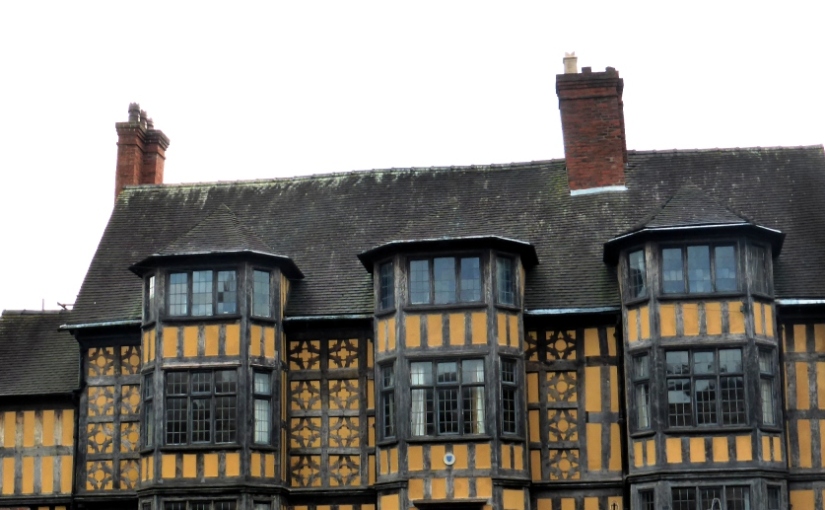
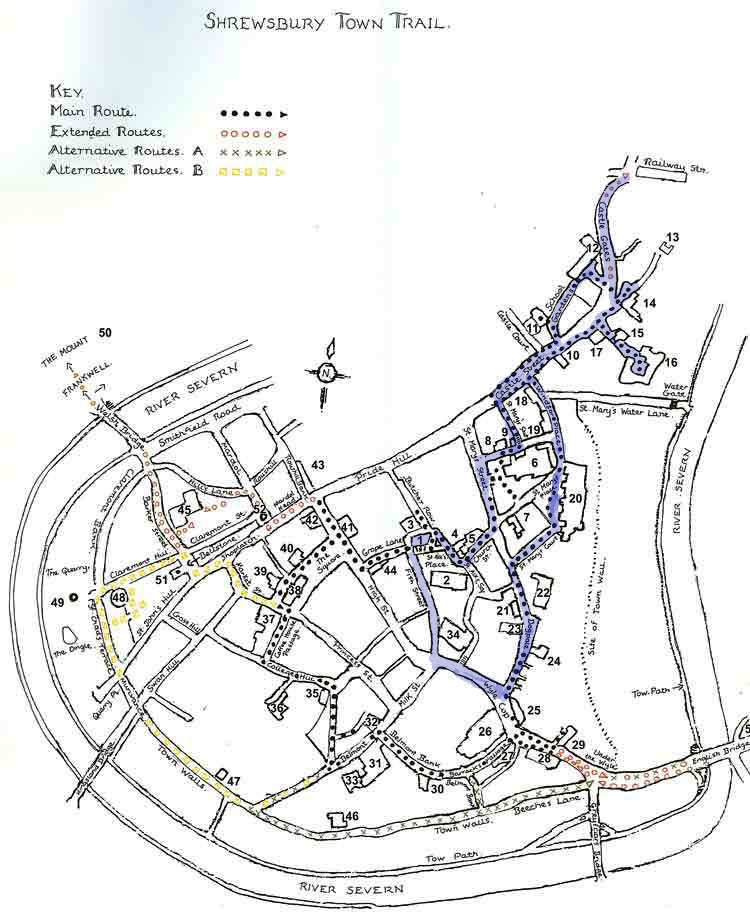
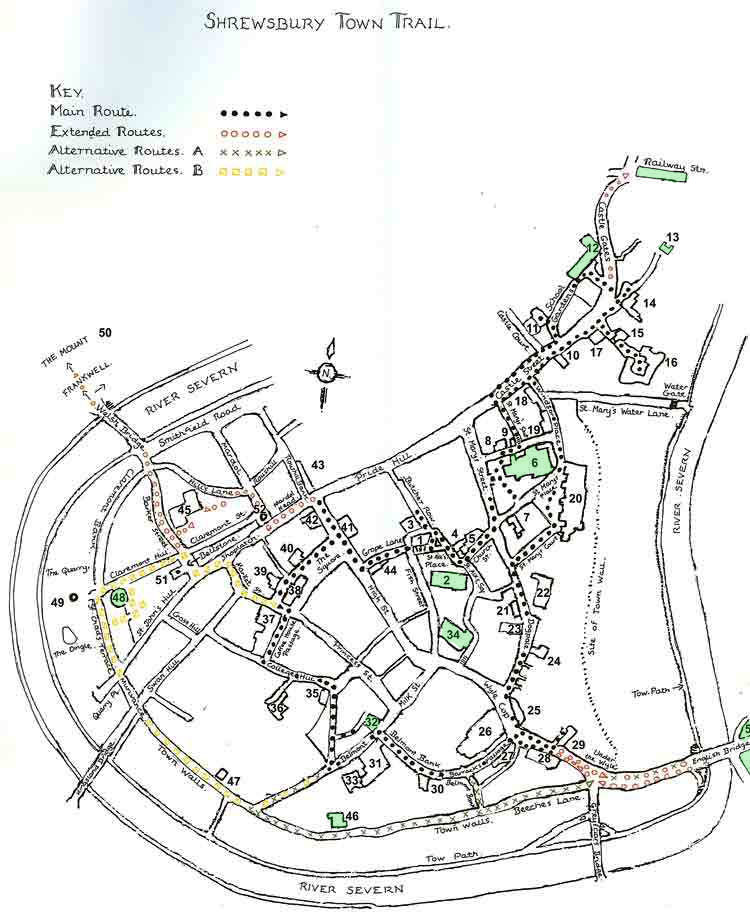
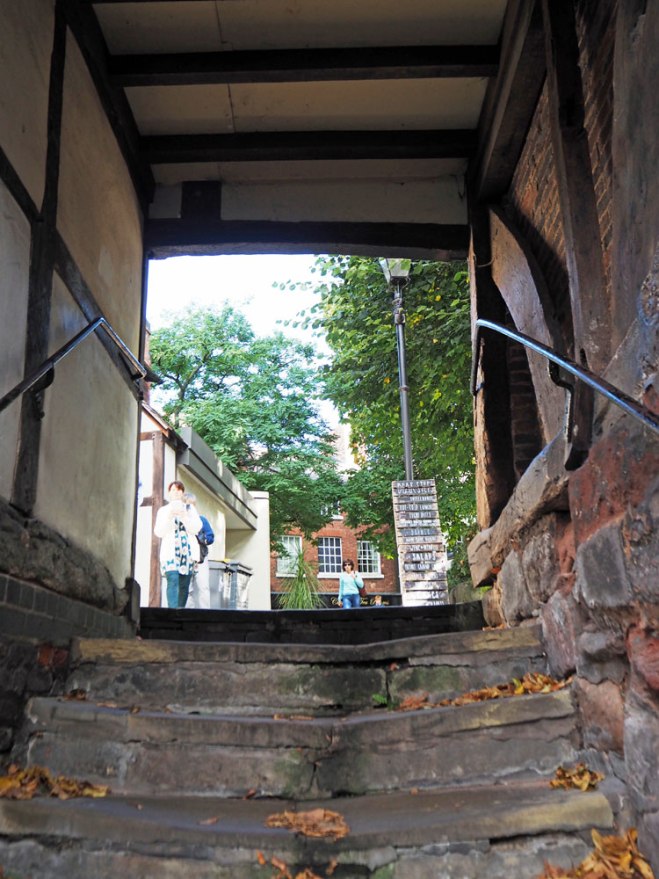 This place has a family connection as the OH’s eldest uncle was born in one of the small cottages back in 1913. The Bear Steps hall is one of only a few remaining medieval stone and timber-framed halls that dominated the town’s architecture. It now houses the offices of the Shrewsbury Civic Society (who produce a Shrewsbury Town Trail booklet and from which much of this information has been gathered) an Art Gallery and Coffee Shop.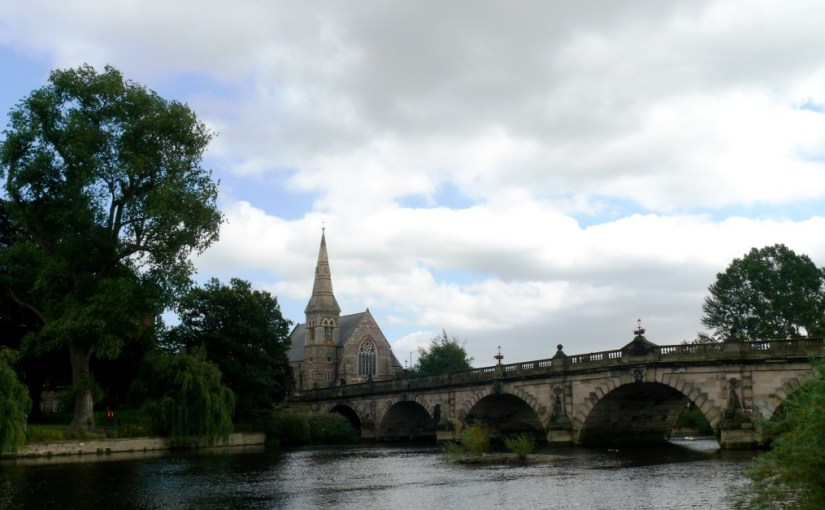

 TRAVEL WORDS