
I have always yearned to visit Venice, the city that is sinking and often stinking, but which is unique – a sanctuary on a lagoon that is virtually unchanged for six hundred years and a monument to the glory days of the Renaissance. On a trip to Lake Bled in Slovenia in 2012 my husband and I were close enough to go there on a day trip – a long drive, but easier by a coach tour than trying to do it by public transport. Continue reading Lost in Venice
Category: On the Road
Posts featuring my travels away from home
A Quiet Corner in Slovenia
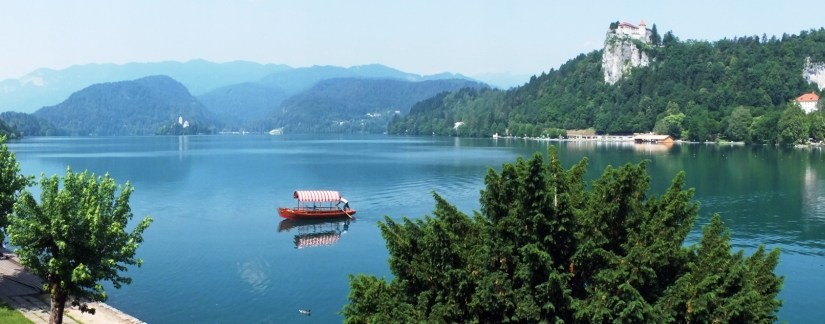
Bled and its perfectly formed lake located in the Julian Alps is in the Gorenjska region of Slovenia, not far from the Austrian and Italian borders. A lake just the right size for a comfortable stroll around its shores with spectacular views from all sides. We found ourselves there for a week in June 2012 when my OH attended a conference. Not far from the airport it was a quick transfer to the Hotel Golf, an ugly sugar-cube building above the lakeside, which had pluses and minuses.
The plus was a lakeside room with wonderful panoramic views. The minuses included no air-con, a steep climb back to the hotel from the lakeside, poor breakfasts and a noisy bar close-by where the natural amphitheatre of the lake basin amplified the sound.

Lake Bled

Pletna Boat

A large brood
The 6 km trail around the lake is long enough to take in the views of the island with the Church of the Assumption which demands a climb up the 99 stone-step staircase; visitors should ring the bell for good luck, and a local tradition at weddings is for the groom to carry his bride up these steps. Behind the island the background is of the Karavanke mountains. The castle is perched on the high limestone mass at the north of the lake and you will see the colourful traditional Pletna boats and boatmen who will row you over to the island; swans, ducks and fish swim in glacial waters so clear you can see the bottom. There are convenient benches for you to rest and absorb the beauty surrounding you.

Relax

Silver fishes

Island and Church

Pletna Boats

The Ninety-nine Steps

Sv Martin Church
The lakeside town is charming and popular with lovely cobbled streets in the old town, plentiful lakeside restaurants serving the famous Bled cake (kremna rezina), a delicious custard and cream confection, and the lovely neo-gothic St Martin’s Church below the Castle. The castle can be reached up a steep route from the Castle beach, or slightly less tortuous routes by road from behind the Bledec hostel. The castle offers magnificent views and is an interesting medieval fortress, well worth the effort of getting there.

Bled Castle

Castle details

View east from the castle
When you are tired of the scenery around the lake you can visit Vintgar Gorge, 4 km north-west of Bled. A public bus will get you there and back. The 1.6 km gorge carves its way through vertical rocks and you alternate between paths and boardwalks alongside the River Radovna and its waterfalls, pools and rapids crossing over wooden bridges. It is a lovely cool place to visit on a hot day.
The Triglav National Park covers almost the entire Julian Alps and offers a completely different experience. Majestic mountains, steep gorges, clear mountain streams and traditional farms. Take an exhilarating and spectacular drive up the hairpin bends of the Russian Road to the Vršič Pass which is on the border with Italy.
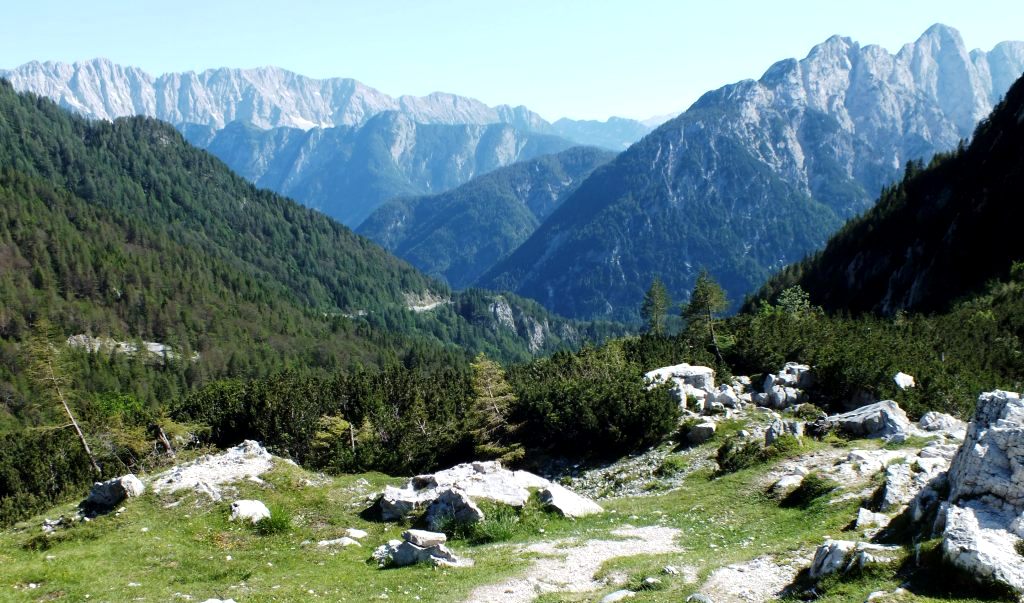
Not only is it special for the views and scenery, but there is a history behind its existence. It was built by Russian prisoners-of-war in 1915 and because the road had to be kept open all year round, prisoners were kept in camps to shovel off the snow. In 1916 an avalanche buried one of these camps killing around 400 prisoners and 10 guards. There is a small cemetery near hairpin 4 and a beautiful Russian Orthodox Chapel on the site of the camp at hairpin 8.

Hotel on route

Russian Road Info

Restaurant

Vrsic pass

Heading down the pass

Triglav National Park
Travel Journey of the Week: The Emerald Isle
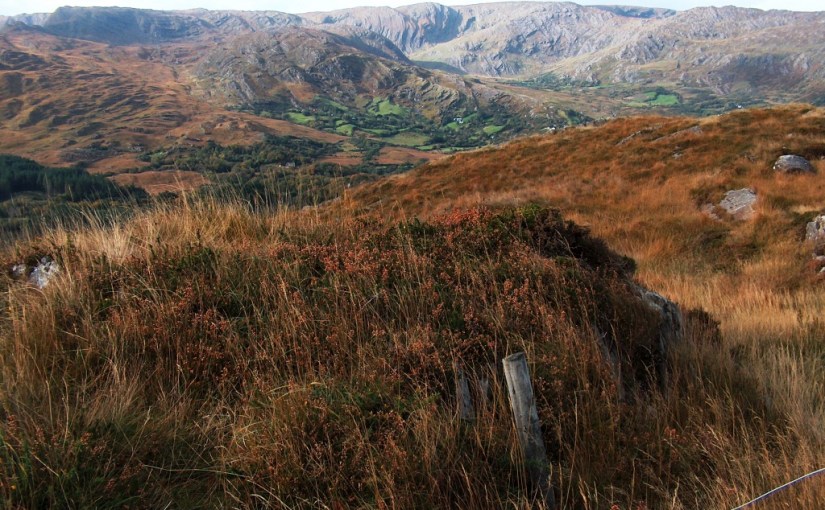
This week’s place from Liberated Traveler is Ireland, so I have had to cast my mind back to the one and only time I visited this country for four days in October 2003. I could only have four days because at the time I was doing a PGCE course to become a secondary school teacher. Although it was half-term and in theory we should have had a week’s holiday, the training school insisted we went in for three days for additional lectures. So making the most of a very cheap Ryan Air flight to Dublin from Birmingham (£1 one way) we arrived in a very wet Dublin airport on an early Wednesday evening. Continue reading Travel Journey of the Week: The Emerald Isle

North Norfolk Churches: Hindringham St Martin
Hindringham St Martin dates from the 14th century and is typical of the churches in the region having a tall west tower, a tall nave with north and south aisles and large Perpendicular windows. This building has five clerestory windows above to provide even more light to the inner space and consequently, like many of the Norfolk churches that we visited, the interior is surprisingly light and airy. There are two interesting windows, one at the east end of the south aisle containing some 15th century glass remnants and the other a Decorated window with five main lights and reticulated tracery.
The clock on the tower was given in 1867 to celebrate Queen Victoria’s Diamond Jubilee.


The 15th century octagonal font is expertly carved with beasts representing the saints – Matthew, Mark, Luke and John and four different shields.


The east window of the south aisle contains some medieval glass and two distinctive angels formed from the fragments. You can tell that they depict 15th century angels by the wonderful feathery tights they are wearing. The other interesting piece is a baby on the corner surrounded by golden rays, which could be the ‘Christ Child in Glory’.


At the east end of the nave is a Victorian wooden eagle lectern.
 The impressive East window glass was made by Ward & Hughes in 1862 and shows several scenes from Christ’s Life and Death. Above these five main lights are representations from the Old Testament, including Noah’s Ark, the selling of Joseph and the Ten Commandments.


(sources of information: Church Tours in 2012 leaflet by Lyn Stilgoe; and the British Listed Buildings Website)

Just Back From… Laugharne
…and some like myself, just came one day, for a day, and never left; got off the bus, and forgot to get on again…”
~ Dylan Thomas
Laugharne (pronounced Larn) is probably most famous for being the last place where renowned Welsh poet Dylan Thomas lived, wrote, drank and is laid to rest; he died in New York.
His Boathouse and Writing Shed overlooking the wide Tâf estuary draw in the crowds and you can even get a cup of tea at the Boathouse, though not when we visited as it was closed for filming a new film about Dylan Thomas’s fourth and final reading tour of America which is being made to mark next year’s centenary of his birth. The play “Under Milkwood” and “Poem on his Birthday” were written here. There is even a ‘Birthday Walk’, which if done on your birthday entitles you to a complimentary birthday gift. Climb up Sir John’s Hill for mind-blowing views across three estuaries (River Tâf, Towey and the Gwendraeth) and over the bay to the Gower Peninsula.

Dylan Thomas Grave

The Boathouse (right)

The Writing Shed
It’s not all about Dylan though, there is also a ruined castle built in the thirteenth century with more spectacular views of the estuary and out to Carmarthen Bay, an interesting clock tower on the town hall, and a unique Tin Shed Experience – a quirky 1930s – 1940s museum. It is also one of the oldest self-governing townships in Britain, presided over by the Portreeve wearing his traditional chain of gold cockleshells.

Clock tower

Tin Shed Experience

St Martin’s Church

The Taf Estuary

Laugharne Castle
Close to Laugharne is the seven mile beach known as Pendine Sands which was used to set world land speed records as it has a wide, flat and firm surface. Several generations of the Campbell family have raced there and there is a Museum of Speed. And if you travel a little further west you will discover the turquoise waters of Amroth, reminiscent of neighbouring Saundersfoot and Tenby in Pembrokeshire.
Carmarthenshire is often overlooked by people rushing through to the beautiful Pembrokeshire coastline, but it has much to offer itself with a new Coast Path which passes through a range of habitats including fresh water marshes, salt marshes, sand dunes and pine forests.

