I am not a fan of cacti though I have been known to have some in the house many years ago and when I lived in Cape Town we had some of the lovely Lithops in the garden which look like living stones. But they are succulents so not quite the same. One very tall cactus only flowered at night so there were many anxious evenings once a bud appeared. And I do recall a trough of cacti into which my son fell at the age of 18 months. It happened at night and I hadn’t realised that his hand was full of the spines when I washed it under the tap!
But back in 2009 – 2012 I was lucky enough to spend some time in San Diego and on one occasion went to visit Balboa Park – a definite must see if you are ever in SD. There are several gardens including a desert garden with magnificent cacti and succulents.
The 1935 (Old) Cactus Garden was developed under the direction of Kate Sessions for the 1935 California Pacific International Exposition. It contains some of the largest cactus and succulent specimens in the Park and has also been developed to include the exotic African and Australian Protea plants.
In 2005 we decided on a trip to Canada, starting with a flight to Toronto, a train to Vancouver and a ferry over to the Island where we hired a car to get around to some amazing places. So join me on my Canadian trip of a lifetime.
Air: The following images are taken on coming in to land at Toronto as we circled right over the city. Sometimes even having a seat with a wing view can be interesting too.
Sunlight on Wing
Toronto’s CN Tower from the air
Tommy Thompson Park
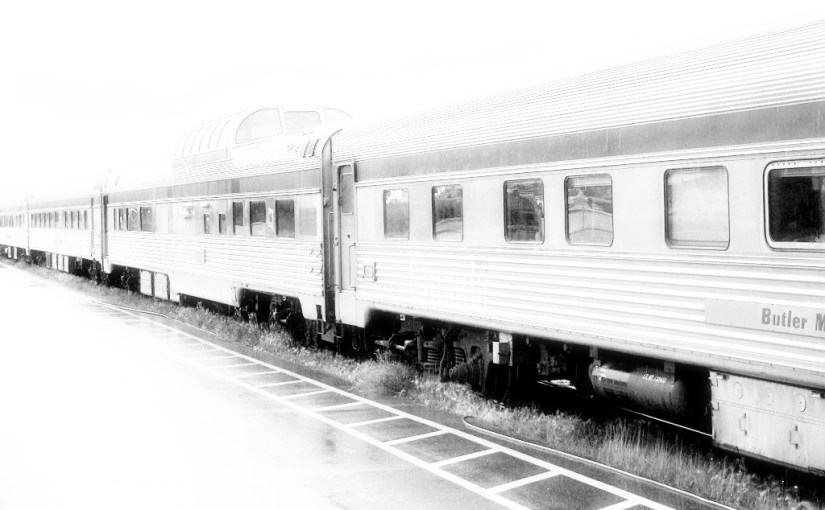
Train: After a few days exploring Toronto and a quick trip down to Niagara Falls we joined the Canadian train departing from Union Station in the country’s largest city to cross through some of Canada’s most sparsely populated regions. On the first day the panorama changes from the glass skyscrapers of Toronto to the pine trees of Sioux Lookout. Day two took us to Edmonton, crossing Winnipeg River, the Prairies and the lakes of Whiteshell Provincial Park. On the third day the train steadily climbs through the foothills of the Rockies, crossing several rivers and glacial lakes of the most stunning colours. After Jasper the train winds its way through the Yellowhead Pass, the crest of which marks the border of Alberta and British Columbia. The Canadian is in sight of Mount Robson for 16 km before turning sharply south and descending. In the early hours of the morning the mountains suddenly fall away and the Canadian follows the flat green fields along the Fraser River. It arrives at the Pacific Railway Station in Vancouver after a long and astonishing journey.
Via Canada
A Sunset on the move
Grain silos in the Prairies
Boat: On reaching Vancouver the next step of our journey was to travel on the wonderful BC Ferries up and along the Sunshine Coast then over to Vancouver Island. I’m not a very good sailor, but would go on these ferries any time, and if you are lucky, as we were, you might catch a glimpse of a pod or two of Orcas.
Crossing to the Island
Looking Back
Just in Case…
Of course there are many other types of boats on Vancouver Island, so here are a few of the smaller ones.
Comox Harbour at sunset
Ferry Boat Victoria
Houseboat – Fisherman’s Wharf
Road: Of course the journey would not be complete without the use of our lovely Lincoln hire car. She enabled us to get off the highways and to more remote places that were not easily accessible by public transport. On and off ferries to explore the smaller islands of Hornby and Denman, over a logging route to visit Telegraph Cove, along the Pacific Rim coastline to Port Renfrew, Ucluelet and Tofino, and north to Alert Bay. But my first journeys in the car were in the environs of Vancouver – to the fabulous UBC Anthropology Museum, Van Dusen Gardens and over the Lions Gate Bridge to Grouse Mountain.
Logging Truck
Lions Gate Bridge
Arriving at the B&B
And of course there are many other methods of transport available in Canada. I hope you have enjoyed the ride 🙂
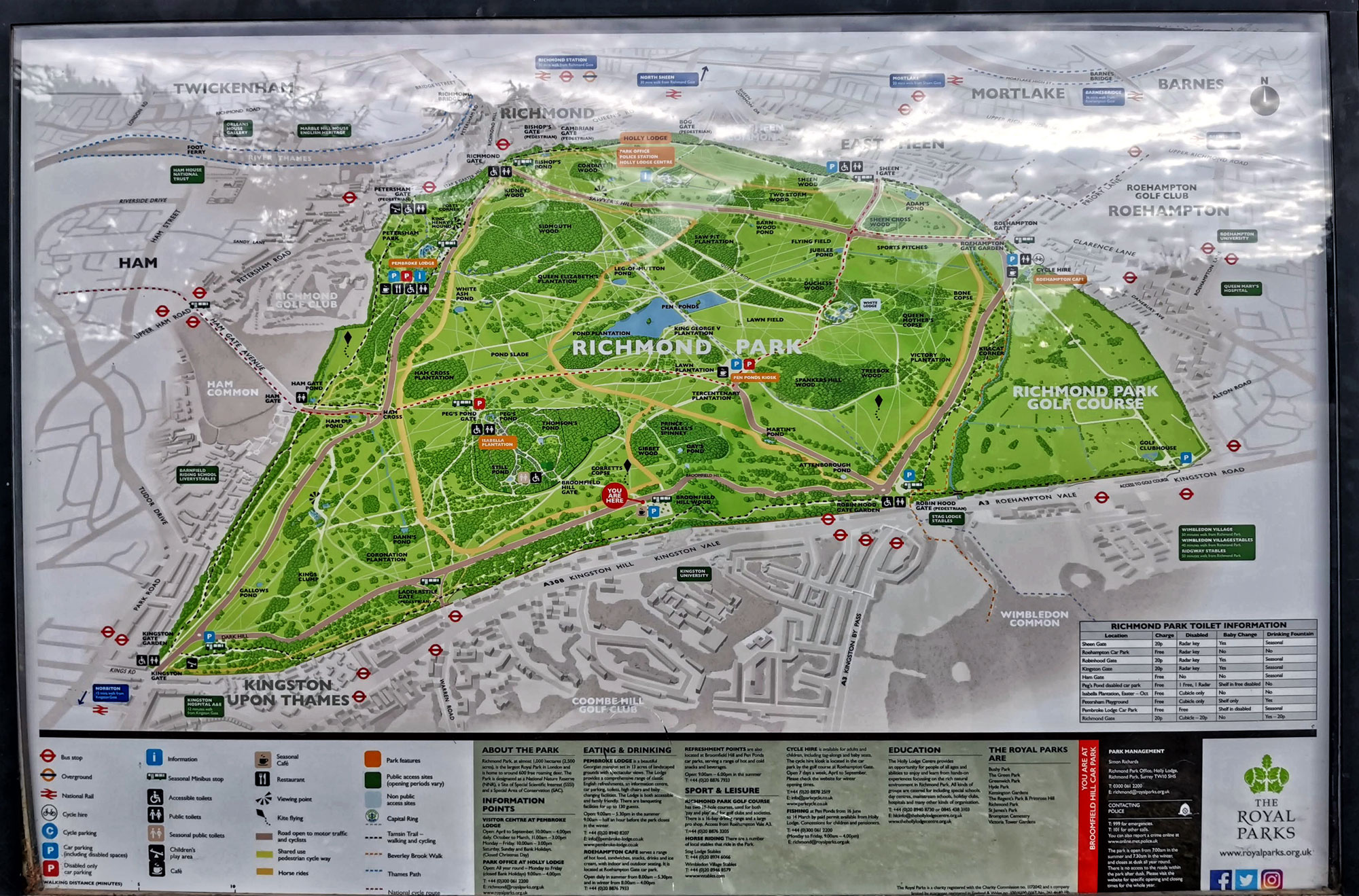
Over the Bank Holiday weekend I spent a couple of days visiting my daughter in Surrey. After a morning of gardening we decided to skip a visit to Wisley and instead head off to Richmond Park, one of the Royal Parks in London. It’s a place we’ve been to before when the grandchildren were small, but not for many years for me.
Isabella’s Plantation was a favourite spot with a pretty stream leading to a pond and stepping stones and tiny bridges for youngsters to enjoy, but it was rather disappointing to find it very overgrown with reeds, Greater Willow herb and Joe Pye Weed in particular. So much so that we couldn’t even see the stream and most of the ponds were hidden from view. I’m all for rewilding places, but they still require management and maintenance. However, it is still a popular place for families to find some peace and enjoy a picnic (relatively speaking as huge planes pass overhead constantly and the non-native ring-necked green parakeets screech above your head).
Isabella Plantation
Erica / Heather Garden
Lythrum salicaria / Purple Loosestrife
Greater Willowherb
Reed / Grass
Lythrum salicaria / Purple Loosestrife
Pickerel Weed (Pontederia cordata)
Erica
The Isabella Plantation is a 40 acre woodland garden set within a Victorian woodland plantation planted in the 1830’s. First opened to the public in 1953, it is best known for its evergreen azaleas, which line the ponds and streams and at their peak of flower in late April and early May. The site is managed very much with nature in mind and the gardens are run on organic principles. Native plants commonly grow alongside exotics throughout the Plantation. [source: Isabella Plantation]
I think spring time is probably the best season to visit this garden as there are many camellias and rhododendrons and azaleas planted and the native stuff would have died down over the winter.
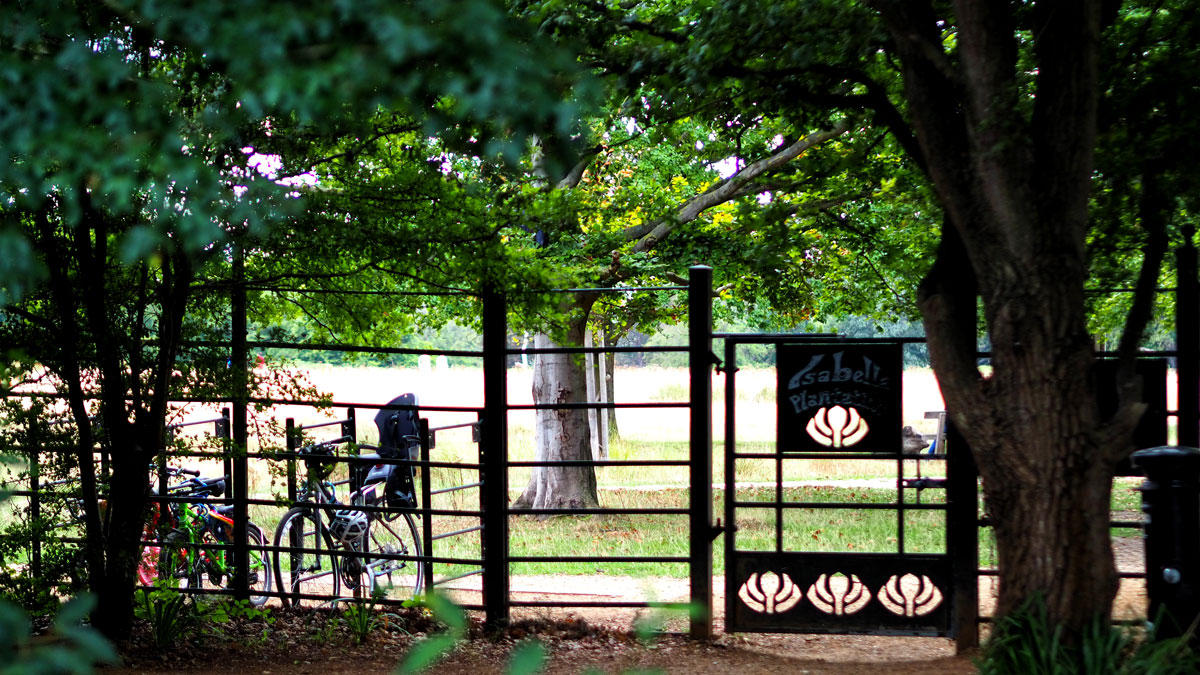
Peg’s Pond Gate
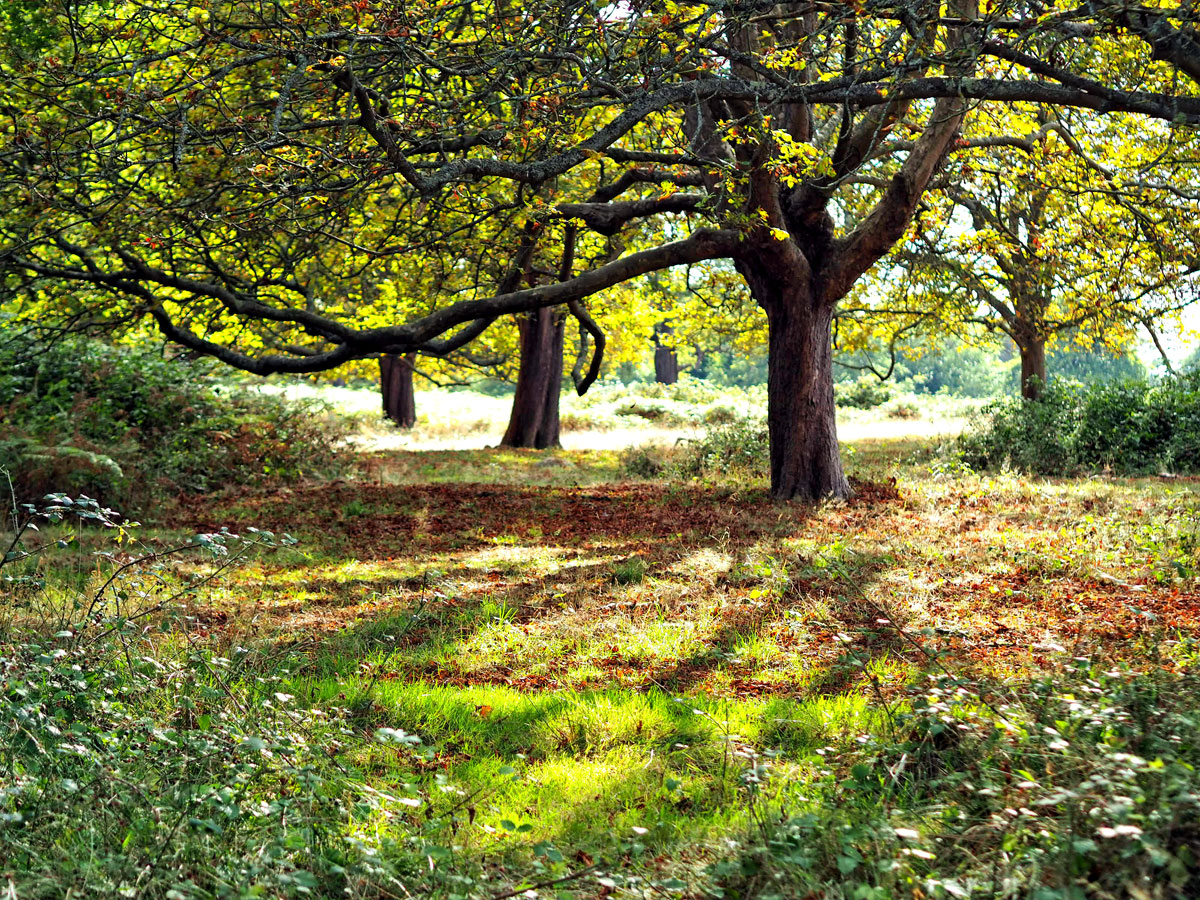
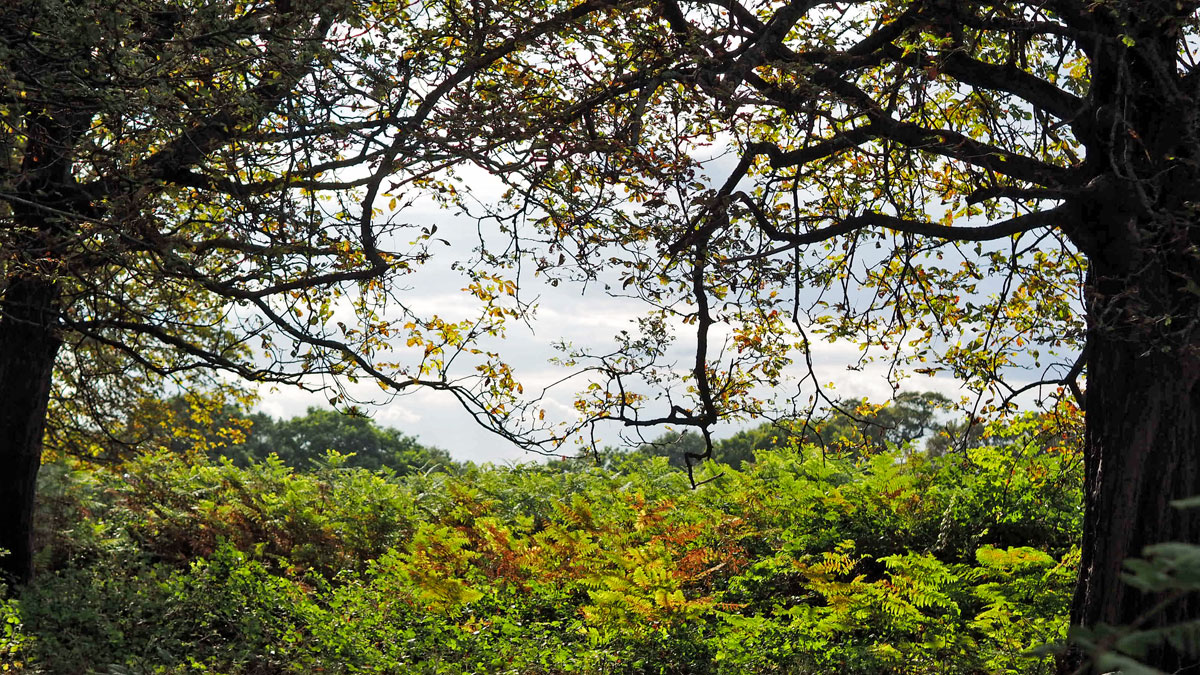
We exited through Peg’s Pond Gate and walked around the perimeter of the garden under the large trees – oaks, beech, horse chestnuts – enjoying the filtered light and listening to the parakeets. It must have been a welcome shady place to be during the heatwave.
Dappled shade
On arriving back at the car park we decided to walk up to Pen Ponds in the centre of the park so the dog could have a run off the lead. You still need to be careful with your dog as there are deer roaming freely in the park and during May – August dogs must be kept on leads throughout the park.
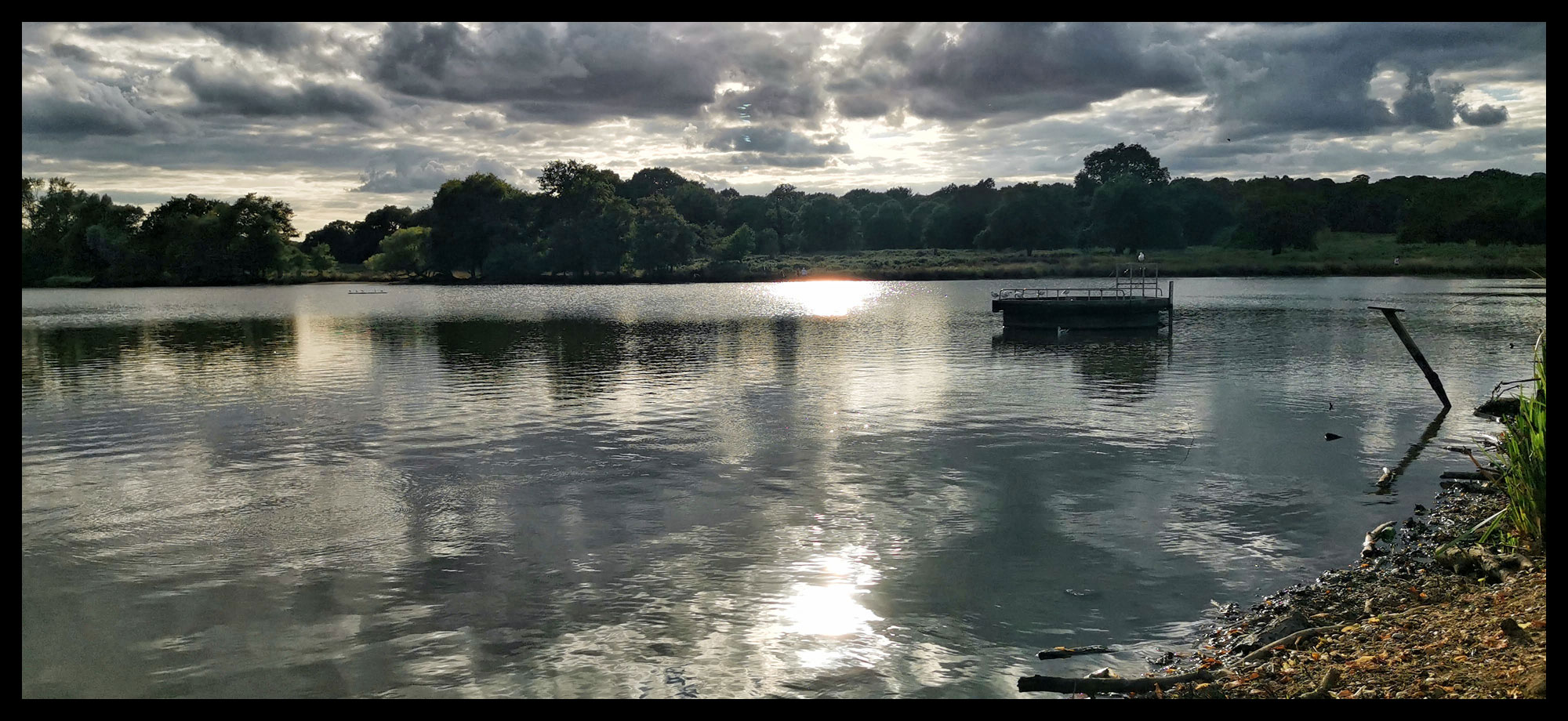
Pen Pond Reflections
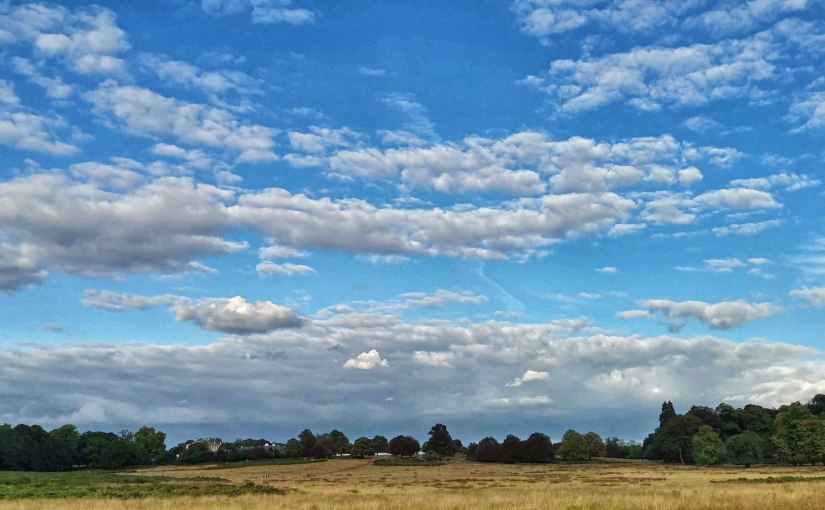
By the time we reached the ponds the sky had turned very black to the south, though still blue towards London. Despite the look of those clouds it didn’t rain a single drop.
This slideshow requires JavaScript.
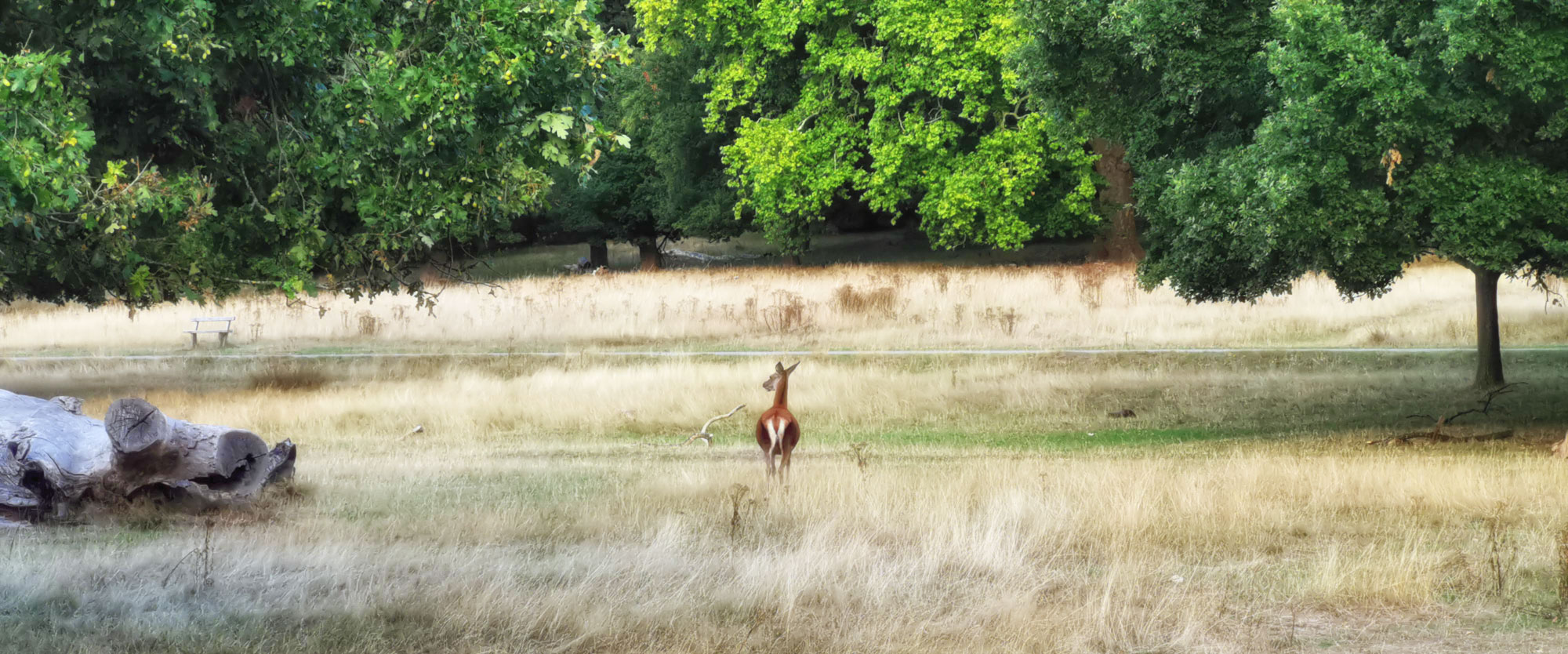
And we were lucky enough to see a few of the deer.
Tavistock is an ancient stannary town on the border of Devon and Cornwall and supposedly the home of the cream tea. Once home to the wealthiest Benedictine abbey in Devon founded in 974 it grew to become a market town (named after the river Tavy and ‘stoc’ which is an Old English word for settlement) and a significant producer of woollen cloth.
After the Dissolution of the Monasteries in 1539, Henry VIII transferred the abbey and most of its assets to John Russell, the first in a succession of Earls and Dukes of Bedford to own most of the town. In the 19th century Tavistock’s economy and society were transformed by the expansion of metal mining, mainly for copper, around the town and in the Tamar Valley.
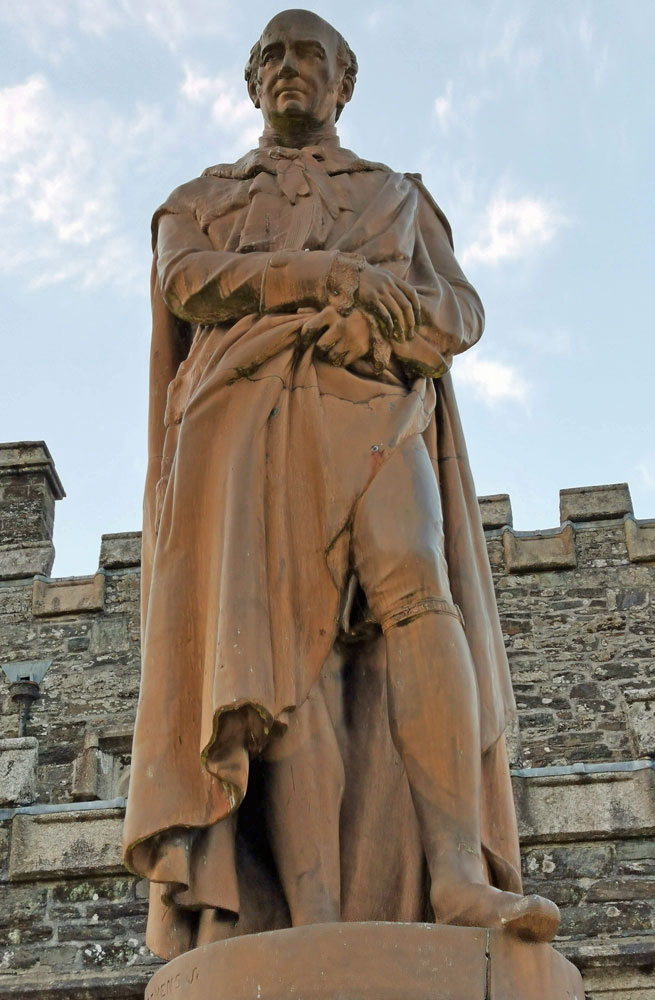
Francis the 7th Duke of Bedford by public subscription 1864
The 6th and 7th Dukes used the revenues from copper mines on their land to redevelop the town centre, provide fine public buildings including the Guildhall and Pannier Market, and erect ‘model’ cottages for industrial workers. The Pannier market has different themed markets throughout the week and you can find unusual crafts, second-hand items and clothing. Shops and cafés line the outside pedestrian walk.
Entrance to the Pannier Market
Town Hall
Guildhall
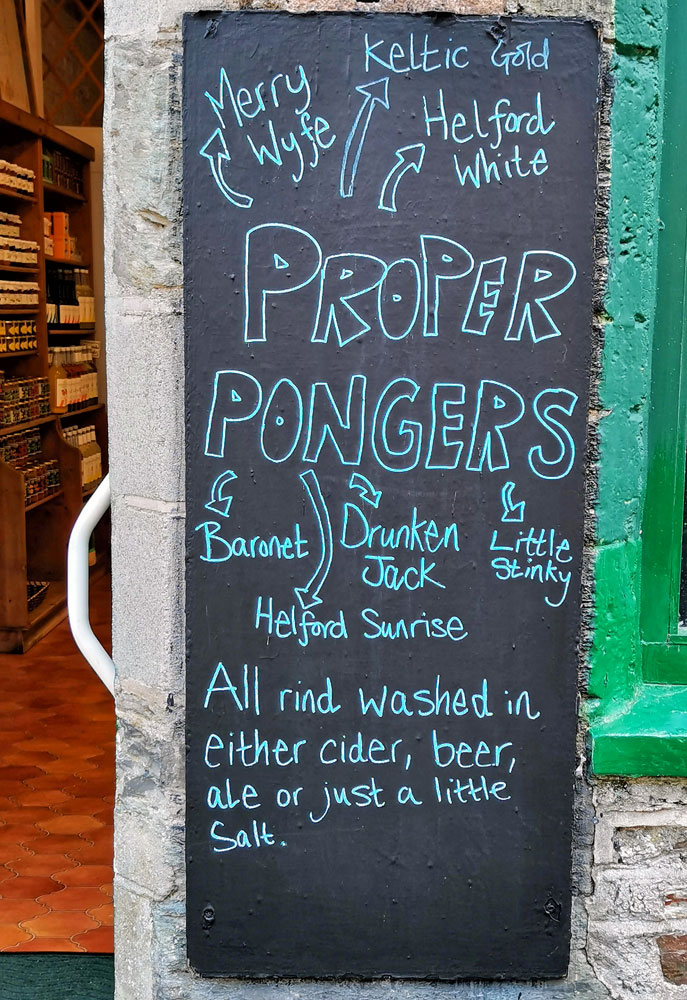
Cheesemonger’s sign
We selected the town as a base to explore this western part of Devon as it is on the doorstep of Dartmoor National Park. Tavistock is especially rich in independent stores: a brilliant bookseller and music shop, butchers, an award-winning cheesemonger, clothiers, a fine delicatessen, framers, fruit and veg shops, hardware, lighting, and stationers, among others.
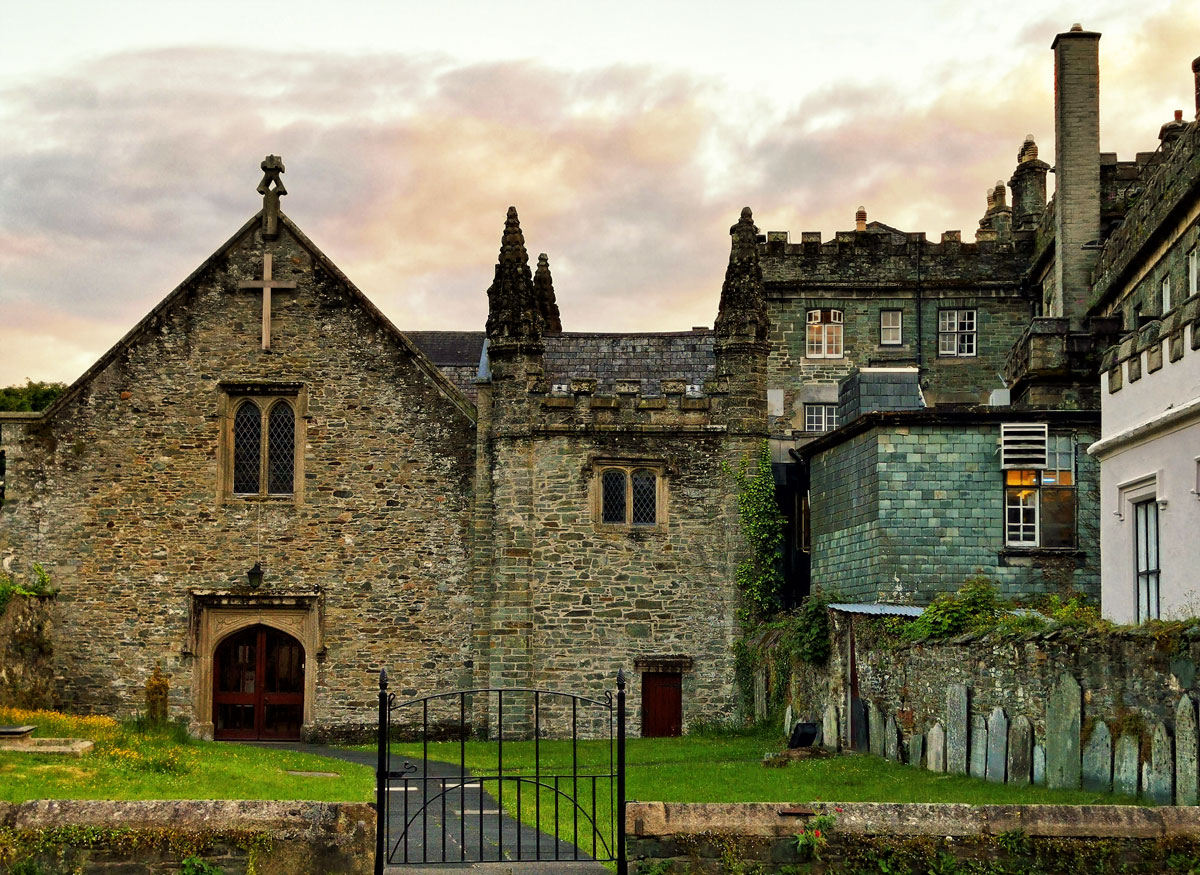
Abbey Chapel
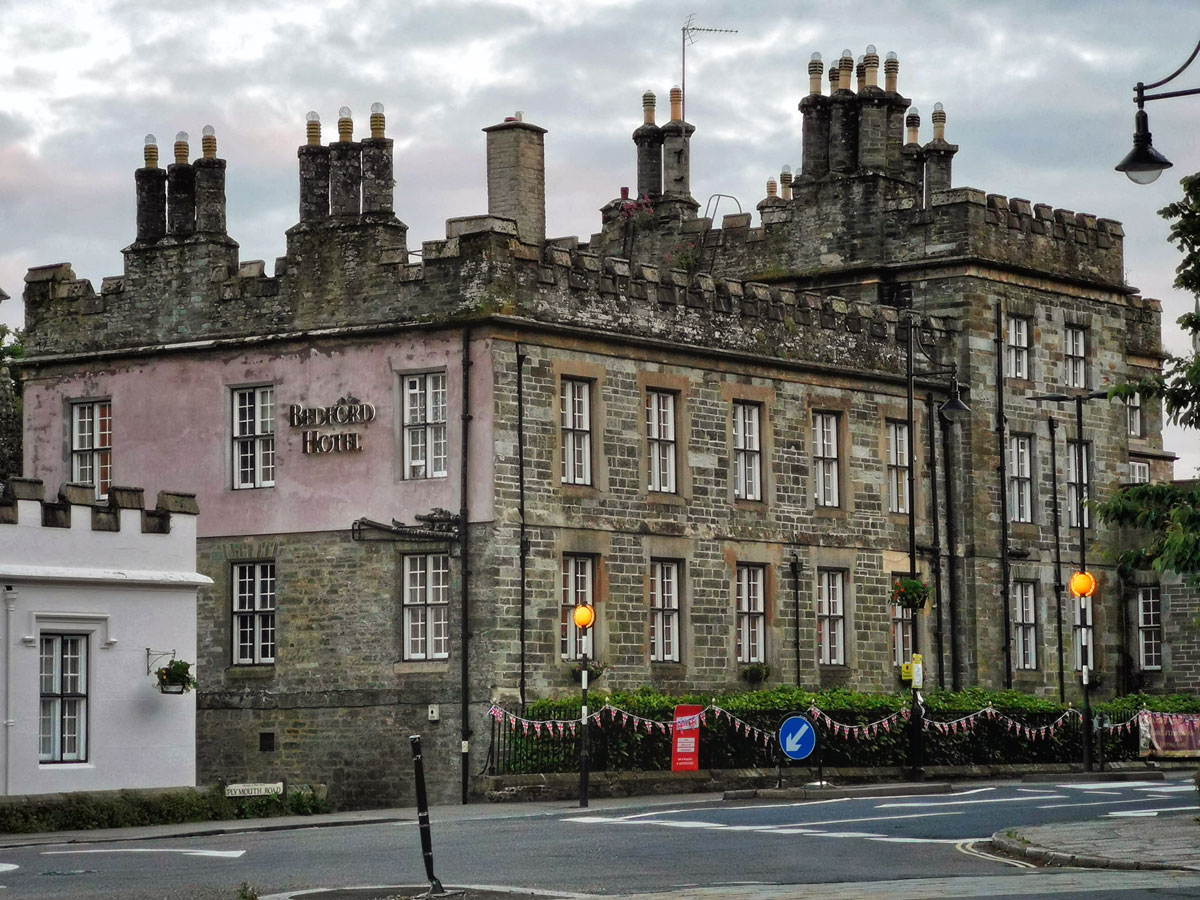
We stayed in the unusual looking Bedford Hotel which is opposite the Parish Church and close to the impressive Guildhall. The Bedford Hotel takes its name from the Duke of Bedford, who appointed the architect Jeffry Wyatt (who was also responsible for the transformation of Windsor Castle in 1824) to transform the inn into The Bedford Hotel which was completed in 1822, and a ballroom was added in 1830. Although somewhat old-fashioned we enjoyed our stay there, the room was rather tired, though clean, and on the 3rd floor (no lift) but the food was excellent and it is in a perfect location for exploring the town and the area.
The Bedford Hotel
At the back of the hotel is a rather lovely secret walled garden. We didn’t manage to sit out in there, but on a warm evening it is probably a lovely spot to take a bottle of wine and relax and smell the many beautiful roses.
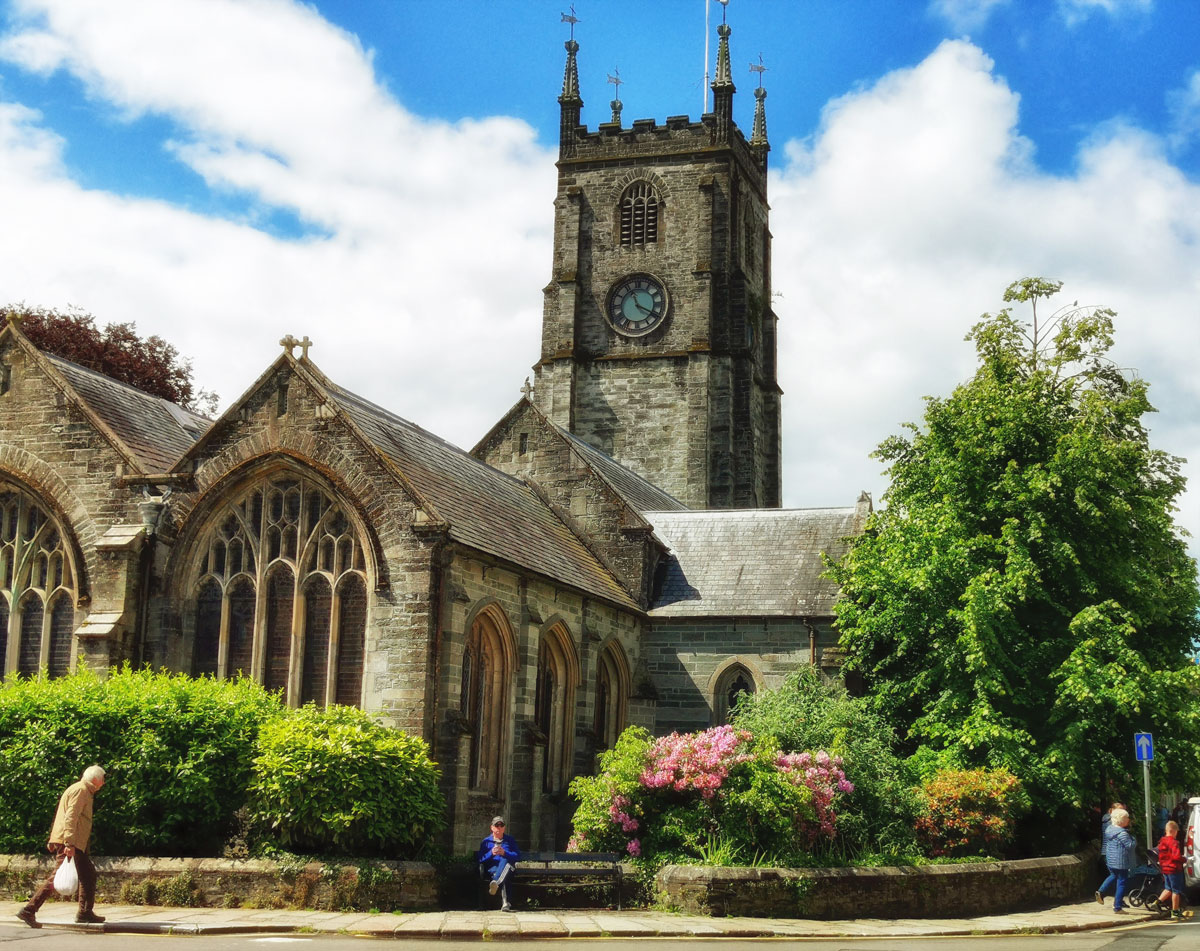
Remains of the cloister of Tavistock Abbey, destroyed during Henry VIII’s dissolution of the monasteries, can be seen in the churchyard of the rather beautiful St Eustachius church which is directly opposite the hotel.
St Eustachius Church
Remains of the Abbey Cloisters
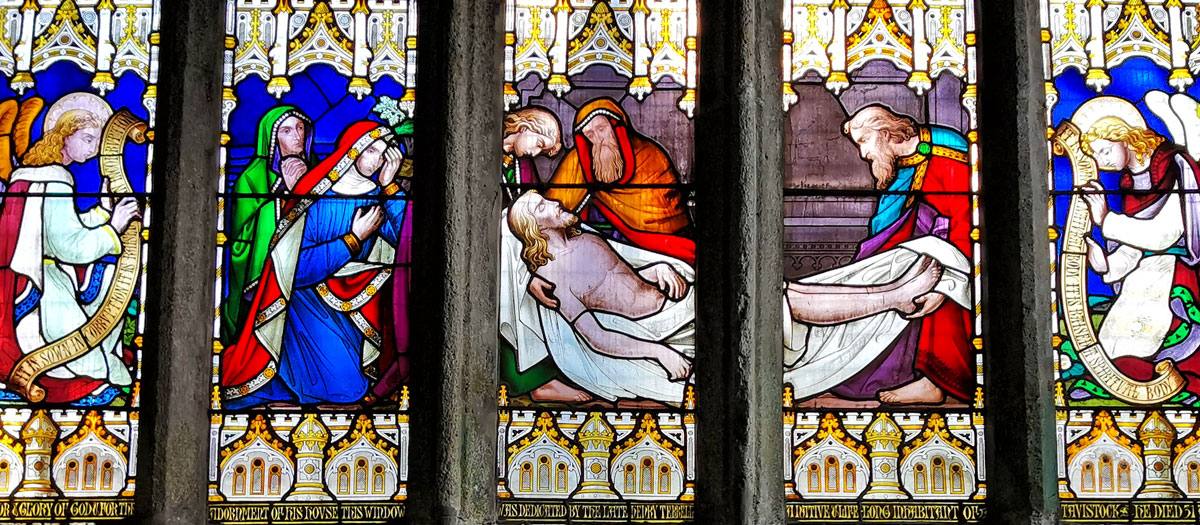
The church is well worth visiting though we never managed the time to revisit and use the helpful information leaflet to guide us around.
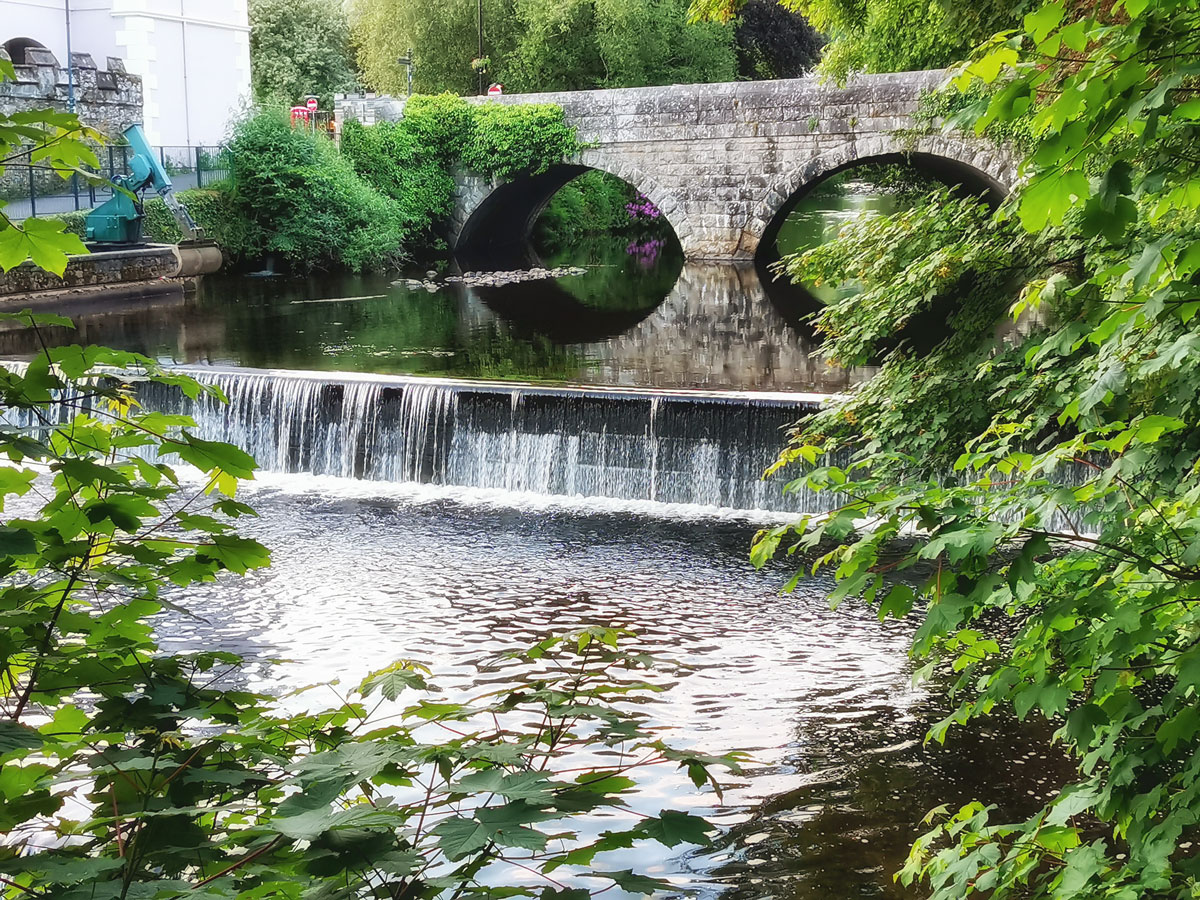
There are lovely walks alongside the River Tavy as it meanders softly over granite pebbles and slate stones beside the Abbey walls and the nearby canal, which was created (most of the labour being performed by French prisoners of war from the Napoleonic Wars) to carry copper to Morwellham Quay on the River Tamar, where it could be loaded into sailing ships weighing up to 200 tonnes.
Abbey Weir looking towards Abbey Bridge and the weir.
Abbey weir
Abbey entrance
River Tavy
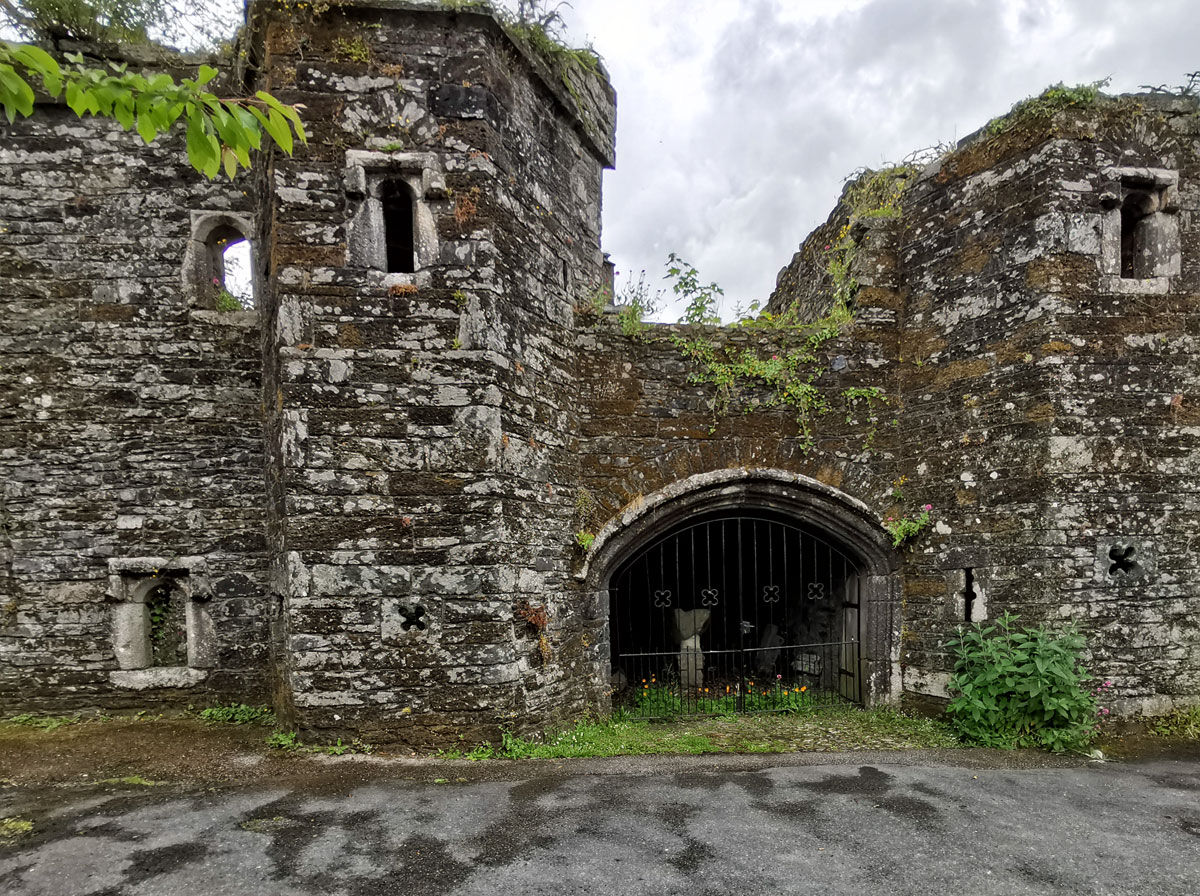
Another interesting find was Betsy Grimbal’s Tower, one of the entrances to the Abbey, which dates from the fifteenth century. Its popular name is probably a corruption of Blessed Grimbald, a ninth century saint revered by the Benedictine monks.
Remains of the Abbot’s lodging and western gate house. Traditionally known as Betsy Grimbal’s Tower it opened onto the gardens and fishponds. Below the archway is a sarcophagus unearthed when the cloisters and chapter-house were demolished in the 18th century.
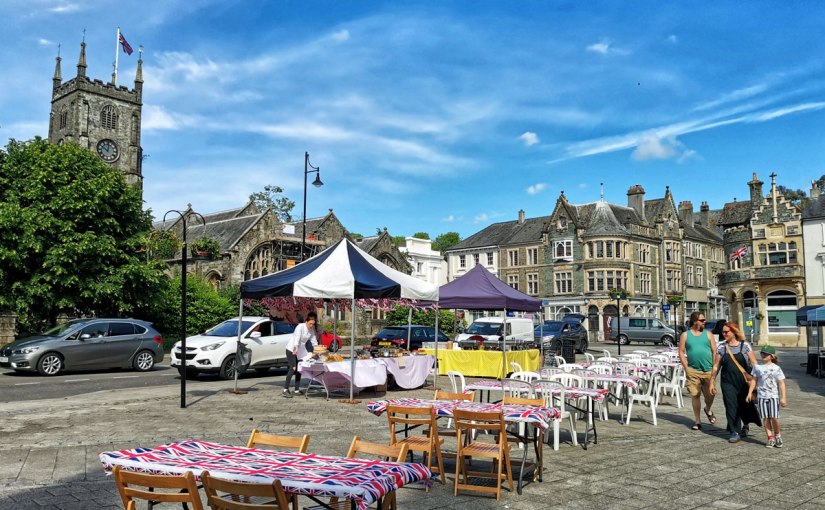
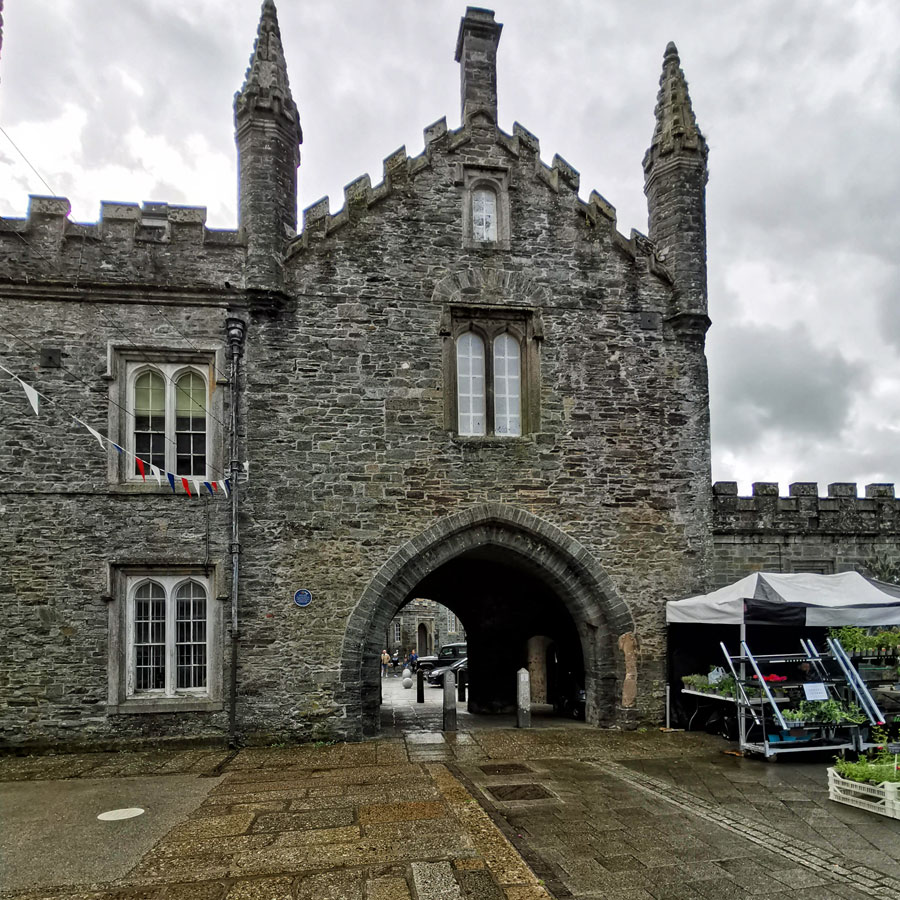
The buildings around Bedford Square (header image) are quite unusual. Here you will find the Guildhall and the Pannier Market and this gateway.
Grade I listed Court Gate – one of the original entrances to the Abbey
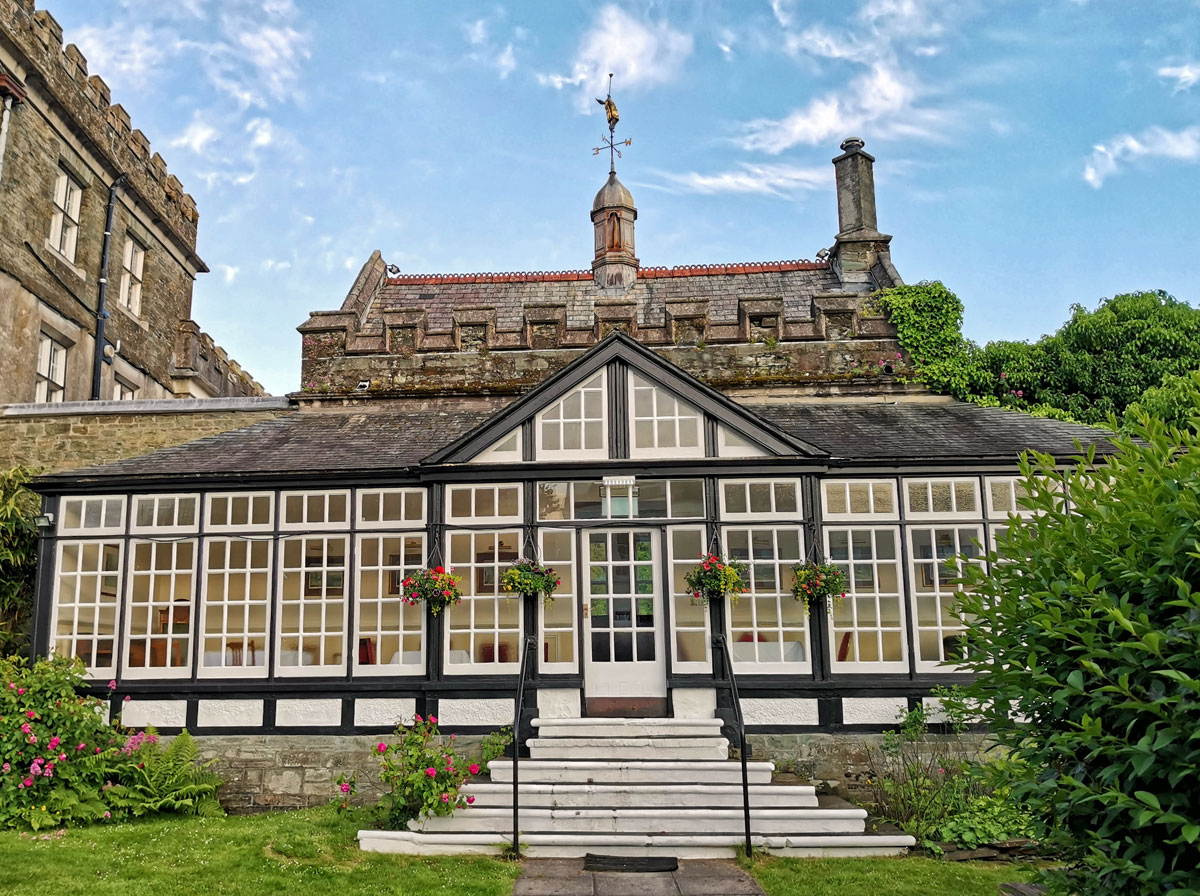
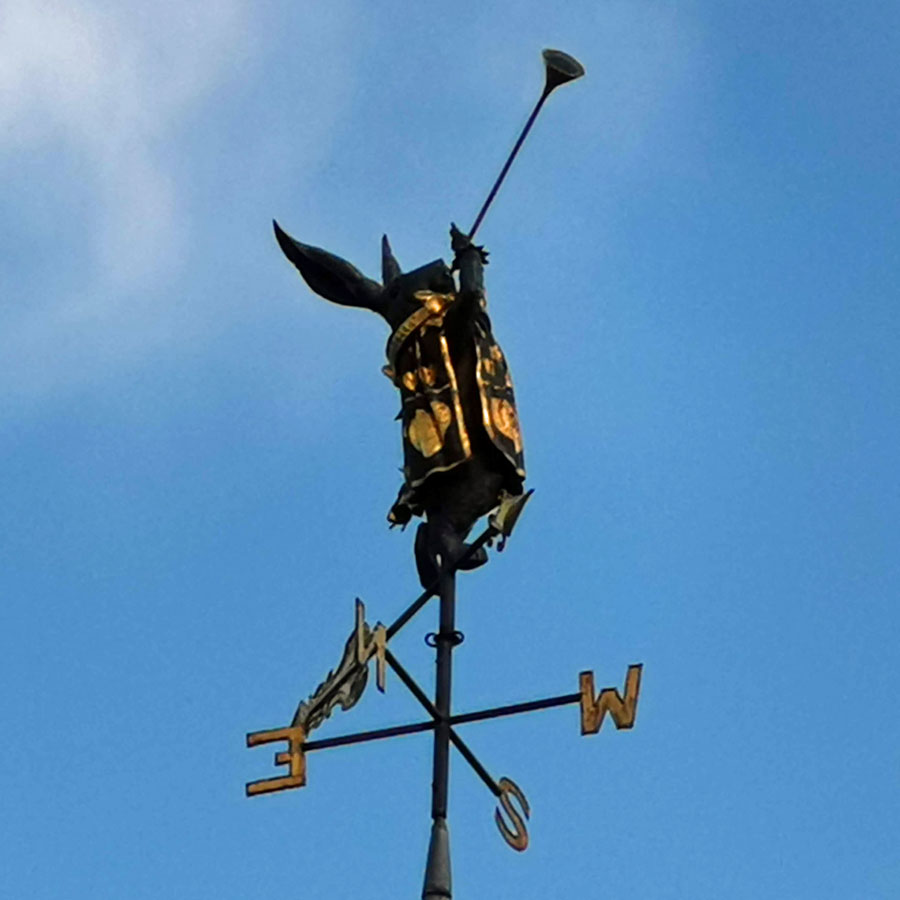
An unusual weathervane on the Bedford Hotel sits above a turret over the Portrait Room. It’s not old, it was created in copper in 2001 by Greens Weathervanes, who at that time had a workshop at Tor Royal in Princetown.
The Portrait Room Veranda.
Based in design upon the White Rabbit, Herald to the Queen of Hearts, drawn by Sir John Tenniel for Lewis Carroll’s Alice’s Adventures in Wonderland, the vane is a veritable work of art.
White Rabbit, Herald to the Queen of Hearts Weather Vane
And I even managed to capture a Cheshire Cat…
Tavistock is definitely a town worth visiting and there are plenty of pubs, restaurants and cafés to enjoy as well as walks to discover the many medieval remains and the newly opened Guildhall Gateway Centre formerly a courtroom and police station. And in the autumn the famous Goose Fair is held on the second Wednesday of every October and sees fair rides, stalls and activities take place. The fair dates back to the 12th Century, when a Michaelmas Fair was held every 29 September.
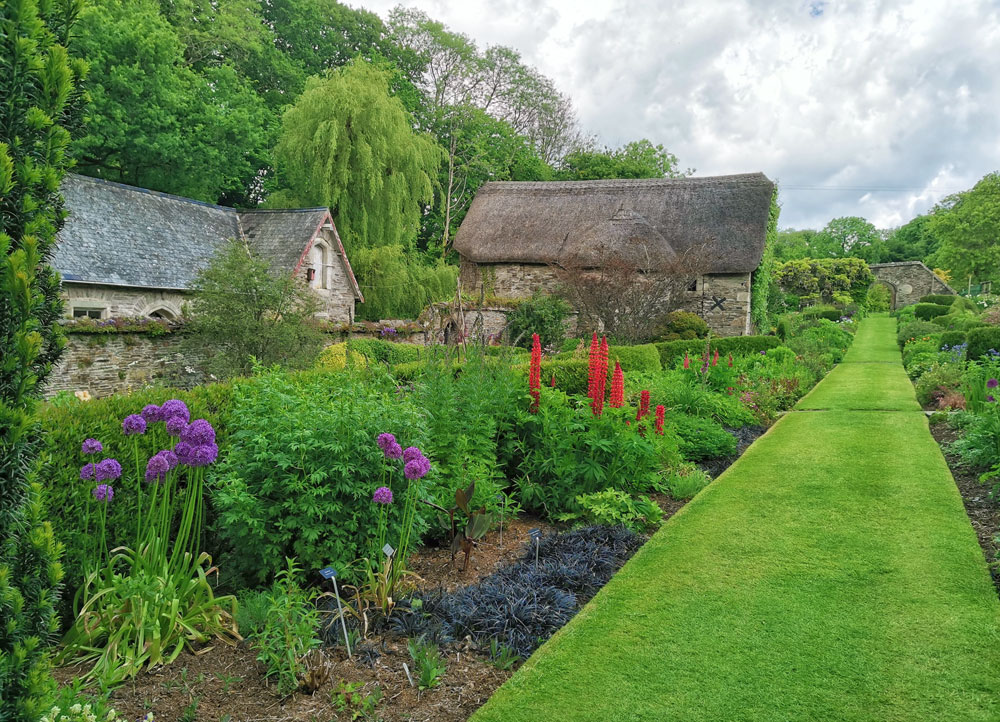
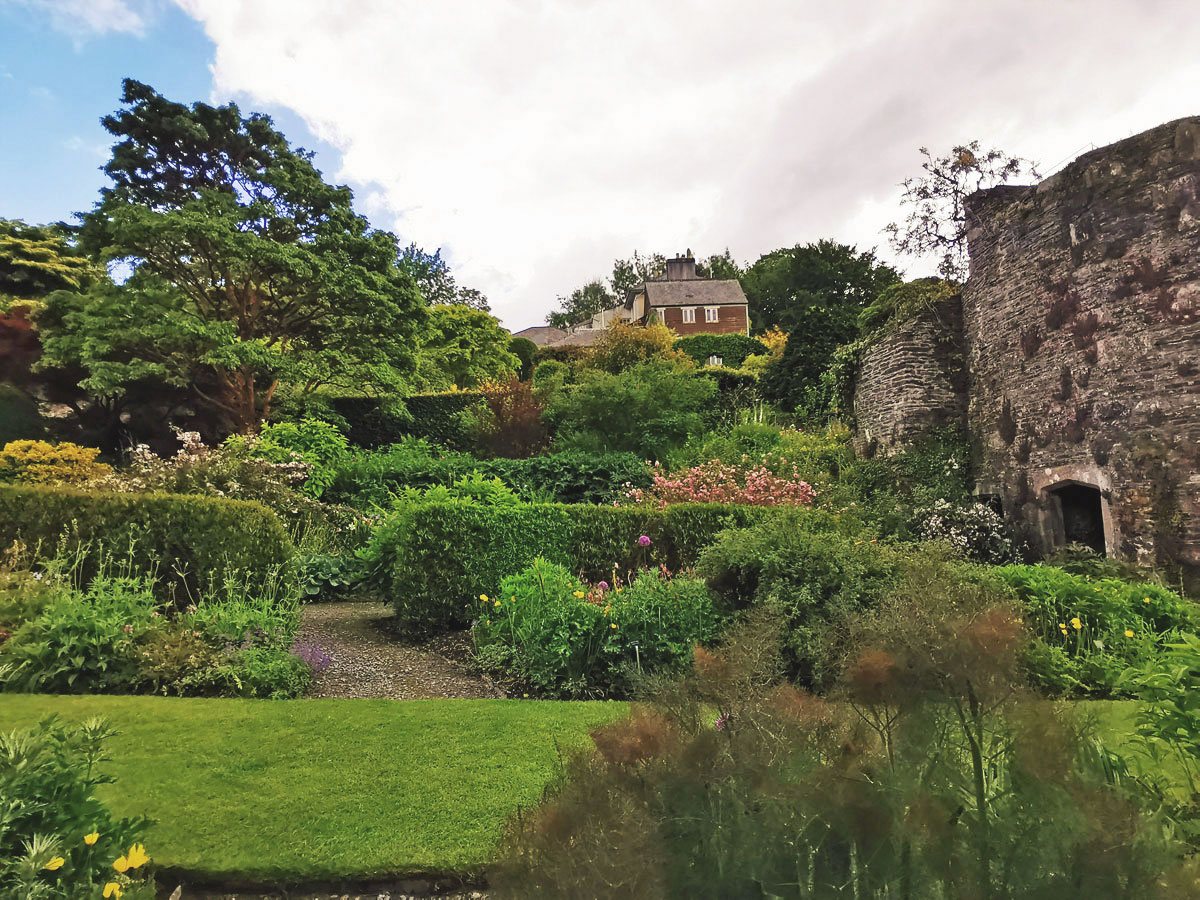
The second part of my visit to The Garden House is of the Walled Garden and the terraced areas leading up to the Café.
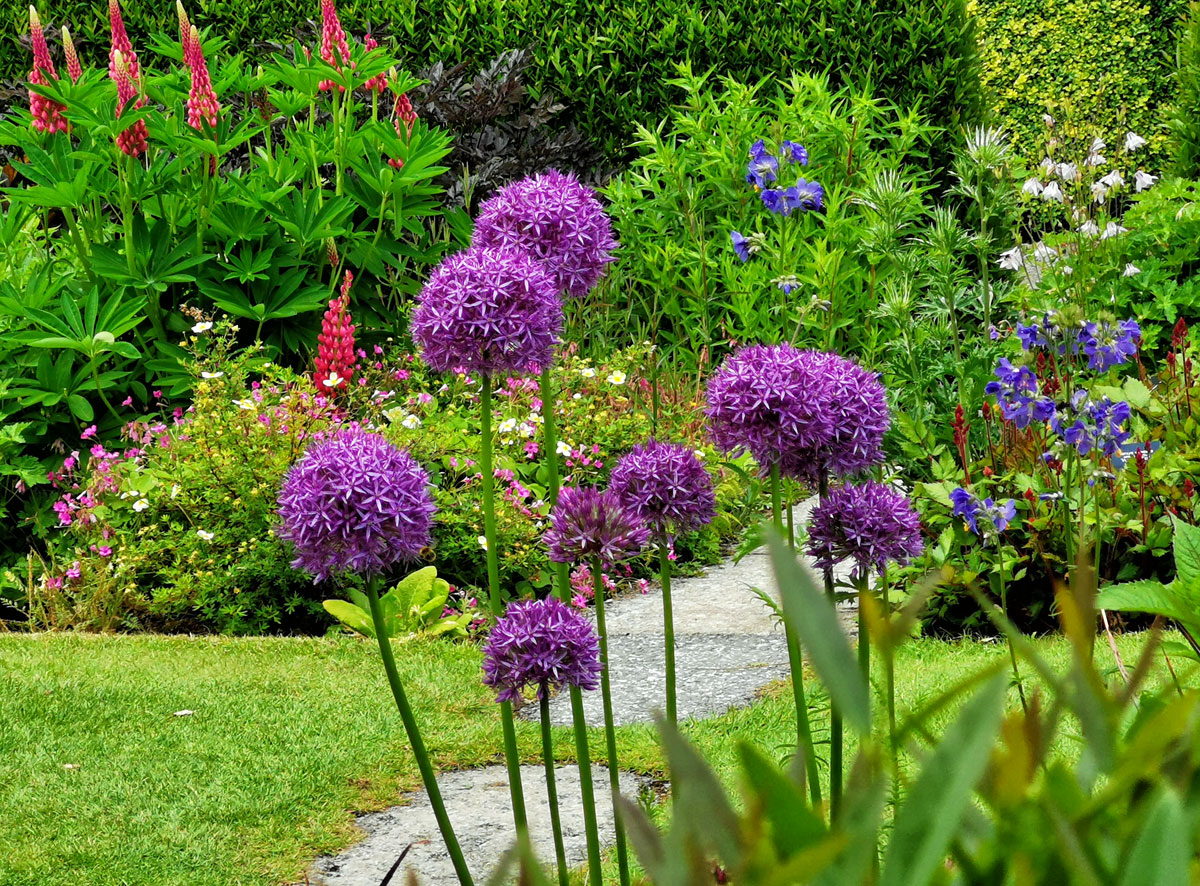
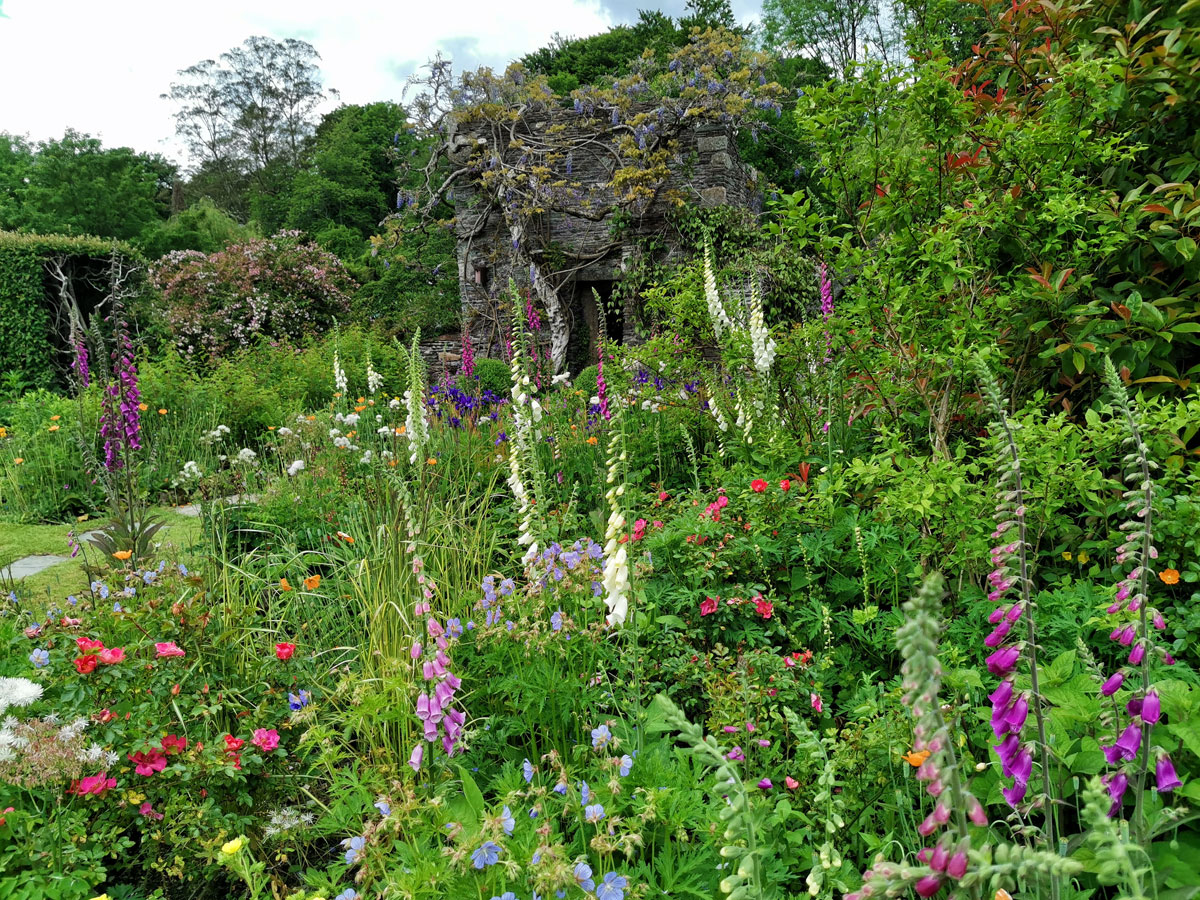
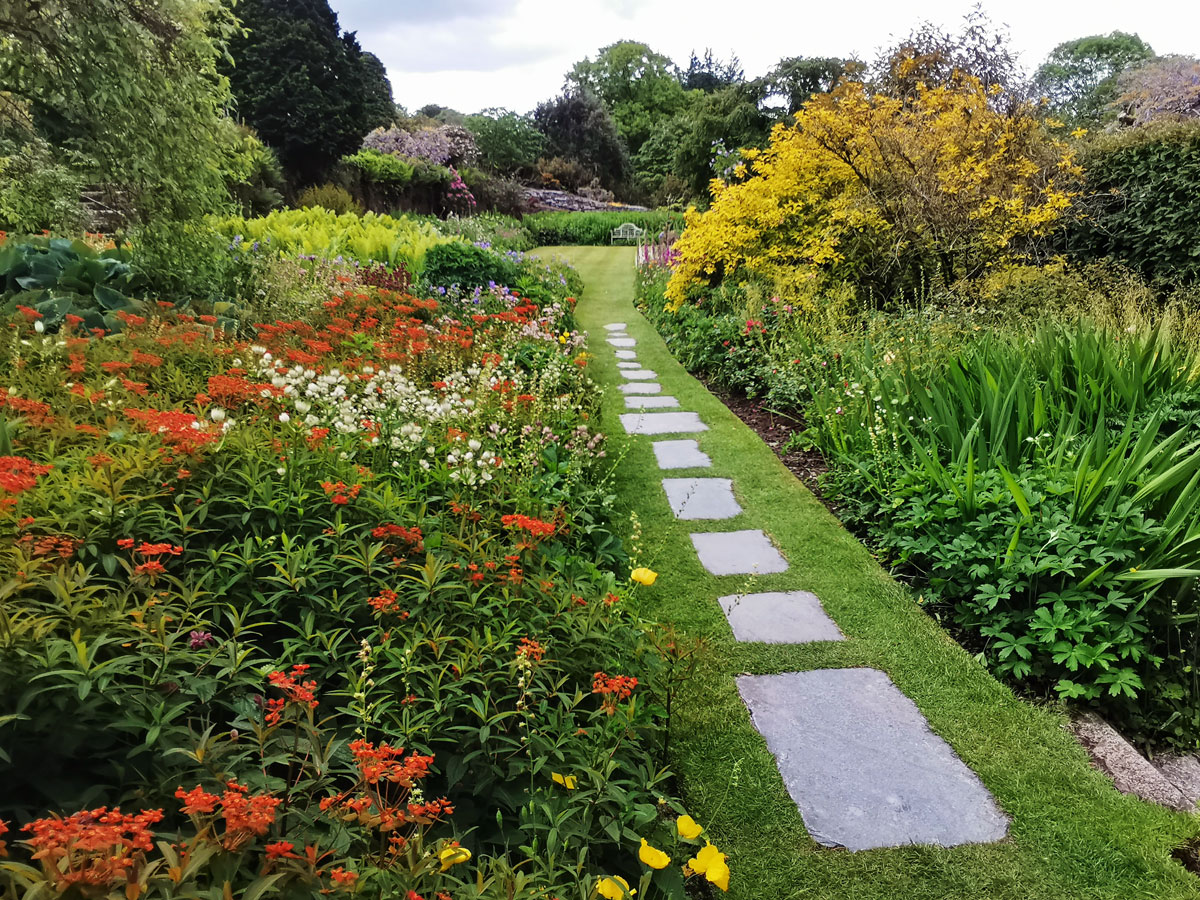
On both sides of a very neatly mown grass path, which seemed far too good to actually walk on, there are deep double herbaceous borders, filled in late May with swathes of Alliums, Peonies, Lupins, Aconites, Wisteria and lots of other perennials just beginning to emerge.
Ruined tower
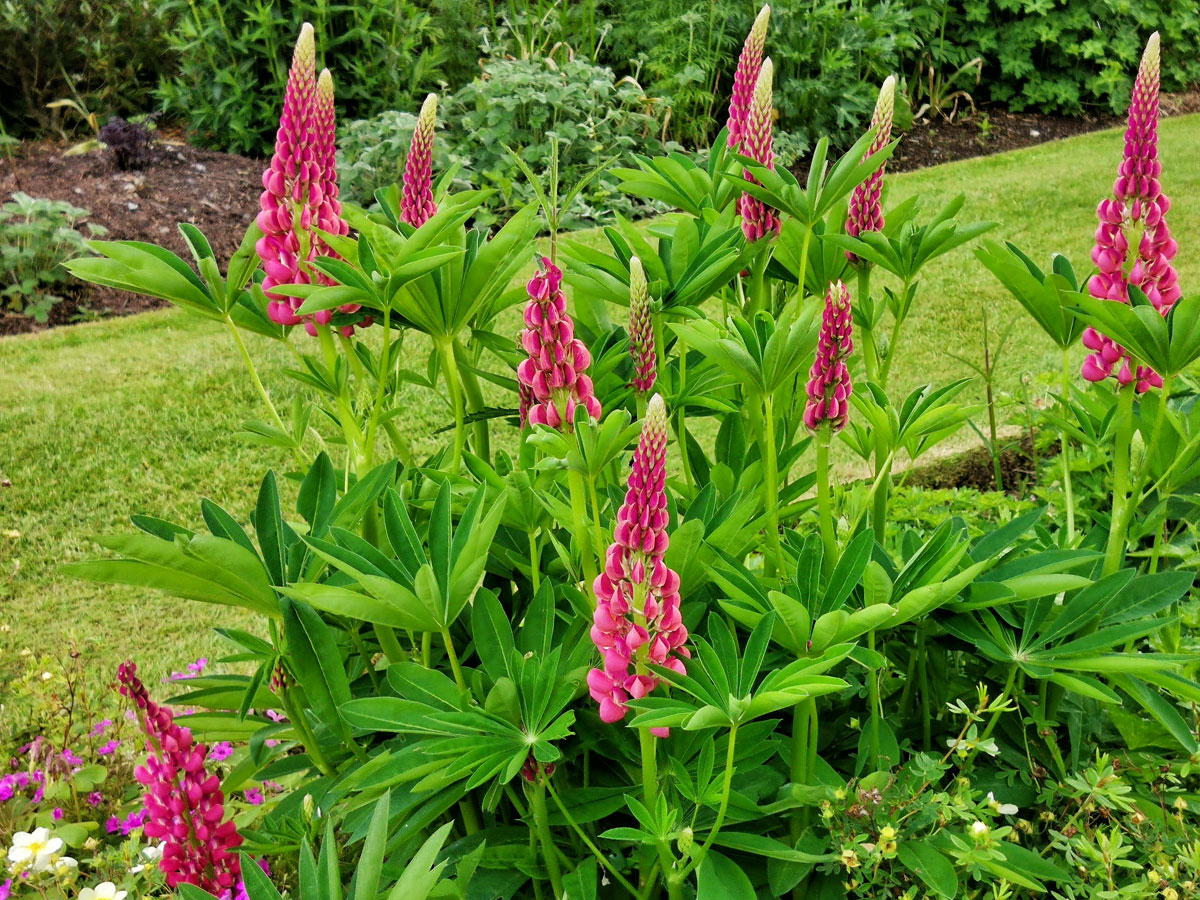
lupins
Alliums and lupins
alliums
Aconite / Monkshood
Wisteria
Wisteria
Paeonia ‘Coral Charm’
Paeonia ‘Bowl of Beauty’
Fennel
Hakonechloa macra ‘all gold’
Melianthus major
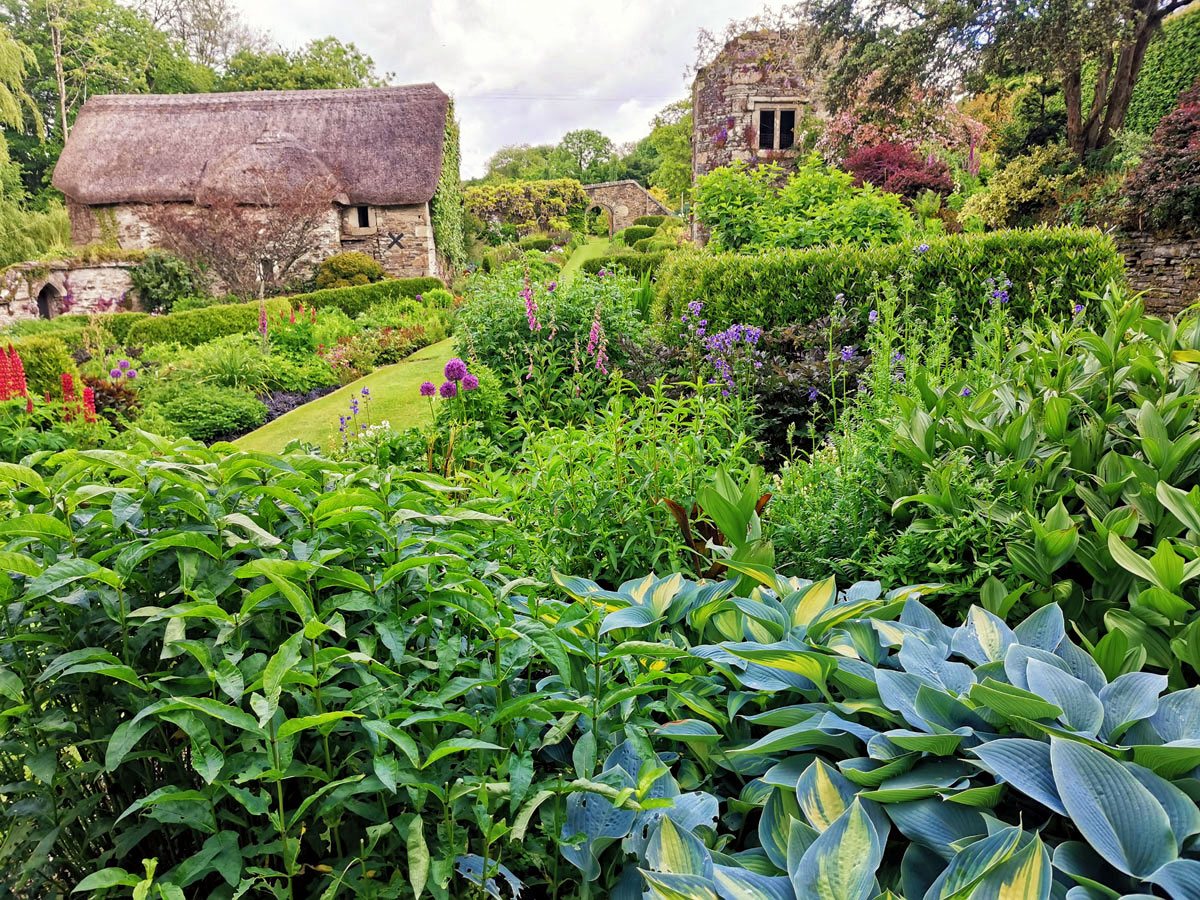
More wisteria, bronze fennel, grasses and architectural plants such as the Melianthus major, Hostas and Ligularia.
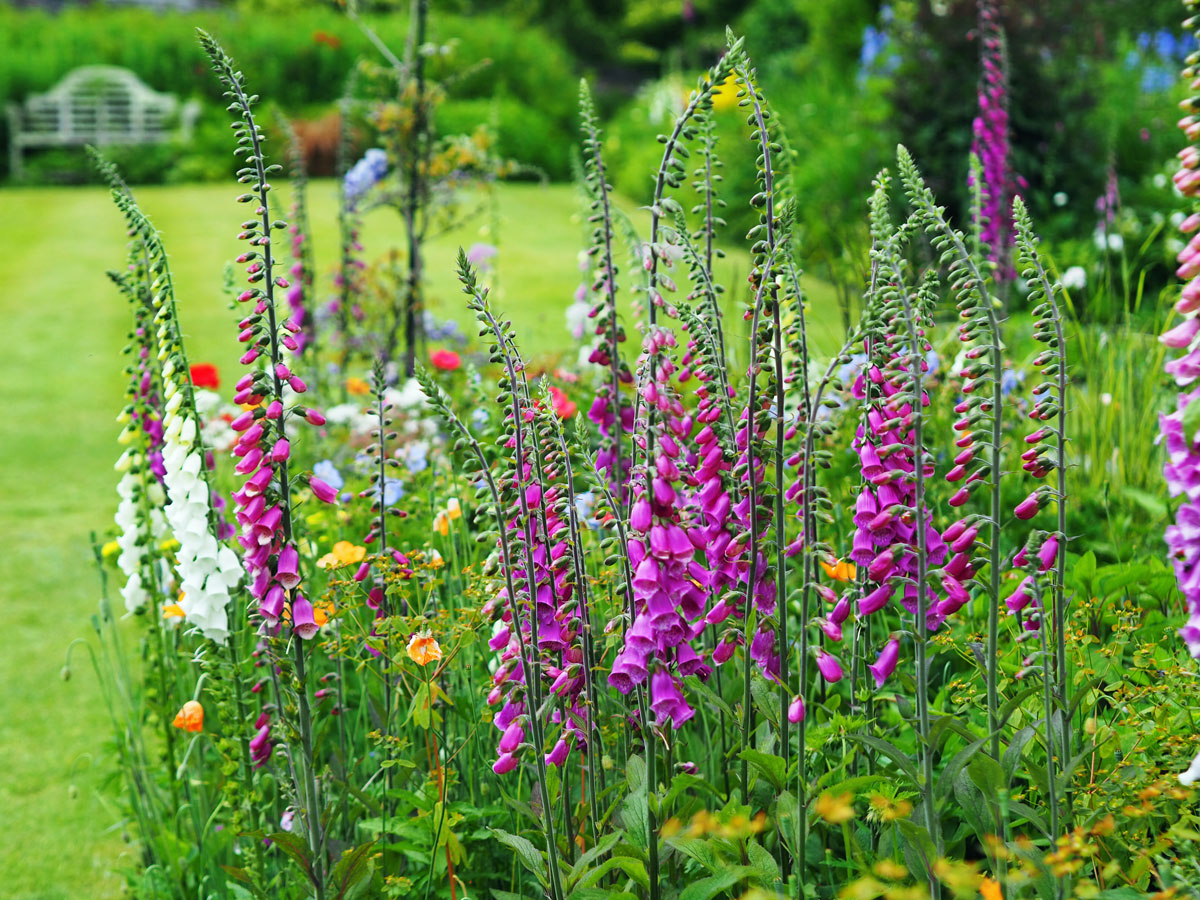
These lupins in particular caught my eye, I just love the deep magenta pink colour
Eventually we made our way up to the Lower terrace and lawns to the café.
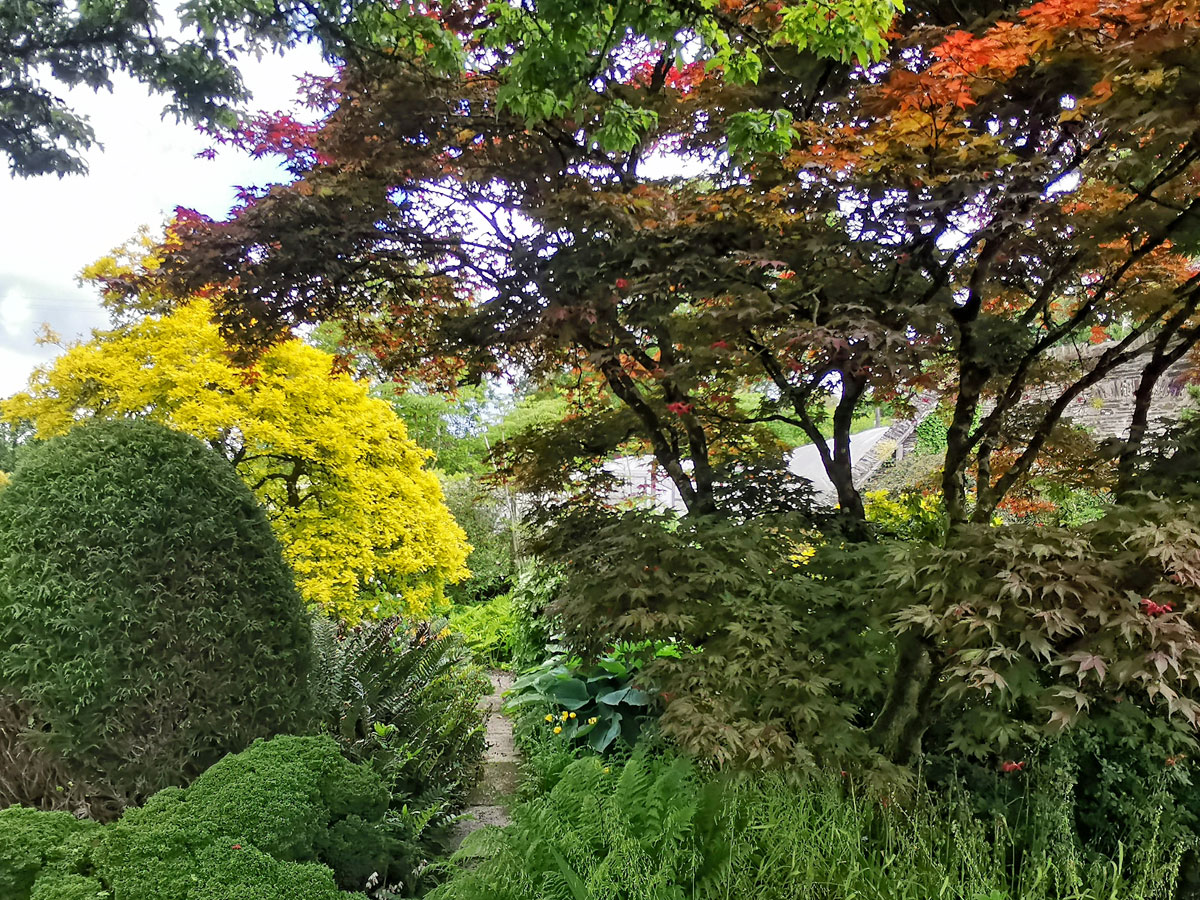
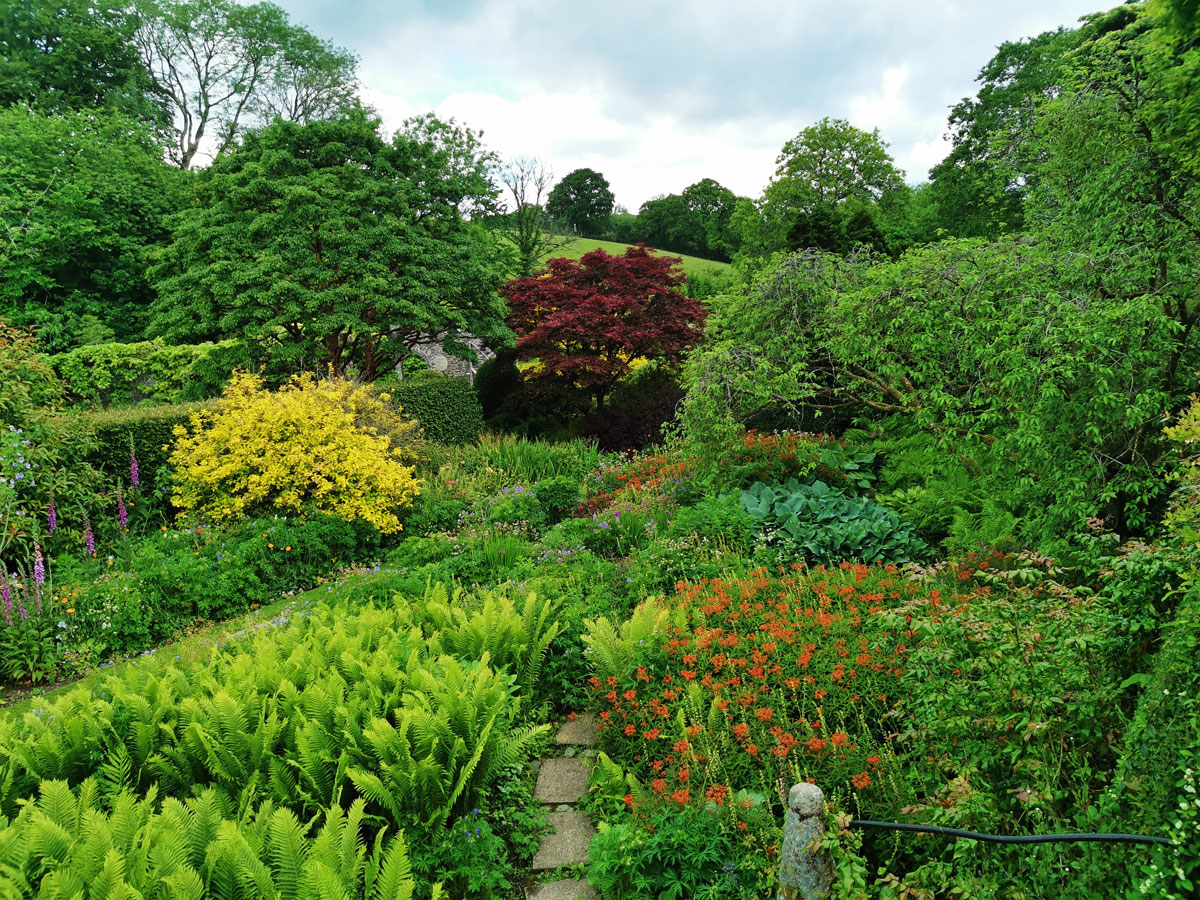
Behind the borders are more winding pathways among colourful shrubs and trees.
Geum
Impatiens
Corydalis
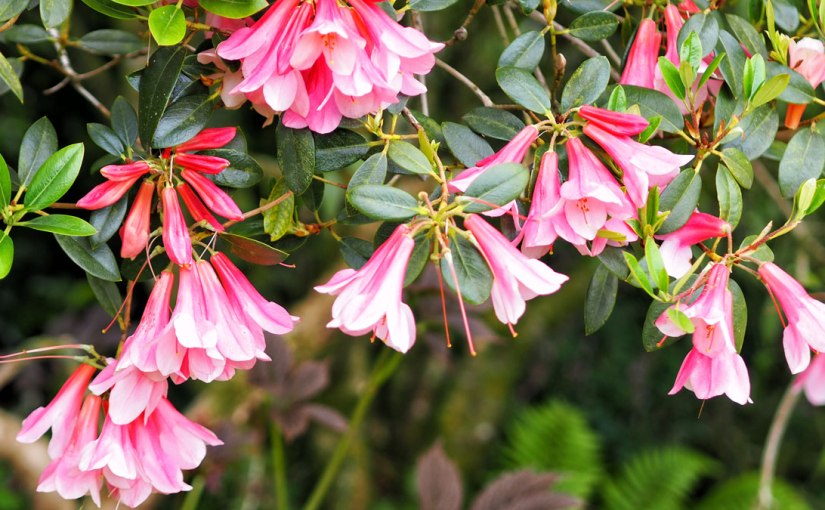
Rhododendron
On every level there was planting to admire.
We didn’t have time to explore the lake and arboretum, as we wanted to have one last birthday treat and enjoy a Cream Tea – the Cornish way!
Naturally it was far too tempting not to have a look at the plant sales although I did intend only to look up the names of a geranium I fancied. However, resistance is futile and I walked away with a couple of new Hydrangea plants for the dappled shade border.
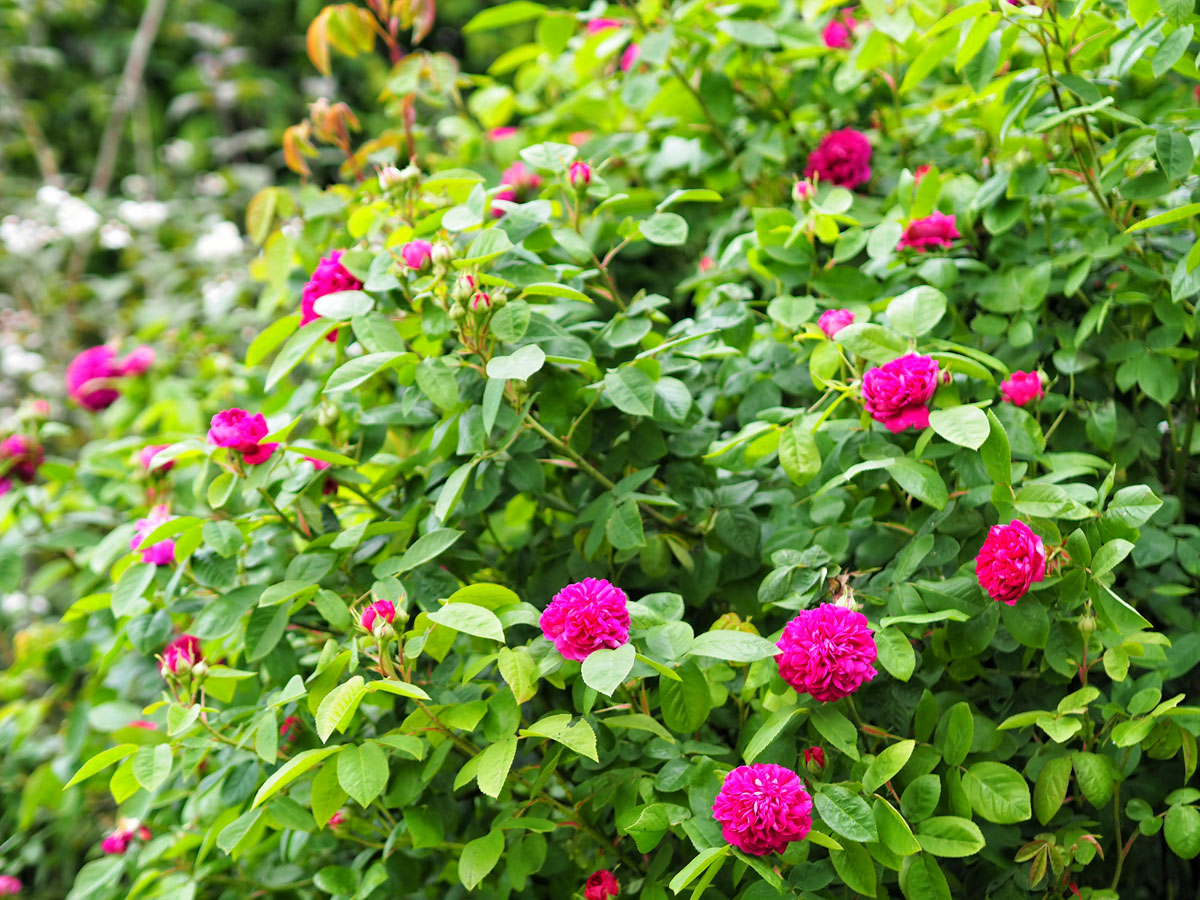
And there is always time to stop and smell the roses
It is a garden I would love to go back to in a different season and being less than 2 hours from home it is entirely possible that we can do it on a day out.






















 TRAVEL WORDS