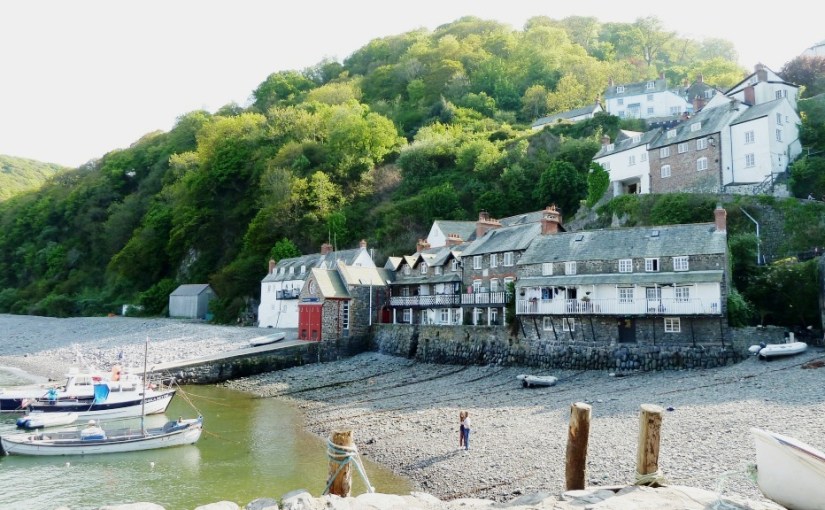
The other must-do in North Devon is a visit to the village of Clovelly, where you have to park (and pay) to enter at the top of the village. Like Robin Hood’s Bay in North Yorkshire, this village is inaccessible by car. Originally the main occupation of the village was fishing – for mackerel and herring. Nowadays the fishing is only done on a limited, sustainable basis and the main income is from tourism. The steep and uneven cobbled streets run down to the harbour where you can visit the Red Lion Hotel for a welcome drink or food or grab a snack from the Quay Shop or Seafood Shop. You can hop on a Land Rover for the return trip if you don’t feel like hiking al the way back to the top! At a price, of course. And you can get a ferry from here out to Lundy Island, that lump of rock seen in the background of some of my photos in this region where the Atlantic meets the Bristol Channel. Continue reading North Devon: Clovelly
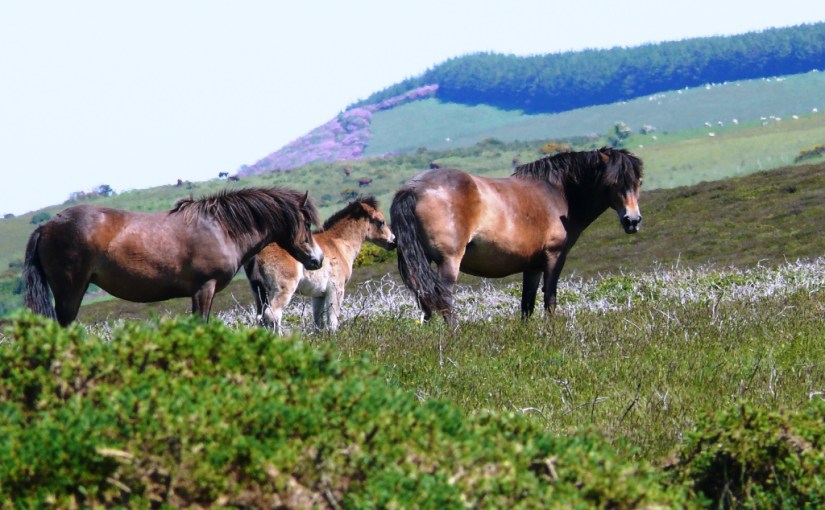
Spring in North Devon
A couple of years ago we went to North Devon and stayed in a National Trust Cottage near the pebbly Peppercombe Beach.
The cottages were traditionally built out of cob in the late eighteenth century, to house the officers of what was then called the Preventive Service – tasked with policing this wild stretch of coast to prevent smuggling – and later evolved into the life saving Coastguard Service Continue reading Spring in North Devon
“Eviva España”
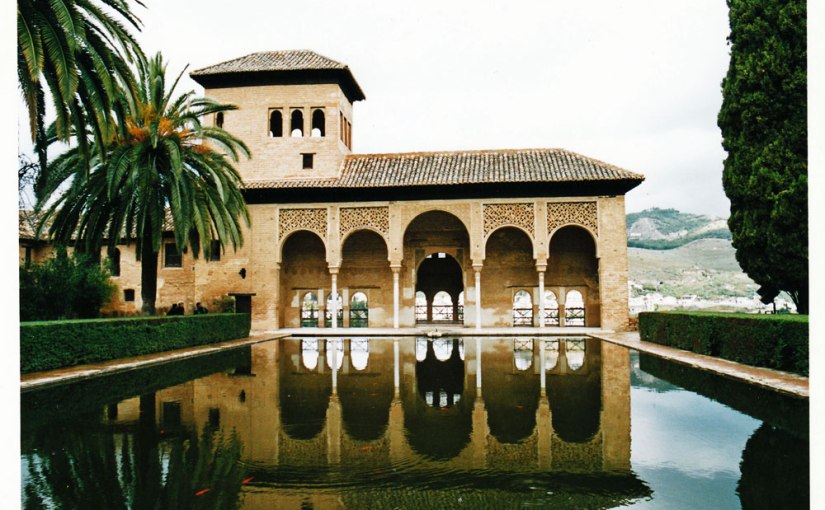
In 2002 shortly before the birth of my daughter’s firstborn she decided that we should go away for another Mother / Daughter bonding holiday. Any of you who have read about the Italian Adventure will immediately understand my sense of foreboding. However, she is a very persistent daughter and desperately wanted to get away from the dreary cold English winter to a warmer climate, if only briefly. We discussed Ghana, Sharm el-Sheikh and other sunspots not too far from the UK, but dismissed each and every one because of the vaccinations involved. Eventually we decided on Southern Spain and she found us a bargain holiday in a hotel close to Algeciras. Continue reading “Eviva España”
Cornish Harbours
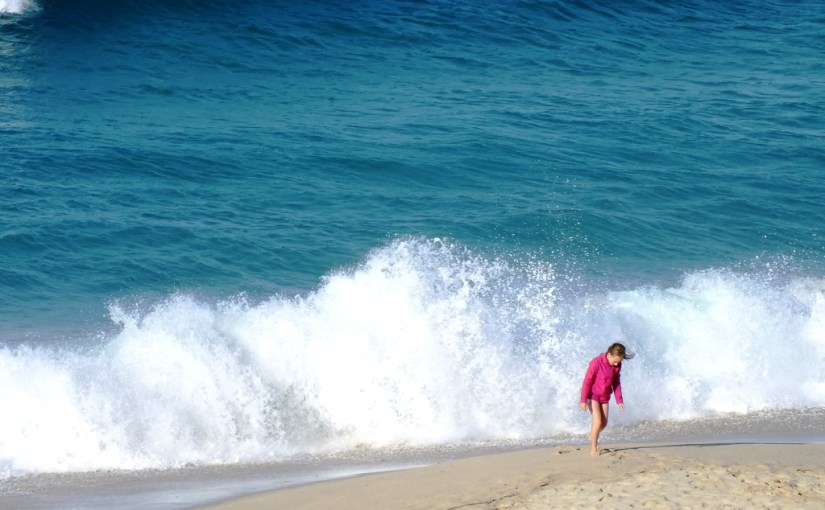
It’s hard not to fall in love with Cornwall where a magnificent coastline wraps itself around 300 miles of diverse landscapes. The big skies and wilderness of Bodmin Moor to the north with walking trails and prehistoric remains, further south the sun turns the sea turquoise and the land is scattered with Bronze age standing stones and Celtic crosses where the natural light is so blinding. In the west there is a special art scene and Cornwall is becoming a real foodie heaven with top-class chefs producing gourmet menus, daily offerings of fresh fish and seafood and local produce such as cheeses, wine and meat widely available from delicatessens, farmers’ markets and roadside stalls, not to mention Cornish pasties and well-loved clotted cream teas. Continue reading Cornish Harbours
Travel Journey of the Week: Mission Dolores (6)
This week’s challenge from Liberated Traveler is the wonderful city of San Francisco, a place that found its way into my heart during the 1960s hippy movement when it was the world’s “City of Love”. I have already written extensively about this city and how it has messed with my head over the decades, so for this challenge I am going to tell you about the delightful Misión San Francisco de Asís, popularly known as Mission Dolores.
This is the oldest intact building in the City of San Francisco and the only intact Mission Chapel in the chain of 21 established under the direction of Father Serra. It is the third most northerly with only Sonoma and San Rafael further north and the sixth mission to be founded – June 29 1776. I have a ‘thing’ for the Californian missions, or as my husband would say, an obsession. For some reason I am drawn to their simplicity, their history and the tranquillity of their sites. As someone who is an atheist, this is odd, but no different I suppose than my general interest in churches and graveyards. One added bonus though is that the California Missions are all located on or near Highway 101, which roughly traces El Camino Real and I don’t need much more of an excuse to take a road-trip!

Mission Dolores

Basilica Entrance

Crosses

Plaque

Basilica

Mission Dolores

Mission Dolores
To find the mission you have to step outside the usual tourist areas of the city (Union Square, Alamo Square, Embarcadero and Fisherman’s Wharf) and head to Mission District. The 16th Street Mission Station is the nearest BART, and the mission itself is on the corner of 16th Street and Dolores Street. Much of Mission Dolores is original with adobe walls and redwood logs supporting the roof. The gilded reredos came from Mexico in 1796 and the colourful wall paintings are good examples of early California art. Whilst I was there a school trip was visiting and the children seemed more interested in me and my camera than the teacher who was telling them about the history of the site. I on the other hand was very interested.

Artwork

Access to the Choir Loft

St Joseph’s Altar

Reredos
The Basilica is a few steps away, but although the Mission survived the 1906 earthquake, the parish church wasn’t so fortunate. The present building dates from 1918. It contains some beautiful stained windows, including angels and 21 California Missions and a lovely sunburst pattern.


Angels

Basilica

One of the 21 Mission Windows

Wood Carving

Father Palou
There is also a little museum on the site, but my favourite part has to be the cemetery. Most of the headstones are of people who died in the decades following the Gold Rush when San Francisco was growing fast with many illnesses and early deaths. Many people buried here gave their names to the streets of San Francisco.

Adobe Walls

Monument to a firefighter

Monument to a firefighter

The Cemetery

Statue

Irish Gravestone

Father Junipero Serra
So my advice to you is that if you are lucky to travel to the lovely city of San Francisco, try and make some time ( a couple of hours will suffice) to visit this beautiful historic site – you won’t regret it.
 TRAVEL WORDS