Victoria II: Legislative Building

The following day we were passing by the legislative building and thought we’d pop inside to have a look; we were just in time to attach ourselves onto a free tour (every hour) and learn something about the history and government of BC.

The tour is worth doing (but probably better if not accompanied by a toddler who was with his rather indulgent father who allowed the kid to run around and make a lot of noise – I don’t think I was the only one getting hot under the collar and it is a shame that the guide didn’t have a quiet word with him) if only to get a look at the beautiful decoration inside the building. It was designed by Francis Rattenbury, then aged only 25 and fresh from England who, in 1892, blagged his way into winning his first major commission. Continue reading Victoria II: Legislative Building

Daily Prompt: Local Flavour

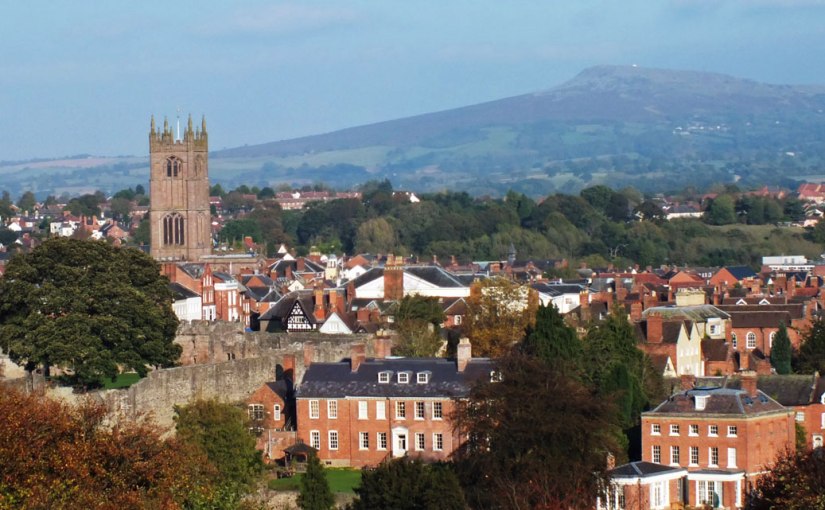
This is my introduction to Ludlow, which was where I lived from 2011 to 2016. The name Ludlow comes from ‘lud’ the loud waters and ‘low’ a tumulus. If you were to ‘Google’ Ludlow you would find that it is the largest town in south Shropshire and has over 500 listed buildings. You may also discover that it is known as one of the best ‘foodie’ towns in the UK with regular open-air markets, local produce markets and both a Spring and Autumn food festival lasting over the weekend

Ludlow has been described as the “perfect English town”. It is situated on the River Teme in the southernmost part of Shropshire, on the Welsh Marches. It has a medieval street pattern and many ancient buildings including a castle and a magnificent parish church as well as streets lined with medieval and Georgian properties.

” The secret of Ludlow resides in the fact that, like York, it was once a seat of government in Tudor and Stewart England. A sense of its own identity and importance has never quite left it. That accounts for its strength of character and the lingering sense of authority. This is a town which, although the tide of history has receded from it, still manages to preside magisterially over the countryside one glimpses at the end of every street. ” – Sir Roy Strong

The natural starting point for a stroll around the town would be the Castle Square where the market is held several days a week and on the second or fourth Thursday of the month when the local produce market is held you can load up with local cheeses, meats, real ales from micro-breweries, bottles of home-made chutneys and preserves, soaps and even fresh herbs if you so desire. It is a traditional open-air market with 20-30 stalls selling produce from within a 30 mile radius of Ludlow.

From here you can visit the castle. It is a ruin, but quite an interesting one, and it dominates the skyline from the river side of the town. It has a combination of architecture from Norman, Medieval and Tudor times. Parts date from the 11th century when built by Walter de Lacy. It was enlarged by Roger Mortimer in the 14th century and has been in the hands of the Earls of Powis since 1811. The castle was a seat of government for Wales for a time and it was involved in the Wars of the Roses with a major battle taking place at Ludford Bridge. Often events are held in the castle such as the Christmas Medieval Fayre (late November) and the Ludlow Festival held in the summer which features an open-air production of Shakespeare. Continue reading Daily Prompt: Local Flavour

Walking the Right Bank Passages in Paris

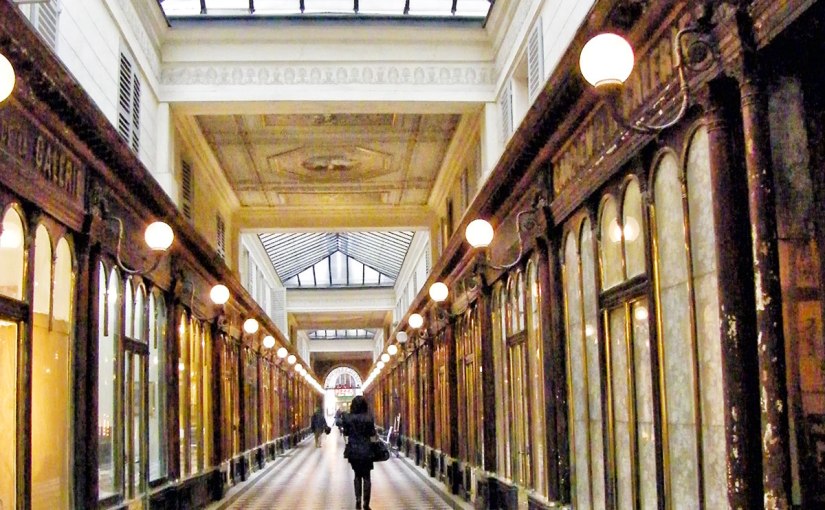
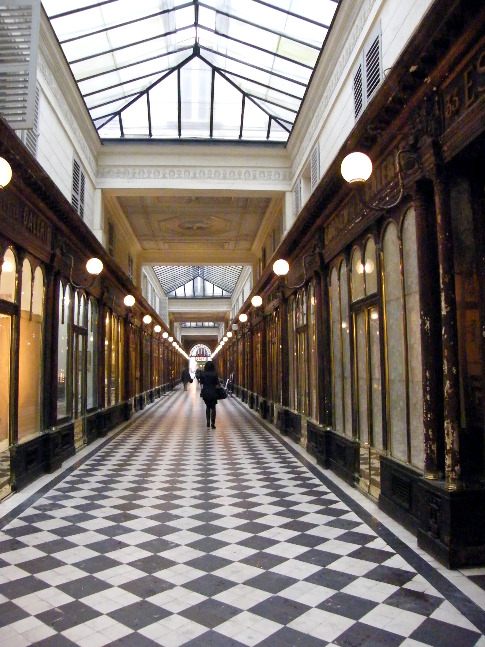
I had come across references to “Les Passages” in a Paris guidebook and decided to take a closer look at them during my last visit to “The City of Light”. So on a very wet and chilly spring day I set off on my Passages Walk. Between the late 18th and early 19th centuries the Right Bank included a network of 140 covered passageways – the fashionable shopping arcades of the time. In a city without sewers, pavements or sheltered walkways, these arcades allowed shoppers to stroll from one boutique to another protected from the filth of the city streets. Today there are fewer than 30 left, some well-preserved with their original mosaic floors and neoclassical decoration. It was time to check them out and find out what it was like living in 19th century Paris.

Galerie du Passage Véro DodatStarting from the Metro station Palais-Royal I headed east on Rue Saint-Honoré towards Place Colette and then turned left into Rue Jean-Jacques Rousseau to enter the Galerie du Passage Véro Dodat. This is one of the prettiest and oldest passages, built in 1823. It has mahogany panelling and an old-fashioned floor of chequered black and white tiles, Corinthian columns and gas globe fittings (which have been converted to electricity). There are 38 identical boutiques with narrow arched windows surrounded by gilt edging including the beautiful window display of musical instruments in Luthier. Don’t forget to look up at the ceiling either as you will be rewarded with beautiful gilt framed 19th century murals.

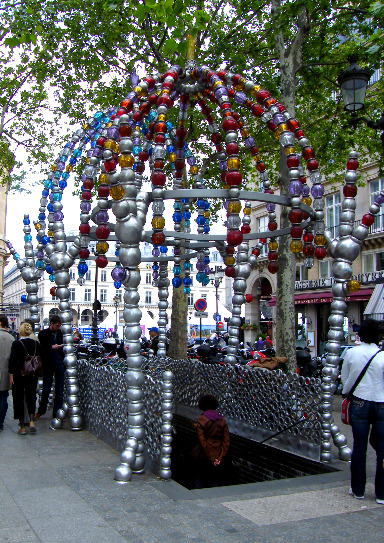
metro comedie francaisRetracing my steps towards the Louvre I took a detour through the Louvre des Antiquaires as it had started to rain heavily. It is a most extraordinary store of antiquities on three levels, with goods ranging from Eastern carpets to Baccarat crystal and delicate Sevres tea sets to incredibly ornate porcelain decorated grand pianos. A very interesting complex to while a way a few rainy hours, but definitely not a place to take children! Being a little too expensive for my pockets (and anyway, where would I put that enormous baby grand?) I exited onto Place Colette and retraced my steps towards the Comedie-Francaise (interesting metro design) next to the Palais-Royal with its Revolutionary history (another story entirely) and entered the Jardin du Palais Royal where elegant 18th century arcades (1786) surround a very peaceful garden. Although not strictly passageways they are considered to be the prototype of what was to come. Continue reading Walking the Right Bank Passages in Paris

Strolling around the Île de la Cité

I once read somewhere that “life is too short not to go to Paris as often as one can” but must admit to not having adhered to that having only been there three times in my life. The “City of Lights” or “La Ville-Lumière” as it was then called, comes from the fact that Paris was the birthplace of the Age of Enlightenment and it was famous as a centre of education and ideas throughout Europe. The city’s early adoption of street lighting probably also contributed to its “City of Lights” tag.

Le quai des Grands-Augustins depuis le Pont-Neuf

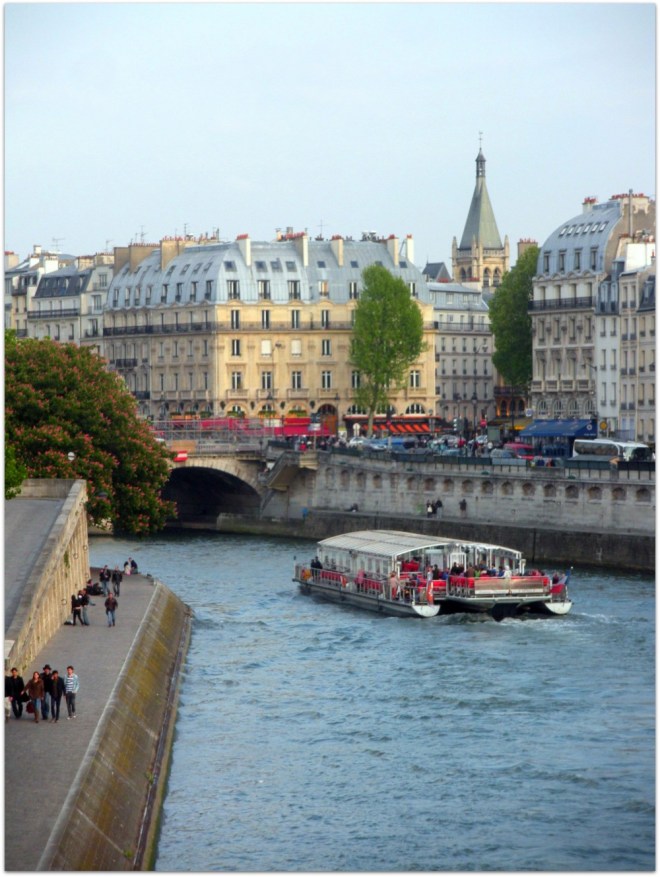
My previous visit had been during the dull days between Christmas and New Year when everything seems flat. Leaving London Waterloo on Boxing Day seemed like a good idea at the time. Paris put on her usual glittering party frock and despite the bitter cold and wet weather the OH and I enjoyed a few days walking along the banks of the River Seine and exploring the usual tourist sites that we had both seen (though not together) in our late teens; eating expensive steaks and drinking expensive wine and taking rather bad photos (I blame the weather – too damn cold to take off the gloves)

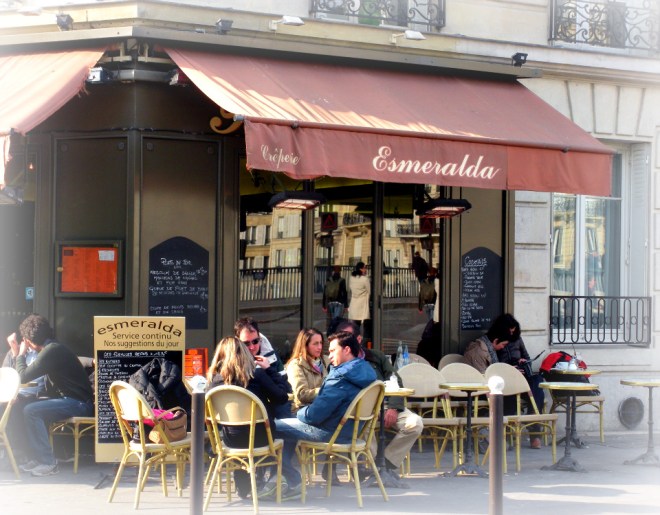
Café EsmeraldaSo in 2010 when the opportunity to spend five days in Paris in early spring arose it was not to be sniffed at. Once again we took the Eurostar (this time from its new terminal in St Pancras station) to ‘gay Paree‘, hoping for a somewhat warmer welcome. As the OH was to be “au conference” pretty much the whole time it gave me an excuse to wander aimlessly and have a look at the hidden parts of Paris. There is nothing better for me than to venture into districts I have not been in and to look more closely at those I had. So armed with a good map, several metro tickets, camera and notebook, off I went to explore. Continue reading Strolling around the Île de la Cité