Alert Bay I: Arrival

After a fun afternoon exploring Telegraph Cove we headed back to the 19 and on towards Port McNeil where we got the 40 minute ferry ride across to Alert Bay. It is an important fishing community and has been the traditional home to the ‘Namgis First Nation for thousands of years. It was named by Captain G H Richards of the Royal Navy in 1860 after HMS Alert, a screw corvette serving on the Pacific station at the time. We stayed in a small cabin right on the water’s edge with stunning sunset views back towards the mainland, and a deck where we could watch the fishing boats and whale watching boats coming in and spot herons and cormorants.

We had booked a whale trip for the Monday, but meanwhile had the whole island to explore. The weather wasn’t all that great – lots of fog and mist – but there was still a lot to see and do. Even spending a couple of hours photographing the beach for flotsam and jetsam was huge fun. We had great baked oysters with spinach and parmesan for dinner on Saturday although finding somewhere to dine on the Sunday was rather more challenging. The boat trip was brilliant even though it was so foggy that we could barely make out the pod of orcas we were following plus they were so quick leaping out of the water that most of our photos showed absolutely nothing at worst and the tip of a fin at best! But listening to them communicating with each other was the best.

Victoria IV: Arts and Crafts

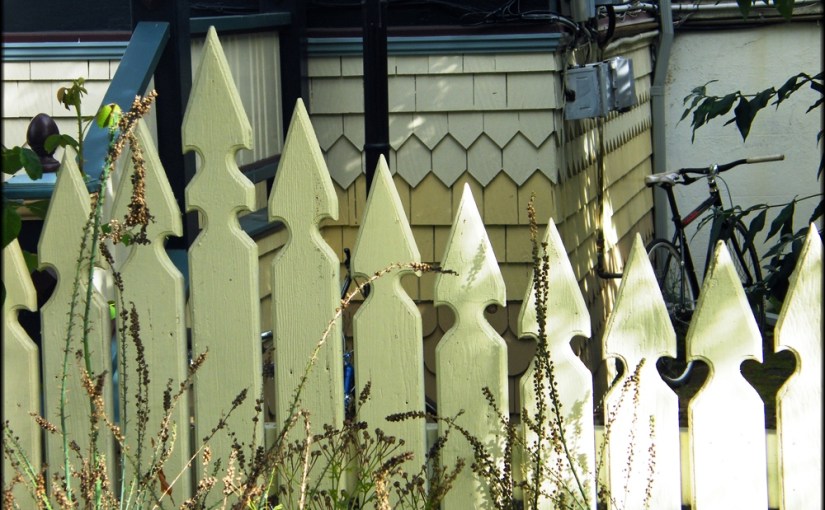
Cutting back through the park we arrived at Fairfield and Cook Street Village. Fairfield is a picturesque neighbourhood with tree-lined streets and you can take a self-guided walking tour which describes some of the buildings of interest along the route. Housing styles typical to the area are Edwardian Vernacular Arts & Crafts (1904 – 1914) British Arts & Crafts (1905 – 1930), Foursquare (1900 – 1920) and Californian Bungalow (1900 – 1929). Needless to say this occupied a good deal of our day, though we found time to browse in a couple of second-hand book stores (always a dangerous pastime) and have a bowl of soup in a cute retro American Diner complete with pictures of Betty Boop. Continue reading Victoria IV: Arts and Crafts

Victoria III: Beacon Hill

Victoria has a selection of self-guided walks around the city, available from the Tourist Information Office on the Waterfront, they are a good way to explore the city at your own pace.

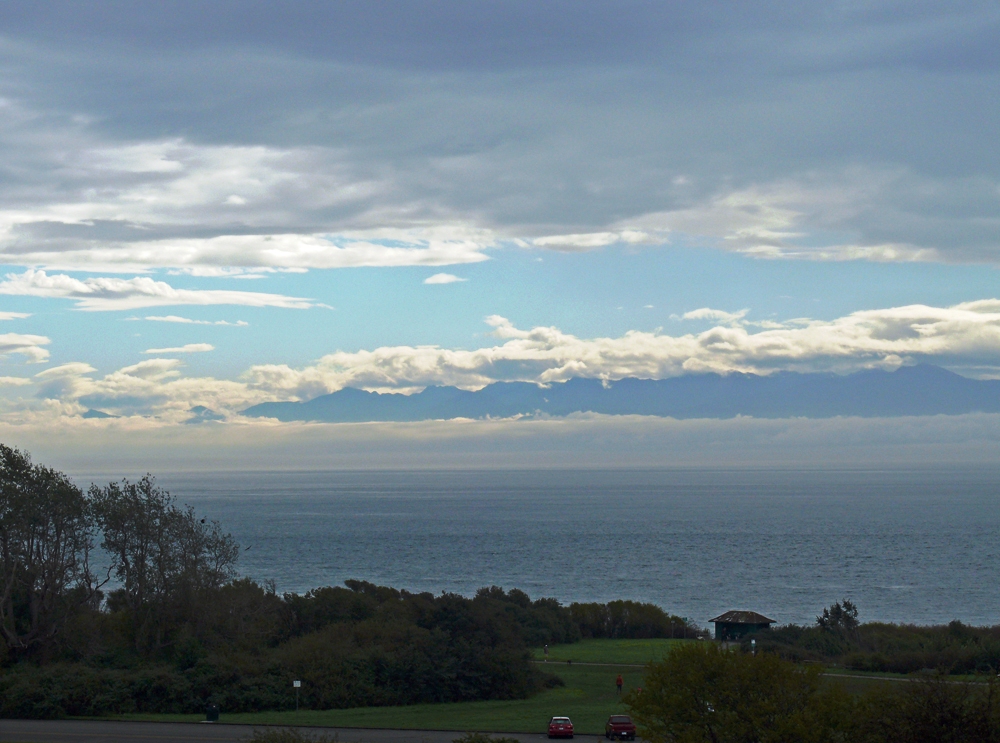
After our hour or so of culture we needed some exercise so made our way via Thunderbird Park and the totem poles through to Beacon Hill Park, spotting a great blue heron at the top of a tree near the lake and several peacocks –we couldn’t persuade a single one to open its tail, but managed to get pretty close – before arriving at the lookout where you have wonderful views (on a clear day) across the Juan de Fuca Straits.

We shared a bench with an elderly gentleman – yes, even older than us – who proceeded to entertain us with stories of the area and of the people who once lived here such as the fact that the seemingly random rocks on the hill were in fact burial markers and it wasn’t until a load of them had been moved that this fact came to light – too late then to put them back where they belonged.

Aboriginal burial cairns were often located on prominent hillsides and above defensive sites. Beacon Hill fits that pattern. Finlayson Point, directly below the hill, was the location of a small native village and defensive site. The presence of human graves on Beacon Hill and evidence found at the Point–including house remains, a defensive trench and midden contents indicates the village was “a more permanent settlement rather than a short-term camp.” “People lived in a village on Finlayson Point beginning about 800 or 900 years before the founding of Fort Victoria.” (Grant Keddie, Curator of Archaeology at the Royal B. C. Museum)

I love it when we meet people like him who have so many tales to tell, it’s a shame it happens less frequently when you travel as a couple.

View to Mount Olympus Washington

Victoria II: Legislative Building

The following day we were passing by the legislative building and thought we’d pop inside to have a look; we were just in time to attach ourselves onto a free tour (every hour) and learn something about the history and government of BC.

The tour is worth doing (but probably better if not accompanied by a toddler who was with his rather indulgent father who allowed the kid to run around and make a lot of noise – I don’t think I was the only one getting hot under the collar and it is a shame that the guide didn’t have a quiet word with him) if only to get a look at the beautiful decoration inside the building. It was designed by Francis Rattenbury, then aged only 25 and fresh from England who, in 1892, blagged his way into winning his first major commission. Continue reading Victoria II: Legislative Building

Victoria I: Inner Harbour

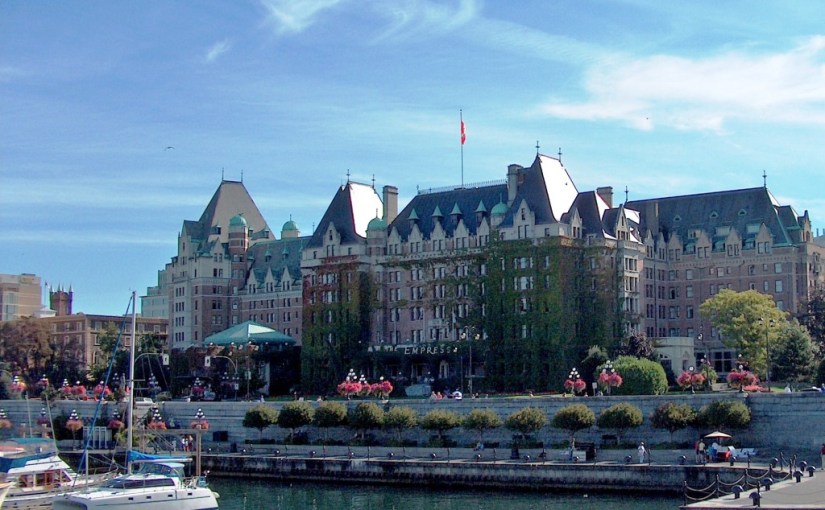
On this our second visit to the island we wanted to stay in the city (previously we stayed out at Sooke which is south-west of the city) so we booked the Great Western Inner Harbour as it is within walking distance of the inner harbour, downtown and the southern suburbs. We only realised shortly before leaving the UK that the Island marathon was being run on the Sunday (the day of our departure) and our hotel was slap bang in the centre of the start and finish places so all the roads surrounding us would be blocked! It was also Thanksgiving in Canada that weekend too which probably explained why we had such difficulty booking any B&Bs during this period. (I apologise to all Canadians as up until this time I didn’t even know you guys celebrated Thanksgiving!) Continue reading Victoria I: Inner Harbour